 Orcas Island Siding
 Exterior Work on Lopez Island: A Different Set of Rules
Lopez Island sits in the rain shadow of the Olympics, which spares it some of the deluge that hits the outer coast, but that doesn't mean the island is easy on a house exterior. Homes here deal with a steady diet of salt-laden air off Rosario Strait and the surrounding waterways, wind-driven rain that finds every gap in a wall assembly, and a mild, damp climate that keeps moss, algae, and lichen actively growing on north-facing walls and shaded siding for most of the year. Add in the wide temperature swings between summer sun and winter damp, and you have an exterior envelope that's constantly expanding, contracting, and absorbing moisture in small amounts, day after day, year after year.
None of this is dramatic on its own. It's the cumulative effect that gets homeowners — a little water intrusion behind a poorly flashed window, a little moss buildup that holds moisture against a wall, a little UV fade on the sunny side of the house. Over a decade or two, those small issues compound into real repair bills. Siding, roofing, windows, and decks all take this same slow beating, which is why we think about a Lopez Island home as one connected system rather than a set of separate projects.
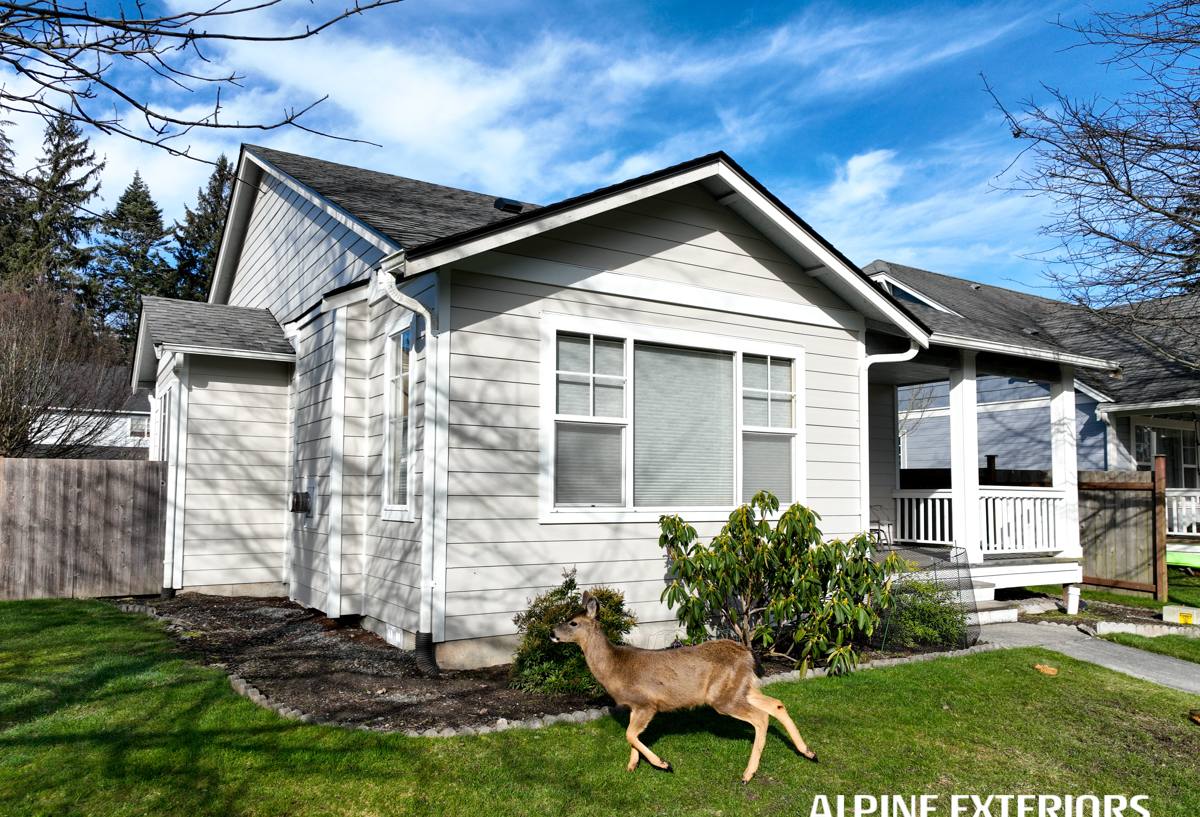
Why We Install Only James Hardie Fiber Cement Siding
We get asked fairly often why we don't offer vinyl, LP SmartSide, or other engineered wood and composite siding products. The honest answer is that we've made a professional judgment call after years of exterior work in this climate, and fiber cement is what holds up best against salt air, standing moisture, and moss without demanding constant upkeep.
What We're Weighing Against
Vinyl siding is affordable and easy to install, and for a lot of drier inland climates it performs fine. In a marine environment like the San Juan Islands, though, vinyl tends to show its limits: it expands and contracts more than fiber cement with our temperature swings, seams and laps can loosen over time, and it doesn't offer much of a barrier against the kind of driving rain that finds its way sideways under eaves and around corners. Engineered wood products like LP SmartSide use a wood-strand core with a resin binder — a real improvement over old wood siding, but the product is still wood-based, which means any breach in the factory coating or field-cut edge that isn't properly sealed can let moisture in, and moisture plus wood fiber is exactly the combination that leads to swelling and rot in a wet climate. Cedar and primed spruce are honest, attractive materials, but they need repainting, recaulking, and vigilant maintenance to survive salt air and moss — maintenance that a lot of island homeowners, understandably, don't want to sign up for on a second home or a busy schedule.
Why Fiber Cement Wins Out Here
James Hardie fiber cement siding is made from cement, sand, and cellulose fiber, which makes it non-combustible and dimensionally stable — it doesn't swell, warp, or rot the way wood-based products can. Hardie's ColorPlus factory-applied finish is baked on under controlled conditions, which gives it better fade and adhesion performance than field-applied paint, and it comes with a real transferable warranty backing that finish. For a marine climate that spends months at a time damp and shaded, that combination of moisture resistance and finish durability is what tips the decision. It's also why, when we do a full siding replacement on Lopez Island, Hardie is the only product we put on the wall.
The James Hardie Product Lines We Work With
Hardie makes several plank and panel profiles, and part of our job is matching the right one to your home's style and exposure. Lap siding in various widths and textures covers the classic look most island homes want, while panel and board-and-batten options suit more modern or shed-style builds. Hardie also engineers its products by climate zone — HZ5 formulations are built for regions with freeze-thaw cycles and sustained moisture, which fits the Pacific Northwest better than a one-size-fits-all product. We'll walk you through color options in the ColorPlus line, along with trim and soffit materials that complete the system, so the whole exterior reads as one cohesive package rather than mismatched parts.
How We Approach a Lopez Island Siding Project
Every project starts with a walk-around assessment, not a sales pitch. We look at the current siding condition, check for water staining or soft spots around windows and at the base of walls, and take note of how much moss and shade exposure a given elevation gets — north and northwest walls on Lopez Island tend to need more attention than south-facing ones. From there we talk through scope: a full re-side, a partial replacement of the worst-affected elevations, or repair work paired with a maintenance plan, depending on what the house actually needs and what makes financial sense.
Once we start work, proper flashing and weather-resistive barrier detailing matter as much as the siding itself. A lot of the moisture problems we find on older island homes trace back to poor flashing around windows, doors, and roof-to-wall transitions — not the siding material itself. We install per Hardie's published fastening and clearance specifications, including the ground clearance and gap requirements that keep the bottom edge of the siding from sitting in standing water or snow.
Roofing, Windows, and Decks: The Rest of the Envelope
Siding doesn't work in isolation, and a lot of the moisture issues we get called out for on Lopez Island actually start at the roofline or around a window, then show up as a stain or soft spot on the wall below. We handle roofing, window, and deck work alongside siding so those transition points — where roof meets wall, where a window sits in the wall plane, where a deck ledger attaches to the house — get treated as the vulnerable spots they are, not afterthoughts.
Roofing
A roof that's shedding water properly, with clean flashing at valleys, chimneys, and wall intersections, is the first line of defense for everything below it. Moss on a roof is common here and left unaddressed it holds moisture against shingles and speeds up wear.
Windows
Old or poorly flashed windows are one of the most common sources of hidden water intrusion we find behind siding on island homes. Replacing windows at the same time as siding lets us integrate flashing correctly the first time, instead of working around an existing installation.
Decks
Decks take a similar beating from rain and moss, especially where they attach to the house. We build and repair decks with the same attention to water management — proper ledger flashing, drainage, and material choices that hold up outdoors.
Comparing Common Siding Choices for a Marine Climate
| Material | Moisture Resistance | Maintenance | Typical Lifespan Here |
|---|---|---|---|
| James Hardie fiber cement | Strong — non-combustible, dimensionally stable | Low — occasional wash, no repainting for years | Multiple decades with correct install |
| Vinyl | Fair — seams and laps vulnerable to driving rain | Low, but limited repair options if damaged | Variable, shorter in high-wind/salt exposure |
| LP SmartSide / engineered wood | Fair — good if coating stays intact, at risk if breached | Moderate — edge sealing and inspection matter | Shorter if moisture reaches the wood core |
| Cedar / primed wood | Fair — natural material, absorbs moisture | High — regular painting and caulking | Shorter without diligent upkeep |
This isn't a knock on every alternative product — it's a summary of the trade-offs we weigh, and why fiber cement is the one we're willing to stand behind with our own installation crew on a Lopez Island roof.
What to Expect From a Correctly Installed Siding Job
- A weather-resistive barrier installed continuously, with all seams and penetrations sealed
- Flashing installed at every window, door, and roof-to-wall transition before siding goes on
- Proper ground clearance and gap spacing at the base of the wall, per manufacturer specification
- Fasteners placed and set according to Hardie's published fastening schedule
- Butt joints and corners detailed to shed water rather than trap it
- A final walk-through where we point out what was done and why, in plain language
If a bid you're comparing skips over these details, or can't explain how they'll handle flashing and clearance on your specific house, that's worth asking about directly.
What Drives Cost on an Island Project
A few factors tend to move the price on Lopez Island jobs more than on a typical mainland project. Ferry scheduling and material logistics add planning time, since deliveries and crew mobilization have to work around the boat schedule rather than a quick drive. The condition of the existing wall assembly matters too — if we find water damage or rot once old siding comes off, that's addressed before new siding goes up, and it's better to know that upfront than discover it mid-project. House size, elevation count, trim complexity, and how much of the old siding needs full removal versus overlay (which we generally don't recommend for a long-term fix) all factor into the estimate as well.
Why a Local Crew Makes a Difference
Working on the islands means understanding ferry logistics, material staging, and scheduling around weather windows that don't always match the mainland forecast. A crew that's used to island jobs plans material orders further ahead, batches trips efficiently, and doesn't get caught off guard by a canceled sailing. Just as important, we're familiar with how San Juan County homes actually age — which elevations take the worst of the weather, where moss builds up fastest, and what kind of detailing holds up over the long haul in this specific climate. That local knowledge shows up in the small decisions made throughout a project, not just the finished look.
If you're weighing a siding replacement, a roof that's showing its age, tired windows, or a deck that needs attention, we're happy to take a look and talk through honest options — no pressure, no obligation. Reach out below for a free estimate.