 Orcas Island Siding
 What "Primed Wood Siding" Actually Means
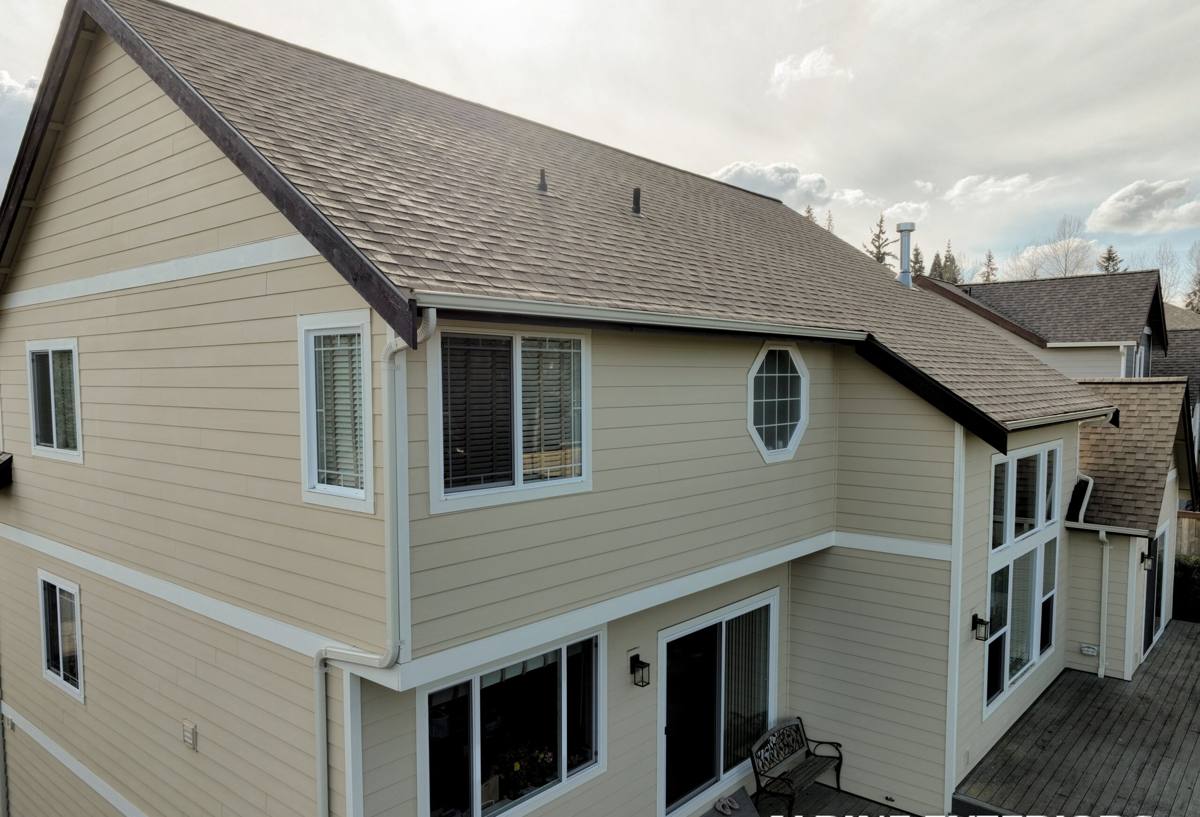
When people say "primed wood siding," they're usually talking about engineered wood products (commonly spruce, pine, or fir-based) that arrive from the factory with a coat of primer already applied. The primer is meant to give the wood a head start before it goes up on the wall, so the crew doesn't have to prime bare boards on site. It's a legitimate product category, and a lot of homes across the country wear it well.
The key word is "primed," not "sealed." Primer is a preparation layer for paint, not a moisture barrier. Once the boards are cut, nailed, and exposed to weather, the wood underneath that thin factory coat behaves like wood always has — it expands, contracts, and absorbs water wherever the finish is broken or thin.
Where It's Used and Why It's Popular
Primed wood and engineered wood siding earned their place in the market for good reasons: it's usually less expensive up front than fiber cement, it's easy for crews to cut and nail, and it can be finished in almost any color a homeowner wants. In drier inland climates, with a good paint schedule, it can hold up reasonably well for years.
What This Product Gets Right
We're not here to trash a whole category of siding. Primed wood has real advantages, and we want to be upfront about them before explaining why we still don't install it here:
- Lower material cost than most fiber cement products
- Lightweight and straightforward to cut, which can speed up labor on simple elevations
- Smooth, paintable surface that takes custom colors well
- Long track record in mild, dry inland markets
If we operated a siding business in a high desert town, this conversation might go differently. But we work on Orcas Island, and San Juan County's marine climate is not a high desert town.
Salt Air, Driving Rain, and a Long Moss Season
Orcas Island sits in a marine environment that stresses building materials in a specific combination: salt-laden air off the water, wind-driven rain that hits siding at an angle instead of falling straight down, and a moss and lichen season that can run most of the year on shaded, north-facing walls. Any one of those factors is manageable. Together, they're hard on wood-based products.
Salt air accelerates the breakdown of paint films and finishes faster than inland exposure does. Driving rain forces water into laps, seams, and fastener holes that would stay dry in a calmer climate. And prolonged dampness from moss and shade keeps wood-based siding wet for longer stretches, which is exactly the condition that wood-based products are least equipped to handle over the long haul.
The Real Issue: Priming Isn't Sealing
Every piece of primed wood siding has to be cut on site — around windows, doors, corners, and utility penetrations. Every one of those cuts exposes raw, unprimed wood or end grain. That cut edge is the weak point, and on a home wrapped in a wet marine climate, it's also the point where water gets in first.
Manufacturers of these products are clear in their own installation literature: cut edges need to be field-primed and sealed before installation, gaps and clearances need to be maintained, and caulking needs to be inspected and refreshed on a schedule. That's not a knock on the product — it's just what wood requires to perform. The problem is that this maintenance discipline has to hold up for the entire life of the siding, not just the first few years, and it has to hold up against an island climate that doesn't give a lot of breaks.
Common Failure Points We See on Wood-Based Siding
- Swelling and delamination at butt joints and cut ends
- Paint failure and bare wood exposure on the weather side facing prevailing storms
- Soft or spongy boards near ground level, decks, or roof-wall intersections where splashback lingers
- Moss and algae staining on shaded north walls that trap moisture against the surface
- Nail popping and fastener staining as the substrate moves with moisture cycles
Maintenance Burden Over Time
The honest trade-off with primed wood siding isn't whether it can perform — it's what it costs in upkeep to keep performing, year after year, in this climate. Fiber cement was engineered specifically to reduce that burden.
| Factor | Primed Wood / Engineered Wood Siding | James Hardie Fiber Cement |
|---|---|---|
| Repainting cycle in marine climate | Often every 5-7 years | ColorPlus finish typically holds 15+ years before repaint is needed |
| Moisture absorption | Wood fiber core swells if finish is compromised | Cement composition resists swelling from moisture |
| Cut-edge treatment required | Yes, on every field cut | Recommended but far less consequential if missed |
| Combustibility | Combustible wood-based core | Non-combustible material |
| Typical manufacturer warranty | Varies, often shorter and more exclusion-heavy | Long-term, transferable limited warranty |
Installation Sensitivity Raises the Stakes
Wood-based siding products are also less forgiving of small installation mistakes than most homeowners realize. Clearance from grade, gaps at butt joints, flashing details at every penetration, and consistent field-priming of cut edges all have to be done correctly, every time, by every crew member on the job. Skip one of those details on a home in a mild climate and you might get away with it for years. Skip it on Orcas Island, facing open water and driving rain, and that shortcut tends to show up much sooner as a soft spot, a stain, or a swollen board.
We don't say this to cast doubt on every contractor who installs these products — plenty do it correctly. We say it because we've made a business decision to only install a siding system where the margin for error is wider, and where the material itself is doing more of the work to resist this climate rather than relying entirely on flawless field execution.
Warranty Realities Worth Understanding
Warranties on primed wood and engineered wood products are frequently written around proper priming, sealing, and maintenance being documented and kept up. That's a reasonable ask from a manufacturer, but in practice it means the burden of proof sits with the homeowner if something goes wrong years down the line — did the paint get refreshed on schedule, was every cut edge sealed, was caulking maintained. James Hardie's fiber cement warranty structure is built around a product engineered to hold a factory finish and resist moisture intrusion for decades, which is a meaningfully different promise.
Why We Standardized on James Hardie Instead
After years of servicing homes across San Juan County's islands, we made the call to install only James Hardie fiber cement siding. A few reasons that decision holds up on Orcas Island specifically:
- Non-combustible material — meaningful in a rural island community where wildfire response and mutual aid can take longer to arrive than on the mainland
- ColorPlus factory finish — a baked-on finish that resists the fading and chalking that salt air accelerates on field-painted surfaces
- Climate-engineered HZ product lines — Hardie manufactures specific formulations for wetter, harsher climates, which lines up with what a marine environment demands
- Strong, transferable warranty — backed by decades of real-world performance data, and transferable if the home sells
- Proven longevity when installed to spec — a material that doesn't depend on a repainting schedule to keep water out
None of this means wood siding is a bad product everywhere. It means that for the specific combination of salt air, driving rain, and a long moss season that Orcas Island homes face, we don't think it's the right product for us to put our name behind.
Questions to Ask Before Choosing Any Wood-Based Siding
If you're weighing options for your home and a contractor is proposing primed wood or engineered wood siding, these are fair questions to ask regardless of who you hire:
- Will every field cut be primed and sealed before installation, and how will that be documented?
- What repainting interval does the manufacturer recommend for a marine/coastal environment?
- What does the warranty actually require of me to stay valid — and what voids it?
- How will clearance from grade, decks, and roof lines be handled at moisture-prone transitions?
- What happens at north-facing, shaded walls where moss and algae growth is heaviest?
If you're planning a siding project on Orcas Island and want a straight answer about what will actually hold up on your specific home, we're happy to take a look and walk you through it. Reach out for a free, no-pressure estimate — no obligation, just an honest assessment.