 Orcas Island Siding
 Living With Deer Harbor's Marine Climate
Deer Harbor sits on the west side of Orcas Island, a small boating and ferry community tucked into San Juan County's marine layer. It's a beautiful place to own a home, and a genuinely hard place to keep one looking good. The same water views that make the area desirable also mean nearly every exterior surface here is dealing with salt-laden air, wind-driven rain off the water, and long stretches of shade and dampness under the fir and madrona canopy that covers much of the island. Add in a moss season that can run from fall through spring, and you've got a climate that's tough on paint, tough on trim, and unforgiving of any siding product that wasn't built with moisture in mind.
We work on homes across Orcas Island, and the exterior challenges in Deer Harbor track closely with what we see elsewhere in San Juan County: exposure to salt air near the water, heavy seasonal rainfall, and homes that are often occupied part-time, which means small problems can go unnoticed for months before someone's back on the property to catch them.
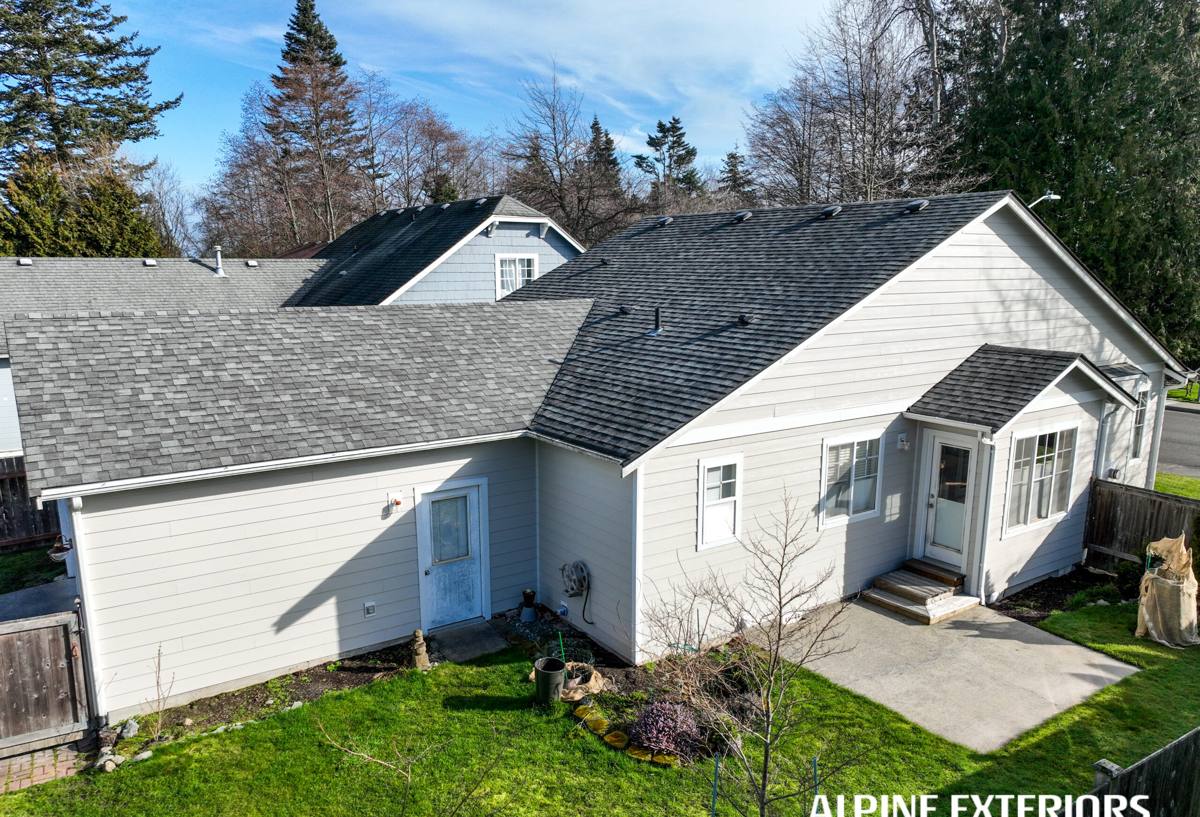
What Salt Air and Moisture Actually Do to Siding
Salt Air and Fasteners
Airborne salt doesn't just sit on the surface of a home — it works into seams, fastener heads, and any place where two materials meet. Over years, that accelerates corrosion on lower-grade fasteners and trim hardware, and it breaks down paint films faster than it would a few miles inland. Homes closer to the water take the brunt of this, but Deer Harbor's whole shoreline-adjacent setting means even homes set back from the harbor get a steady dose of salt-bearing wind.
Driving Rain and Wall Assemblies
Wind-driven rain off the water pushes moisture sideways into siding laps, corner boards, and window trim in a way that vertical rain doesn't. Siding materials that swell, wick moisture, or rely on paint film alone to stay sealed tend to show problems first at these transition points — cupping boards, soft spots at butt joints, and paint failure around fasteners.
Moss, Algae, and Shade
The Pacific Northwest's moss season is longer and heavier on the west side of the islands than most people expect. Homes tucked under tree cover — common throughout Deer Harbor — stay damp longer after a rain event, which gives moss and algae more time to establish on north-facing walls, fascia, and anywhere debris collects. Left alone, that moisture-holding growth keeps the substrate underneath wet for extended periods, which is exactly the condition that shortens the life of moisture-sensitive siding.
Why We Install Only James Hardie Fiber Cement
We made a deliberate decision as a company: we install James Hardie fiber cement siding, and we don't install vinyl, LP SmartSide, Cemplank, Allura, or primed wood siding like cedar or spruce. That's not a marketing position — it's what we've concluded holds up best against exactly the conditions Deer Harbor deals with every year.
What Makes Hardie Different Here
- Non-combustible material — fiber cement doesn't feed a fire the way wood-based products can, which matters for insurance conversations and peace of mind alike.
- ColorPlus factory finish — the color is baked on at the factory under controlled conditions, rather than field-applied paint that has to cure in whatever weather shows up that week.
- HZ5 climate engineering — Hardie's HZ5 product line is formulated for wetter, harsher climates, which is the right specification for a marine, high-moisture environment like the San Juan Islands.
- Dimensional stability — fiber cement doesn't swell and shrink with moisture the way wood-based sidings can, which means fewer cracked caulk joints and less paint failure at the seams over time.
We're upfront that Hardie isn't the cheapest option on the market, and it isn't the easiest to install — it requires specific fastening patterns, clearances, and joint treatment to perform the way it's designed to. That installation sensitivity is exactly why we standardized on one product we can install correctly every time, rather than juggling several systems and getting good at none of them.
Beyond Siding: Roofing, Windows, and Decks
Siding rarely fails in isolation. On a home exposed to the kind of weather Deer Harbor sees, roofing, windows, and decking all take a beating on the same timeline, and they all interact with each other. A roof that's shedding water poorly will overload the siding and trim below it. Windows with failing seals let moisture into the wall cavity behind otherwise sound siding. A deck built without the right ledger flashing or gapping can rot from the inside long before the surface boards show it.
Because we handle siding, roofing, windows, and decks, we look at a property as one connected exterior system rather than four separate trades. That matters most on a home like the kind common around Deer Harbor — often a second home or rental, checked on periodically rather than lived in daily, where a small leak has more time to become a big one before anyone notices.
What a Local Crew Brings to a Job Like This
Orcas Island isn't a place where you can call in a mainland crew for a same-day fix. Ferry schedules shape everything — material deliveries, crew scheduling, and how quickly anyone can get back out to address a callback. A crew that already works the island regularly can plan around those logistics instead of losing days to them.
Local experience also means understanding the practical realities of building here: how far a job site is from the ferry landing, how weather windows open and close quickly off the water, and which parts of a property tend to hold moisture longest based on tree cover and orientation. None of that comes from a spec sheet — it comes from having worked on enough homes in San Juan County to see the patterns repeat.
How a Siding Project Typically Runs
- On-site evaluation — we look at existing siding condition, trim, flashing, and any signs of moisture intrusion, not just the surface appearance.
- Scope and product selection — we walk through Hardie's plank, shingle, and panel options and the ColorPlus color range for the home.
- Prep and moisture barrier — proper house wrap and flashing details go in before a single piece of siding goes up; this step matters more here than almost anything else.
- Installation to manufacturer spec — correct fastener spacing, clearances at grade and trim, and joint treatment, done to Hardie's published requirements.
- Final walkthrough — checking caulk lines, trim reveals, and touch-up before we call the job finished.
Cost Factors for a Deer Harbor Siding Project
Every home is different, and we don't quote sight-unseen, but the same factors drive cost on most projects in this area:
| Factor | Why It Matters Here |
|---|---|
| Home size and wall complexity | More corners, dormers, and trim details mean more labor and material waste |
| Existing siding removal | Tear-off of failing wood or vinyl siding adds time versus a clean substrate |
| Moisture damage repair | Rot found behind old siding has to be repaired before new siding goes on |
| Access and logistics | Ferry-dependent material delivery and site access can affect scheduling |
| Siding profile and color | Lap width, shingle-style panels, and custom ColorPlus colors vary in cost |
| Trim and accessory work | Corner boards, window trim, and fascia often get replaced alongside siding |
Maintenance Checklist for Salt Air and Moss Season
Whether your siding is new or years old, a few habits go a long way in this climate:
- Rinse salt residue off siding near the water a few times a year, especially after storms
- Keep gutters clear so water sheds properly instead of running down wall surfaces
- Trim back tree limbs and vegetation that keep walls in constant shade and dampness
- Check north-facing and shaded walls each fall for early moss or algae growth
- Inspect caulk joints at trim and window edges annually and re-seal as needed
- Walk the property after major wind events to check for loose or damaged siding, trim, or flashing
Ready When You Are
If you own a home in Deer Harbor and you're seeing early signs of trouble — soft spots, peeling paint, persistent moss, or siding that's just tired after years of salt air and rain — it's worth having a local crew take a look before small problems turn into structural ones. We're happy to walk the exterior with you, talk through what we're seeing, and put together a straightforward estimate with no pressure attached.