 Orcas Island Siding
 Windows Built for Deer Harbor's Weather, Not Just the Showroom
Deer Harbor sits on the west side of Orcas Island, where a lot of homes are close enough to the water to catch salt-laden wind straight off the harbor, and far enough into the trees on the other properties to sit under near-constant shade and moisture. Both situations are hard on windows, just in different ways. Waterfront and near-waterfront homes deal with salt air that corrodes hardware and breaks down seals faster than manufacturers' ratings assume. Homes further back under tree cover deal with driving rain that never fully dries out, plus moss and algae that hold moisture against trim and sills for months at a time.
A window that's rated fine for inland Washington can still underperform here. We install and replace windows around San Juan County with that reality built into the plan from the start — not as an upsell, but because a window installed without accounting for wind-driven rain and salt exposure is a callback waiting to happen.
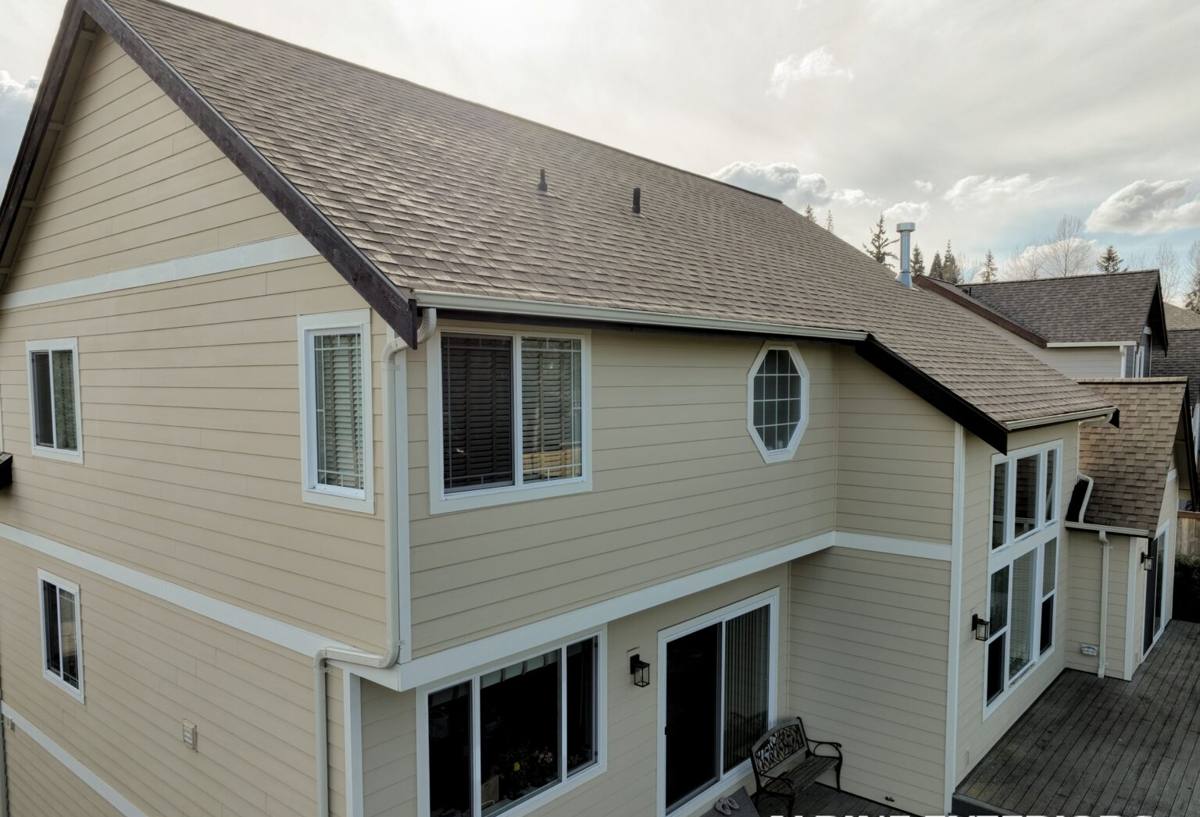
What Salt Air, Driving Rain, and Moss Season Actually Do to Windows
Salt Air
Airborne salt is corrosive to exposed metal — screws, hinges, balance hardware, and lower-quality cladding. On homes with harbor or shoreline exposure, we see hardware corrode and stiffen years before the glass unit itself fails. This is a hardware and fastener issue as much as a window issue, and it's why fastener choice and hardware quality matter more here than they would on a similar home fifty miles inland.
Driving Rain
Orcas Island gets wind-driven rain that hits window assemblies from angles a standard installation doesn't always plan for. Water doesn't need a big gap to get behind trim — it needs a path, and wind pressure will find one. Proper flashing and sill pan work matter more here than in a calm, dry climate, because the margin for error is smaller.
Moss and Sustained Moisture
Shaded, tree-covered lots hold moisture longer. Moss and algae growth on siding and trim keeps wood and lower-grade composite surfaces damp for extended stretches, which accelerates rot at sills and jambs if the original installation didn't seal and flash correctly. By the time moss is visibly growing on a window sill, moisture has usually been sitting there a while.
Signs a Deer Harbor Home Needs Window Attention
- Fogging or a permanent haze between panes — the seal has failed and the gas fill is gone
- Soft or spongy wood at the sill, jamb, or exterior trim when pressed
- Visible gaps, cracked caulk, or daylight around the frame from inside
- Windows that stick, won't stay open, or won't latch fully
- Corroded or seized hardware — cranks, locks, or balances that feel gritty or stiff
- Noticeable draft or a cold wall around the window even with it closed
- Moss or dark staining building up on the sill or trim below the window
- Higher heating bills than the size of the home would suggest
Any one of these on its own isn't necessarily an emergency. Several together, especially on a wall that faces prevailing wind and rain, usually means it's time to look closer rather than wait.
What a Correct Window Installation Involves
Window installation is mostly about what happens before the window ever goes into the opening. The window itself is a manufactured product — the installation is what determines whether it performs for twenty years or leaks in three.
Opening Prep and Inspection
Before a new window goes in, we check the rough opening for rot, soft framing, or prior water damage. On this island, it's common to find some degree of moisture damage around older window openings, especially on north- and west-facing walls that take the brunt of the weather. Any compromised framing gets addressed before the new window goes in — installing a good window into a bad opening just hides the problem.
Flashing and Sill Pan
This is the part that actually keeps water out over the long run. A sill pan creates a sloped, waterproof pocket at the bottom of the opening so any water that does get past the window has somewhere to drain instead of pooling against the framing. Flashing tape integrates with the house wrap in the correct shingle-lap order — top piece over the side pieces, side pieces over the sill pan — so water sheds outward and down, never inward.
Sealing and Insulation
Gaps around the window unit get filled with low-expansion foam or backer rod and sealant, not just caulked shut. Over-filling with standard expanding foam can bow the frame and cause the window to bind or seal poorly, so the product and technique matter as much as whether it was done at all.
Exterior Trim and Finish Sealing
The exterior caulk joint between the window and the trim or siding is the first line of defense against driving rain. It has to be a compatible sealant applied to a clean, dry surface — caulking over old, failed sealant just traps moisture underneath it.
Frame Material: What Holds Up in This Climate
| Frame Material | Salt Air Behavior | Maintenance | Notes for This Area |
|---|---|---|---|
| Vinyl | Does not corrode; UV can affect color over decades | Low — occasional cleaning | Good all-around choice for wind and moisture exposure; budget-friendly |
| Fiberglass | Very stable, resists warping and corrosion | Low | Strong option for waterfront exposure; higher upfront cost, very durable |
| Wood | Vulnerable to rot if seals or paint fail | High — regular painting/sealing needed | Classic look; needs disciplined upkeep in a shaded, damp lot |
| Aluminum-clad wood | Exterior metal can pit or corrode near salt exposure over time | Moderate | Good look and performance, but hardware and cladding quality matter more this close to the water |
| Aluminum (uncladded) | Most exposed to corrosion, also conducts cold | Moderate to high | We generally steer clients away from this near the harbor unless it's a specific architectural fit |
None of these materials are wrong, and we install several of them depending on the home's style, budget, and exposure. The point of this table isn't to push one product — it's to make the trade-offs clear so the decision matches how exposed your specific lot actually is.
Glass Packages Worth Knowing About
Double-pane with a low-E coating and argon fill is a solid baseline for this climate — it manages heat loss and condensation reasonably well without a big cost jump. Triple-pane adds another layer of insulation and sound dampening, which is worth considering on a home right on the water dealing with wind noise, but it adds weight and cost that isn't necessary on every project. We'll walk through what makes sense for your specific opening rather than defaulting to the most expensive package.
New Construction vs. Replacement Windows
These are two different jobs. New-construction windows have a nailing flange and get installed with full access to the framing and house wrap, which is the more thorough and more weather-resistant approach when the wall is already open. Replacement (or "insert") windows fit into an existing, intact frame and are the common choice for a remodel where you're not tearing into the siding.
Insert windows are faster and less invasive, but they're only appropriate when the existing frame is sound. If there's rot or prior water damage at the opening — which, given the driving rain here, isn't rare — a full-frame replacement that lets us properly flash and seal the opening is usually the better long-term call, even though it costs more upfront.
How We Approach a Deer Harbor Job
- Walk-through and assessment — we look at each window's exposure, the condition of the existing framing, and how the home's orientation lines up with prevailing wind and rain
- Honest scope and estimate — replacement vs. repair, insert vs. full-frame, and material options based on what your home actually needs
- Scheduling around weather — window installation needs a dry work window; we plan install days around the forecast rather than pushing through rain
- Removal and opening prep — old window out, framing inspected and repaired if needed
- Flashing, sill pan, and install — done in the correct sequence so water sheds out, not in
- Interior and exterior finish — trim, sealant, and insulation completed and cleaned up
- Final walkthrough — operation, seal, and finish checked with you before we call it done
Why Local Experience Matters for This Job
Window installation timing on an island isn't the same as on the mainland. Materials, crew, and equipment all move by ferry, which means the schedule has to account for sailing times and the occasional cancelled run — a mainland contractor unfamiliar with island logistics can turn a two-day job into a week of delays. We plan material orders and crew scheduling around that reality as a matter of course.
There's also a difference in judgment that comes from having worked on enough San Juan County homes to know what a given exposure actually does to a window over time, versus what a spec sheet says it should do. A house tucked into the trees on Orcas Island ages differently than one sitting open to the wind near the harbor, and the installation details — sealant choice, hardware grade, how aggressively we flash a given opening — should reflect that, not a one-size-fits-all approach.
Caring for New Windows in a Salt Air, High-Moisture Climate
A correctly installed window still benefits from basic upkeep here:
- Rinse salt residue off frames and hardware periodically if you're near the water, especially after storms
- Keep moss and debris cleared from sills and surrounding trim so moisture doesn't sit against the frame
- Check exterior caulk lines yearly for cracking or separation and have them addressed before they fail fully
- Operate hardware occasionally through the winter so cranks and locks don't seize from disuse and moisture
- Keep gutters and downspouts clear so roof runoff isn't sheeting directly down over window openings
None of this is complicated, but skipping it is how a well-installed window ends up needing attention years earlier than it should.
Get a Straightforward Estimate
If you're dealing with drafty, fogged, or sticking windows in Deer Harbor, or you're planning ahead for a remodel, we're happy to come take a look and give you an honest read on what your home actually needs. The estimate is free, there's no pressure attached, and you'll get a clear answer about repair versus replacement before you decide anything. Use the form below to get started.