 Orcas Island Siding
 Exterior Work Built for San Juan Island's Marine Climate
San Juan Island sits out in the Salish Sea, and homes here take a different kind of weathering than houses just a short ferry ride away on the mainland. Salt-laden air moves in off the water, driving rain finds its way into every gap a builder left loose, and the shaded, tree-covered lots that make San Juan County so appealing also keep siding damp longer than it should be. We've built our approach around those specific conditions rather than a generic Pacific Northwest playbook, because San Juan Island's exposure is its own thing.
This page covers how we think about siding, roofing, windows, and decks for homes in this part of San Juan County, why we install James Hardie fiber cement exclusively, and what to expect if you're planning an exterior project here.
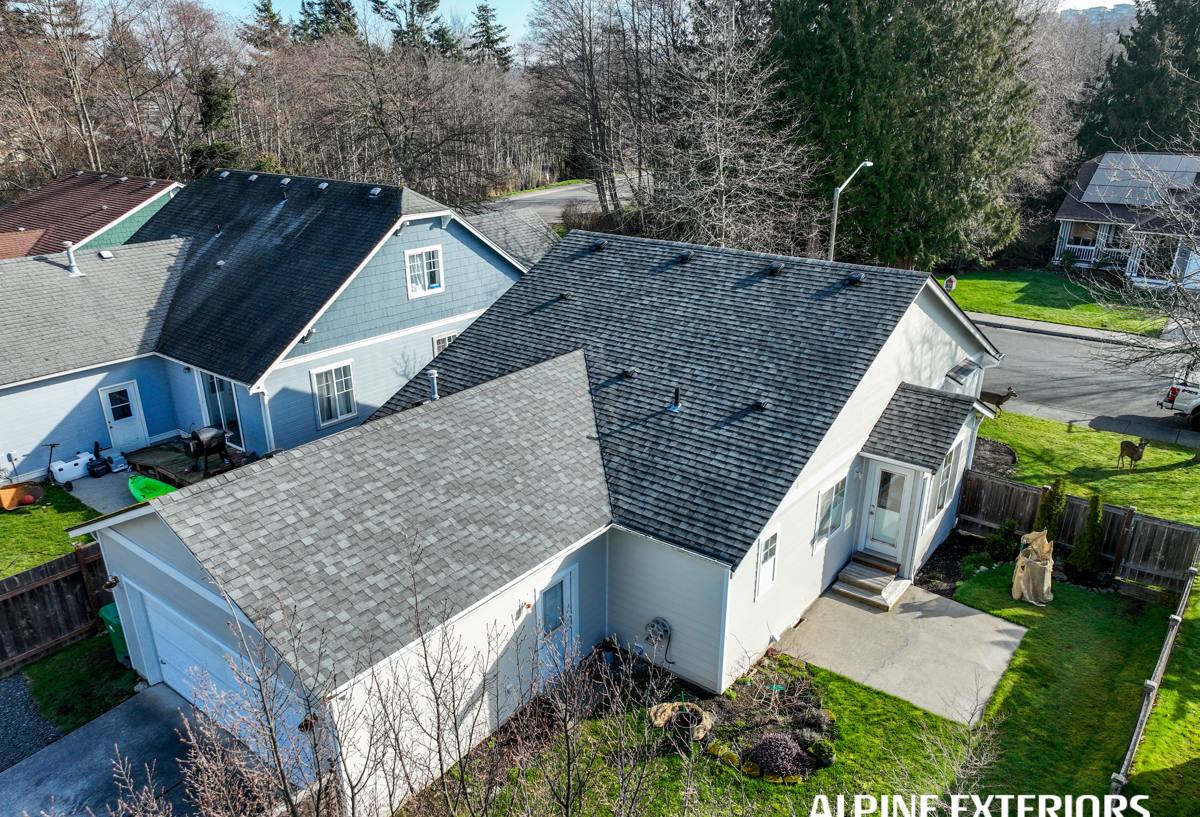
What the Island Climate Does to Exteriors
Salt Air and Corrosion
Homes closer to the water deal with airborne salt that settles on every exterior surface. Over years, that salt accelerates corrosion on fasteners, flashing, and trim, and it degrades certain paint films and coatings faster than inland weathering would. Materials and hardware that hold up fine in a dry inland climate can fail early here if they weren't chosen with that exposure in mind.
Driving Rain and Wind-Driven Moisture
San Juan Island doesn't get the heaviest rainfall totals in Western Washington, but the rain it does get frequently comes sideways off open water. Wind-driven rain pushes moisture into seams, laps, and penetrations that would stay dry in a calm, straight-down rain event. Siding systems and installation details that aren't built for that kind of exposure tend to show water intrusion first at trim joints, window returns, and butt seams.
Moss, Shade, and Slow-Drying Walls
Between the tree cover common on island lots and the long stretches of overcast, damp weather, north-facing and shaded walls can stay wet for extended periods. That's exactly the environment moss and mildew favor, and it's tough on any siding material that swells, wicks moisture, or holds it against the wall assembly instead of shedding it.
Why We Install Only James Hardie Fiber Cement
We made a decision a while back to stop installing several common siding products — vinyl, LP SmartSide, primed spruce, cedar, and composite boards like Cemplank or Allura — even though each has its place in the market. On San Juan Island specifically, the combination of salt exposure, driving rain, and moss season pushed us toward a single standard: James Hardie fiber cement.
Non-Combustible and Dimensionally Stable
Fiber cement doesn't expand and contract with moisture the way wood-based products do, and it doesn't provide fuel the way vinyl or wood siding can in a wildfire exposure. For island homes that sit close to trees and brush, that non-combustible quality is a real, practical benefit — not just a marketing point.
ColorPlus Factory Finish
Most Hardie siding we install carries a factory-applied ColorPlus finish rather than a field-applied paint job. That finish is baked on under controlled conditions and backed by its own warranty, which matters in a salt-air environment where field-applied coatings tend to chalk, fade, or fail at the edges faster than a factory finish does.
Climate-Engineered HZ Product Lines
Hardie manufactures different HZ5 and HZ10 formulations for different climate zones, accounting for moisture exposure and freeze-thaw behavior. We use the product line engineered for the Pacific Northwest's wet, marine conditions rather than a one-size-fits-all board.
Being Honest About the Trade-Offs
Fiber cement is heavier to handle, requires specific fasteners and clearances, and costs more upfront than vinyl or engineered wood. It's not the cheapest option on the shelf. We think the trade-off is worth it for the longevity and low maintenance it delivers on a site like San Juan Island, but we won't pretend it's the budget choice — it isn't, and any contractor telling you otherwise isn't being straight with you.
Comparing Common Siding Materials for Island Homes
| Material | Moisture Behavior in Marine Climate | Maintenance | Why We Don't Install It |
|---|---|---|---|
| Vinyl | Doesn't absorb water, but can warp under heat/cold cycling and gaps at seams allow moisture behind panels | Low, but cracks and fades over time | Limited insulation value and appearance options; seam performance in wind-driven rain is inconsistent |
| LP SmartSide | Engineered wood strand product; performs well when perfectly sealed, vulnerable if edges are exposed | Moderate; edge sealing is critical | Edge and cut-end sensitivity is a bigger risk in a high-moisture, salt-air setting |
| Cedar / Primed Spruce | Natural wood movement, prone to moisture absorption and rot without diligent upkeep | High; regular refinishing needed | Ongoing maintenance burden is steep in a climate this wet, especially on shaded walls |
| Cemplank / Allura | Fiber cement, generally solid moisture performance | Low to moderate | We standardized on Hardie's specific HZ formulations, factory finish, and warranty structure |
| James Hardie Fiber Cement | Engineered for climate zone, resists moisture-driven swelling and rot | Low | Our standard product |
What a Siding Project Looks Like Here
Every project starts with a walk-around of the house, paying particular attention to the sides most exposed to prevailing wind and rain, and any areas shaded enough to stay damp longer. We look at existing flashing, window and door details, and the condition of the sheathing underneath the current siding before we ever talk about board selection.
- Assess current siding condition and identify any hidden moisture damage before pricing the job
- Check and correct flashing at windows, doors, and roof-to-wall transitions
- Confirm proper rain-screen or drainage gap behind new siding where the wall assembly calls for it
- Select the Hardie product line and profile suited to the home's exposure
- Use corrosion-resistant fasteners appropriate for a salt-air environment
- Detail all seams, corners, and penetrations to shed wind-driven rain
Roofing, Windows, and Decks: The Whole Building Envelope
Siding doesn't work in isolation. A roof that's shedding water improperly, windows with failing seals, or a deck ledger that's trapping moisture against the house will undermine even a well-installed siding job. We handle roofing, windows, and decks alongside siding so the building envelope gets looked at as one system rather than a series of disconnected repairs.
Roofing
Roof condition directly affects how much water runs down the walls below. Clogged gutters, damaged flashing, or moss-covered roof sections send extra moisture right at the siding and trim underneath.
Windows
Window flashing and sealing are common failure points in wind-driven rain. When we're already opening up siding for a project, it's often the right time to address window flashing details rather than waiting for a leak to show up on an interior wall.
Decks
Ledger boards and deck-to-house connections are another spot where trapped moisture causes problems out of sight. We build and repair decks with drainage and separation from the house structure in mind, not just appearance.
Why a Local, Ferry-Dependent Crew Matters
Working on San Juan Island means planning around ferry schedules, not just drive times. Materials, equipment, and crew all have to be staged and timed around sailings, and weather delays on the water can affect a project schedule as much as weather delays on-site. A crew that's used to that logistics reality plans for it up front instead of treating it as a surprise mid-project. It also means we're familiar with the specific microclimates around the island — which sides of a property tend to catch the worst of the wind and rain, and which stay shaded and slow to dry — rather than applying assumptions from a mainland job site.
Maintenance That Actually Matters in This Climate
Fiber cement siding is low-maintenance, not no-maintenance. A little seasonal attention goes a long way toward getting the full service life out of the material, especially with San Juan Island's moss season and salt exposure.
- Rinse salt residue off exterior walls periodically, especially on sides facing open water
- Keep gutters clear so roof runoff doesn't sheet down the siding
- Trim back vegetation and tree cover to let shaded walls get more airflow and sun
- Check caulking at trim joints and penetrations annually and touch up as needed
- Address any moss or algae growth on siding promptly rather than letting it establish
- Inspect flashing at windows, doors, and deck ledgers each year for early signs of failure
Cost Factors for Island Projects
Pricing for siding, roofing, window, or deck work on San Juan Island depends on the usual factors — square footage, existing condition, and the amount of trim and detail work involved — plus a few things specific to island jobs: ferry-related material and crew logistics, site access, and how much existing damage is hiding behind the current siding once it comes off. We won't quote a number without seeing the property, but we'll always walk you through what's driving the cost before work starts.
If you're weighing a siding, roofing, window, or deck project on San Juan Island, we're happy to come take a look and put together a straightforward, no-pressure estimate. Use the form below to get started.