 Orcas Island Siding
 One Product, One Standard
Walk into most siding companies in the San Juans and you'll get a menu: vinyl if you want cheap, LP SmartSide if you want something in between, fiber cement if you want the good stuff. We don't do menus. Every exterior we install on Orcas Island is James Hardie fiber cement, full stop. No vinyl, no engineered wood, no primed spruce, no cedar. This page explains the reasoning, not the marketing pitch, because homeowners deserve to know why a contractor limits their own options before they hire one.
The short version: Orcas Island's climate is hard on siding in specific, predictable ways, and after years of installing and repairing exteriors here, we've settled on the one product system that holds up to those conditions without requiring the homeowner to babysit it.
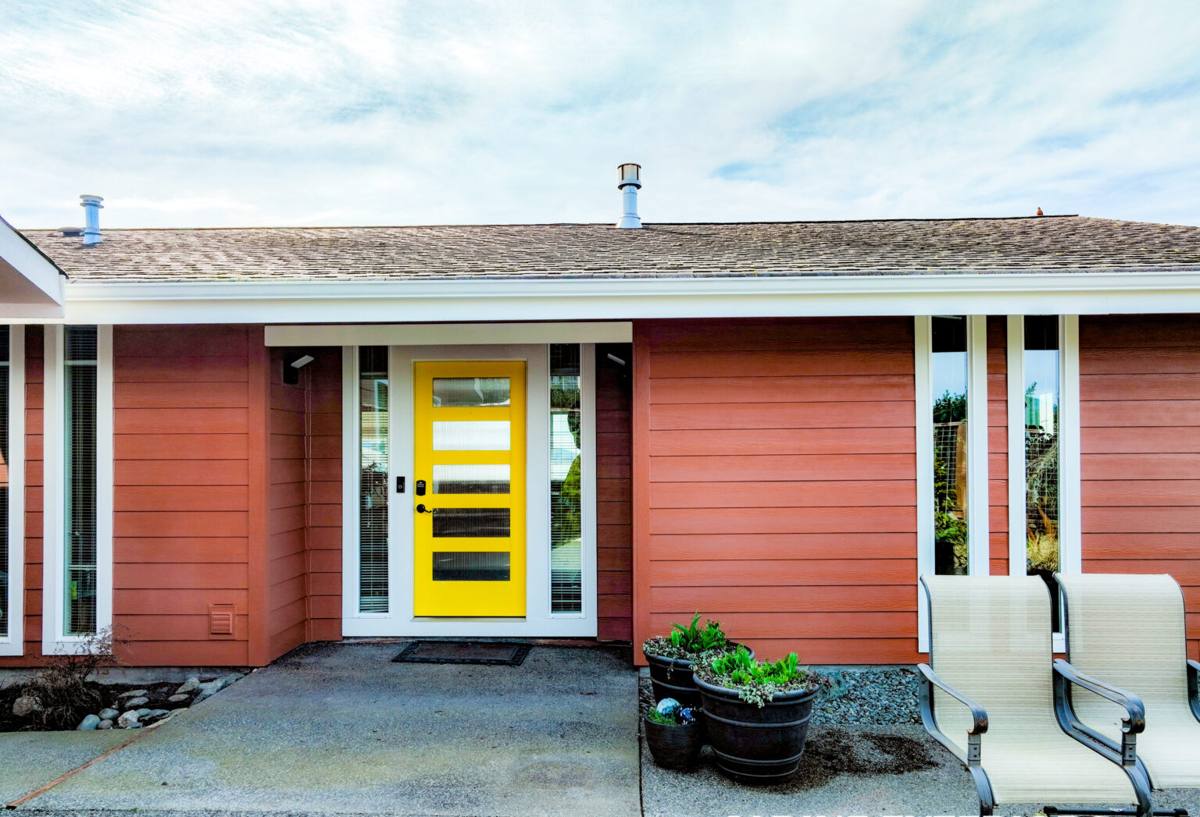
What Orcas Island Does to Siding
San Juan County sits in a marine climate that looks mild on paper — moderate temperatures, no extreme freeze-thaw cycles like you'd see inland. But three things work against exterior materials here year-round, and they compound each other:
- Salt air. Waterfront and near-waterfront homes take a steady drip of airborne salt that accelerates corrosion of fasteners and degrades coatings that aren't formulated for it.
- Driving rain. Storms off the Strait of Juan de Fuca and Rosario Strait don't just fall straight down — wind-driven rain gets forced sideways into lap joints, corner boards, and anything with an exposed seam.
- Long moss and mildew season. Shaded, damp conditions persist for much of the year under the island's tree cover, which means anything that can hold moisture against its surface — wood grain, absorbent substrates, unsealed edges — becomes a growth surface for moss, algae, and mildew.
None of that is exotic. It's just relentless. A siding product that's "fine" in a dry inland climate can struggle here, and a product that's marginal in a dry climate can fail outright.
Why We Don't Install the Alternatives
Vinyl Siding
Vinyl is inexpensive and low-maintenance in the sense that it doesn't need painting. But it's a thin plastic product that expands and contracts with temperature swings, can crack on impact in colder snaps, and — critically for this climate — it isn't rigid enough to seal tightly against wind-driven rain at seams and penetrations the way a properly installed fiber cement system does. It also fades over time under UV exposure, and once it fades there's no refinishing it; you replace it. For a waterfront or view-lot home where the exterior is a major part of the property's value, we don't think it's the right long-term bet.
LP SmartSide
LP SmartSide is an engineered wood product — wood strands bonded with resin, treated and coated. It performs reasonably well when installation and maintenance are done exactly to spec, but it is still a wood-based substrate, which means its long-term durability depends heavily on caulking, painting cycles, and keeping cut edges sealed. In a climate with this much sustained moisture and moss pressure, that's a maintenance burden we're not willing to hand a homeowner and then walk away from.
Cemplank and Allura
These are other fiber cement manufacturers, and fiber cement as a category is the right material choice for this region — non-combustible, dimensionally stable, moisture-resistant at the core. Where we part ways is the finish system and warranty structure. We standardized on Hardie's factory-applied ColorPlus finish and its specific HardieZone engineering rather than splitting our crews' expertise and our warranty relationships across multiple fiber cement brands. One product means our installers know its quirks cold, and our warranty conversations with the manufacturer are never complicated by "well, which brand was it."
Primed Spruce and Cedar
Solid wood siding, whether primed spruce boards or cedar, is the traditional look a lot of island homes were originally built with, and we understand the appeal. But raw wood is the most maintenance-intensive option in a climate built for moss and mildew growth. It needs repainting or restaining on a recurring cycle, it's the most susceptible of any option here to trapped moisture and rot at end grain, and cedar in particular has become expensive relative to its durability. We'll repair existing wood siding, but we don't install new wood exteriors.
What James Hardie Gets Right for This Climate
Fiber Cement Core
Hardie board is made from cement, sand, and cellulose fiber — it doesn't rot, it doesn't feed moss the way organic wood substrates do, and it's non-combustible, which matters increasingly for insurance underwriting even in a low-wildfire-risk area like the San Juans. It's also dimensionally stable, meaning it doesn't swell and shrink with humidity the way wood and some engineered products do, which keeps joints tighter over time.
ColorPlus Factory Finish
Instead of field-painting after installation, ColorPlus siding arrives with a baked-on finish applied under controlled factory conditions, cured through multiple coats. That finish is engineered to resist fading and chipping far longer than a field-applied paint job, and it comes with its own dedicated finish warranty. For salt-air exposure, a factory-cured finish holds up more consistently than paint applied on-site in variable weather.
HZ5 Engineering
Hardie manufactures its products in climate-specific formulations called HardieZone. The Pacific Northwest, including San Juan County, falls into the HZ5 zone, engineered specifically for regions with sustained moisture exposure. That's not a marketing detail — it means the product's moisture-management characteristics were designed for exactly the conditions Orcas Island produces, rather than a one-size-fits-all national formulation.
Warranty Structure
Hardie backs its siding with a transferable limited warranty (typically 30 years on the substrate for HZ5 product, plus a separate ColorPlus finish warranty), and that warranty stays with the house if it sells. For an island where a meaningful share of homes are vacation properties or eventually change hands, a warranty that transfers to the next owner is a real asset, not a footnote.
Comparing the Options
| Material | Moisture/moss resistance | Salt air durability | Maintenance cycle | Typical warranty |
|---|---|---|---|---|
| James Hardie fiber cement | High — non-organic core, HZ5 engineered | Strong with factory finish and proper fasteners | Occasional wash; no repainting for finish life | 30-yr substrate + finish warranty, transferable |
| Vinyl | Moderate — doesn't rot but seams can trap moisture | Fades and becomes brittle over time | Low, but no refinishing option once faded | Varies widely by manufacturer/grade |
| LP SmartSide | Moderate — wood-based, depends on sealed edges | Coating-dependent | Repainting and caulk maintenance on a cycle | Typically 5-year workmanship, longer material |
| Cedar / primed spruce | Low in shaded, damp conditions | Coating-dependent, frequent upkeep | Repaint/restain every few years | Manufacturer material warranty only, if any |
What Correct Hardie Installation Actually Involves
Fiber cement is only as good as its installation. We see failures on other contractors' Hardie jobs, and it's almost always an installation problem, not a product problem. The details that matter most in this climate:
- Proper clearance between siding and grade, decks, and roof lines so water can't wick up from below.
- Correct fastener spacing and type — stainless or hot-dip galvanized fasteners matter more here than in a dry inland climate because of salt exposure.
- Caulked and flashed butt joints, not just butted boards, especially on walls that take direct wind-driven rain.
- Rain screen or drainage plane behind the siding so any moisture that does get past the cladding has somewhere to go.
- Factory-cut and factory-primed edges used wherever possible, with any field cuts sealed per Hardie's published specifications.
Skip any of these and you can void the manufacturer's warranty even though the boards themselves are Hardie product — which is part of why we train our crews specifically on Hardie's installation requirements rather than treating fiber cement installation as generic.
Cost Factors Worth Understanding
Hardie siding generally costs more upfront than vinyl and is comparable to or somewhat above engineered wood, depending on the product line and trim details chosen. A few things actually drive that number on an Orcas Island project:
| Factor | Why it matters here |
|---|---|
| Access and logistics | Ferry scheduling and island delivery windows affect material staging and project timeline |
| Existing substrate condition | Removing old wood or vinyl can reveal sheathing or moisture damage that needs addressing first |
| Product line and profile | Lap, shingle, and panel HardiePanel/HardiePlank options price differently, as do trim and corner details |
| Home exposure | Waterfront or high-wind-exposure elevations may call for additional fastening and flashing detail |
We'd rather walk a homeowner through these factors honestly during an estimate than quote a number that doesn't reflect what their specific house and site actually need.
A Checklist for Evaluating Any Siding Bid
Whether you go with us or another contractor, these are worth confirming before signing anything:
- Is the fastener type specified, and is it rated for coastal/salt-air exposure?
- Does the bid include a drainage plane or rain screen, or is siding going directly over old sheathing?
- Is the finish factory-applied or field-painted, and what does that finish's warranty actually cover?
- Are butt joints and penetrations flashed and caulked per manufacturer spec, or just butted together?
- Is the warranty transferable if you sell the home?
- Is the installer certified or specifically trained on the product being installed?
Our Bottom Line
We narrowed our installs to one product because we got tired of watching other materials underperform in this specific climate and then getting called to explain why a five-year-old exterior already needs repainting or is growing moss in the shaded elevations. James Hardie, installed correctly, is the one system we've found that consistently holds up to salt air, driving rain, and Orcas Island's long damp season without asking the homeowner to maintain it constantly. That's not a sales pitch — it's the reason our crews don't carry ladders for anything else.
If you're weighing a siding replacement or new build on Orcas Island, we're glad to walk your property, look at your exposure and existing condition, and give you a straightforward, no-pressure estimate for what a properly installed Hardie exterior would look like on your home.