 Orcas Island Siding
 Building Exteriors for the Mountain Lake Community
Mountain Lake sits inland on Orcas Island, tucked into forested terrain within Moran State Park's orbit, a different setting than the exposed shoreline lots elsewhere on the island but no easier on a home's exterior. Between the tree cover, the elevation, and the weather patterns that move through San Juan County off the Salish Sea, homes here face a specific combination of moisture, shade, and organic growth that most siding, roofing, and window products were never designed to handle for the long haul.
Orcas Island Siding Company works throughout this area doing siding, roofing, windows, and decks. We're not a national franchise dispatching whoever's available that week. We're a local crew that understands what island weather does to a house over ten, twenty, thirty years, and we build our recommendations around that reality instead of around whatever's cheapest to truck over on the ferry.
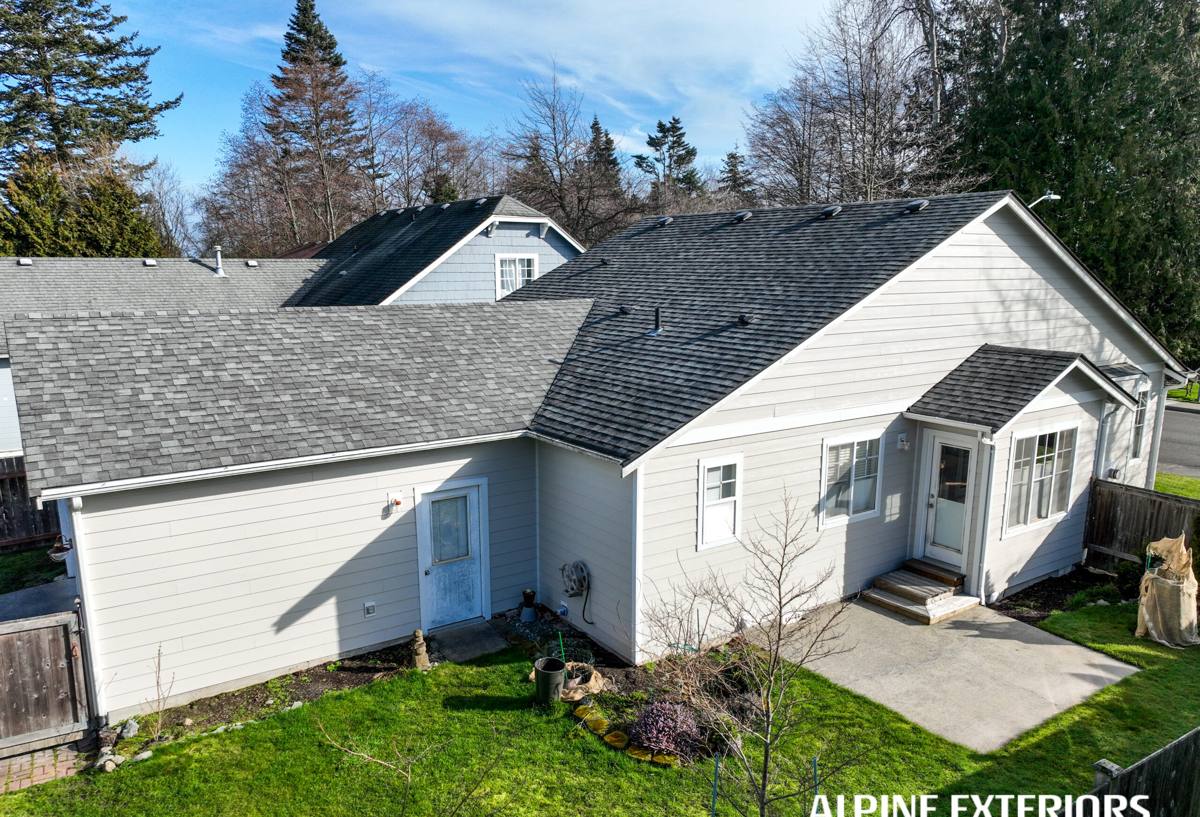
What the Climate Around Mountain Lake Does to a House
Salt Air Doesn't Stay at the Shoreline
People assume salt air is only a problem for waterfront homes. On an island the size of Orcas, moisture carrying salt moves further inland than most homeowners expect, especially with the wind patterns that funnel through the island's valleys and lake basins. Over years, that salt-laden moisture accelerates corrosion on metal fasteners, flashing, and hardware, and it works into any exterior material that isn't sealed and finished to hold up against it.
Driving Rain and a Long Wet Season
San Juan County gets a real wet season, and when weather rolls through, it often arrives sideways rather than straight down. Driving rain finds every gap in flashing, every seam in siding, every spot where caulk has started to fail. Homes near Mountain Lake, shaded by tree canopy, tend to dry out slower after these events than homes in open, sunny locations, which matters more than most people realize.
Moss Season Is Basically Half the Year
Shade plus moisture plus mild temperatures is exactly what moss, algae, and lichen need to thrive, and the wooded terrain around Mountain Lake gives them plenty of it. Moss holds moisture directly against a surface for extended periods. On roofing it can work under shingles and shorten their life. On siding, especially wood-based products, sustained moss and algae growth softens material, feeds rot, and creates a maintenance cycle that never really ends.
Why We Only Install James Hardie Fiber Cement Siding
We get asked fairly often why we don't offer vinyl, LP SmartSide, cedar, primed spruce, or other fiber cement brands like Cemplank or Allura. It's not that these products have no redeeming qualities — vinyl is inexpensive, wood has real visual warmth, and other fiber cement brands are chemically similar to Hardie's. But after years of doing exterior work in this specific climate, we standardized on James Hardie because it holds up to what Mountain Lake and the rest of San Juan County actually throw at a house, and the other options each carry trade-offs we're not willing to install and then stand behind.
Vinyl
Vinyl siding is affordable and low-maintenance in mild, dry climates, but it's a petroleum-based product that expands and contracts with temperature swings, and its seams and panel joints give moisture a path inward over time. In a shaded, damp environment like Mountain Lake, trapped moisture behind vinyl is a slow, hidden problem rather than an obvious one.
Wood — Cedar and Primed Spruce
Wood siding looks great and has real appeal for a wooded, cabin-style setting like Mountain Lake. But wood is organic, and moss, algae, and rot are organic problems. In a location with this much shade and moisture, wood siding demands a maintenance schedule most homeowners underestimate: regular refinishing, caulking, and vigilant moisture monitoring, or it degrades faster than the price tag suggested it would.
LP SmartSide
LP SmartSide is engineered wood strand siding, which means it's still wood at its core, just treated and resin-bonded. It performs reasonably well when installation is precise and maintenance stays current, but any breach in its factory coating exposes wood fiber to moisture, and in a climate with this much sustained dampness, that's a risk we don't think is worth taking on a client's behalf.
Cemplank and Allura
These are legitimate fiber cement competitors to Hardie, chemically similar in composition. Our reasons for choosing Hardie over them come down to manufacturing consistency, the depth of their engineered product lines for different climate zones, the strength and transferability of their warranty, and the long track record we've seen firsthand. It's less about a flaw in the competing products and more about which company we trust to back the material for decades.
What James Hardie Gets Right for This Location
James Hardie fiber cement is non-combustible, which matters on an island where wildfire risk and defensible space are real considerations for insurance and for safety. It's dimensionally stable, meaning it doesn't expand, contract, warp, or rot the way wood-based products do when humidity swings. Its ColorPlus factory finish is baked on under controlled conditions, which holds color and resists the kind of fading, chalking, and moisture intrusion that field-applied paint struggles with over time. And Hardie engineers specific product lines, including HZ5 formulations, for regions with heavy moisture and freeze-thaw exposure, which describes San Juan County reasonably well.
Siding, Roofing, Windows, and Decks — How They Work Together
A house is a system, not a collection of separate products, and nowhere is that more obvious than in a wet, shaded environment like Mountain Lake. Siding that's installed correctly but backed by failing roof flashing will still take on water. Windows with degraded seals will feed moisture into wall cavities no matter how good the siding is. Decks exposed to the same driving rain and moss pressure need materials and drainage details that match the rest of the house.
- Siding: James Hardie fiber cement installed with correct clearances, flashing, and fastening for this climate zone
- Roofing: Material and underlayment choices suited to sustained moisture and moss exposure, with attention to valleys and penetrations where leaks actually start
- Windows: Proper flashing integration with the siding envelope so window openings don't become the weak point in an otherwise solid exterior
- Decks: Framing, fastening, and drainage details built for a shaded, damp site, not a generic dry-climate spec
Cost Factors for Exterior Work in the Mountain Lake Area
Every project is different, and we don't quote sight unseen, but these are the factors that most affect scope and cost for homes in this area.
| Factor | Why It Matters Here |
|---|---|
| Access and site conditions | Wooded, sloped, or lake-adjacent lots can affect equipment staging and material delivery |
| Existing moisture damage | Homes with long-term moss or trapped moisture may need sheathing repair before new siding goes on |
| Roof-siding-window integration | Projects addressing flashing and drainage details cost more upfront but prevent repeat failures |
| Ferry and logistics | Material scheduling around ferry timing can affect project sequencing more than it would on the mainland |
| Existing siding removal | Tear-off complexity varies with what's currently on the house and its condition underneath |
Signs a Mountain Lake Home Needs Exterior Attention
- Persistent moss or algae growth on siding or roofing that returns shortly after cleaning
- Soft spots, discoloration, or bubbling on wood-based siding, especially on shaded walls
- Visible gaps, cracking, or peeling at siding seams and trim joints
- Water stains on interior walls or ceilings near window or roof lines
- Fastener corrosion or rust streaking on siding and trim
- Roof shingles that look prematurely worn, curled, or moss-covered
Why a Local Crew Matters Here
Working on Orcas Island isn't the same as working on the mainland, and any contractor who's spent real time here knows it. Material deliveries run on ferry schedules. Weather windows for exterior work can close fast. And the specific microclimate around a shaded, inland spot like Mountain Lake behaves differently than an open shoreline lot ten minutes away. A crew that lives and works in San Juan County plans around all of that as a matter of course, not as a surprise that shows up mid-project.
We've built our process, our material choices, and our installation details around what actually happens to homes in this county over time, not around a generic national playbook. That's the whole reason we narrowed our siding offering down to one product line instead of carrying five.
Get a Free, No-Pressure Estimate
If your home near Mountain Lake is showing signs of moisture damage, moss buildup, or aging siding, roofing, windows, or decking, we're glad to take a look and walk you through honest options — no pressure, no hard sell. Use the form below to request a free estimate and we'll get back to you to schedule a time.