 Orcas Island Siding
 Exterior Work Around Cascade Lake, Orcas Island
Cascade Lake sits inland from the saltwater shoreline that defines most of Orcas Island, but that distance doesn't buy a home much protection from what San Juan County's weather does to an exterior over time. Homes here still sit inside the marine air mass that moves across the whole island, they still catch the long, wet stretches of fall and winter rain, and the surrounding forest canopy still means shaded, damp siding for a good part of the year. We work this area regularly, and the pattern of wear we see on Cascade Lake homes is consistent enough that we can usually tell a homeowner what to expect on their exterior before we've even finished the walk-around.
This page is about what actually happens to siding, roofing, windows, and decks around Cascade Lake, and how our crew approaches the work when we're out here.
What the Cascade Lake Climate Does to a Home
Salt Air, Even Inland
Orcas Island doesn't have a spot that's fully sheltered from marine air. Cascade Lake is set back from the water, and tree cover offers some buffer, but salt-laden moisture still moves through on the wind, especially during winter storms. Over years, that salt content accelerates corrosion on exposed metal fasteners, flashing, and hardware, and it contributes to the slow breakdown of paint films and lower-grade siding products that aren't built to handle it.
Driving Rain and Wind-Driven Moisture
The Pacific Northwest's rain isn't just steady — a lot of it comes in sideways during winter fronts. Wind-driven rain finds every gap in flashing, every under-caulked seam, and every spot where siding wasn't lapped correctly. On a lake-adjacent property with more open exposure, that wind load can be higher than what you'd see tucked into a denser part of the island.
Moss, Shade, and a Long Damp Season
Cascade Lake's tree cover is part of what makes the area appealing, but it also means siding and roofing on the shaded, north-facing sides of a house can stay damp for weeks at a stretch during the wetter months. That's exactly the environment moss, algae, and mildew need to take hold. On wood-based siding products, sustained moisture plus organic growth is a slow but steady path toward rot, delamination, and paint failure.
Siding: Why We Only Install James Hardie Fiber Cement
We install James Hardie fiber cement siding exclusively. We don't install vinyl, LP SmartSide, Cemplank, Allura, primed spruce, or cedar, and that's a deliberate standard, not an oversight. Every one of those alternatives has a real place in the market, but none of them holds up the way we want an Orcas Island exterior to hold up given what this climate does to a house.
Where the Alternatives Fall Short Here
- Vinyl siding expands and contracts with temperature swings, can warp or crack in wind-driven weather, and offers no real fire resistance — a growing concern as wildfire risk gets more attention across the San Juans.
- LP SmartSide and other engineered wood products are wood-based at the core. Wood-based siding is more sensitive to sustained moisture exposure, and a shaded, damp site like Cascade Lake is close to a worst-case scenario for that kind of product.
- Cemplank and Allura are fiber cement competitors to Hardie, but they don't carry the same regional engineering, factory finish warranty structure, or track record we've come to trust after years of installs in this specific climate.
- Primed spruce and cedar are natural wood siding. They look great fresh, but they require an ongoing maintenance commitment — recoating, caulking, moisture monitoring — that most homeowners underestimate until the first signs of rot show up.
What Hardie Gets Right
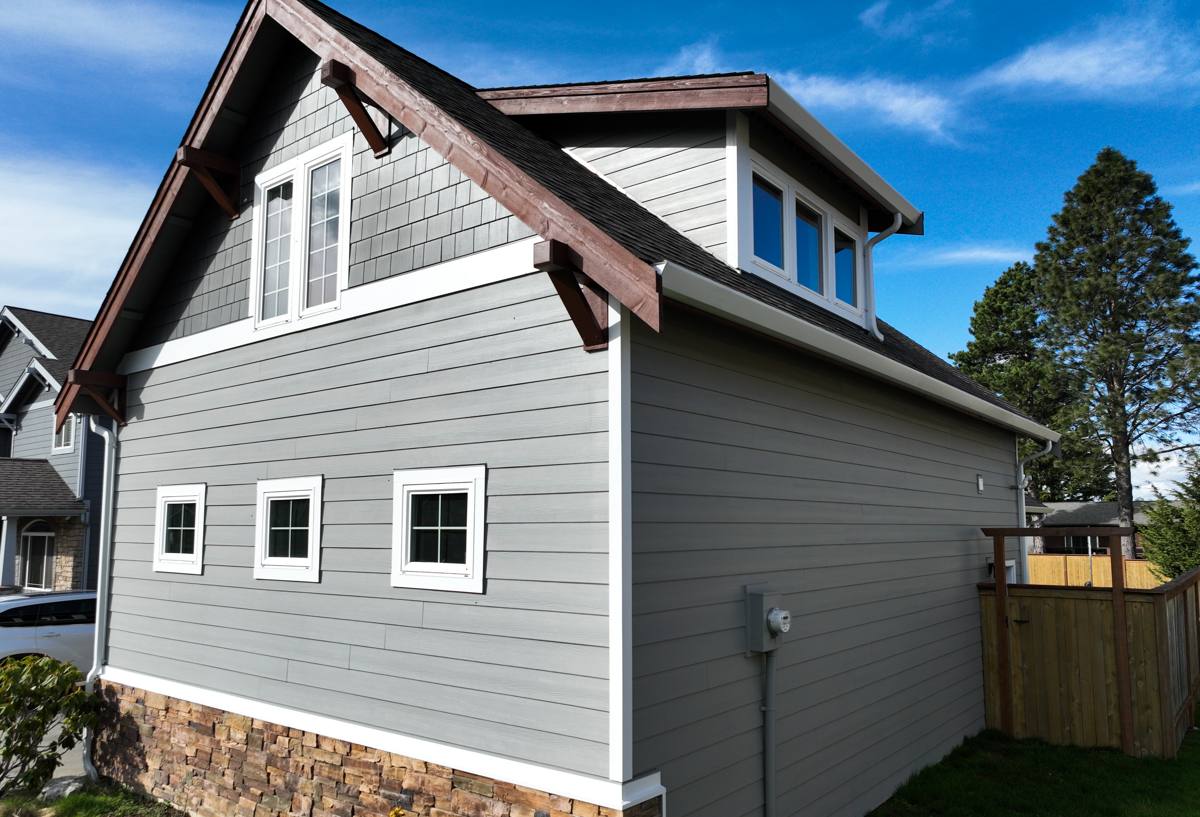
James Hardie fiber cement is non-combustible, which matters both for wildfire exposure and for standard home insurance considerations. It's engineered specifically for wet climates through Hardie's HZ10 product line, which is built for the Pacific Northwest's moisture and temperature profile. The ColorPlus factory finish is baked on under controlled conditions, which gives it a more consistent, longer-lasting color hold than field-applied paint on wood siding — and it comes with a real, transferable warranty backing that finish. When it's installed to spec, with correct flashing, clearances, and fastening, it's the most durable siding option we've found for what Cascade Lake homes actually face year to year.
How a Siding Job Works, Start to Finish
- On-site assessment. We walk the exterior, check for existing moisture damage, evaluate current siding condition, and look at drainage, grading, and tree cover around the house.
- Written estimate. You get a clear scope of work and pricing before anything is scheduled — no surprise add-ons mid-project.
- Prep and tear-off. Old siding comes off, and we inspect the sheathing and weather barrier underneath for hidden rot or damage before anything new goes up.
- Weather barrier and flashing. This step is where most siding failures actually originate if it's done wrong. Correct flashing at windows, doors, and roof intersections is non-negotiable.
- Hardie installation. Panels or lap siding go up per manufacturer spec — correct fastener pattern, clearances from grade and roofing, and joint treatment.
- Final walkthrough. We go over the finished work with you before calling the job done.
Roofing, Windows, and Decks Face the Same Climate
Roofing
The same moss and moisture pressure that affects siding hits roofing even harder, since a roof takes the brunt of standing water, needle and leaf litter from surrounding trees, and direct UV exposure in the summer months. Regular inspection catches small issues — lifted shingles, deteriorating flashing, moss buildup at valleys — before they turn into a leak.
Windows
Older or poorly flashed windows are a common source of water intrusion on wind-exposed sides of a house. Around Cascade Lake, where wind can move freely off the water and across open yards, window flashing integration with the siding system is critical — it's one of the most common failure points we find during siding tear-off.
Decks
Decks near Cascade Lake deal with constant damp shade in a lot of yards, which shortens the service life of untreated or poorly maintained decking. Proper ledger flashing, gapped board spacing for drainage, and material choice all matter more here than they would in a drier climate.
Cost Factors to Understand Before You Budget
| Factor | Why It Affects Cost |
|---|---|
| Home size and complexity | More corners, dormers, and roof intersections mean more flashing detail and labor time |
| Existing damage | Hidden rot found during tear-off adds sheathing repair before new siding can go on |
| Siding profile chosen | Lap, panel, and shingle-style Hardie products vary in material and install cost |
| Access and site conditions | Tree cover, slope, and staging space around lake-adjacent lots affect labor efficiency |
| Trim and detail work | Window and door trim, corner boards, and fascia detail add to scope |
We don't quote a job without seeing it. Anyone giving you a firm number over the phone for a Cascade Lake property, sight unseen, is guessing.
What to Ask Before You Hire an Exterior Contractor
- Are they licensed and insured to work in Washington State?
- Do they carry manufacturer certification for the specific siding product they're installing?
- Will they put the flashing and weather barrier details in writing, not just the finish material?
- Do they have experience with island logistics — material delivery, ferry scheduling, crew access?
- What does their warranty actually cover, and is it backed by the manufacturer or just the installer?
A crew that's unfamiliar with island scheduling can turn a straightforward siding job into a drawn-out one. Material deliveries have to be planned around ferry runs, and weather windows for exterior work are narrower here than on the mainland. A local crew that already accounts for that keeps a project moving instead of stalling out waiting on a barge.
Why a Local Crew Matters for This Job
Working on Orcas Island isn't the same as working in a mainland suburb. Every material order, every crew schedule, and every weather-dependent step has to account for ferry logistics and the island's own microclimates. A crew that works this island regularly knows which weeks of the year are realistic for tear-off and re-siding, how Cascade Lake's tree cover changes drying time compared to a more open lot, and what kind of flashing detail actually holds up here versus what looks fine on paper. That local knowledge shows up in the details — the ones you don't notice until five years later when the house next door is dealing with a moisture problem and yours isn't.
Maintenance That Actually Extends the Life of Your Exterior
Even the best siding and roofing system benefits from basic upkeep, especially in a damp, shaded environment like Cascade Lake. A short annual routine goes a long way:
- Clear gutters and downspouts before the fall rains start, since clogged gutters push water back toward siding and fascia.
- Trim back tree branches and brush that keep siding or roofing in constant shade and slow drying time.
- Rinse visible moss or algae growth off siding and roofing surfaces before it spreads or holds moisture against the material.
- Check window and door flashing and caulking for gaps once a year, particularly after a hard winter storm season.
- Walk the deck each spring to check for soft boards, loose fasteners, or ledger flashing issues.
None of this replaces a professional inspection, but it catches the small stuff before it becomes a bigger repair.
Ready When You Are
If you're weighing a siding replacement, a roof repair, new windows, or deck work on a Cascade Lake property, we're happy to come take a look and give you a straightforward, no-pressure estimate — no obligation, no hard sell, just an honest read on what your home needs.