 Orcas Island Siding
 Crow Valley and the Weather That Shapes a Home's Exterior
Crow Valley sits inland from the saltwater shoreline that wraps most of Orcas Island, but "inland" on an island in the Salish Sea still means salt-laden air, long wet winters, and a growing season for moss and algae that most mainland homeowners never have to think about. San Juan County's marine climate keeps summers mild and winters mild too, but it trades that comfort for months of low clouds, drizzle, and humidity that never quite lets a house dry out completely between storms.
That combination is hard on exterior building materials in a specific, predictable way. It's not one big storm that causes damage — it's the cumulative effect of hundreds of freeze-thaw-and-soak cycles a year, plus the biological growth that thrives in shade and moisture. Homes tucked into the valley's tree cover get less direct sun and wind to dry them out than homes right on the water, which paradoxically can mean more moss and mildew pressure, even with less direct salt exposure.
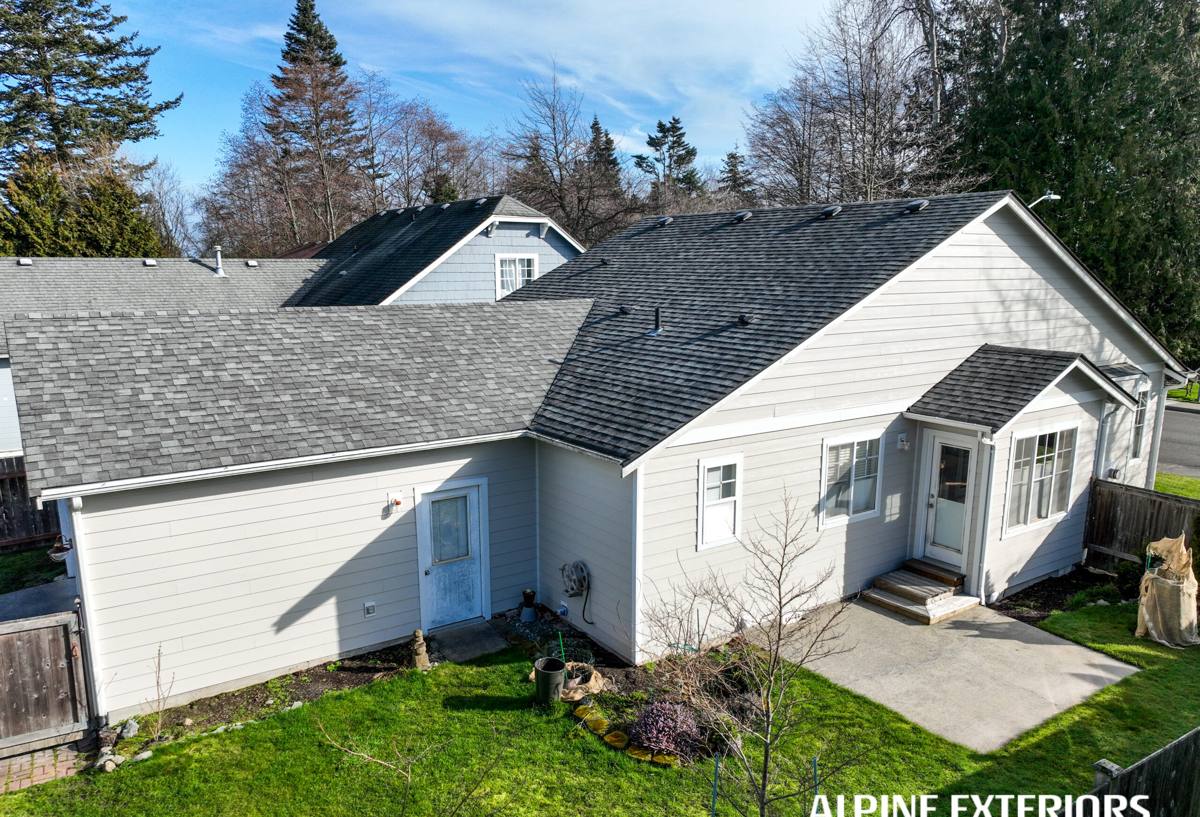
What Driving Rain and Moss Actually Do to a House
Moisture Intrusion
Wind-driven rain doesn't just fall on a wall — it gets pushed sideways into laps, seams, and fastener penetrations. Over years, siding materials that swell, wick water, or rely on paint film to stay sealed will eventually let moisture behind the cladding. Once that happens, the sheathing, framing, and insulation behind the siding are at risk, and that damage is invisible until it's expensive.
Moss and Algae
Shaded, north-facing walls and roof planes in Crow Valley can stay damp for days at a time in fall and winter. Moss doesn't just look bad — its root structures hold moisture against the surface it's growing on, and on roofing in particular it can work under shingle edges and shorten the roof's service life. Regular cleaning and material choices that resist growth make a real difference over a decade-plus timeline.
UV and Temperature Cycling
Summers here aren't brutal, but the swing between damp winter cold and drier, sun-exposed summer days still stresses paint film and any material prone to expansion and contraction. Factory-applied, baked-on finishes hold up to that cycling far better than field-applied paint on site-primed products.
Why We Standardized on James Hardie Fiber Cement
We install James Hardie siding exclusively — not vinyl, not LP SmartSide, not Cemplank or Allura, not primed cedar or spruce. That's a deliberate professional standard, not a sales preference, and it comes directly from what we see holding up (and not holding up) in this climate over time.
Fiber cement is non-combustible and dimensionally stable — it doesn't absorb and release moisture the way wood-based products do, which matters enormously in a climate where the siding rarely gets a long, uninterrupted dry stretch. James Hardie's ColorPlus finish is baked on in a factory process, not brushed or sprayed on site, which gives it far better resistance to fading, chipping, and moss-friendly surface texture than field-applied paint. Hardie also engineers regional product lines (HZ5 for this kind of climate) specifically for high-moisture, temperature-variable regions like the Pacific Northwest — that engineering is the difference between a product that's merely acceptable here and one that's actually built for it.
None of this means other products are junk — LP SmartSide and vinyl both have legitimate uses and price points, and plenty of installers do good work with them. Our position is narrower: for the moisture load and moss pressure a Crow Valley home takes on year after year, we don't think the trade-offs of wood-based composite siding or vinyl's seams and expansion joints are worth it when a better-engineered option exists. We'd rather install one product very well than spread ourselves across several.
It's Not Just Siding — The Whole Exterior Envelope Matters
Siding doesn't work in isolation. On an island property, roofing, windows, and decking all take the same weather load, and problems in one area tend to show up as damage in another — a failing roof edge can send water behind siding, a poorly flashed window can rot the framing around it. We handle all four (siding, roofing, windows, and decks) so the whole envelope gets looked at as one system rather than four separate contractors who never talk to each other.
Roofing
Roof planes shaded by fir and cedar cover are the first place moss takes hold on most Crow Valley properties. Proper ventilation, flashing, and material choice all affect how long a roof stays ahead of that growth.
Windows
Window flashing and sealant details matter more here than in a dry climate — a small gap that would go unnoticed for years elsewhere becomes a moisture path much faster under sustained wind-driven rain.
Decks
Exterior decking faces the same wet-dry cycling and moss pressure as siding, plus foot traffic and standing water at fastener points. Drainage detailing at ledger boards and joists is often the difference between a deck that lasts and one that doesn't.
Why a Local Crew Matters on Orcas Island
Working on an island changes how a project has to be planned. Material and equipment logistics run through the ferry schedule, weather windows for exterior work are narrower than on the mainland, and a crew that doesn't live and work here regularly doesn't have the same feel for how a specific property — its tree cover, its exposure, its drainage — behaves through a full year of San Juan County weather.
A local crew also means someone who can respond if a punch-list item comes up after the job, without a ferry-and-drive day tacked onto a simple callback. We plan material deliveries and crew scheduling around the ferry system as a matter of course, not as an afterthought that blows up a timeline.
What a Siding Project Looks Like, Start to Finish
- Walkthrough and assessment — we look at existing siding condition, moisture damage, trim, and flashing details, not just the visible surface.
- Scope and estimate — a written estimate covering material, labor, and any repair work uncovered once old siding comes off.
- Material order and ferry logistics — James Hardie product is ordered and scheduled to arrive with the crew, timed around ferry availability.
- Tear-off and inspection — removing old siding is when hidden moisture or rot damage gets found and addressed before new siding goes on.
- Weather barrier and flashing — correct house wrap, flashing, and drainage plane installation, which matters as much as the siding itself in this climate.
- Hardie installation to manufacturer spec — proper fastening, clearances, and caulking per James Hardie's published installation requirements, which is what keeps the warranty valid.
- Final walkthrough — checking trim, caulking, and paint lines before calling the job done.
James Hardie Compared to Other Siding Options
| Factor | James Hardie Fiber Cement | Vinyl | Wood-Based Composite (e.g. LP SmartSide) |
|---|---|---|---|
| Moisture behavior | Dimensionally stable, doesn't swell or rot | Doesn't rot, but seams and expansion joints can let water track behind | Engineered wood core, vulnerable if edges or cuts aren't sealed |
| Finish durability | Factory-baked ColorPlus finish resists fading and chipping | Color is through-body but can fade and become brittle over time | Typically field- or shop-primed, needs repainting on a maintenance cycle |
| Fire performance | Non-combustible | Combustible plastic material | Combustible, wood-based |
| Moss/algae resistance | Smooth factory finish resists surface growth better than porous or textured surfaces | Can develop mildew film in shaded, damp areas | Wood grain texture can hold moisture and organic growth |
| Typical warranty | Long, transferable manufacturer warranty on the product | Varies widely by manufacturer and grade | Varies, often shorter and more exclusion-heavy on moisture damage |
What Drives Cost on a Crow Valley Project
| Cost Factor | Why It Matters Here |
|---|---|
| Home size and wall complexity | More corners, gables, and trim detail mean more labor and cut waste |
| Existing siding removal and repair | Moisture-damaged sheathing found during tear-off adds scope |
| Access and site conditions | Steep driveways, tree cover, and limited staging area affect crew efficiency |
| Material delivery logistics | Ferry scheduling can affect project timeline, though not typically total material cost |
| Hardie product line and finish | Panel vs. lap siding, and standard vs. premium ColorPlus finishes, price differently |
We give written estimates that break out these factors so a homeowner can see where the number actually comes from, rather than a single lump figure.
Maintaining Your Exterior Once It's Done
- Rinse siding and trim annually to keep pollen, algae film, and airborne salt from building up, especially on shaded walls.
- Keep gutters clear so overflow doesn't run down the face of the siding repeatedly in one spot.
- Trim back tree cover that keeps a wall shaded and damp longer than necessary after rain.
- Re-caulk trim joints and penetrations if you notice gaps opening up, rather than waiting for a leak to show up inside.
- Have roofing checked for moss before it spreads onto adjoining siding or trim.
- Walk the deck each spring and check for soft spots, ledger board staining, or loose fasteners.
A Local Standard, Not a Sales Pitch
We didn't standardize on James Hardie because it's the only product that can technically be installed on Orcas Island — plenty of houses here wear vinyl, composite, and painted wood siding, and some of it is installed well. We standardized on it because after years of exterior work in this specific climate, it's the material we trust to hold up to salt air, driving rain, and a moss season that doesn't really end, with the least amount of long-term maintenance burden for the homeowner. That's a judgment call, and we're happy to explain the reasoning behind it, or the reasoning behind any recommendation we make about your specific home.
If you're weighing a siding, roofing, window, or deck project for a Crow Valley property, we're glad to walk the exterior with you, point out what the current materials are doing well or poorly, and put together a free, no-pressure estimate.