 Orcas Island Siding
 Exterior Contracting for Olga, Orcas Island
Olga sits on the quieter, eastern side of Orcas Island, tucked between wooded hillsides and the saltwater of the Salish Sea. It's a small community, and that's part of what makes it a distinct place to own a home: properties here range from modest cabins tucked into the trees to waterfront homes exposed to open water and wind. What they share is a climate that never really lets up on a building's exterior. San Juan County weather is milder than the mainland in temperature, but it is relentless in moisture — and moisture, not cold, is what wears out siding, trim, roofing, and decking on Orcas Island.
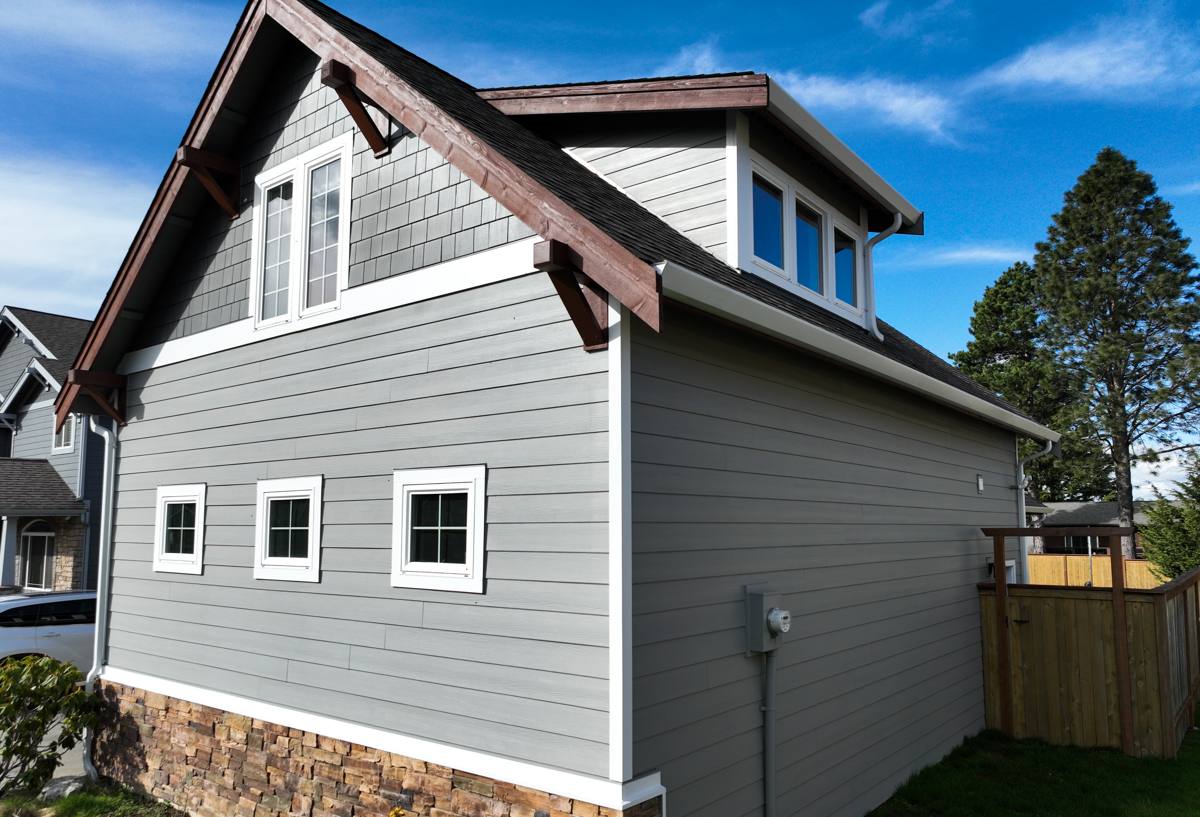
We're a local exterior contractor working across Orcas Island, including Olga, Eastsound, Deer Harbor, and the rest of the island. We install siding, roofing, windows, and decks, and we've built our siding program around a single product line: James Hardie fiber cement. This page walks through what Olga homes typically face and how we approach exterior work here.
What the Olga Climate Does to a House
Salt Air
Homes closer to the water — and even many set back from it — deal with salt-laden air carried in on marine wind. Salt accelerates corrosion on fasteners, flashing, and any exposed metal, and it can degrade certain paints and coatings faster than inland exposure would. Siding and trim materials that aren't engineered for coastal exposure tend to show it first at seams, fastener heads, and lower courses near grade.
Driving Rain
Orcas Island gets weather systems that come in sideways off the water, not just straight down. Driving rain finds every gap in flawed flashing, every under-caulked joint, and every seam where two dissimilar materials meet. A siding system's water-management details — how it's flashed, lapped, and sealed — matter more here than the material itself in a lot of failure cases we see.
Moss and Shade
Between the tree cover common around Olga and the long stretch of wet months, moss and algae have a long growing season on this island. North-facing walls, areas under overhangs, and anything shaded by fir and cedar canopy stay damp longer after a storm, which gives organic growth more time to establish. Siding that holds moisture at the surface, or that has seams and joints where moss can get a foothold, ages faster and needs more maintenance.
Why We Only Install James Hardie Siding
We get asked why we don't offer vinyl, LP SmartSide, cedar, primed spruce, or other fiber cement brands like Cemplank or Allura. The honest answer is that after years of installing and repairing exterior products in this climate, we standardized on one system that holds up consistently to salt air, driving rain, and heavy shade without demanding constant upkeep from the homeowner.
| Material | Common Trade-Off in This Climate |
|---|---|
| Vinyl siding | Can warp or become brittle with temperature swings and UV exposure; seams and J-channels give moisture a path behind the panel |
| Cedar siding | Beautiful but needs regular refinishing, and prolonged dampness under shade encourages rot and moss unless maintained closely |
| Primed spruce / wood composites | Primer is a starting point, not a finish coat; field-applied paint systems fail faster in salt air and constant moisture cycling |
| LP SmartSide | Engineered wood strand product — factory-treated, but still an organic wood substrate that depends on edge sealing and caulking being done exactly right |
| James Hardie fiber cement | Non-combustible, dimensionally stable, factory-applied ColorPlus finish, engineered HZ product lines for specific climate zones |
None of the alternatives are junk products — cedar in particular has real appeal, and we understand the pull of it. But we install exteriors that are meant to be lived with for decades, not repainted or partially replaced every several years. James Hardie's fiber cement is cement, sand, and cellulose fiber — it doesn't rot, it isn't a food source for moss the way wood is, and it resists the swelling and shrinking cycles that eventually crack paint and open seams on wood-based products. The factory-baked ColorPlus finish also matters in salt air specifically, since it's more consistent and durable than most field-applied paint.
The James Hardie System We Install
James Hardie makes climate-engineered "HZ5" and similar product lines specifically formulated for regions with humidity, salt exposure, and freeze-thaw variability — which describes the San Juan Islands well. We install:
- Lap siding in a range of widths and textures, smooth or cedar-grain
- Board and batten for a more vertical, modern or farmhouse look
- Hardie panel systems for accent walls or full elevations
- Trim boards that match the siding system for a consistent, integrated exterior
Color is factory-applied through ColorPlus Technology, which is baked on and backed by its own finish warranty — a meaningful advantage over field-painted materials, especially in a marine environment where paint adhesion and UV/salt exposure are constant stressors.
Installation Is Where Siding Actually Fails
Most siding failures we're called out to repair on Orcas Island aren't material failures — they're installation failures. Fiber cement performs exactly as well as the flashing, fastening, and water-management detailing behind it. On a house exposed to driving rain off the water, the details that matter most include:
- Proper weather-resistive barrier and rain-screen gap where the wall assembly calls for it
- Correct fastener placement and type — Hardie is specific about this, and shortcuts show up as cracking or nail pops over time
- Flashing at every horizontal transition: window heads, roof-to-wall intersections, deck ledgers, and butt joints
- Proper clearance from grade, roofing, and decking surfaces so siding isn't sitting in standing water or snow load
- Caulking and sealant used only where Hardie's specifications actually call for it — over-caulking traps moisture just as badly as under-caulking lets it in
This is also why we don't subcontract siding out to whoever's available — our crews install fiber cement to manufacturer spec because it's the only way the material lives up to what it's capable of, and because a mis-installed product can void the warranty regardless of the material's quality.
Roofing, Windows, and Decks in the Same Climate
Siding doesn't work in isolation — it's one part of a building envelope that includes the roof, window flashing, and any attached decks. On Olga properties we often find that a siding issue traces back to a roof valley or deck ledger that isn't shedding water correctly, or a window that was never properly flashed into the wall assembly. Because we handle roofing, windows, and decks as well as siding, we can look at the whole exterior system rather than patching one component and leaving a moisture path open somewhere else. That matters a lot on the shaded, moss-prone north and east walls that are common on wooded Olga lots.
Why a Local Crew Matters Here
Orcas Island isn't a place where a mainland contractor can easily run a crew back and forth for a multi-week siding job — ferry schedules, material delivery timing, and weather windows all factor into how a project actually gets sequenced. A crew that works this island regularly understands how to plan around ferry logistics, knows which weeks tend to have the driest stretches for tear-off and install, and isn't guessing at how San Juan County's coastal exposure behaves on a given lot. That local familiarity translates into fewer surprises and a project that moves at a realistic pace instead of stalling out mid-tear-off.
What to Check Before Hiring Anyone for Exterior Work
- Are they licensed and insured to work in Washington State, with proof available on request?
- Do they have manufacturer-specific training or certification for the siding system they're proposing?
- Will they detail the flashing and water-management plan, not just the visible siding material?
- Do they work regularly on the islands, and do they understand ferry-based material and scheduling logistics?
- Is the warranty — both material and labor — written down, and does it transfer if you sell the home?
Planning a Siding Project in Olga
Every project starts with actually looking at the house — how it's oriented to weather, how much shade and moisture exposure the walls get, what condition the existing siding and flashing are in, and whether roofing, windows, or a deck need attention as part of the same scope. From there we can talk through James Hardie product options, color, and a realistic timeline that accounts for the island's weather patterns and ferry logistics.
If your Olga home is dealing with worn siding, persistent moss, or you're planning ahead for a full exterior refresh, we're happy to come take a look and walk the property with you. Reach out for a free, no-pressure estimate — there's a form below to get started.