 Orcas Island Siding
 Why Siding Cost Questions Don't Have a One-Line Answer
Every homeowner on Orcas Island asks some version of the same question: what's this going to cost? It's a fair question, and it deserves an honest answer instead of a made-up number pulled from a national average that has nothing to do with San Juan County. The truth is that siding replacement cost is the sum of several separate decisions — material, home complexity, what's hiding under the old siding, and how hard it is to get crews and materials to your specific property. Understanding each piece lets you read a quote intelligently instead of just comparing a bottom-line total.
This page walks through the real cost drivers in the order they usually matter, with honest ranges instead of invented figures, so you can ask better questions when you sit down with a contractor.
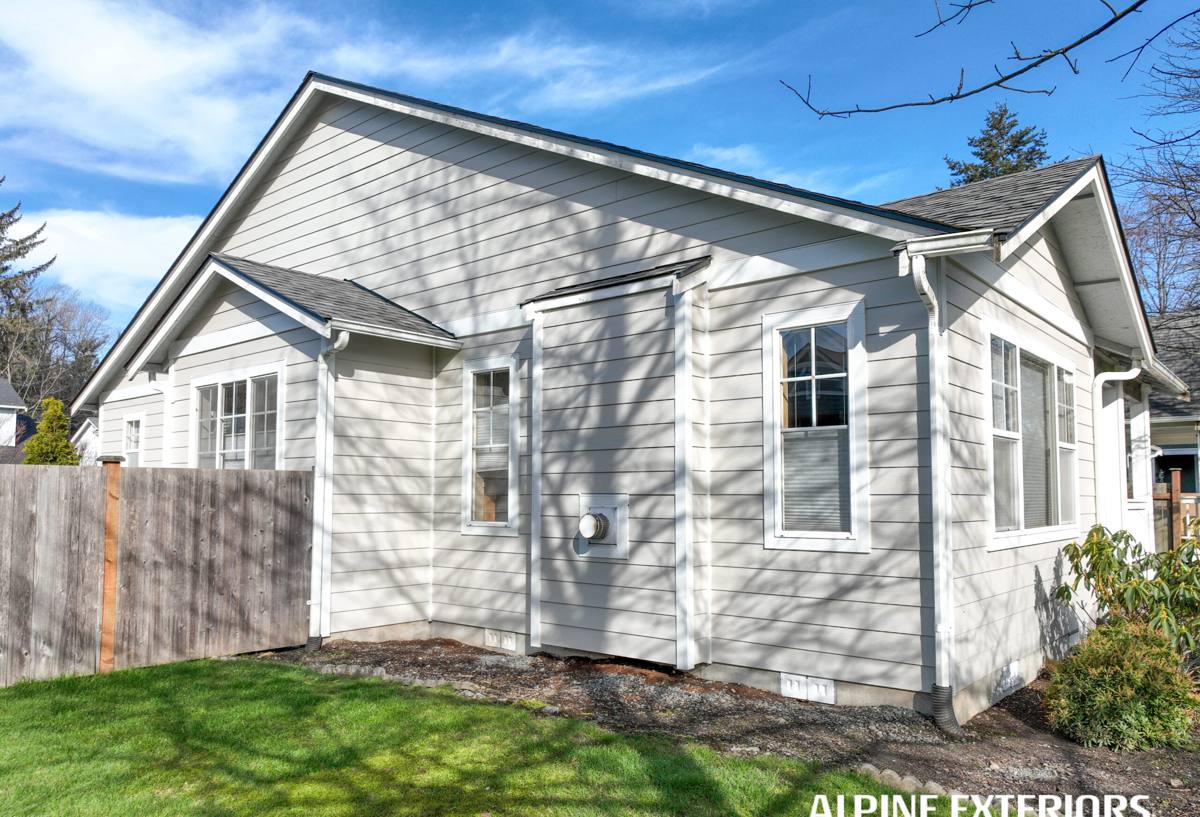
Material Choice: The Single Biggest Cost Factor
The siding product you choose affects not just the upfront price but how much you'll spend over the next 20-30 years. Vinyl is the cheapest material to buy and install. Engineered wood products like LP SmartSide sit in the middle. Cedar and fiber cement both cost more up front, but for very different reasons — cedar because of the material and finishing labor, fiber cement because it's a denser, more precisely installed product that lasts longer and holds paint or factory finish far better.
We install James Hardie fiber cement exclusively, so we're not a neutral party here — but the table below reflects how these materials actually behave over time, not just their sticker price.
| Material | Typical Lifespan | Maintenance Burden | Behavior in Salt Air & Moisture |
|---|---|---|---|
| Vinyl | 15-25 years | Low, but fades and cracks with UV/temperature swings | Doesn't rot, but seams and edges trap moisture; can warp |
| LP SmartSide (engineered wood) | 20-30 years with upkeep | Moderate — needs repainting and caulk maintenance | Wood-based core is vulnerable if moisture gets past the finish |
| Cedar | 20-30 years with diligent upkeep | High — regular staining/sealing, especially in wet climates | Absorbs moisture, prone to cupping and rot without upkeep |
| James Hardie fiber cement | 30-50+ years | Low — factory ColorPlus finish holds color for years | Non-combustible, dimensionally stable, engineered for wet/coastal climates |
Material alone can swing a project's total cost by thousands of dollars, but the bigger long-term number is cost per year of service. A cheaper material that needs repainting every 5-7 years, or partial replacement after 15, often ends up costing more than a pricier material installed once and left alone.
Home Size, Shape, and Complexity
Square footage is the obvious factor, but shape matters just as much. A simple rectangular home with few corners installs faster and cheaper per square foot than a home with dormers, bump-outs, multiple gables, or a wraparound porch. Every inside corner, window trim detail, and roofline transition adds cutting, fitting, and flashing work that a flat wall doesn't require.
Two homes of identical square footage can have meaningfully different labor costs simply because one has twice the corners and trim details of the other. When you get quotes, ask the contractor to walk you through which parts of your home's shape are driving labor time — a good contractor will show you, not just quote a lump sum.
Story Height and Access
Two-story and three-story sections require scaffolding or lift equipment, which adds both rental cost and labor time compared to single-story walls a crew can work from ladders or simple staging.
What's Underneath: Tear-Off and Hidden Damage
You can't accurately price a siding job without knowing what's behind the existing siding, and that's genuinely unknowable until it's opened up. Old siding sometimes hides rotted sheathing, water-damaged framing, or failed house wrap — problems that are common in older homes on the island that have weathered decades of wet winters.
A contractor who gives you one number before ever removing a section of siding is guessing. The more honest approach is a base quote for the siding itself plus a disclosed per-square-foot or per-hour rate for any rot repair discovered once the walls are opened. This protects you from being nickel-and-dimed and protects the contractor from eating the cost of damage nobody could have seen in advance.
The Orcas Island Climate Tax
Building here isn't the same as building in a dry inland climate, and pricing should reflect that. A few realities specific to this area push cost and material decisions:
- Salt air: Homes closer to the shoreline see accelerated wear on fasteners, trim, and lower-quality finishes — it doesn't destroy good materials, but it punishes weak ones faster.
- Driving rain: Wind-driven rain off the water pushes moisture into joints and laps that would stay dry in a calmer climate, which makes correct flashing and installation detail more important than almost anywhere else in the state.
- Long moss season: Shaded, north-facing walls under tree cover stay damp for months at a time, which is exactly the condition that rots wood-based siding and feeds mildew on surfaces that aren't engineered to shed moisture.
None of this means siding fails here — it means the margin for error is smaller. A product and installation that would perform fine in a dry climate can underperform on Orcas Island, and that reality should factor into your material decision as much as your budget does.
Island Access and Logistics
This is a cost factor mainland homeowners never have to think about. Materials for an Orcas Island project have to be barged or ferried over, and crews need to schedule around ferry timetables rather than just driving to the job site. Weather delays that would be a minor inconvenience on the mainland can bump a barge reservation by a day or more. A contractor who works this island regularly has already built these realities into their scheduling and logistics — one who doesn't may pass along surprise costs or delays partway through your project.
This is also part of why buying siding in bulk-material quantities that ship efficiently, and scheduling deliveries around weather windows, matters more here than in a lot of other markets.
Labor and Installation Quality
Fiber cement in particular is installation-sensitive — clearances, fastening patterns, and flashing details all affect how the product performs over decades, not just how it looks on install day. A crew with real fiber cement experience costs more per hour than a general handyman crew, but the gap shows up in the next 20 years, not the invoice you get this month. Ask any contractor quoting your project how many fiber cement jobs they've completed and whether their installers are manufacturer-trained — it's a fair, direct question and a good contractor will answer it plainly.
Warranty and Long-Term Value
Price comparisons that stop at the upfront number miss half the story. A material backed by a strong, transferable manufacturer warranty protects you and future buyers of the home; a material with a thin or prorated warranty leaves you exposed if something goes wrong in year eight. When you're comparing quotes, ask what's actually covered, for how long, and whether it transfers if you sell the home — those answers matter as much as the bottom-line price.
A Practical Checklist Before You Choose a Contractor
- Get an itemized quote, not just a lump sum — material, labor, tear-off, and disposal broken out separately
- Ask what happens if rot or water damage is found once old siding comes off, and get that policy in writing
- Confirm the crew's specific experience with the material you're choosing, not just siding in general
- Ask about manufacturer warranty terms and whether they're transferable to a future owner
- Discuss how the project timeline accounts for ferry schedules, weather, and material delivery
- Walk the exterior together and ask which architectural features are driving labor cost
- Get references from other island projects, not just mainland work
What a Fair Estimate Looks Like
A trustworthy estimate for your San Juan County home should separate material cost, labor, tear-off/disposal, and a clear policy for hidden damage — and it should explain the reasoning behind the material recommendation, not just the price. If a contractor can't explain why they're recommending a particular product for your specific home, walls, and exposure, that's worth asking more questions about before you sign anything.
If you'd like an honest, no-pressure look at what your specific home would need — including which walls face the weather, what's likely underneath your current siding, and a real itemized estimate — we're happy to walk the property with you and talk through it. There's no obligation, and no pressure to choose a particular product before you've heard the reasoning.