 Orcas Island Siding
 What ColorPlus Technology Actually Is
ColorPlus is James Hardie's factory-applied finish system. Instead of leaving siding, trim, and shingles primed and waiting for a painter, Hardie bakes on multiple coats of color at the factory using a controlled process, then cures the finish before the boards ever leave the plant. The result is a harder, more consistent finish than most contractors can achieve with a brush, roller, or sprayer on a jobsite — especially a jobsite on Orcas Island, where wind, humidity, and unpredictable weather windows make outdoor painting conditions inconsistent for much of the year.
The point of this page isn't to sell you on color trends. It's to explain what you're actually buying when you choose a ColorPlus color, how that finish behaves in a San Juan County marine climate, and what to think through before you commit to a color for a home that may sit on siding for decades.
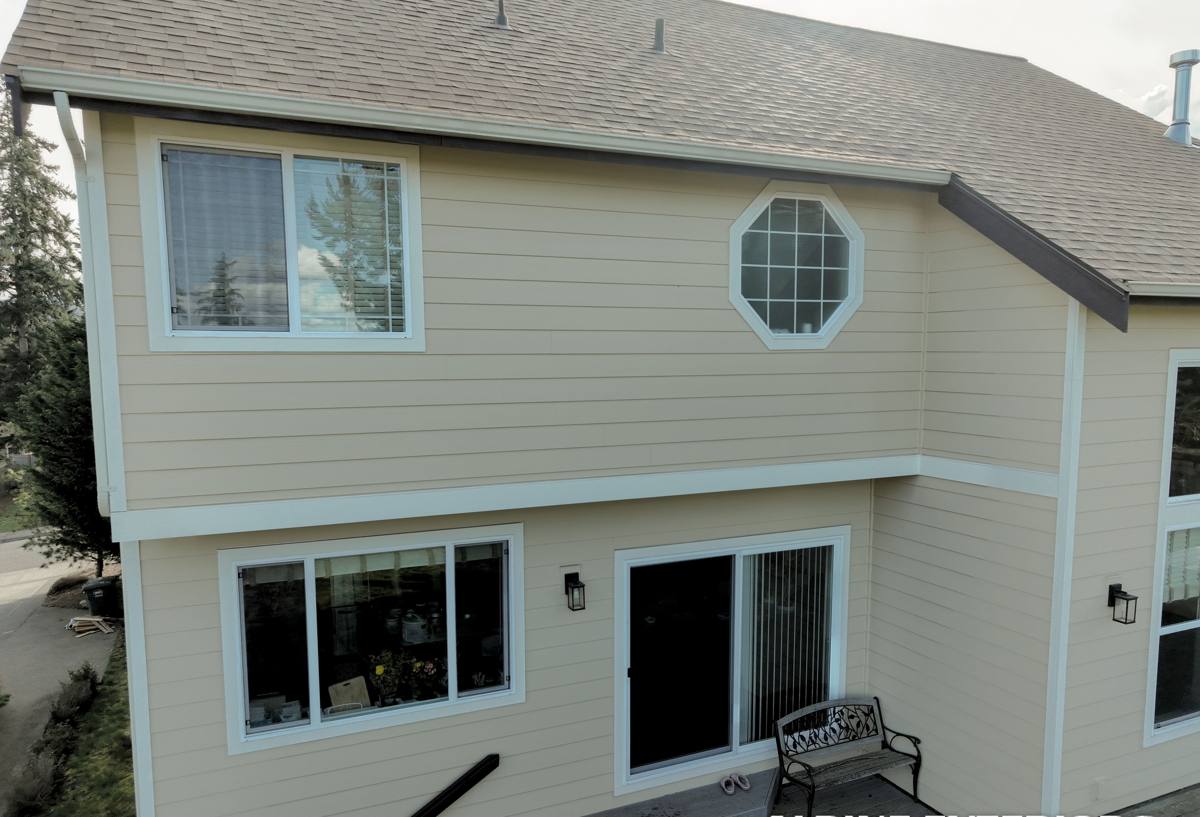
How ColorPlus Differs From Field-Applied Paint
Field-applied paint — whether on fiber cement, primed spruce trim, or cedar — depends on the weather the day it's sprayed, the skill of the crew, and how well the substrate was prepped. A factory finish removes most of those variables. Hardie's ColorPlus process applies color in a climate-controlled setting, which means uniform coverage on every board, consistent color lot to lot, and a cure that a jobsite simply can't replicate.
That matters here specifically. Orcas Island sees driving rain off the Sound, salt-laden air, and a long stretch of the year where moss and mildew have the moisture and shade they need to take hold on north-facing walls and anything tucked under fir cover. A finish that was fully cured before it ever saw island weather has a real advantage over paint that had to dry and cure on the wall.
What "13-Year Finish Warranty" Actually Covers
ColorPlus-finished products carry a separate finish warranty from the substrate warranty on the fiber cement itself. In plain terms: the board material and the paint on top of it are two different warranty claims, and ColorPlus is engineered so both are backed by the manufacturer rather than left to a contractor's paint job. Ask any installer to show you the actual warranty document rather than describing it from memory — terms and transferability details matter more than the headline number.
The ColorPlus Palette: What's Actually Available
Hardie doesn't offer unlimited custom color at the factory level — that's the trade-off for the durability. The ColorPlus palette is a curated collection, generally organized around a few families:
- Neutrals and whites — the most common choice on the island, forgiving against evergreen backdrops and gray winter skies.
- Warm earth tones — browns and tans that read well against fir, madrona, and stone.
- Cool grays and blue-grays — popular on waterfront and view homes, they tend to hold their tone well under overcast Pacific Northwest light.
- Deeper accent colors — near-blacks, deep greens, and blues typically reserved for trim, shutters, or accent walls rather than full-field siding.
Within those families you'll find well-known ColorPlus names like Arctic White, Iron Gray, Timber Bark, Boothbay Blue, and Mountain Sage — but the exact lineup, and which products each color is offered on, changes over time and by product line. Don't shop from an old brochure; confirm current availability and order actual physical samples before you decide anything.
Matching Across Product Lines
A full exterior rarely uses one product. HardiePlank lap siding on the field, HardieShingle or HardiePanel for accent gables, and HardieTrim boards around windows and corners all need to read as one coordinated system, not three slightly different shades. ColorPlus colors are engineered to match across these product lines, which is one of the real practical advantages over sourcing trim from one supplier and siding from another and hoping a painter can bridge the gap on site.
Why the Finish Matters More in This Climate Than Most
Salt air is corrosive to more than metal — it accelerates the breakdown of lower-grade paint films, and it shows up fast as chalking and fading on anything facing open water or exposed to prevailing wind. Combine that with driving rain that drives moisture into any seam or hairline crack in a field-applied finish, and you get a maintenance cycle that's shorter than most homeowners expect when they first move to the island.
Then there's moss. San Juan County's wet season is long, and shaded, north-facing walls under tree cover stay damp for extended stretches. A cured factory finish resists moisture intrusion at the surface far better than a paint film applied on-site, which reduces (though doesn't eliminate — nothing does) the conditions moss and mildew need to get a foothold in the finish itself.
UV and Fade Behavior
Even on cloudy days, UV exposure on the water side of the island is real, and it's uneven — a south or west elevation will fade faster than a shaded north wall on almost any exterior finish. ColorPlus is formulated to resist UV fade better than typical field-applied acrylic paints, which matters most on homes with a lot of unbroken wall facing the sun. It's not immune to fading over decades, but the fade is slower and more uniform than what you'll typically see on painted wood siding.
ColorPlus vs. Painting the Siding Yourself Later
| Factor | ColorPlus (Factory Finish) | Field-Painted (Later, by You or a Painter) |
|---|---|---|
| Finish consistency | Uniform, cured under controlled conditions | Depends on weather, prep, and applicator skill |
| Warranty | Separate factory finish warranty | Typically only the paint manufacturer's product warranty, if any |
| Repaint interval (typical) | Often stretches well past a decade before repaint is needed | Shorter cycles, especially on salt-exposed elevations |
| Color matching across products | Engineered to match trim, panel, and shingle lines | Matching relies on the painter mixing and applying consistently |
| Upfront cost | Built into the material cost | Lower material cost, added labor cost later |
| Custom color | Limited to the curated palette | Any color, any sheen |
If a homeowner wants a genuinely custom color outside the ColorPlus palette, primed Hardie board can be field-painted — that's a legitimate option. Just go in knowing you're trading the factory warranty and cure quality for color flexibility, and that a repaint cycle on this island tends to arrive sooner than people expect.
Choosing a Color for an Orcas Island Property
A few practical things worth thinking through before picking:
- Light conditions on your actual site. A color that looks right in a showroom or on a small sample chip can read very differently under the gray, diffused light common here most of the year versus direct summer sun.
- Elevation exposure. If your home faces open water or takes the brunt of southwest weather, that elevation will weather differently than a sheltered north wall — a large sample viewed on the actual wall, at different times of day, tells you more than a chip.
- Neighborhood and covenant restrictions. Some developments and properties on Orcas Island fall under design review or covenant guidelines that restrict exterior colors or require approval. Check your CC&Rs or your association before you order material, not after.
- Long-term maintenance appetite. Very dark colors show dust, pollen, and moss growth differently than mid-tone neutrals — worth weighing against how often you're realistically going to wash the exterior.
Ordering and Viewing Samples
Never choose a ColorPlus color from a printed brochure or a screen. Order actual sample boards, and look at them against your home's roofline, stone, and trim in real daylight, ideally across a couple of different days given how much the light shifts here. A color that reads warm and inviting on a sunny afternoon can look flat and cold under a January overcast sky.
Maintenance: What Owning ColorPlus Siding Looks Like
ColorPlus siding isn't maintenance-free, but the maintenance is lighter than painted wood or field-painted fiber cement. A periodic gentle wash — garden hose and soft brush, not a pressure washer aimed directly at seams — handles most salt residue, pollen, and surface grime. Moss and mildew on shaded walls should be addressed promptly with a mild cleaning solution rather than left to establish, regardless of what siding you have. Caulking at trim joints and butt seams should be inspected periodically, since caulk failure — not the ColorPlus finish itself — is the most common source of moisture problems on any fiber cement installation.
Touch-Up and Repair
Hardie makes touch-up products formulated to match ColorPlus colors for minor scuffs or nail-head touch-ups. For anything beyond a small cosmetic mark — a cracked board, storm damage, an area that needs to be reworked — replacement with matched material is the right call rather than trying to blend a large repair by hand.
Before You Commit to a Color
- Confirm which ColorPlus colors are currently offered on the specific products you're using (plank, panel, shingle, trim) — availability isn't universal across every line.
- Get physical sample boards, not chips, and view them on-site in different light.
- Ask your installer for the actual finish warranty document, not a verbal summary.
- Check any HOA, covenant, or county design guidelines that might apply to your property before ordering.
- Think through elevation exposure — water-facing walls, shaded north walls, and sun-heavy south walls will all age differently even in the same color.
- Decide up front whether color flexibility (field-painted primed board) is worth giving up the factory warranty and cure quality.
If you're weighing colors for a new install or a re-side on Orcas Island, we're happy to bring actual ColorPlus samples out to your property, walk the elevations with you, and talk through what will hold up best given your site's sun and weather exposure. Reach out for a free, no-pressure estimate — there's no obligation, and it's the best way to see real color against your actual home before you decide anything.