 Orcas Island Siding
 Living on Orcas Island's East Side: What Doe Bay Homes Face
Doe Bay sits on the quieter, more rural side of Orcas Island, where wooded lots run down to rocky shoreline and homes are spread out rather than packed in. That setting is a big part of why people live there, but it also means the exterior of a house is doing real work every day. Between saltwater exposure, wind off the water, deep tree shade, and a wet season that stretches across most of the year, San Juan County's east-facing island properties tend to show weathering faster than homes further inland or on the mainland. We work throughout the county and see the same pattern repeat on Doe Bay homes: siding that looks fine from the road but is failing at the seams, roofs holding moss in the shaded valleys, and decks with soft spots where water has been sitting against wood for years.
None of that is unusual for this part of the island — it's just what marine, forested climates do to a house over time. The fix isn't complicated, but it does require materials and installation practices matched to the actual conditions here, not generic products built for a drier, calmer climate.
Salt Air and Wind-Driven Rain: The Coastal Exposure Problem
Waterfront and near-waterfront homes around Doe Bay deal with salt-laden air that accelerates corrosion on fasteners, flashing, and any exposed metal trim. Combined with wind-driven rain — rain that doesn't just fall but gets pushed sideways into wall assemblies, window trim, and roof edges — the exterior envelope takes on a heavier moisture load than a typical inland home ever sees.
Two things matter most here: what the material is made of, and how tightly it's installed. A siding or trim product that absorbs water, or a roof detail with a gap where wind can drive rain behind it, will find trouble eventually. That's true of any exterior on any coastline, but it shows up faster on an island where storms come in off open water with little to break the wind.
Where we typically find damage first
- Corner boards and trim joints facing the prevailing weather direction
- Roof valleys and flashing around chimneys or skylights
- Deck ledger boards where they attach to the house
- Window and door casings on the windward side
- Lower courses of siding near grade, where splashback keeps material wet longer
Moss, Shade, and the Long Wet Season
A lot of Doe Bay properties sit under mature fir and cedar canopy, which is beautiful but keeps roofs and north-facing walls damp and shaded for much of the year. Moss and algae need exactly that combination — moisture plus shade — and once they get established on a roof or siding surface, they hold water against the material even after the rain stops. Over a long wet season that can run from fall through late spring, that constant dampness is what drives premature wear, whether it's shingle degradation on a roof or swelling and paint failure on siding that isn't built to handle it.
Siding That Holds Up: Why We Only Install James Hardie
We install James Hardie fiber cement siding exclusively. That's a deliberate standard, not a limitation on what we're capable of installing. Over years of working on homes exposed to this kind of coastal, wet-forest climate, we've seen which materials hold their line and which ones create ongoing maintenance headaches, and we'd rather stand behind one product system we trust than offer several and let a homeowner gamble on the wrong one.
Vinyl siding is affordable and low-maintenance in mild climates, but it can warp or become brittle with temperature swings, and its seams and J-channels give wind-driven rain more opportunities to get behind the panel. Cedar siding is a beautiful, traditional Pacific Northwest look, but it requires real ongoing commitment — refinishing, caulking, and vigilance against moisture and rot — that many homeowners underestimate until the maintenance backs up. Primed spruce and engineered wood products like LP SmartSide perform reasonably well when maintained closely, but they're still wood-based, meaning any breach in the factory coating opens the door to swelling and rot, which is a real risk on a site with heavy moisture exposure.
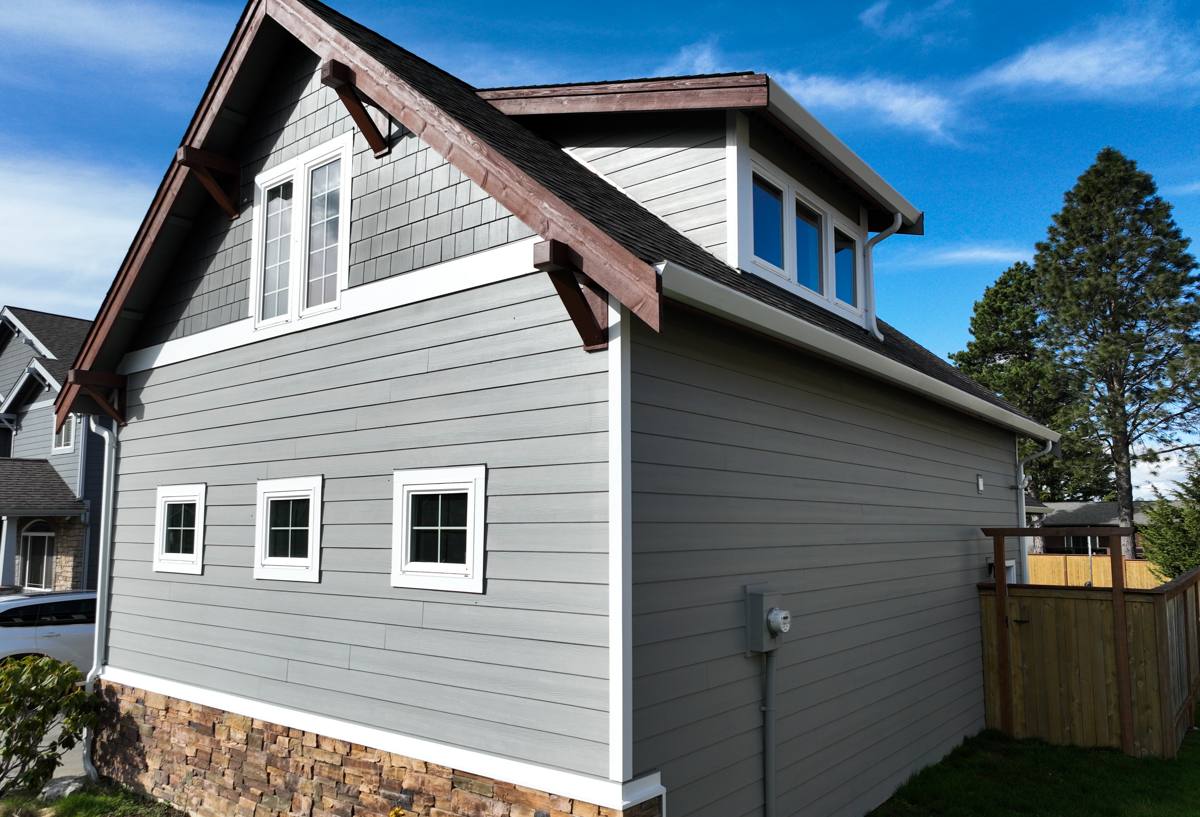
James Hardie fiber cement doesn't share those weaknesses. It's non-combustible, dimensionally stable in wet-dry cycling, and comes with a factory-applied ColorPlus finish that's baked on rather than field-painted, which matters a great deal in a climate where a field-applied coating has to cure in damp, cool conditions. Hardie's HZ5 product line is engineered specifically for climates with freeze-thaw cycling and sustained moisture exposure — a good match for Orcas Island's weather pattern.
Material Comparison for Coastal, Wet-Forest Conditions
| Material | Moisture Behavior | Maintenance | Typical Lifespan Factors |
|---|---|---|---|
| James Hardie fiber cement | Dimensionally stable; resists swelling and rot | Occasional wash; factory finish holds color | Long service life when installed to spec, with strong transferable warranty |
| Vinyl | Doesn't rot, but seams allow water intrusion behind panels | Low, but panels can warp or fade | Shorter effective life in high-wind, coastal exposure |
| Cedar | Absorbs moisture; needs coating to stay protected | High — refinishing and caulk maintenance | Variable; heavily dependent on upkeep |
| Primed spruce / LP SmartSide | Wood-based; vulnerable once coating is breached | Moderate to high; requires prompt repair of any damage | Shorter if moisture exposure is frequent |
Roof Repair and Maintenance for Doe Bay Properties
Roofs in this part of the county take a combination of hits: wind-driven rain finding weak flashing, moss holding moisture against shingles in shaded sections, and salt air working on any exposed metal. Most of the roof problems we find on Doe Bay homes aren't dramatic — they're small, overlooked issues that compound over a wet season or two. A lifted shingle tab, a gap in step flashing, a clogged valley holding needle debris and moss — each one is a minor fix on its own, but left alone through a few winters, they turn into interior leaks and decking damage.
Our approach to roof repair here is straightforward: inspect the whole roof, not just the spot someone noticed a stain under, address flashing and moss issues at the same time as any shingle repair, and be honest about whether a section needs a patch or is close enough to the end of its service life that a full replacement is the better long-term move.
Deck Repair: Salt, Moisture, and Structural Wear
Decks on Doe Bay properties, especially those with any water view or exposure, deal with the same salt air and moisture load as the siding and roof — plus the added stress of structural connections that are harder to inspect visually. Ledger boards, joist hangers, and post bases are where we most often find hidden deterioration, because they stay damp longer than the visible decking surface and aren't something a homeowner checks regularly.
We look at decks as a full system: decking boards, structural framing, fasteners, and how the deck ties into the house. A deck that looks fine on the surface can still have a ledger connection that's been slowly failing behind the siding, which is exactly the kind of problem that's cheap to fix early and expensive to fix late.
Windows: Sealing Out Wind and Moisture
Window performance is closely tied to the siding and trim around it. Wind-driven rain concentrates at window and door openings, so flashing and sealant details there matter as much as the window unit itself. When we replace siding on a Doe Bay home, we treat window flashing as part of the job, not an afterthought — because a new siding installation is the best opportunity to correct old flashing mistakes that have been letting moisture in for years, often without any visible sign until the damage is already inside the wall.
Why a Local Crew Matters on Orcas Island
Getting materials and crews to Orcas Island means working around ferry schedules, which changes how a project needs to be planned compared to a mainland job. A crew that doesn't regularly work in San Juan County can underestimate how much lead time that adds, or show up with the wrong material order and lose days waiting on a return trip. We plan around that reality rather than treating it as a surprise, which keeps projects moving instead of stalling out waiting on a ferry slot.
Beyond logistics, working this climate regularly means we recognize the difference between a cosmetic issue and a structural one at a glance, and we know which details — flashing laps, fastener spacing, clearance at grade — matter most for homes taking on salt air and heavy rain year after year.
What to Expect: Our Process
A typical exterior project starts with a full walk-around of the home — siding, roof, trim, windows, and any decks — so nothing gets missed because it wasn't the reason for the original call. From there we give a straightforward assessment of what needs attention now, what can be monitored, and what the realistic options and costs look like.
Signs a Doe Bay home may need exterior attention
- Moss or dark streaking building up on the roof, especially in shaded sections
- Soft or spongy decking, or discoloration around ledger boards and posts
- Paint or finish failing on siding faster than expected, especially on the windward side
- Gaps or cracking in caulk around windows and trim
- Visible rust or corrosion on exposed fasteners or metal flashing
- Interior water stains near ceilings, window headers, or exterior walls
If you're noticing any of these on a Doe Bay property, or just want an honest read on how your siding, roof, windows, or deck are holding up against the island's weather, we're glad to take a look. Reach out for a free, no-pressure estimate using the form below.