 Orcas Island Siding
 Siding in Obstruction Pass: Built for a Marine Climate
Obstruction Pass sits on the water, and that changes how a house ages. Homes here don't just deal with rain — they deal with salt-laden air drifting off the pass, wind that drives moisture sideways instead of straight down, and long stretches of shade and dampness that keep exterior surfaces wet far longer than they'd stay wet inland. Add in San Juan County's mild, moist winters and the moss and algae growth that comes with them, and you've got an exterior environment that's genuinely tougher on building materials than most people realize until they've owned a home here for a few years.
We're a local siding, roofing, window, and deck contractor working across Orcas Island, and Obstruction Pass is exactly the kind of location where the wrong exterior choices show up early — bubbling paint, soft trim, streaked and mossy siding, swollen seams. The right choices, installed correctly, hold up. This page walks through what the climate actually does to a home here, how we approach siding and the rest of the exterior envelope for this specific area, and why we've standardized on one siding product instead of offering a menu of options.
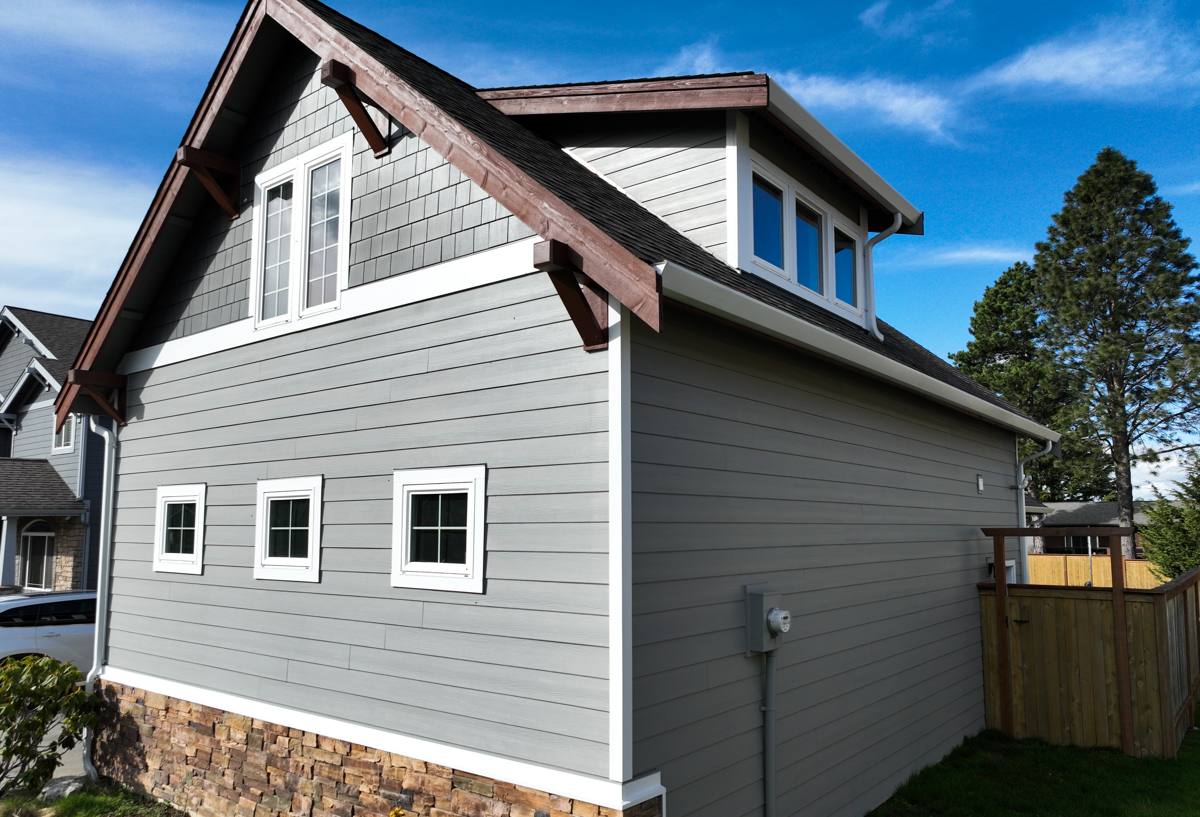
What Salt Air, Rain, and Moss Actually Do to a House
Salt Air and Coastal Exposure
Salt in the air isn't just a coastal cliché — it's an accelerant. Airborne salt settles on exterior surfaces and speeds up corrosion of metal fasteners, flashing, and hardware, and it can degrade certain coatings and finishes faster than a comparable inland exposure would. Homes closer to the water at Obstruction Pass see this more directly than homes tucked further into the island's interior, but even a few hundred yards of distance doesn't fully insulate a house from it. Materials and fasteners that aren't rated for coastal exposure tend to show their weaknesses here first — rust streaks at nail heads, pitting on lower-grade hardware, and finishes that chalk or fade ahead of schedule.
Driving Rain and Wind-Driven Moisture
San Juan County doesn't get the heaviest rainfall totals in Western Washington, but exposed shoreline locations like Obstruction Pass get wind-driven rain — moisture pushed horizontally and up under laps, trim, and joints rather than simply running down a wall. That's a different stress than straight-down rain. It finds gaps in flashing, works into end-cuts that weren't sealed, and sits in places that don't dry quickly because the house is shaded by trees or facing away from the sun for much of the day. Over years, that's what turns a small installation shortcut into a rot problem behind the siding.
Moss, Mildew, and the Shade Factor
Much of Orcas Island, Obstruction Pass included, sits under a mix of conifer canopy and coastal vegetation that keeps roofs, siding, and decks shaded and damp for long stretches, especially from fall through spring. That's ideal growing conditions for moss, algae, and mildew. On roofs, moss lifts shingles and holds moisture against the roof deck. On siding, algae staining is mostly cosmetic on the right material but can signal moisture retention on the wrong one. On decks, it makes surfaces slick and accelerates wood decay. None of this is unique to Obstruction Pass, but the combination of shade, humidity, and proximity to water makes it a more persistent issue here than in drier, more open parts of the county.
Why We Install Only James Hardie Fiber Cement
We get asked fairly often why we don't offer vinyl, LP SmartSide, or other fiber cement brands like Cemplank or Allura. The honest answer is that after years of doing exterior work in this climate, we settled on one product because it performs consistently in conditions like the ones Obstruction Pass throws at a house, and we'd rather stand behind one system we know well than offer a menu of products with different failure modes.
Non-Combustible Material
James Hardie siding is fiber cement — primarily sand, cement, and cellulose fiber — which means it doesn't burn, feed a fire, or melt the way vinyl siding can under radiant heat. For homes near dry summer brush or simply for long-term peace of mind, that's a meaningful structural advantage that has nothing to do with looks.
Factory-Applied ColorPlus Finish
Hardie's ColorPlus finish is baked on in a controlled factory environment, not brushed or sprayed on-site. That matters directly for a place like Obstruction Pass: a factory finish resists the fading, chalking, and moisture-related coating failures that field-applied paint is more prone to in a marine environment. It also means touch-up and caulk are formulated to match the finish system rather than generic exterior paint.
HZ5 Engineering for the Pacific Northwest
James Hardie makes climate-specific product lines, and the HZ5 line is engineered for the wetter, more humid conditions found in the Pacific Northwest, including the marine environment around the San Juan Islands. It's a different formulation than what gets shipped to a dry inland climate, which is part of why we don't treat "fiber cement siding" as a one-size-fits-all product — the specific line and the installation detailing both need to match the site.
What We're Trading Off
To be fair to the alternatives: vinyl is lighter and typically less expensive up front, LP SmartSide is engineered wood with its own reasonable track record when well-maintained, and other fiber cement brands are legitimate manufacturers. Our decision isn't that those products are junk — it's that after weighing moisture behavior, coating durability, warranty structure, and long-term maintenance burden in this specific climate, Hardie is what we're willing to install and warranty our labor on. We'd rather turn down a job than install something we don't believe will hold up on a house we put our name on.
Our Siding Installation Process
Correct installation matters as much as the material choice, especially in a wind-driven-rain environment. Manufacturer specs exist for a reason, and skipping steps is exactly how a good product fails early. Our process on an Obstruction Pass home generally includes:
- Removing existing siding and inspecting the sheathing and framing underneath for existing rot or moisture damage before covering anything up
- Repairing or replacing any compromised sheathing, framing, or trim found during tear-off
- Installing a weather-resistive barrier and correctly integrated flashing at every window, door, and penetration
- Maintaining proper clearances at grade, roofline, and decks so water has somewhere to go and siding isn't sitting in standing moisture
- Installing James Hardie panels or lap siding to manufacturer nailing and fastening specs, using fasteners rated for coastal exposure
- Sealing and caulking joints, seams, and butt joints with products compatible with the ColorPlus finish system
- Final inspection of trim, corners, and transitions before walk-through
Beyond Siding: Roofing, Windows, and Decks
Siding doesn't work in isolation — it's one part of an exterior envelope that has to work together to keep water out. We handle roofing, window replacement, and deck construction for the same reason: a new roof with poor flashing detail can undermine even perfectly installed siding, and a deck built without attention to ledger flashing is one of the most common sources of hidden rot on homes near the water.
On roofing, we pay particular attention to moss-resistant approaches and proper ventilation, since the shaded, humid conditions common around Obstruction Pass are exactly what moss needs to take hold. On windows, we look at both energy performance and, just as importantly, correct flashing integration with the new siding so water is directed out and away rather than trapped behind the wall assembly. On decks, we build with attention to ledger connections, joist protection, and decking materials that can handle repeated wet-dry cycling without cupping or rotting.
Cost Factors for Exterior Projects Near the Water
Every home and site is different, but a few factors consistently move the cost of siding, roofing, window, and deck projects in a location like Obstruction Pass:
| Factor | Why It Matters Here |
|---|---|
| Existing damage behind old siding or trim | Shoreline and shaded lots see more hidden moisture damage, which affects repair scope before new material even goes on |
| House size and wall complexity | More corners, gables, and trim details mean more cutting, flashing, and labor time |
| Access and site logistics | Island scheduling, material delivery, and site access (driveways, slopes, tree clearance) factor into project timelines and cost |
| Product line selected | Hardie panel vs. lap siding, and specific colors or textures, carry different material costs |
| Fastener and flashing grade | Coastal-rated fasteners and flashing cost more than standard-grade materials but matter more here |
| Scope of tear-off vs. overlay | Full removal and sheathing inspection costs more up front but avoids covering existing problems |
We'll walk through these specifics for your property during an estimate rather than quoting a number in the abstract — every Obstruction Pass home we've looked at has had a slightly different starting condition.
Why a Local, Island-Based Crew Matters
Working on Orcas Island isn't the same as working on the mainland. Material deliveries have to be planned around ferry schedules, weather windows for exterior work are narrower in the wetter months, and a crew that doesn't know the island's microclimates can misjudge how a shaded, water-facing lot like Obstruction Pass behaves compared to a sunnier, more sheltered spot elsewhere on the island. A local crew also means we're not disappearing after the job — if a warranty question or a maintenance issue comes up two or five years down the line, we're still here, on the same island, reachable the way an off-island company generally isn't.
Maintenance: What to Expect After Installation
One advantage of fiber cement over some alternatives is that it doesn't demand constant upkeep, but "low-maintenance" doesn't mean "no maintenance," especially in a marine environment. A reasonable maintenance routine for a home in Obstruction Pass includes:
- Periodic rinsing to remove salt residue and organic buildup, particularly on north- and shade-facing walls
- Visual checks of caulking at trim, windows, and joints every year or two, since caulk failure is usually the first sign of a developing moisture path
- Keeping gutters clear so water isn't overflowing onto siding or pooling at the base of walls
- Trimming back vegetation that keeps siding, roofing, or deck surfaces shaded and damp longer than necessary
- Prompt attention to any soft trim, staining, or bubbling paint on adjacent wood elements, since those often show a problem before it reaches the siding itself
None of this is heavy lifting, but skipping it is how small issues turn into expensive ones in a climate that doesn't give a house much of a break.
Get a Free, No-Pressure Estimate
If you're weighing a siding, roofing, window, or deck project on your Obstruction Pass property, we're happy to come take a look, explain what we're seeing, and put together a straightforward estimate — no pressure, no hard sell. Use the form below to get started.