 Orcas Island Siding
 Friday Harbor's Exterior Is Working Harder Than It Looks
Friday Harbor sits right on the water in San Juan County, and that location cuts both ways. It's a big part of why people love living here, and it's also why the exterior of a home in this town ages differently than one thirty miles inland. Salt-laden air moves off the harbor and up into the surrounding neighborhoods, driving rain comes in sideways during winter storms, and the shade and moisture that make the island so green also make moss and algae a year-round maintenance topic instead of a seasonal one. None of this is dramatic on any single day. It's the accumulation over years that separates siding, roofing, and trim that hold up from products that quietly fail from the inside out.
As a local crew, we're not guessing at what Friday Harbor homes need — we see the same failure patterns repeat on the same types of siding, in the same exposures, year after year. That's the whole reason we standardized on one siding product instead of offering a menu of options.
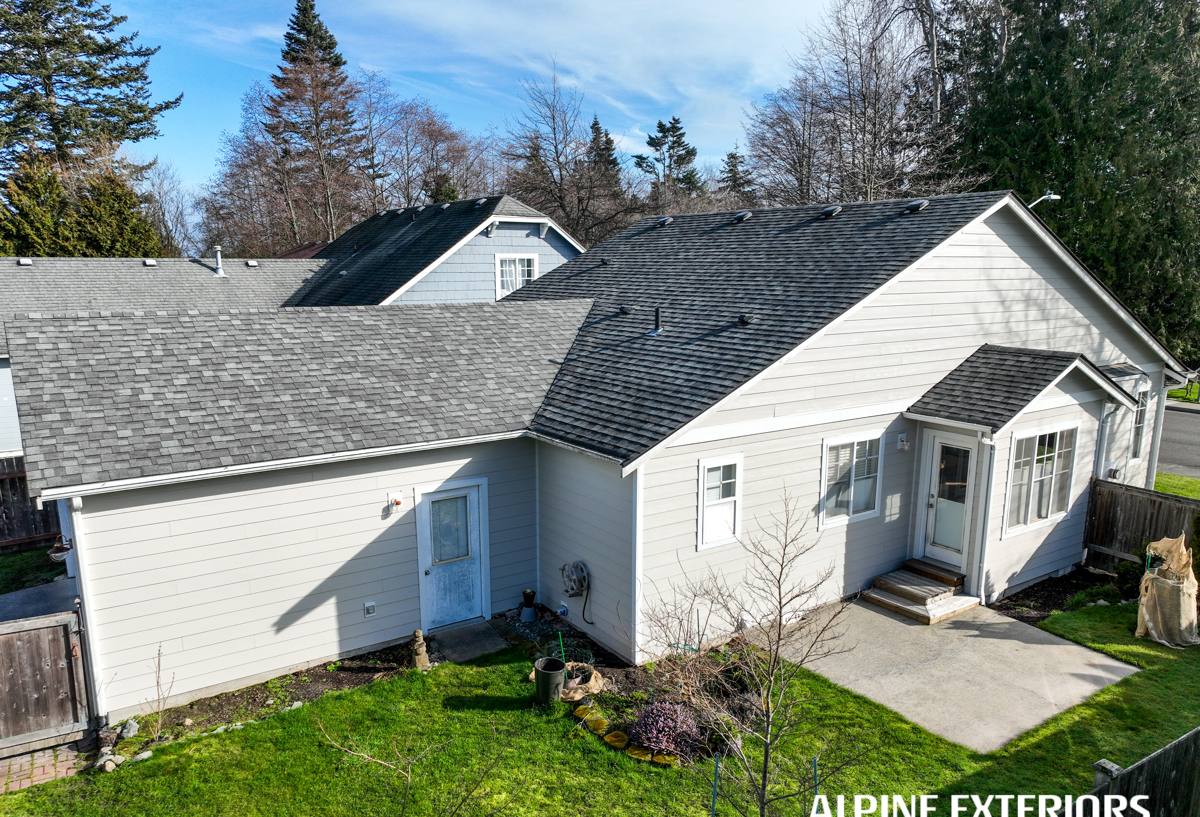
What Salt Air and Moisture Actually Do to a House
Salt Air
Airborne salt is corrosive to fasteners, flashing, and metal trim, and it accelerates the breakdown of paint films and caulk. On wood-based or wood-composite siding products, salt exposure combined with moisture cycling speeds up swelling, checking, and edge deterioration — especially at butt joints and cut ends where the factory sealing is thinnest to begin with.
Driving Rain
San Juan County gets weather systems that push rain horizontally, not just straight down. That matters because it forces water into laps, joints, and fastener penetrations that a product installed for a calmer climate was never really tested against. Water intrusion at those points is rarely obvious right away — it shows up months or years later as soft spots, bubbling paint, or rot behind the cladding.
Moss and Organic Growth
Shade, moisture, and mild temperatures are ideal for moss, algae, and mildew. On porous or absorbent siding surfaces, organic growth isn't just cosmetic — it holds moisture against the material longer, which compounds every other problem on this list. A siding product's surface texture and water absorption rate directly determine how much moss becomes an issue and how often it needs to be cleaned off.
Why We Only Install James Hardie Fiber Cement
We used to get asked to quote a wider range of siding products, and for years we did. What changed our position wasn't marketing — it was watching how different materials actually performed on Orcas Island and San Juan County homes over time, particularly the ones facing water, wind, and salt air head-on.
James Hardie fiber cement is engineered from cement, sand, and cellulose fiber. It doesn't absorb water the way wood-based products do, it doesn't feed mold or moss growth as a food source, and it's non-combustible, which matters given the wildfire risk conversations happening across the Pacific Northwest in recent years. Hardie's ColorPlus factory-applied finish is baked on under controlled conditions rather than painted on site, which gives it more consistent coverage and better fade resistance than field-applied paint, especially on a coastal home that's going to see intense UV combined with salt spray.
We're not going to tell you every other siding product is junk — that's not honest and it's not our call to make about materials we don't install. What we will say is that after years of callbacks, moisture inspections, and re-siding jobs on homes with wood composite, vinyl, and other fiber cement brands, Hardie was the one product that held up consistently in this specific climate without demanding constant homeowner maintenance to keep it that way. That's the standard we hold every job to now.
How Hardie's Product Lines Fit This Climate
Hardie makes climate-engineered product lines, and the HZ5 formulation is built for regions with freeze-thaw cycling and wet weather exposure — which describes San Juan County's winters well. For a Friday Harbor home, that typically means:
- HardiePlank lap siding for the primary wall surfaces, in a smooth or cedar-textured finish depending on the home's style
- HardieTrim for corner boards, window and door casing, and fascia, which resists the moisture wicking that plain wood trim suffers at end grain
- HardiePanel or HardieShingle siding for accent areas, gables, or a shingle-style look without the maintenance burden of real cedar shingles
- ColorPlus factory finish in a color selected to hold up under coastal UV and salt exposure, backed by a separate finish warranty from the substrate warranty
The product itself is only half the equation. Fiber cement is unforgiving of poor installation — improper fastening, missing flashing, or tight-butted joints without expansion gaps will cause problems no matter how good the material is. That's why installation crew experience matters as much as the brand name on the box.
Comparing How Common Siding Materials Handle This Climate
| Material | Moisture Behavior | Moss/Algae Resistance | Typical Maintenance |
|---|---|---|---|
| James Hardie Fiber Cement | Does not swell or rot; engineered for wet climates | Non-organic surface, resists growth | Occasional rinse; repaint only if not ColorPlus |
| Wood/Engineered Wood Siding | Absorbs moisture at joints and cut ends | Organic material feeds growth | Regular painting, caulking, moisture checks |
| Vinyl Siding | Doesn't rot but can warp, crack in cold and UV | Can trap moisture behind panels | Low, but limited repair options if damaged |
| Cedar Siding/Shingles | Natural but moisture-sensitive without upkeep | High susceptibility without treatment | Frequent staining/sealing and moss removal |
This table reflects general material behavior, not a claim about any specific manufacturer's product failing. Every material has trade-offs; ours is a professional judgment about which trade-offs make sense for this coastline.
Roofing, Windows, and Decks in the Same Climate
Siding doesn't work in isolation — the roof, windows, and any exterior deck structure all share the same exposure to salt air, wind-driven rain, and moss. When we're on-site for a siding project, we're also looking at flashing details where the roof meets the wall, window sill and head flashing condition, and whether a deck's ledger board and fasteners are showing the corrosion or wood movement that's common on waterfront and near-waterfront properties in San Juan County.
Handling siding, roofing, windows, and decks as one integrated exterior means fewer gaps where two trades' work doesn't quite line up — which is often exactly where water finds its way in on older Friday Harbor homes.
What a Local Crew Means in Practice
Being local to the island isn't just a convenience for scheduling. It means we already know how a north-facing wall on a shaded lot behaves differently than a south-facing wall exposed to open water, and we plan material choices, drainage details, and finish colors accordingly. It also means we're not shipping in a crew that installs the same way regardless of climate — the flashing and gapping details that matter here are the ones we build into every job as standard practice, not an upsell.
What to Check Before Hiring for Exterior Work Here
- Do they install fiber cement siding regularly, or only occasionally alongside other materials?
- Can they explain their flashing and moisture-management approach for wind-driven rain, not just their siding brand?
- Are they licensed and insured to work in Washington, and can they provide proof?
- Do they inspect adjoining roofing, window, and trim details as part of a siding job rather than ignoring them?
- Is the warranty they describe backed by the manufacturer, the installer, or both — and what's actually covered?
Planning a Siding Project on Orcas Island
Timing matters here more than in drier climates. Siding replacement and major exterior work are easier to sequence around the wetter months, and a good contractor should be upfront about how weather windows affect scheduling rather than rushing a job into a stretch of bad weather. If you're also considering roof or window work, doing an honest assessment of all three together often saves money compared to addressing them one at a time as each starts to fail.
If your home is showing early signs of trouble — soft spots near the bottom of siding boards, paint that keeps failing in the same spots, persistent moss that comes right back after cleaning, or trim that's darkening and swelling — those are worth a look before they become a bigger repair.
If you'd like an honest look at what your home's exterior is dealing with, we're happy to walk the property with you and talk through options — no pressure, no obligation. Reach out using the form below for a free estimate.