 Orcas Island Siding
 Why Crow Valley Roofs Wear on Their Own Timeline
Crow Valley sits inland from Orcas Island's shoreline, tucked among tree cover and open pasture, so it's easy to assume a roof here is sheltered from the marine weather that batters waterfront homes elsewhere on the island. It isn't, not entirely. Salt-laden air off the surrounding waters still moves across Orcas Island and settles on every exposed surface, roofs included, even where the shoreline is out of sight. Layer on the tree canopy common to valley lots — shade, dropped needles, and slower drying after every storm — and you get a roof that ages differently than one on an open, sun-exposed lot. It's not necessarily a harder environment than the coastline, but it's a different one, and a roof replacement that ignores those differences won't hold up.
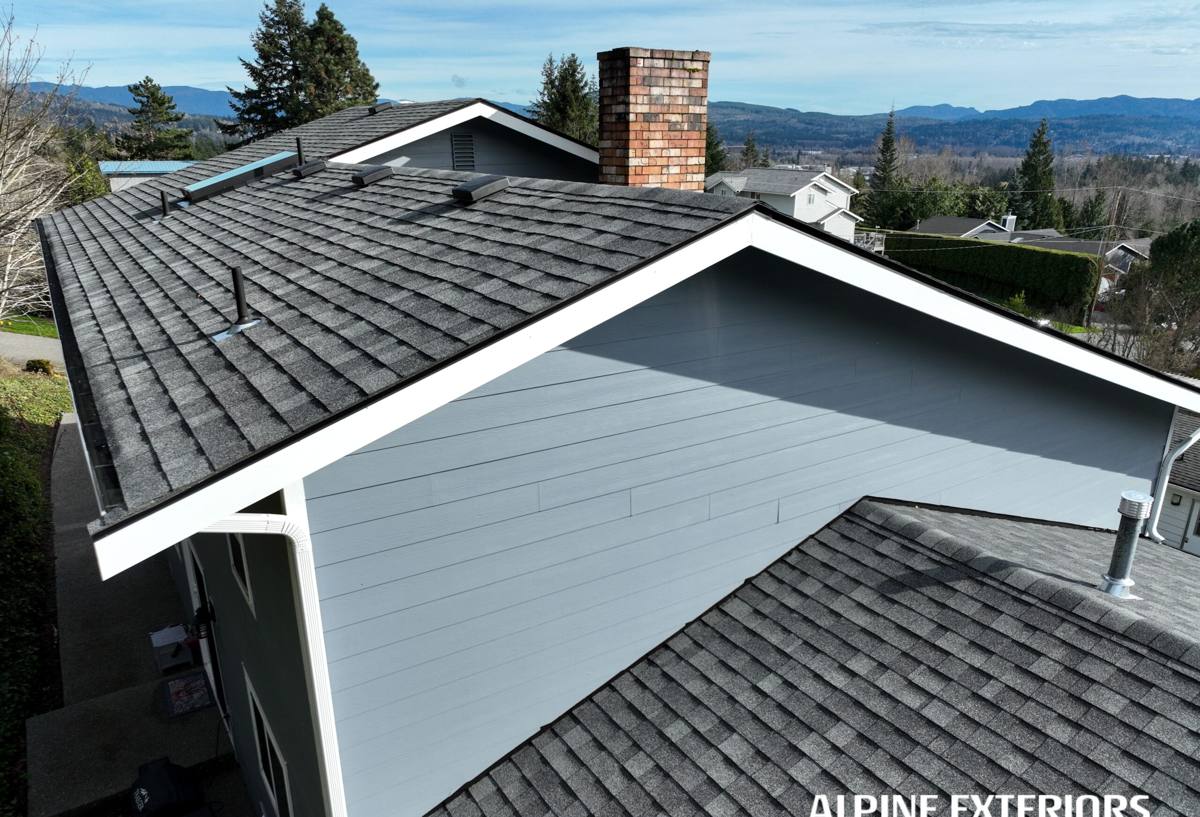
The Three Things Working Against Your Roof
Salt Air
Even set back from open water, salt in the air corrodes exposed metal over time — fasteners, flashing, gutter hangers, and any hardware not rated for a marine-influenced climate. Corrosion here is gradual, which is exactly why it gets missed until a leak shows up somewhere the metal finally failed.
Driving Rain
San Juan County storms rarely fall straight down. Wind-driven rain finds every gap in flashing, and it's especially unforgiving on rooflines with valleys, dormers, and chimneys — features common on the older, more varied homes you find on valley lots. A flashing detail that would hold up fine in a calm rain can leak for years under wind-driven rain before anyone notices water inside.
Moss Season
Shaded, tree-covered lots hold moisture far longer than open rooflines elsewhere on the island. Moss takes hold in fall and keeps working through winter and spring, and it doesn't just sit on the surface — it roots under shingle tabs, lifts edges, and holds water directly against the roof deck. That's a slower failure mode than a wind-torn shingle, but it's just as real, and it's the single biggest factor shortening roof life in a valley setting.
Signs a Crow Valley Roof Needs Replacing, Not Just Patching
Repairs make sense for isolated damage. Replacement makes sense once the roof is failing broadly, or once repairs start treating symptoms instead of the cause. Watch for:
- Heavy granule loss showing up in gutters and downspouts
- Shingles curling, cupping, or lifting at the edges
- Moss growing as thick mats rather than light surface patches
- Soft or spongy spots in the roof deck underfoot
- Daylight or damp insulation visible from inside the attic
- The same leak returning after a repair, especially near a valley or chimney
- Dark algae streaking combined with active moss growth
- A roof at or past the expected lifespan for its material
Any one of these on its own might be a repair. Two or three together, especially on an older roof, usually mean the underlayment and decking are compromised and a full replacement is the honest recommendation.
What a Correct Roof Replacement Actually Involves
A roof replacement done right in this climate is not "shingles on top of shingles." It's a full system, and every layer matters more here than it would in a drier, more open setting.
Full Tear-Off
Old roofing comes off completely. Layering new shingles over old traps moisture, hides deck problems, and voids most manufacturer warranties outright — none of which is acceptable on a roof that already has moss and wet-climate exposure working against it.
Deck Inspection and Repair
Once the old roofing is off, the plywood or board decking underneath gets inspected board by board. Any soft, delaminated, or rotted sections are cut out and replaced before anything new goes down. Skipping this step is the most common shortcut in the trade, and it's the one that causes the earliest failures.
Ice-and-Water Membrane at Vulnerable Points
Eaves, valleys, and any low-slope transitions get a self-adhered waterproof membrane underneath the main underlayment. These are the spots wind-driven rain and standing snowmelt find first, and they're also the spots moss tends to build up thickest.
Underlayment Built for a Wet Climate
A synthetic, breathable underlayment across the full deck gives a second line of defense if any water gets past the roofing material — which, in a valley setting with heavy tree cover, it eventually will.
Flashing at Every Penetration
Chimneys, skylights, vent stacks, and roof-to-wall transitions all get new, correctly lapped flashing — not caulk over old flashing. Caulk is a maintenance item, not a waterproofing method, and it fails first in exactly the wind-driven rain conditions this area gets.
Ventilation That Matches the Site
Balanced intake and exhaust ventilation keeps the attic dry and the roof deck at a stable temperature. It matters more on shaded, tree-covered lots, where the roof surface itself dries slower and the attic can hold moisture longer if airflow isn't right.
Roofing Materials That Hold Up in This Setting
There's no single "best" material — the right choice depends on the home, the budget, and how much upkeep an owner wants to take on. Here's how the common options compare for a shaded, moisture-heavy valley lot:
| Material | Moss & Moisture Behavior | Maintenance | Typical Lifespan |
|---|---|---|---|
| Architectural asphalt shingle | Good, especially with zinc or copper strips at the ridge to slow moss regrowth | Periodic moss treatment recommended | 25–30 years |
| Standing seam metal | Very good — smooth surface sheds moss and drains driving rain effectively | Low | 40–50+ years |
| Cedar shake | Requires the most attention in shaded settings; moisture that's slow to dry accelerates rot and moss growth | High — regular cleaning and treatment | 20–25 years with consistent upkeep |
Cedar can still be the right call for a homeowner who wants the look and is committed to the upkeep. Our job is to lay out the maintenance burden and moisture behavior honestly before you commit, not after — a heavily shaded roof is not the forgiving environment cedar performs best in, and that's a trade-off worth knowing up front rather than discovering in year eight.
Our Process, Start to Finish
- On-site assessment. We walk the roof and the attic, not just look from the ground, and check the deck condition directly.
- Written estimate. Material choice, tear-off scope, and any anticipated decking work are spelled out before we start — no surprise change orders for things we could see up front.
- Scheduling around weather. We work within realistic weather windows for this part of San Juan County rather than rushing a job into a forecast that won't hold.
- Tear-off and deck inspection. Old roofing comes off, the deck gets checked board by board, and any repairs happen before anything new is installed.
- Waterproofing and flashing. Ice-and-water membrane, underlayment, and flashing go in at every valley, penetration, and edge.
- Roofing installation. Material goes on to manufacturer specification, including proper ventilation.
- Cleanup. Old material is hauled off, and we run a magnetic sweep for stray nails and fasteners.
- Final walkthrough. We go over the finished roof with you before calling the job done.
What Roof Replacement Cost Depends On
We don't quote a number until we've seen the roof, but the cost drivers are consistent from job to job:
| Factor | Why It Matters |
|---|---|
| Roof size and pitch | More square footage and steeper pitches mean more material and labor time |
| Roofline complexity | Valleys, dormers, and multiple chimneys each add flashing work |
| Decking condition | Rot or soft spots found during tear-off add repair cost that's impossible to quote sight unseen |
| Material chosen | Asphalt, metal, and cedar carry very different material and labor costs |
| Access and site conditions | Tree cover, tight staging areas, and steep driveways affect crew time and equipment needs |
As a general rule, a straightforward architectural shingle replacement runs less than a standing seam metal roof, and either can run higher if the tear-off uncovers significant deck damage. We'll walk you through exactly what's driving your number before any work starts.
Why Hiring a Crew That Already Works Crow Valley Matters
A roofer who's worked this part of Orcas Island knows the difference between a roof that's shaded by a couple of trees and one that sits under a full canopy most of the day, and how much that changes moss treatment and ventilation planning. They know San Juan County's permitting process, how to plan around ferry and barge schedules for material delivery, and how weather windows here actually behave season to season — not from a manual, but from having done the work. And when a warranty question or a post-storm check comes up two years later, a local crew is a call away, not a mainland outfit that has to plan a ferry trip to look at one house.
If your roof is showing its age — moss that keeps coming back, a leak that won't stay fixed, or shingles that are visibly past their prime — we're happy to take a look and give you a straight, no-pressure estimate. Use the form below to get started.