 Orcas Island Siding
 Building a Deck That Actually Holds Up in Deer Harbor
Deer Harbor sits on the water, and that changes what a deck needs to survive. A design that works fine twenty miles inland can start showing corrosion streaks, soft spots, and slick green moss within a couple of seasons out here. Building decks on Orcas Island long enough teaches you which details matter in a marine environment and which ones are just extra steps that don't earn their keep. This page covers what we've learned building and repairing decks for waterfront and near-waterfront homes in and around Deer Harbor.
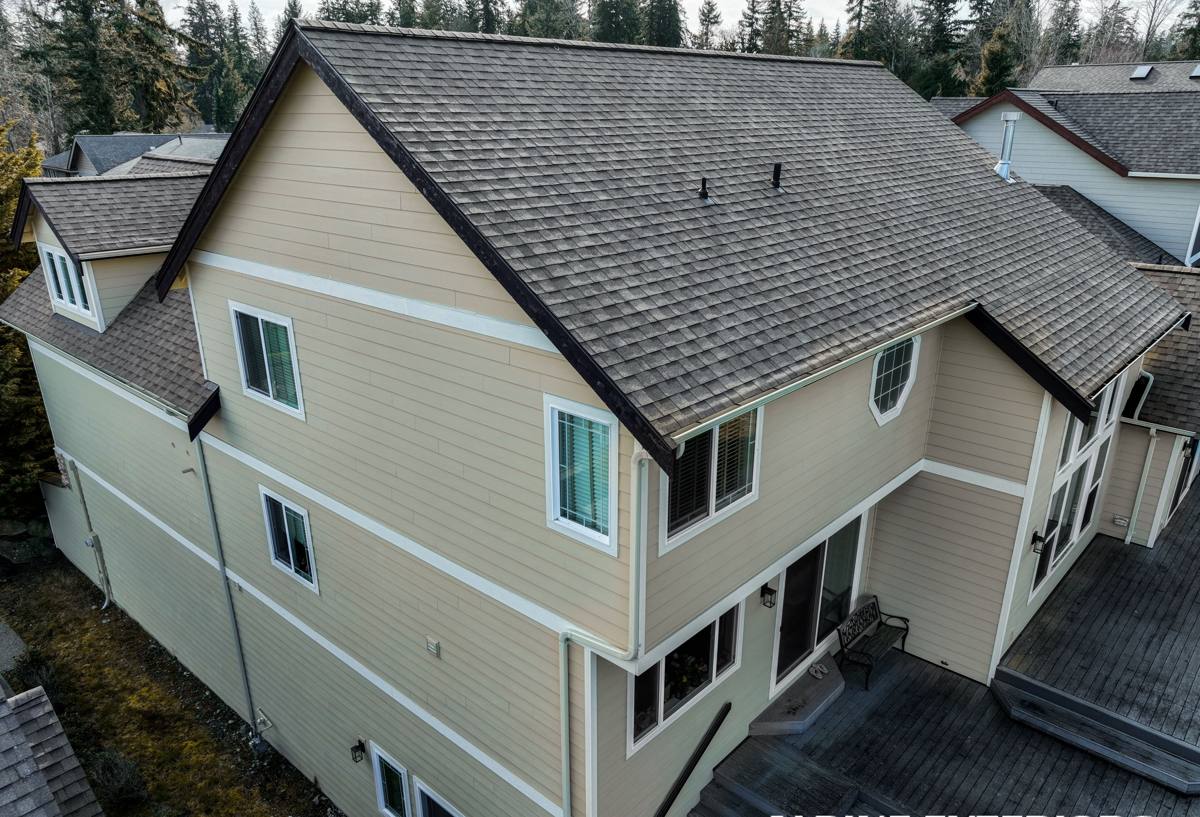
What Salt Air, Rain, and Moss Actually Do to a Deck Here
Salt air and hardware
Airborne salt doesn't need direct ocean spray to cause problems — it travels on the wind and settles on any exposed metal. Standard zinc-plated screws, joist hangers, and bolts can start rusting within a year or two this close to the water. Once a fastener corrodes, it weakens at the exact point holding your deck together, and by the time you see rust bleeding through the decking boards, the damage underneath is usually worse than it looks from the top.
Driving rain and the house connection
San Juan County gets its share of wind-driven rain, especially through fall and winter storms coming off the water. The weak point on most decks isn't the open deck surface — it's the ledger board, where the deck attaches to the house. If that connection isn't flashed correctly, water works its way behind the siding and into the rim joist and wall framing, and you don't find out until there's rot to deal with.
Moss and the long shade season
Orcas Island's tree cover keeps a lot of decks in partial shade for much of the year, and combined with regular moisture, that's exactly what moss and algae need to take hold. Beyond looking bad, a mossy deck surface holds water against the wood or composite longer than it should and gets dangerously slick underfoot, especially on stairs and near the house where drainage is slowest.
Choosing Decking Material for a Marine Environment
There isn't one universally "best" decking material — there's a best fit for your site, your budget, and how much upkeep you want to do. Here's how the common options actually perform in a Deer Harbor setting:
| Material | Moisture & salt performance | Moss/algae resistance | Maintenance |
|---|---|---|---|
| Western red cedar | Naturally rot-resistant; still needs sealed end cuts and good airflow underneath | Needs periodic cleaning; can green up faster in full shade | Annual cleaning, re-staining every 2-4 years |
| Pressure-treated fir/hem-fir | Treatment resists rot but fasteners and connectors must be rated for treated lumber | Similar to cedar without regular cleaning | Regular cleaning and sealing |
| Composite decking | Won't rot, but lower-quality boards can still trap moisture at fastener points | Can still grow moss/algae on the surface, though it doesn't feed on the material itself | Occasional washing; no staining or sealing |
| PVC/capped composite | Best moisture resistance of the group; fully sealed against water absorption | Surface can still need washing in shaded areas | Lowest ongoing maintenance; higher upfront cost |
We'll talk through these trade-offs honestly during a site visit rather than steering you toward whatever happens to be easiest for us to install. A shaded, tree-covered lot near Deer Harbor's shoreline calls for different choices than an open, sun-exposed site even a short distance away.
Fasteners and hardware
Whatever decking material you choose, the hardware holding it together matters just as much. In this environment we spec stainless steel or heavy hot-dip galvanized fasteners and connectors rated for coastal exposure, not the standard-grade hardware that's fine for an inland build. It costs more up front and saves you a structural repair down the road.
What a Correctly Built Deck Involves Out Here
Footings on Orcas Island terrain
A lot of Deer Harbor lots have exposed bedrock, thin soil, or a meaningful slope down toward the water. Footing depth and placement need to account for whatever's actually under the site rather than assuming a flat, deep-soil lot. On rockier ground that can mean different footing methods than a standard poured concrete pier, decided on-site rather than off a generic plan.
Ledger flashing and water management
Where the deck meets the house, we install proper flashing that directs water out and away from the wall assembly, along with joist tape on top of the framing to keep water from sitting in fastener holes. This is the single detail most likely to cause hidden rot if it's skipped or done halfway, and it's the hardest one to inspect after the fact without pulling boards.
Board spacing and drainage
Correct gapping between boards lets water shed quickly instead of sitting on the surface, which matters more here than in a drier climate because it directly affects how fast moss and algae take hold. We also grade and space framing to avoid low spots where water and debris collect against the house or along the rim joist.
Railings and guards
Any deck of meaningful height needs a code-compliant guardrail — correct height, baluster spacing tight enough to meet code, and posts anchored into structural framing, not just through the decking. On waterfront properties with a view worth protecting, we also think about sightlines so the railing does its job without blocking what you built the deck to look at in the first place.
Permitting and Shoreline Considerations
Deck projects in San Juan County typically require a building permit, and if your property is close enough to the water, the county's shoreline regulations can affect setbacks, allowable size, or what documentation is needed before a permit is issued. Every waterfront and near-waterfront lot is a little different, and the rules depend on your specific parcel, so we don't guess — we check what applies to your property and handle the paperwork as part of the job rather than leaving you to figure it out.
Signs Your Current Deck Needs Attention
Not every deck problem means a full rebuild, but a lot of them are easier and cheaper to fix before they get worse. Walk your deck and check for:
- Soft or spongy spots underfoot, especially near the house or at stair landings
- Rust streaks running down from screw heads, joist hangers, or post brackets
- Gaps, cracks, or missing caulk where the deck meets the house siding
- Persistent moss or algae that comes right back after cleaning
- Railings or posts that wobble or flex when you lean on them
- Visible daylight or water staining underneath the deck at the ledger board
- Boards that have cupped, split, or pulled away from their fasteners
If you're seeing more than one or two of these, it's worth having someone look at the structure, not just the surface.
What Affects the Cost of a Deer Harbor Deck Project
| Factor | Why it matters here |
|---|---|
| Size and shape | More linear feet of framing, decking, and railing directly scales material and labor |
| Site slope and access | Sloped or rocky lots near Deer Harbor often need custom footing work and more site prep |
| Material choice | Cedar, pressure-treated, composite, and PVC span a wide cost range and different maintenance costs over time |
| Tear-out of an existing deck | Removing and disposing of an old structure adds labor before rebuilding starts |
| Permitting and shoreline review | Waterfront-adjacent lots can require extra documentation and review time |
| Delivery logistics | Material has to come over by ferry or barge, which affects lead times and scheduling more than it would on the mainland |
We give straightforward, honest ranges once we've actually seen the site — anyone quoting a firm number over the phone for a deck on this kind of terrain is guessing.
Our Process, Start to Finish
- Site visit to look at existing conditions, terrain, sun/shade exposure, and (if applicable) the deck being replaced
- Honest material and design conversation based on your site, not a one-size-fits-all pitch
- Permit handling through San Juan County, including any shoreline review your parcel requires
- Demolition and disposal of the old structure, if this is a replacement
- Framing and footings built for your specific ground conditions
- Ledger flashing, joist protection, and structural connections done to hold up in salt air and rain
- Decking, railings, and finish work completed and walked through with you before we call it done
Why Hiring a Crew That Already Works Deer Harbor Matters
Building on Orcas Island isn't the same as building on the mainland, and Deer Harbor has its own quirks even within the island. Materials and crews travel by ferry, which means scheduling has to account for sailing times and freight capacity, not just a drive across town. A contractor who's already worked this area knows which fasteners have held up on other jobs here, which sites tend to hide bedrock a foot down, and what San Juan County actually asks for on a shoreline-adjacent permit — instead of learning all of that on your project. That experience shows up as fewer surprises, fewer callbacks, and a deck that's actually built for the climate it's sitting in, not just built to a generic plan and hoped for the best.
If you're planning a new deck or dealing with an existing one that isn't holding up the way it should, we're glad to take a look and give you a straight answer. Reach out for a free, no-pressure estimate using the form below.