 Orcas Island Siding
 Building a Deck That Belongs in Deer Harbor
Deer Harbor sits close enough to the water that a deck here lives a different life than one built inland. Salt-laden air moves through the trees, rain comes in sideways during the fall and winter, and shaded, tree-covered lots hold moisture long after a storm has passed. A deck built with mainland assumptions — standard fasteners, minimal ventilation underneath, decking chosen on looks alone — tends to show its age fast in this setting. A deck built for this specific stretch of Orcas Island holds up the way it should.
This page covers what actually matters when you're planning a custom deck in Deer Harbor: the materials that make sense here, the framing details that get skipped on lower-bid jobs, and the maintenance reality of a long, wet, mossy season. It's meant to help you ask better questions and make a more informed decision, whether you're building new or replacing something that's failed early.
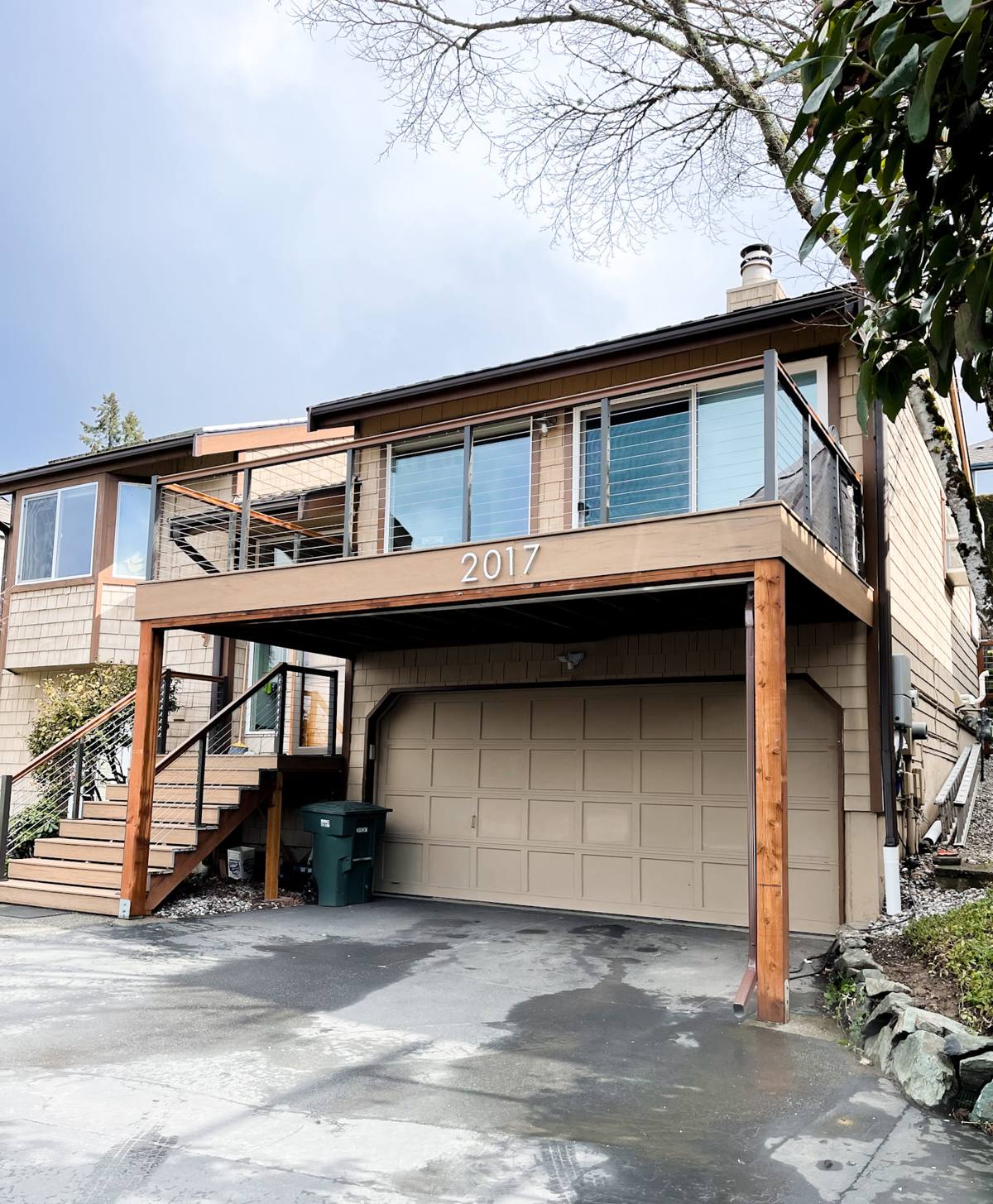
What Deer Harbor's Climate Actually Does to a Deck
Three things drive almost every deck problem we see out here, and they compound each other.
Salt Air
Even properties that aren't directly waterfront pick up salt-carrying moisture off the surrounding water. Salt accelerates corrosion in fasteners, hangers, and any exposed metal hardware, and it's harder on certain finishes and coatings than plain rain would be. A deck built with hardware rated for interior or general exterior use — rather than hardware rated for coastal exposure — will corrode faster than the wood or decking around it.
Driving Rain
San Juan County storms don't always fall straight down. Wind-driven rain gets pushed under railings, into ledger connections, and behind fascia boards that aren't properly flashed. Water that gets into a structure and can't get back out is far more damaging than water that simply runs off a well-built surface.
Moss and Shade
Many Deer Harbor lots are wooded, which means dappled shade and slower drying times after rain. Moss and algae take hold on decking, railings, and stair treads wherever moisture sits and sunlight doesn't reach. Beyond looking bad, moss holds water against the surface and makes stairs and walking surfaces genuinely slick.
None of this means a deck can't last out here — it means the design, materials, and fasteners need to be chosen with this specific combination in mind, not swapped in from a generic build spec.
Choosing Decking Material for a Deer Harbor Property
There's no single "best" decking material — there's a best fit for your budget, your site's sun and shade pattern, and how much upkeep you actually want to do. Here's how the common options compare under Deer Harbor conditions:
| Material | Upfront Cost | Maintenance | Salt Air / Moisture Behavior |
|---|---|---|---|
| Cedar | Moderate | Regular cleaning and refinishing to control moss and graying | Naturally rot-resistant but surface needs upkeep in shaded, damp spots |
| Pressure-Treated Fir/Pine | Lowest | Frequent cleaning, sealing, and inspection for splitting | Treatment resists rot but is more prone to moss growth and surface wear near water |
| Composite (capped) | Higher | Occasional washing; no sealing or staining | Doesn't absorb moisture or rot, but moss/algae can still grow on the surface film and needs washing |
| Tropical Hardwood (e.g., ipe) | Highest | Periodic oiling if a fresh look is wanted; low structural upkeep otherwise | Excellent natural density and rot resistance; heavy and sensitive to installation technique |
For most Deer Harbor homes we lean toward capped composite or a quality cedar, depending on whether the priority is minimal upkeep or a more traditional look. We'll walk you through the real trade-offs for your specific site rather than pushing one product line — the right call often comes down to how much shade your lot gets and how much time you want to spend on maintenance.
A Note on Cheaper Composite and Uncapped Boards
Not all composite decking is built the same way. Older or uncapped composite products can absorb moisture at the core over time, which is a poor match for a climate that rarely lets a deck fully dry out for months at a stretch. Our standard is to use fully-capped composite or solid wood species chosen for rot resistance — not because cheaper products are inherently bad, but because the moisture and shade profile here punishes any product with a weak moisture barrier faster than it would in a drier climate.
Framing and Substructure: Where Decks Actually Fail First
Most deck failures don't start with the decking boards — they start underneath, where nobody's looking. This is the part of the job that separates a deck that lasts from one that needs major repair in under a decade.
- Ledger flashing: Where a deck attaches to the house, proper flashing keeps wind-driven rain from tracking behind the siding and into the wall framing — one of the most common sources of hidden rot.
- Joist protection: Joist tape or an equivalent moisture barrier on top of framing members keeps standing water from soaking into end grain and fastener holes.
- Ventilation underneath: Decks built low to the ground or over shaded, damp soil need enough airflow underneath to actually dry out between storms — not just after them.
- Post and footing depth: Footings need to go below frost depth and bear on solid, well-draining soil, which varies across Orcas Island's terrain more than people expect.
- Beam and joist sizing: Spans and spacing need to match the actual decking material and loads, not a generic table — composite and hardwood have different span ratings than standard lumber.
A deck can look flawless on the surface and still be quietly failing underneath because one of these steps got skipped to save time. This is the part of the build worth asking your contractor about directly.
Fasteners and Hardware: The Detail Salt Air Punishes First
In a climate with regular salt exposure, hardware is often the first thing to fail — well before the wood or decking itself shows wear. Galvanized fasteners that would be perfectly fine inland can start corroding within a few seasons out here, especially where they're in contact with pressure-treated lumber, which is chemically more corrosive to certain metals.
Our standard for Deer Harbor builds is stainless steel fasteners and coated structural hardware rated for coastal or high-moisture exposure, matched to whatever decking and framing material is actually being used (some composite manufacturers specify particular fastener types to keep warranties valid). It costs more upfront than standard galvanized hardware. It also means you're not looking at rust streaks and loosening connections in a few years.
Design Choices That Matter on Deer Harbor Lots
Deer Harbor properties tend to fall into a few categories — waterfront or near-waterfront lots with view priorities, sloped and wooded parcels, and everything in between. Each shapes the deck design differently.
Drainage and Grading
On sloped lots, water needs a clear path away from footings and from the space underneath the deck. Poor grading around posts is a slow, quiet way for moisture problems to start.
Railing Material
Metal cable and aluminum railings look great and hold up well generally, but in salt air they need the same hardware-grade attention as structural fasteners. Wood and composite railing systems are often the lower-maintenance choice for properties closer to the water.
Stair and Surface Safety
Given how much moss and algae growth this climate produces, we pay attention to board spacing, surface texture, and stair tread design specifically to reduce how slick a deck gets in shaded, damp conditions — not just how it looks on a dry summer day.
How We Build a Custom Deck in Deer Harbor
Our process is the same whether it's a small entry deck or a full multi-level outdoor living space — we just scale the details.
- Site visit: We look at sun/shade exposure, slope, soil, and how close the site is to prevailing wind and water, since that shapes material and hardware decisions.
- Design and material selection: We walk through decking, railing, and finish options with the real maintenance trade-offs laid out, not just the upfront price.
- Permitting: We handle the San Juan County permitting steps a new or replacement deck typically requires, so you're not chasing paperwork.
- Framing and substructure build: Ledger flashing, joist protection, footings, and hardware go in to the standard described above — this is the stage that determines how long the deck lasts.
- Decking, railing, and finish work: Final surface installed with fastening and spacing appropriate to the material and the site's moisture exposure.
- Walkthrough: We go over basic care and what to watch for so you know how to keep it looking and performing well.
Living With a Deck Through a Long Moss Season
Even a well-built deck needs some seasonal attention out here — the goal of good material and hardware choices is to reduce that upkeep, not eliminate it entirely.
- Sweep off leaves and debris regularly, especially in fall — trapped organic matter is what feeds moss and algae growth.
- Wash decking and stairs periodically with a deck-safe cleaner to remove moss and green algae film before it builds up.
- Keep an eye on drainage paths underneath and around the deck, especially after heavy rain events.
- Check railing and stair hardware annually for any early signs of corrosion, especially near the coast.
- Trim back overhanging branches where practical to let more light and air reach shaded sections of the deck.
Why Local Deck-Building Experience Matters Here
A deck built to a generic mainland spec can look identical to one built for Orcas Island's climate — until a few winters of driving rain and salt air pass. The difference shows up in hardware that's already rusting, decking that's staying damp long after a storm, or a ledger connection that's been quietly letting water into the house. A crew that already works Deer Harbor and the surrounding parts of Orcas Island has seen which details actually matter here versus which ones are fine to standardize, and builds accordingly from the start rather than learning it through a callback.
If you're planning a new deck or replacing one that hasn't held up, we're happy to take a look and talk through what makes sense for your property. Reach out below for a free, no-pressure estimate.