 Orcas Island Siding
 Why Eastsound Homes Need Siding Built for This Climate
Eastsound sits at the head of a saltwater bay on Orcas Island, which means homes here take on a combination of weather stresses that most inland siding never has to deal with. Salt-laden air moves in off the water and settles on exterior walls year-round. Driving rain off Puget Sound and the Strait of Georgia drives moisture sideways into seams, laps, and trim joints rather than just falling straight down. And the shoulder seasons bring long stretches of shade, humidity, and standing moisture that let moss and algae take hold on north-facing walls and anything under tree cover.
None of this is unusual for San Juan County, but it does mean siding choices that work fine in a drier inland climate can underperform here. Wood swells and checks. Some engineered wood products struggle with sustained moisture exposure at cut edges and seams. Vinyl can warp and fade faster under UV and salt cycling than homeowners expect. Siding for an Eastsound home needs to handle constant moisture cycling, resist salt corrosion at fasteners and trim, and shed algae and moss growth without becoming a maintenance chore every spring.
Why We Install Only James Hardie Fiber Cement
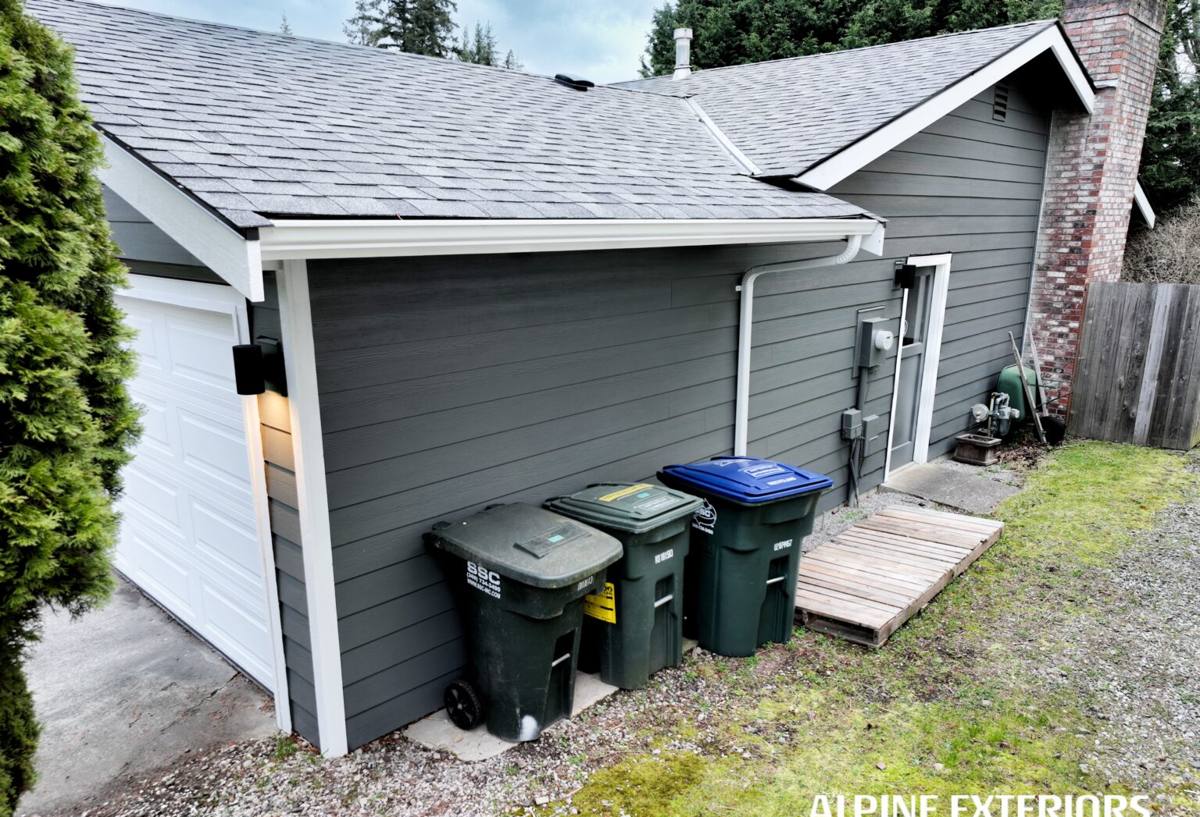
We install James Hardie fiber cement siding exclusively — not vinyl, not engineered wood products like LP SmartSide, not cedar, and not other fiber cement brands. That's a deliberate standard, not a sales preference. Fiber cement is a mix of cement, sand, and cellulose fibers, which makes it non-combustible and dimensionally stable in ways wood-based products simply aren't. James Hardie backs that material with a factory-applied ColorPlus finish and climate-engineered HZ product lines, plus a strong transferable warranty when the job is installed to their specification.
How the Material Behaves in Coastal Conditions
Fiber cement doesn't absorb and release moisture the way wood or wood-fiber composites do, so it doesn't swell, cup, or delaminate at the edges the way some engineered wood siding can after years of wet-dry cycling. It also doesn't feed mold or algae growth the way organic wood fibers can, which matters directly in a place where moss season runs long. Combined with a factory finish that's baked on rather than field-applied, it holds color and resists the chalking and fading that salt air and UV exposure accelerate on lesser-protected products.
What This Means for a Specific Eastsound Property
Every lot is different — a home tucked under fir cover on a north slope has a moss and shade problem more than a wind problem, while a home closer to the water deals more with wind-driven rain and salt deposition on the walls. Part of our estimate visit is looking at your specific exposure: which walls take the weather, where moisture tends to sit, and where past siding has failed or shown wear, so the installation plan actually answers what your house is dealing with rather than a generic template.
What a Correct Fiber Cement Installation Actually Involves
Fiber cement siding is only as good as the installation behind it. James Hardie's own installation manual is specific about clearances, fastening, and water management, and skipping those details is the single biggest reason any siding — fiber cement included — fails early.
Water Management Behind the Siding
Correct installation starts before the first board goes up: a properly lapped weather-resistive barrier, flashed window and door openings, and integrated kick-out flashing anywhere a roofline meets a wall. Fiber cement is durable, but it is still a rain-screen cladding, not a waterproofing membrane — the barrier and flashing behind it are what actually keep water out of the wall assembly.
Clearance and Fastening
Hardie's specifications call for defined clearance between the bottom of the siding and grade, decking, or roofing, so water can't wick up into the board or sit against a cut edge. Fasteners need to be corrosion-resistant and driven to the manufacturer's depth and spacing — over-driven or under-driven nails are a common cause of cracking and premature wear, especially in a climate with this much moisture cycling.
Cut Edges and Field Touch-Up
ColorPlus finish is factory-cured and more durable than field-applied paint, but any field cut exposes raw material that needs to be sealed and touched up per manufacturer guidance. On a salt-air site, we're careful about this step specifically because an unsealed cut edge is a fast path to moisture intrusion and early staining.
Our Process for an Eastsound Project
- Site assessment: we walk the exterior, note exposure by wall, check existing siding and trim condition, and look for moisture or moss patterns tied to shade and drainage.
- Scope and product selection: we recommend the Hardie profile and HZ product line suited to your exposure and confirm color and trim details.
- Prep and tear-off: removal of failing siding, inspection of sheathing for hidden rot or moisture damage, and repair before anything new goes up.
- Water management install: weather-resistive barrier, flashing at all penetrations, windows, doors, and roof-to-wall transitions.
- Siding installation: Hardie boards or panels installed to manufacturer clearance, fastening, and joint specifications.
- Trim, caulking, and touch-up: factory-matched caulking at joints and cut-edge sealing where field cuts were made.
- Final walk-through: we go over the finished job with you before calling it done.
Choosing the Right Hardie Product for the Job
James Hardie makes several profiles, and the right one depends on the look you want and how the wall is exposed. Here's how the common options compare for a coastal Orcas Island setting.
| Product | Best Use | Notes for Eastsound Exposure |
|---|---|---|
| HardiePlank lap siding | Traditional horizontal siding, most common choice | Widest color and texture range; performs well on both water-facing and shaded walls when properly flashed |
| HardiePanel vertical siding | Modern look, accent walls, gable ends | Fewer horizontal laps means fewer joints for water to find; good for high-exposure gables |
| HardieShingle siding | Cottage or shingle-style aesthetic | More seams than lap siding, so correct flashing and fastening matter even more in driving rain |
| HardieTrim boards | Corners, fascia, window and door trim | Matched ColorPlus finish resists the fading and staining that mismatched trim often shows first |
How Fiber Cement Compares to Other Siding Materials Here
We get asked why we won't install other products, so it's worth laying out the trade-offs plainly rather than just asserting a preference.
| Material | Moisture & Rot Behavior | Salt Air Performance | Moss/Algae Resistance |
|---|---|---|---|
| Vinyl | Doesn't rot, but can warp under heat/cold cycling and at poor installs water can get trapped behind it | UV and salt exposure accelerate fading and brittleness over time | Smooth surface sheds spores fairly well, but seams can trap organic debris |
| Cedar/wood | Absorbs and releases moisture; prone to swelling, checking, and rot without diligent maintenance | Salt accelerates weathering of unfinished or under-maintained wood | Organic material is more hospitable to moss and algae growth |
| Engineered wood (e.g. LP SmartSide) | Wood-based core is more moisture-tolerant than raw wood but still sensitive at cut edges and seams | Field-applied or factory finishes vary in how well they resist salt cycling | Better than raw wood, but still an organic substrate |
| James Hardie fiber cement | Cement-based composition doesn't swell, cup, or rot | Factory ColorPlus finish resists fading and chalking from salt/UV exposure | Inorganic material doesn't feed mold or algae growth |
This isn't a claim that other materials are unusable — plenty of homes around the region have vinyl, wood, or engineered siding that's been maintained well. It's the reason our company made fiber cement, and specifically James Hardie's engineered lines, the only product we stand behind for the conditions Eastsound homes actually face.
Why Local, Island-Specific Experience Matters
Working on Orcas Island isn't the same as working on the mainland. Materials, crews, and equipment move on a ferry schedule, so a project plan has to account for that instead of assuming next-day deliveries. Weather windows for tear-off and water-management steps matter more here, since a home mid-install is vulnerable to the same driving rain the finished siding is built to resist. A crew that already works in Eastsound and around San Juan County knows how to sequence a job around ferry logistics and weather rather than learning that on your project.
Maintaining Fiber Cement Siding in a Salt-Air, Moss-Prone Climate
Fiber cement is low-maintenance compared to wood, but "low-maintenance" isn't "no-maintenance," especially in this climate. A simple seasonal routine keeps it performing the way it's designed to:
- Rinse walls (especially north- and shade-facing ones) once or twice a year to clear salt residue and early moss or algae growth before it takes hold.
- Keep gutters clear and check that downspouts direct water away from the foundation and lower siding courses.
- Trim back vegetation and tree cover that keeps walls shaded and damp longer than they need to be.
- Inspect caulking at trim and joints yearly, especially after a hard winter, and have gaps resealed before they let moisture in.
- Touch up any field-cut or damaged edges promptly rather than letting raw material sit exposed.
- Have a professional check flashing at roof-to-wall transitions periodically — that's where hidden leaks most often start.
Get an Estimate for Your Eastsound Home
If you're weighing siding options for a home in Eastsound or elsewhere on Orcas Island, we're happy to walk the property, look at your specific exposure, and talk through what a correct James Hardie installation would look like for your house — no pressure, no obligation. Use the form below to request a free estimate.