 Orcas Island Siding
 Deer Harbor's Marine Climate Is Hard on Decks
Deer Harbor sits right on the water, and that waterfront setting is exactly what makes decks here wear out faster than they would twenty miles inland. Salt-laden air off the harbor accelerates corrosion in metal fasteners, joist hangers, and structural screws well before their rated lifespan is up. Add in Orcas Island's long stretch of driving rain each fall and winter, tree cover that keeps decking shaded and damp for days after a storm passes, and a moss season that can run from early fall clear through spring, and you've got a structure under near-constant moisture stress for most of the year.
None of that means a deck in Deer Harbor is doomed to fail — it means it has to be built and repaired with that environment in mind, not treated like a deck in a dry inland climate. That distinction is the difference between a repair that holds for a couple of seasons and one that lasts.
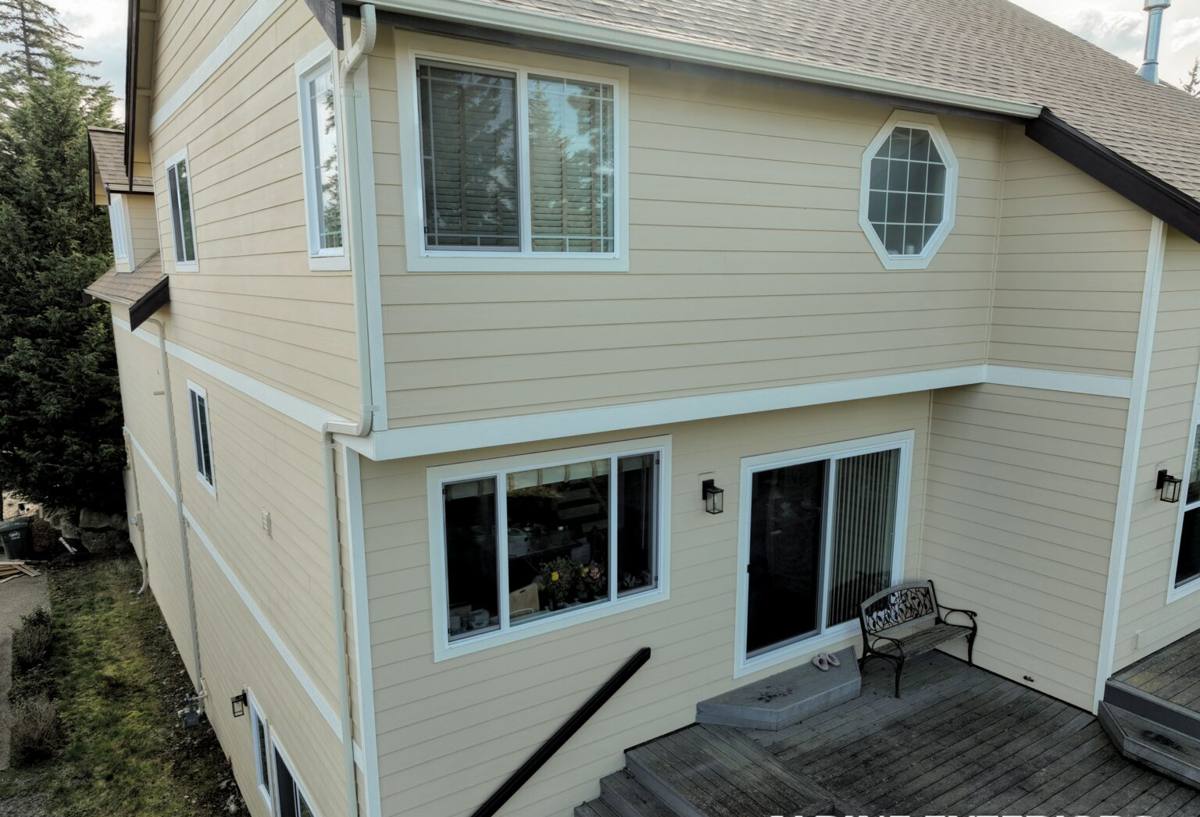
The Deck Problems We See Most on Orcas Island
Ledger Board and Framing Rot
The ledger board — the piece that bolts your deck to the house — is the single most important structural component on most decks, and it's also the one that fails quietest. Water gets behind the flashing (or finds a house with no flashing at all, which was common on older construction), soaks into the ledger and the rim joist behind it, and rot sets in where nobody can see it until the deck starts to feel spongy or pull away from the house.
Corroded Fasteners and Hardware
Standard zinc-coated screws and joist hangers weren't built for salt air. On a waterfront lot like Deer Harbor, we regularly find hardware that's rusted through in half the time it would take somewhere inland. Corroded fasteners lose their grip strength long before the wood around them shows any visible damage, which is part of what makes them dangerous.
Moss and Algae Buildup
Shaded, damp decking is prime moss territory. Beyond making boards slick and dangerous underfoot, moss holds moisture directly against the wood surface, which speeds up rot and staining and shortens the life of any finish or sealant.
Cupped, Split, or Delaminating Boards
Repeated wet-dry cycles cause wood decking to cup, crack, and split at the ends. On composite decking, we see delamination and swelling at cut edges that weren't properly sealed during the original install — a common shortcut that causes problems years down the road.
Soft or Wobbly Railing Posts
Railing posts take a lot of water at the base where they meet the deck surface or a concrete footing, and that's usually where rot starts. A post that flexes or feels soft when you lean on it is a safety issue, not a cosmetic one.
Signs Your Deck Needs Repair Before It Needs Replacement
Catching problems early is what keeps a repair a repair instead of a full rebuild. Walk your deck and check for these:
- Soft, spongy, or springy spots when you walk across the decking
- Visible gaps or movement where the deck meets the house (ledger board)
- Rust streaks running down from screws, bolts, or joist hangers
- Green or black staining, or actual moss growth, on boards that stay shaded
- Railing posts that wobble, flex, or feel loose when pushed
- Cracked, cupped, or splintering boards, especially near board ends
- Stairs that feel less solid than they used to, or treads that shift underfoot
- Standing water that doesn't drain off the deck surface within a few hours
Any one of these on its own might be a minor fix. Several at once, especially near the ledger or a support post, usually means it's worth a full structural look before you use the deck for anything more than foot traffic.
What a Correct Deck Repair Actually Involves
Looking Past the Surface
A repair that only replaces the boards you can see and ignores the framing underneath is a repair that fails again in a few years. Before we touch decking, we check the joists, the ledger connection, and the support posts or footings. A deck can look fine on top and still have a compromised structure underneath — that's the part that actually holds people up.
Flashing and Water Management
Most ledger rot traces back to missing or failed flashing at the house connection. A correct repair re-flashes that joint with materials designed to shed water away from the framing, not just caulk over the problem and hope it holds through the next winter's rain.
Fasteners Rated for Coastal Exposure
Given how much salt air a harbor-side deck sees, we use fasteners and hardware rated for coastal or marine-grade exposure — not the standard-grade hardware that's fine for an inland deck but undersized for what Deer Harbor throws at it. It costs a bit more up front and saves you from redoing the same repair in five years.
Repair or Replace? How We Help You Decide
Not every deck problem calls for a full tear-off, and not every deck is worth patching. We look at the framing condition, the age of the structure, and how much of it is actually affected before recommending either direction.
| Condition | Usually Repair | Usually Replace |
|---|---|---|
| Framing and ledger | Solid, no rot found on inspection | Widespread rot in joists or ledger board |
| Decking surface | A few damaged or cupped boards | Most boards cracked, splintering, or delaminating |
| Railings and posts | Isolated loose post or damaged baluster | Multiple posts soft at the base or footings failed |
| Age of structure | Under 10-15 years, built to a reasonable standard | Original construction outdated or undersized for current code |
| Fasteners/hardware | Isolated corrosion, spot-replaceable | Hardware corroded throughout |
When a deck falls in between, we'll usually recommend a staged approach: repair the structural essentials now, and plan surface or railing work for later if budget is a factor. We'll always tell you honestly which side of the line your deck falls on rather than pushing a full replacement it doesn't need.
Materials We Use for Coastal Deck Repair
Wood vs. Composite for Replacement Boards
Both wood and composite decking can hold up on Orcas Island if they're installed and maintained correctly — the right choice usually comes down to your budget and how much upkeep you want to take on. Wood decking costs less up front but needs regular cleaning, sealing, and moss control to get a full lifespan out of it in this climate. Composite decking costs more initially but resists moisture absorption and doesn't need refinishing, which matters in a climate this wet — though cut edges still need to be sealed properly during installation to prevent moisture intrusion at the core.
Hardware and Fasteners
For structural connections — joist hangers, ledger bolts, post bases — we use stainless steel or hot-dip galvanized hardware rated for coastal exposure rather than the standard electro-galvanized fasteners common in inland construction. It's a small line-item difference in cost that has an outsized effect on how long a repair actually lasts near saltwater.
Flashing and Sealants
We use flashing materials designed to hold up under sustained wet exposure, not just quick fixes meant for drier climates. The goal is water management that works through an actual Pacific Northwest winter, not just a dry-season inspection.
Our Deck Repair Process
- Inspection — We check the decking surface, framing, ledger connection, posts, and footings, and probe any suspect wood to find rot that isn't visible from the top.
- Honest assessment — You get a clear explanation of what's actually wrong, what's cosmetic versus structural, and whether repair or replacement makes sense for that section.
- Written scope and estimate — We outline exactly what work is included, what materials we're using, and why, before anything starts.
- Repair work — Framing and structural issues get addressed first, followed by decking, railings, and finish work.
- Site cleanup — Old material, hardware, and debris are hauled off; we don't leave a job site looking worse than we found it.
Why Hire a Crew That Already Works in Deer Harbor
Deck repair on Orcas Island isn't quite the same trade as deck repair on the mainland. Getting materials and equipment to the island takes planning that off-island crews often underestimate, which turns into delays and change orders once they're on-site. A crew that regularly works Deer Harbor and the surrounding Orcas Island communities already accounts for that in scheduling and material ordering, so your project doesn't stall waiting on a ferry.
Just as important is knowing what actually fails out here. A contractor who mostly works inland may default to standard-grade fasteners and skip flashing details that matter enormously on a waterfront lot in San Juan County, simply because it's not what they see day to day. Local experience means we're not learning the hard way on your deck.
Keeping Your Deck in Shape After the Repair
A good repair buys you years, but a little seasonal attention buys you more. A few habits go a long way in this climate:
- Sweep leaves and debris off the deck regularly in fall — trapped organic matter holds moisture and feeds moss growth
- Treat moss and algae early in the season before it gets established, rather than waiting until it's thick
- Check railings and stair connections once or twice a year for looseness
- Keep gutters and downspouts near the deck clear so runoff isn't draining directly onto or under it
- Reseal wood decking on the manufacturer's recommended schedule — don't stretch it out just because it still looks okay on top
If you're noticing soft spots, rust stains, moss buildup, or a deck that just doesn't feel as solid as it used to, we're happy to take a look and give you a straight answer on what it needs. Reach out for a free, no-pressure estimate — use the form below to get started.