 Orcas Island Siding
 Siding Built for Orcas Island, Not Just Installed on It
A home on Orcas Island sits in one of the more demanding coastal environments in San Juan County. Salt-laden air moves in off the water, driving rain comes sideways during fall and winter storms, and the shaded, damp conditions that make this island beautiful also grow moss on anything that holds moisture for too long. Siding here isn't just a cosmetic choice — it's the layer standing between your framing and a climate that never really lets up.
We install siding specifically for Orcas homes with that reality in mind. That means the product we choose, the way we detail it around windows and trim, and the sequence we follow during installation are all built around what actually happens to a wall assembly on this island over ten, twenty, and thirty years — not just what looks good on install day.
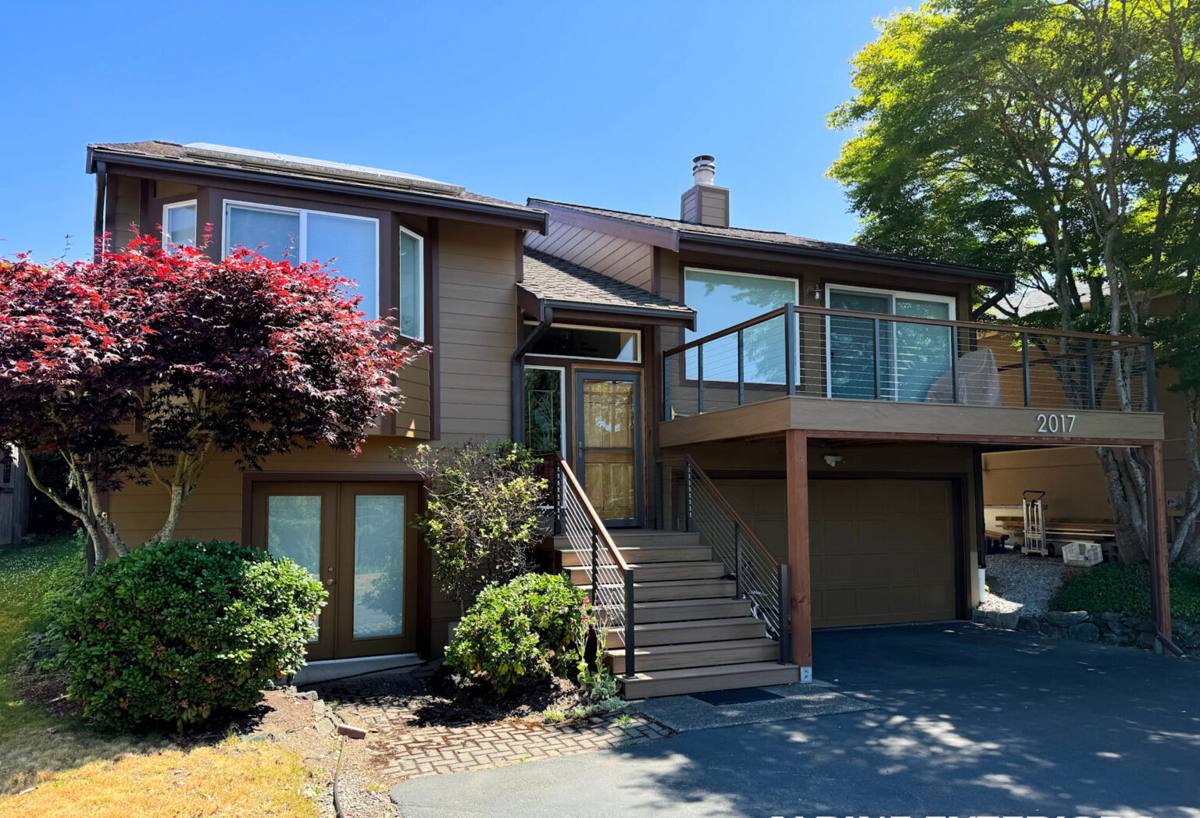
What Salt Air, Rain, and Moss Season Actually Do to Siding
Salt Air
Airborne salt is corrosive to metal fasteners, flashing, and trim, and it accelerates the breakdown of coatings that aren't formulated to resist it. Homes closer to the shoreline see this fastest, but even properties set back from the water get exposure carried in on prevailing winds. Siding materials that rely on a painted or coated surface film — rather than a finish that's baked into the material — tend to show fading, chalking, and coating failure sooner in this kind of air.
Driving Rain
Orcas Island gets weather that comes in sideways, not just straight down. Wind-driven rain finds every gap in flashing, every under-caulked joint, and every seam where two pieces of siding meet without proper lap or clearance. Once water gets behind the siding, the problem usually isn't the siding itself — it's what happens to the sheathing, framing, and insulation behind it, often for years before anyone notices from the outside.
Moss and Sustained Dampness
Between the tree cover common on the island and the long stretches of overcast, damp weather, moss and algae find plenty of places to take hold — on roofs, on decks, and on siding that stays wet longer than it should because of poor drainage or too little clearance from grade, landscaping, or roof lines. Moss itself isn't usually what damages siding directly, but it's a sign that a surface is staying wet longer than it's designed to, and sustained moisture is what causes rot, coating failure, and swelling in moisture-sensitive materials.
Why We Install Only James Hardie Fiber Cement
We made a deliberate decision to install James Hardie fiber cement siding exclusively, and we don't install vinyl, LP SmartSide, Cemplank, Allura, primed spruce, or bare cedar. That's not a marketing position — it's a standard we hold to because of what we've seen these materials do, and not do, over time in a climate like this one.
- Non-combustible material — fiber cement doesn't burn, melt, or contribute fuel the way vinyl and some wood-based products can.
- Factory-applied ColorPlus finish — the color and protective coating are baked on in a controlled environment, not brushed or sprayed on-site, which gives more consistent, longer-lasting resistance to fading and coating failure than field-applied paint.
- Engineered for regional climate — James Hardie's HardieZone system formulates its products differently depending on regional moisture and temperature patterns, rather than shipping one generic product to every part of the country.
- Dimensionally stable — fiber cement doesn't expand, contract, warp, or rot the way solid wood or wood-composite products can when they take on moisture.
- Backed by a strong transferable warranty — meaningful protection that follows the home, not just the original owner.
Products like LP SmartSide and untreated or primed wood siding can perform reasonably well in the right climate with diligent maintenance, and vinyl has its place in some markets. But in a salt-air, high-rainfall environment with a real moss season, the maintenance burden, moisture sensitivity, and coating longevity of those alternatives are trade-offs we're not willing to put on an island home. James Hardie fiber cement is what we install because it's what we're comfortable standing behind here.
What a Correct Installation Actually Involves
Fiber cement siding performs the way it's supposed to only when the assembly behind it is done right. On Orcas Island, where wind-driven rain is a real factor, the details behind the siding matter as much as the siding itself.
Water-Resistive Barrier and Flashing
Every installation starts with a continuous weather-resistive barrier over the sheathing, with flashing integrated at every window, door, and horizontal transition so water is directed out and away from the wall, not trapped behind it. Seams, laps, and penetrations get sealed in the correct order — flashing over the barrier, siding over the flashing — so gravity and drainage do the work, not caulk alone.
Proper Clearance and Drainage
Siding needs clearance from the ground, roof lines, decks, and grade so it isn't sitting in standing moisture. We follow manufacturer clearance requirements and grade transitions carefully, because this is one of the most common places we see moss and rot start on homes that had siding installed without enough attention to drainage paths.
Fastening and Fiber Cement-Specific Technique
Fiber cement has to be fastened, scored, and cut differently than wood or vinyl — correct fastener type and placement, proper nailing patterns, and blade or shear cutting to control silica dust and avoid chipped edges that can compromise the factory finish. Installers who mostly work with other siding types can get this wrong in ways that don't show up until years later.
Trim, Caulking, and Paint-Grade Details
Corners, trim boards, and joints get detailed with compatible sealants and, where ColorPlus product isn't factory-finished at a cut edge, appropriate touch-up so the coating protection stays continuous. Small gaps at trim are a common entry point for driving rain in this climate, so we treat those details as structural, not cosmetic.
Our Process, Start to Finish
- On-site assessment — we walk the home, check the condition of the existing siding and sheathing, and note drainage, grade, and exposure issues specific to the property.
- Product and color selection — we go over James Hardie product lines and ColorPlus color options suited to the home's style and exposure.
- Written estimate — a clear scope of work, materials, and cost factors, with nothing vague about what's included.
- Material staging — because everything for an Orcas Island project comes over by ferry, we plan delivery and staging in advance so the crew isn't waiting on materials mid-job.
- Tear-off and inspection — old siding comes off, and we check the sheathing underneath for hidden moisture damage before anything new goes on.
- Weather barrier, flashing, and installation — the assembly is built in the correct order, with attention to every seam and penetration.
- Final walkthrough — we go over the finished work with the homeowner before calling the job complete.
Comparing Siding Options for an Island Home
| Factor | James Hardie Fiber Cement | Vinyl | LP SmartSide / Wood-Based | Primed or Bare Wood |
|---|---|---|---|---|
| Salt air resistance | Strong — factory finish resists coastal exposure | Can become brittle and fade over time | Moderate — coating and edge sealing matter a lot | Requires frequent repainting to hold up |
| Moisture / rot risk | Not organic — doesn't rot | Low rot risk, but seams can trap moisture | Moisture-sensitive at cuts and damaged coating | High if maintenance lapses |
| Fire performance | Non-combustible | Can melt or contribute fuel | Combustible wood-based core | Combustible |
| Maintenance in this climate | Low — periodic wash, occasional touch-up | Low but limited repair options once damaged | Moderate — edge sealing and monitoring needed | High — regular repainting and inspection |
| Typical lifespan when installed correctly | Multiple decades | 15–25 years | Varies with maintenance | Varies widely with maintenance |
Cost Factors for a Siding Project Here
Every home is different, so we won't quote a number without seeing the property, but a few factors consistently affect cost for Orcas Island projects specifically:
| Factor | Why It Matters |
|---|---|
| Home size and wall complexity | More square footage, corners, and window/door openings mean more material and labor. |
| Existing siding removal | Tear-off, disposal, and any sheathing repair add scope beyond the new siding itself. |
| Sheathing condition underneath | Hidden moisture damage found during tear-off may need repair before new siding goes on. |
| Material and ferry logistics | Getting materials to the island on schedule takes planning that mainland jobs don't require. |
| Access and site conditions | Steep lots, tree cover, or limited staging space can affect labor time. |
| Product line and finish selection | James Hardie offers multiple product lines and ColorPlus colors at different price points. |
Keeping Siding Performing After Installation
Correctly installed fiber cement siding is low-maintenance, not no-maintenance. A little attention goes a long way in this climate:
- Rinse siding periodically to clear salt residue, pollen, and organic buildup before it becomes a foothold for moss or algae
- Keep gutters clear so overflow doesn't run down the wall face
- Trim back vegetation and tree cover that keeps siding shaded and damp longer than necessary
- Check caulking at trim, corners, and penetrations every year or two and touch up as needed
- Address any cracked or chipped panels promptly so the factory finish isn't compromised at exposed edges
- Watch for early moss growth at the base of walls near grade, decks, or shaded corners — it's an early signal, not just a cosmetic issue
Why a Crew That Already Works Orcas Island Matters
Island work isn't the same as mainland work. Ferry schedules dictate when crews and materials can arrive and leave, which means a project has to be planned with that reality built in from the start — not discovered mid-job when a delivery gets missed. Weather windows matter more too: driving rain and wind can shut down safe installation conditions for stretches at a time, and a crew that's used to working around San Juan County weather patterns plans the sequence of work to make the most of the windows that are available.
There's also a familiarity factor. A crew that has worked on Orcas Island before understands the kind of exposure a given property is likely to face based on its position relative to water, tree cover, and prevailing wind — and adjusts detailing accordingly. That local judgment is hard to replace with a crew that's never worked island conditions before.
Ready to Talk About Your Home
If your siding is showing its age, holding onto moisture, or just due for an honest look, we're happy to come take a look and talk through what James Hardie fiber cement would mean for your specific home on Orcas Island. Reach out for a free, no-pressure estimate — there's no obligation, just a straightforward assessment of what your home actually needs.