 Orcas Island Siding
 Deck Replacement in Deer Harbor
Deer Harbor sits close to the water on the west side of Orcas Island, and decks here take a beating that decks in drier, inland parts of Washington simply don't face. Salt-laden air off the harbor, long stretches of driving rain through fall and winter, and a moss season that can run half the year all work against wood, fasteners, and footings. If your deck has gone soft underfoot, gray and splintering, or green with moss in the shaded corners, it's usually not a cosmetic problem anymore — it's a structural one waiting to be found.
This page covers what deck replacement actually involves for a home in Deer Harbor and San Juan County: what the climate does to a deck over time, what a correctly built replacement looks like from the framing up, and what to expect from a crew that works this specific stretch of Orcas Island regularly.
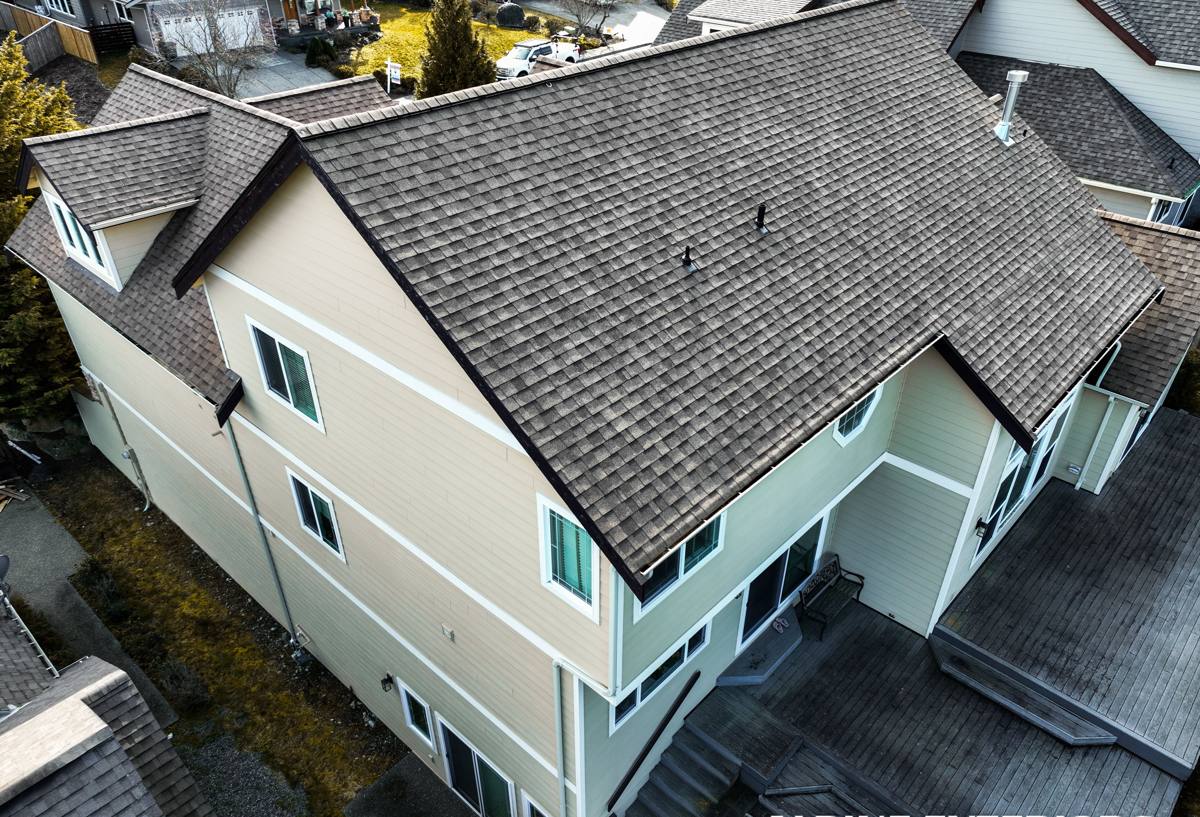
What San Juan County's Climate Does to a Deck
Three things drive most of the deck failures we see out here, and they compound each other.
Salt Air and Corrosion
Homes near Deer Harbor's shoreline get a steady drift of salt-laden air. Over years, that air attacks standard fasteners, joist hangers, and any exposed metal hardware — even galvanized coatings wear thin faster near open water than they would a few miles inland. Corroding fasteners loosen their grip in the wood, and a deck can look solid on the surface while the connections holding it together are quietly failing underneath.
Driving Rain and Trapped Moisture
Orcas Island gets long stretches of wet weather, often blown sideways by wind off the water. Rain doesn't just fall on a deck — it drives into ledger connections, under poorly flashed board ends, and into any gap where end grain is exposed. Wood pulls in that moisture and holds it, especially in framing members that don't get enough airflow underneath. That's how rot starts in joists and ledger boards long before the decking itself looks bad.
Moss and Algae Season
Shaded decks, or decks under trees, stay damp for extended periods, and that's exactly what moss and algae need to take hold. Beyond looking bad, a mossy deck surface holds moisture against the wood constantly and becomes slick and genuinely dangerous underfoot, especially on stairs and ramps.
Signs Your Deck Is Due for Replacement, Not Just Repair
Not every worn deck needs a full tear-off. But certain signs mean patching individual boards won't solve the underlying problem.
- Soft, spongy, or bouncy spots when you walk across the deck
- Screws or nails that back out repeatedly no matter how many times they're reset
- Visible rot, dark staining, or a musty smell around the ledger board where the deck meets the house
- Persistent moss or algae that returns within weeks of cleaning
- Rust streaks running down from joist hangers, bolts, or other hardware
- Railings that flex or feel loose at the posts
- Gaps opening up between decking boards, or boards cupping and splitting
- A deck older than 15–20 years that has never had ledger flashing or joist tape added
If you're seeing two or three of these together, especially anything involving the ledger board or framing, it's worth having someone look at the structure before deciding whether to repair or replace.
What a Correct Deck Replacement Involves
A deck that's going to hold up to Deer Harbor's weather needs to be built right from the ground up, not just re-decked on top of old framing.
Footings and Structure
We check existing footings for movement, frost heave, or rot at the post base before deciding whether they can be reused. Many older decks on Orcas Island were built with undersized or poorly set footings that were never adequate for the load or the site's drainage. On sloped or waterfront-adjacent lots, footing depth and placement matter even more, since runoff patterns can undermine a footing that looked fine when it was poured.
Ledger Board Flashing
The ledger board — where the deck attaches to the house — is the single most common failure point on older decks in wet climates. Proper replacement means removing old siding as needed, installing correct flashing and a water-resistant barrier behind the ledger, and using proper structural fasteners rather than relying on the original nails. This is the detail that keeps water out of your home's wall framing, not just the deck.
Joist Protection and Airflow
We use joist tape or an equivalent moisture barrier on top of framing members to keep water from soaking directly into end grain and top surfaces, and we make sure there's enough clearance and airflow underneath the deck so wood can actually dry out between storms instead of staying damp for weeks at a time.
Fasteners and Hardware
Given the salt air near Deer Harbor, we use stainless steel or high-grade coated fasteners and connectors rated for coastal exposure rather than standard galvanized hardware. It costs more up front and it's the difference between hardware that lasts the life of the deck and hardware that starts rusting within a few winters.
Decking Material Options for This Climate
There's no single "best" decking material — it depends on your budget, how much upkeep you want to do, and how exposed your deck is to sun, shade, and moisture. Here's how the common options actually perform in a wet, salt-air environment like Deer Harbor.
| Material | Moisture & Rot Resistance | Moss/Algae Resistance | Maintenance | Typical Lifespan |
|---|---|---|---|---|
| Pressure-treated wood | Good if properly sealed and maintained | Moderate — needs regular cleaning | Annual cleaning, periodic sealing/staining | 10–15 years |
| Cedar | Naturally decent, degrades faster if unsealed | Moderate — moss can still take hold in shade | Regular sealing to maintain resistance and color | 12–18 years |
| Composite decking | Very good, doesn't absorb water like wood | Better, though algae film can still form on shaded boards | Occasional washing, no sealing/staining | 20–25+ years |
| PVC/vinyl decking | Excellent, essentially non-absorbent | Best resistance of the common options | Occasional washing | 25+ years |
We're honest with clients about trade-offs. Composite and PVC cost more per square foot up front but save on maintenance and replacement cycles over time — a meaningful consideration on a shaded, damp lot where wood decking has to be cleaned and resealed more aggressively just to keep up. Real wood still has its place for homeowners who want that look and are willing to keep up with sealing on a regular schedule.
Our Deck Replacement Process
Every deck replacement we do follows the same sequence, though the details adjust to your specific home and site:
- On-site assessment of the existing deck, framing, footings, and ledger connection
- Honest recommendation on repair versus full replacement, with reasoning explained
- Material discussion based on your budget, sun/shade exposure, and maintenance preference
- Permit review where required under San Juan County rules, particularly for decks near shoreline setback areas
- Removal of the old deck and inspection of framing, ledger, and posts underneath
- Rebuild with corrosion-resistant hardware, proper ledger flashing, and adequate under-deck airflow
- Final walkthrough covering railings, stairs, and any maintenance recommendations specific to your site
Permits and Shoreline Considerations
Many properties around Deer Harbor sit close enough to the water that shoreline setback and permitting rules under San Juan County's regulations can apply to deck work, particularly for rebuilds that change the footprint or height of the existing structure. We handle the permit process as part of the job and won't cut corners here — a deck built without required permits can create real problems at resale, and shoreline-adjacent construction is an area the county pays attention to. If your deck footprint and height are staying the same as the original, the process is usually straightforward; if you're looking to expand it, that's worth discussing early.
Maintaining Your New Deck
A well-built deck still needs some seasonal attention in this climate to get its full lifespan:
- Rinse off moss, pollen, and debris a few times a year, more often in shaded areas
- Keep gutters and downspouts clear so runoff isn't dumping extra water onto or near the deck
- Check railings and stair connections annually for looseness
- For wood decking, reseal on the schedule recommended for your specific product — don't wait until it looks gray
- Trim back overhanging branches that keep sections of the deck shaded and damp
Why a Crew That Works Deer Harbor Regularly Matters
Deer Harbor isn't a generic job site. Properties here range from waterfront lots with shoreline considerations to hillside homes with limited access, and materials and crews often have to work around ferry schedules to get to the island at all. A contractor who's done deck work throughout San Juan County knows what footing conditions to expect on this kind of terrain, which hardware actually holds up to the salt air off the harbor, and how to plan a job so it isn't derailed by a missed ferry or a week of driving rain. That local familiarity shows up in fewer surprises during the job and a deck that's actually built for the conditions it has to survive, not just a generic spec.
If your deck is showing its age or you're planning ahead for a replacement, we're happy to take a look and give you a straightforward, no-pressure estimate. Use the form below to get started.