 Orcas Island Siding
 Storm Damage Roof Repair for Deer Harbor Homes
Deer Harbor sits on the water, and that location is exactly why its roofs take more punishment than a typical inland home. Winter storms roll in off the Strait with driving rain and gusty wind, salt-laden air works on every exposed fastener and metal component year-round, and the shaded, moisture-heavy tree cover that gives the area its character also feeds a long moss season that can hide roof problems for months before they show up as a leak. When a storm does damage a roof here, a proper repair has to account for all of that, not just patch the visible hole.
This page covers what storm damage repair actually involves for homes in and around Deer Harbor, what correct work looks like, and why it matters to hire a crew that already understands how this stretch of Orcas Island treats a roof.
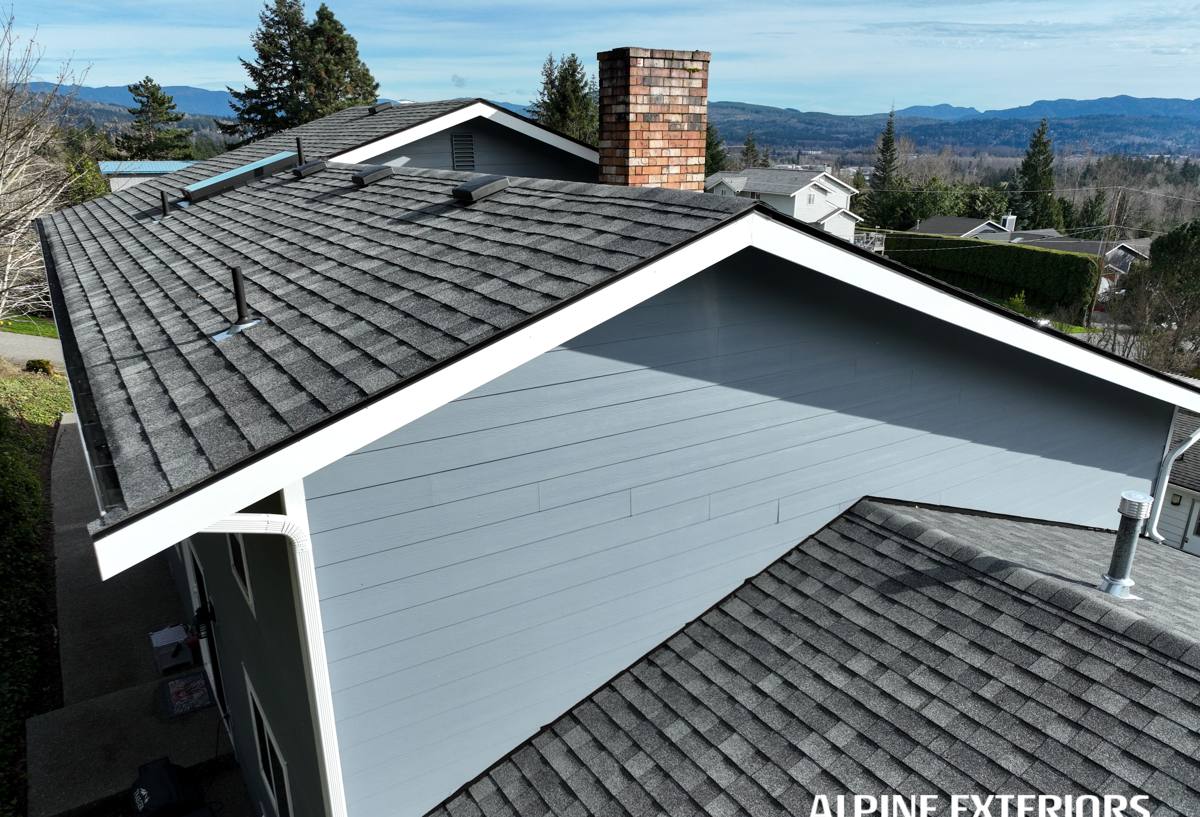
Why Deer Harbor Roofs Fail Differently
Wind and Driving Rain
Storms in this part of San Juan County rarely bring straight-down rain. Wind pushes it sideways and underneath roof edges, ridge caps, and flashing details that were never designed to shed water horizontally. A roof that looks intact from the ground can have wind-lifted shingles, loosened ridge cap, or flashing that's been worked open just enough to let water track down into the decking during the next heavy rain.
Salt Air
Waterfront and near-waterfront homes deal with a slow, steady corrosive effect from salt-laden air. Exposed steel fasteners, cheaper flashing metals, and gutter hardware corrode faster here than they would a few miles inland. A storm repair that reuses corroded fasteners or unprotected steel flashing is a repair that fails again within a couple of seasons.
Moss and Prolonged Moisture
Tree cover and marine humidity mean roofs in Deer Harbor stay damp longer after every rain, and moss gets a real foothold in shaded, north-facing sections. Moss doesn't just look bad — it holds moisture against the roofing material, lifts shingle edges as it grows, and works its way under flashing over time. A storm-damaged section that already had moss buildup is more likely to have hidden rot in the decking underneath, which changes the scope of the repair.
Common Storm Damage We Find on Orcas Island Roofs
- Wind-lifted or torn shingles — usually along ridges, hips, and roof edges where wind uplift is strongest.
- Flashing failures around chimneys, skylights, and roof-to-wall transitions, often worsened by years of moss and moisture already softening the seal.
- Gutter and downspout damage from wind-driven debris or ice, which backs water up under the roof edge instead of carrying it away.
- Tree limb and debris impact — Orcas Island's tree cover means falling limbs are a real and recurring cause of storm damage, from a few cracked shingles to punctured decking.
- Underlayment exposure where shingles have blown off entirely, leaving the roof deck vulnerable to the next rain event.
- Moss-accelerated rot discovered once damaged shingles are pulled back, particularly in shaded valleys and north slopes.
What a Correct Storm Repair Actually Involves
A storm repair that's done right isn't just about covering the hole. It involves a few distinct steps, and skipping any of them is how homeowners end up paying for the same repair twice.
1. Inspection Beyond the Obvious Damage
We check the full roof plane around the damaged area, not just the spot that's visibly broken. Wind damage often extends beyond what's obvious from the ground, and a storm strong enough to tear shingles in one area has usually stressed fasteners and flashing nearby too.
2. Temporary Protection When Needed
If a roof has active exposure to the weather, temporary tarping or dry-in protection comes first, especially given how quickly another rain system can move through. This buys time to do the permanent repair correctly rather than rushing it.
3. Deck Inspection Once Materials Are Pulled
Once damaged shingles and flashing are removed, we check the roof decking underneath for rot or soft spots — something that's more common here than in drier climates because of how long moisture sits against Deer Harbor roofs. Any compromised decking gets replaced before new roofing goes back down.
4. Matching Materials and Proper Flashing
Repairs get tied into the existing roof system with matching or compatible materials, correct nailing patterns, and flashing details built for wind-driven rain — not just caulked over. Corroded fasteners and worn flashing metal get replaced with materials suited to a salt-air environment, not just whatever's fastest to install.
5. Moss Treatment Where Relevant
If moss contributed to the damage or is present nearby, we address it as part of the repair rather than leaving it to keep working on the roof after we leave.
Storm Damage Scope: What Drives the Repair
Not every storm-damaged roof needs the same scope of work. The table below outlines the general factors that determine whether a repair stays small or expands.
| Damage Type | Typical Scope | What Can Expand It |
|---|---|---|
| Isolated wind-lifted shingles | Localized shingle and fastener replacement | Hidden fastener damage on surrounding shingles |
| Flashing failure (chimney, skylight, wall) | Flashing replacement, resealing roof-to-wall transition | Water intrusion already reaching decking or interior framing |
| Tree limb impact | Patch or section replacement over the impact area | Punctured decking or damage to rafters below |
| Moss-related shingle lift | Moss treatment plus shingle repair in affected zone | Long-term moisture exposure has caused deck rot |
| Gutter/edge damage | Gutter and drip-edge repair or replacement | Backed-up water has already damaged fascia or soffit |
This is why an accurate inspection matters more than a quick guess from the ground — the visible damage is often the smallest part of the actual problem.
Roofing Materials and Storm Resistance in This Climate
When storm repairs involve replacing a larger section, homeowners sometimes ask whether it's worth upgrading materials at the same time. Here's how the common options compare for a salt-air, high-moisture setting like Deer Harbor.
| Material | Storm/Wind Performance | Moss & Moisture Behavior | Trade-offs |
|---|---|---|---|
| Architectural asphalt shingles | Good, with proper nailing and rated wind class | Susceptible to moss without periodic treatment | Lower upfront cost, widely available, easier to match for partial repairs |
| Metal roofing | Excellent wind and impact resistance | Sheds moisture well, resists moss on smooth panel profiles | Higher upfront cost, requires correct fastener and flashing details for salt air |
| Standard 3-tab shingles | Lower wind rating, more prone to lifting | Same moss vulnerability as architectural shingles | Lowest cost, but shorter service life in this climate |
We'll walk through these trade-offs honestly during an inspection rather than pushing one option — the right call depends on the roof's age, the extent of the damage, and what makes sense for the home long-term.
Insurance and Documentation
Most storm damage repairs in this area involve a homeowner's insurance claim. We document damage with photos and a written scope of work before repairs begin, which gives homeowners something concrete to bring to their adjuster. We're happy to walk an adjuster through the roof directly if that's useful, but the paperwork and claim decisions are always between the homeowner and their insurance company — our job is to give an honest, accurate account of what the storm actually did.
Why a Deer Harbor-Familiar Crew Matters
Access is a real factor out here. Deer Harbor and the surrounding areas of Orcas Island depend on ferry schedules and island logistics that don't apply to a mainland roofing crew. A contractor who already works this part of San Juan County can respond faster after a storm, already has materials suited to marine exposure on hand, and isn't learning the local weather patterns on your roof. Familiarity with how wind moves across the water here, which roof details typically fail first, and how long moss has likely been working on a given roof all shape a more accurate, more efficient repair.
After a Storm: A Quick Homeowner Checklist
- Check for granules collecting in gutters or on the ground — a sign of shingle damage even without visible tears.
- Look inside the attic or top-floor ceilings for new water stains after the storm passes.
- Photograph any visible damage from the ground before debris or additional weather changes it.
- Avoid getting on the roof yourself, especially on wet, moss-covered, or steep sections.
- Call for an inspection promptly — a small storm-opened gap gets worse with every additional rain event, which is common through much of the year here.
- Keep receipts for any temporary protection measures (tarps, buckets, etc.) for insurance purposes.
Getting It Right the First Time
Storm damage repair isn't the place to cut corners, and it isn't the place to over-sell either. Our approach is to fix what the storm actually damaged, check for what it may have started (especially decking and flashing), and use materials and methods that hold up to Deer Harbor's combination of salt air, wind-driven rain, and moss. That's what keeps a repair from turning into a repeat visit.
If your roof has storm damage — or you're not sure whether recent weather affected it — we're glad to take a look. Fill out the form below for a free, no-pressure estimate and we'll get back to you.