 Orcas Island Siding
 Storm Damage Is a Different Problem on Orcas Island
A roof on Orcas Island earns its keep in ways a roof forty miles inland never has to. It sits in salt-laden air coming off the water, takes on driving rain that arrives sideways during winter blows, and spends a good chunk of the year growing moss under a tree canopy that rarely dries out completely. When a storm rolls through San Juan County, the damage it leaves behind on an island roof often isn't the dramatic kind — a handful of missing shingles or a hole you can spot from the ground. More often it's a lifted shingle tab, a stressed flashing joint, or a seam that let water in just enough to start a slow problem you won't see until it shows up as a stain on a ceiling weeks later.
Storm damage repair here has to account for all of that. A patch job that would hold up fine in a dry, low-wind climate can fail fast once salt air and moss get to work on it. Doing this right means understanding both what the storm did and what the island climate is going to do to the repair afterward.
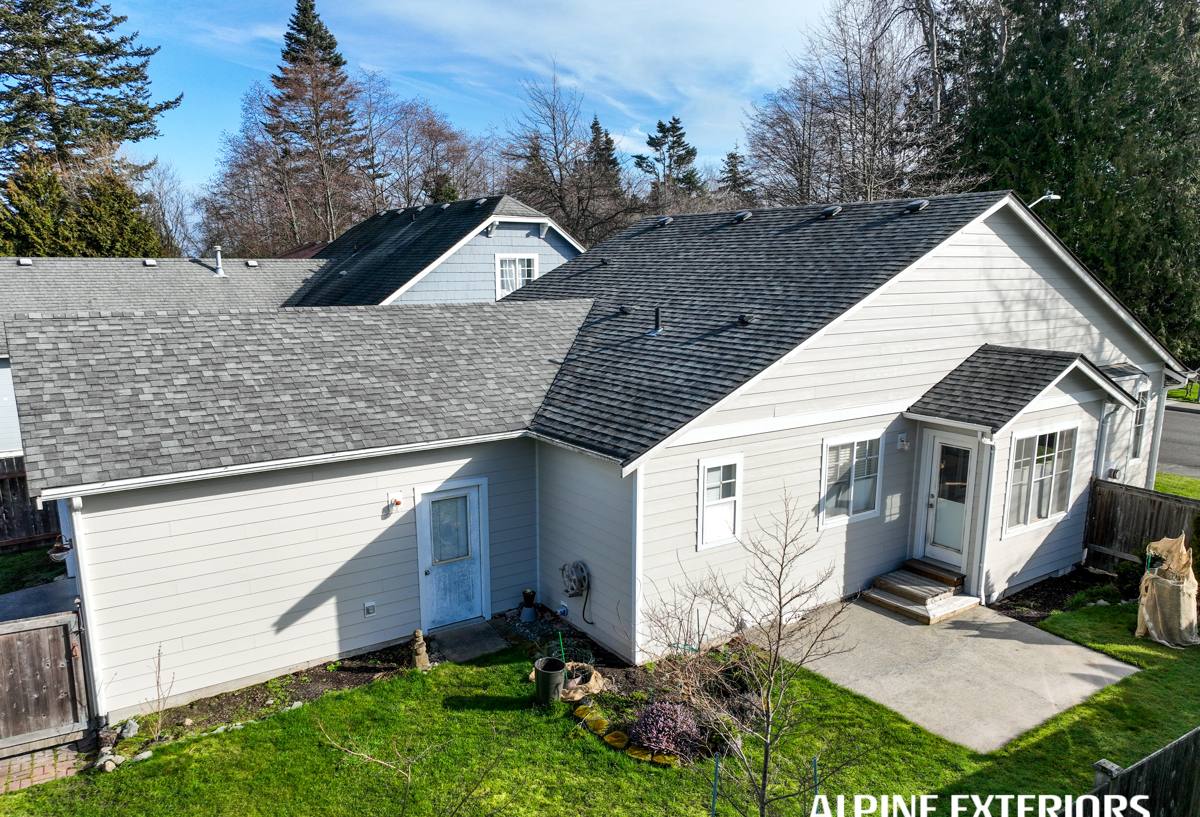
What Actually Counts as Storm Damage
Homeowners often picture storm damage as something obvious — a tree limb through the roof deck, a tarp-worthy hole. That happens, but most of the storm-related repair calls we get involve damage that's easy to miss without a close look.
Wind and Gusts Off the Water
Exposed lots and shoreline-facing homes catch wind loads that stress shingle edges, ridge caps, and ventilation components long before anything visibly blows off. Repeated gusts loosen fasteners and break shingle seals, which sets the roof up for the next storm even if this one didn't do obvious damage.
Wind-Driven Rain and Flashing Failures
Rain that comes in sideways during a Pacific storm doesn't behave like a normal downpour. It gets pushed up under shingle edges and into flashing joints around chimneys, skylights, and roof-to-wall transitions — areas that are fine in a straight-down rain but vulnerable when the wind is driving water horizontally.
Falling Limbs and Debris
Wooded lots, which describe a lot of Orcas Island properties, mean storm winds bring down branches and sometimes whole limbs. Impact damage can crack shingles, dent metal roofing, or puncture underlayment without leaving an obvious visible gap.
Moss, Trapped Moisture, and Long-Term Decay
Moss itself isn't storm damage, but it compounds it. A storm-loosened shingle edge gives moss a foothold, and moss holds moisture against the roof surface year-round. That moisture works into any gap the storm created, and the deck underneath starts to soften long before a stain appears inside the house.
Signs Your Roof Needs a Storm Damage Inspection
After any significant wind or rain event, it's worth checking for these signs — from the ground with binoculars if you can, since we don't recommend homeowners get on the roof themselves:
- Shingles that look lifted, curled, or out of alignment compared to the surrounding field
- Granules collecting in gutters or at downspout outlets
- Visible gaps or bent sections in flashing around chimneys, vents, or skylights
- New or worsening moss growth concentrated in one area rather than spread evenly
- Ceiling stains, especially ones that appeared or grew right after a storm
- Sagging or soft-feeling spots when walked near an attic access point
- Debris — branches, needles, bark — piled against a roof valley or behind a chimney
- Gutters pulling away from the fascia or holding standing water
None of these guarantee a major problem, but any one of them is a good reason to get eyes on the roof before the next storm finds the weak spot.
What a Correct Storm Damage Repair Actually Involves
A repair that just covers the obvious damage and stops there tends to fail again in the next storm. A repair that's actually going to hold up on Orcas Island includes a few steps that are easy to skip if you're rushing:
- Full-roof inspection, not just the damaged section. Storm forces rarely damage only one spot — we check the whole roof for related stress, not just where the leak or visible damage showed up.
- Deck assessment underneath the damaged area. If wind or water got past the shingles, the decking underneath needs to be checked for soft spots or rot before anything new goes on top of it.
- Underlayment repair, not just shingle replacement. The underlayment is the actual water barrier. Replacing shingles over compromised underlayment just hides the problem.
- Flashing rework where needed. Flashing that was stressed or bent in the storm gets resealed or replaced rather than just pressed back into place.
- Matching materials and fastening for wind exposure. Repairs on wind-exposed sections get fastened to hold against the same gusts that caused the original damage.
- Moss and debris clearing around the repair. There's no point sealing a roof back up and leaving moss or trapped needles against the new work.
Repair vs. Replace: How We Make That Call
Not every storm-damaged roof needs to come off. But sometimes a repair is a short-term patch on a roof that's already near the end of its useful life, and it's worth knowing that going in.
| Factor | Points Toward Repair | Points Toward Replacement |
|---|---|---|
| Roof age | Under two-thirds of expected lifespan | Near or past expected lifespan |
| Extent of damage | Isolated to one section or slope | Spread across multiple slopes or the whole roof |
| Deck condition | Solid, no soft spots found | Soft, rotted, or delaminated decking present |
| Moss and moisture history | Minor, recently treated | Long-standing moss with visible deck staining |
| Underlayment condition | Intact outside the damaged zone | Brittle, cracked, or failing broadly |
| Prior repair history | First significant repair | Repeated patch jobs in different areas |
We'll walk you through where your roof lands on this before recommending either option — there's no reason to pay for a full replacement when a targeted repair will genuinely hold, and no reason to keep patching a roof that's telling you it's done.
Our Process, From Call to Completed Repair
- Initial call. We ask what happened, when, and what you're seeing — this helps us bring the right materials on the first visit.
- On-site inspection. We check the damaged area and the full roof, including the deck where access allows, and explain what we find in plain terms.
- Written scope and estimate. You get a clear breakdown of what needs to happen and why, with photos documenting the damage for your records or an insurance claim.
- Scheduling around weather. We plan repair timing around forecasted conditions — there's little point starting deck or underlayment work right before the next front moves through.
- The repair itself. Deck, underlayment, flashing, and roofing materials are addressed as needed, not just the visible top layer.
- Final walkthrough. We show you the completed work and flag anything else on the roof worth keeping an eye on.
Materials and Methods Suited to Island Conditions
What holds up on a roof forty minutes from Seattle doesn't always hold up the same way on Orcas Island. A few things we account for specifically:
Corrosion-Resistant Fasteners and Flashing
Salt air accelerates corrosion in standard fasteners and lower-grade flashing metals. We use fastener and flashing materials rated for coastal exposure so a repair doesn't start failing from corrosion within a few seasons.
Underlayment That Handles Driving Rain
In wind-driven rain, water can travel upward under shingle edges before gravity takes over. Self-adhered underlayment in valleys, eaves, and other vulnerable transitions gives the roof a real second line of defense rather than relying on shingles alone to keep water out.
Sealing Against Moss Recolonization
A repaired section is a fresh, tight surface — but only until moss and debris start collecting on it again. We treat the surrounding area during repair rather than leaving new work sitting next to conditions that will undermine it within a year or two.
Documentation for Insurance Claims
Storm damage repairs are often tied to an insurance claim, and the paperwork matters as much as the repair itself. We document damage with dated photos before any work begins, provide a written scope that describes cause and extent of damage in terms adjusters recognize, and keep our estimates itemized so you can see exactly what's being claimed. We're not a public adjuster and don't negotiate claims on your behalf, but we give you the documentation a straightforward claim needs.
Why a Crew That Already Works Orcas Island Matters
Island logistics are real. Getting a mainland contractor out here means ferry schedules, longer lead times, and crews unfamiliar with how differently wind, rain, and moss behave on this side of the water compared to the mainland. A crew that already works San Juan County isn't figuring that out on your roof — we already know which slopes take the worst of a southwesterly blow, how fast moss reestablishes under the tree cover common on the island, and what fastening and flashing choices actually hold up here long-term. That familiarity shows up in faster, more accurate assessments and repairs that are built for the conditions your roof will keep facing, not just the storm that just passed.
If a recent storm has you wondering whether your roof came through it clean, we're glad to take a look. Request a free, no-pressure estimate using the form below, and we'll give you an honest read on what — if anything — needs attention.