 Orcas Island Siding
 Deer Harbor's Climate Is Hard on Siding
Deer Harbor sits on the water, and that proximity to the marina and the open channel means homes here take on a specific kind of weather stress that inland San Juan County properties don't deal with as much. Salt-laden air moves off the water and settles on every exterior surface, wind-driven rain comes in sideways during winter storms, and the tree cover that gives the area its privacy also keeps things shaded and damp for long stretches of the year. That combination — salt, moisture, and shade — is exactly what breaks down siding that isn't built for it.
Wood siding and trim in this pocket of Orcas Island tend to show moss and soft spots years before they would in a drier, sunnier location. Paint film fails faster under salt exposure. Fasteners and hardware corrode if they aren't rated for a marine environment. None of this is unusual for the west side of the island — it's just the reality of building near saltwater in the Pacific Northwest, and it's the reason siding choice and installation quality matter more here than they would somewhere inland.
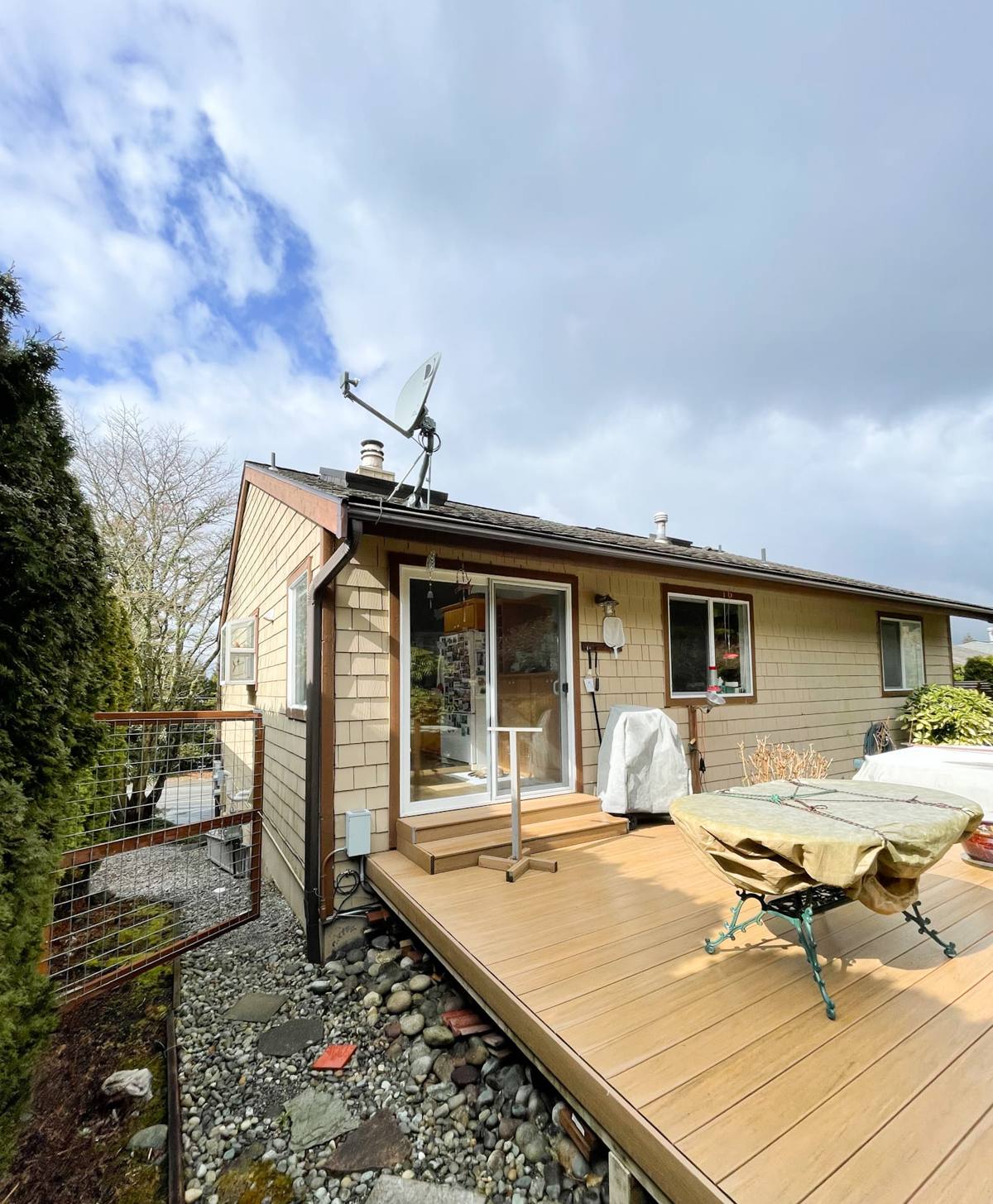
Why We Only Install James Hardie Here
We standardized on James Hardie fiber cement siding for every job we take on, including Deer Harbor, because it's an engineered product built to handle exactly this kind of exposure. It's non-combustible, it doesn't provide a food source for moss and mildew the way wood does, and it holds its shape and dimension in wet-dry cycles instead of swelling, cupping, or splitting. Hardie's HZ5 product line is engineered for the wetter, harsher climate zones on the West Coast, which is a better match for a saltwater-facing property than a general-purpose siding product.
The ColorPlus factory finish is also a real advantage in a salt air environment. It's baked on under controlled conditions rather than field-applied, so it resists fading and chalking better than a job-site paint job, and it holds up to the UV and salt exposure that a west-facing Orcas Island elevation gets. We're not going to pretend every product on the market is interchangeable — the reason we don't install vinyl, LP SmartSide, or untreated wood siding on homes here is that we've seen how much faster those materials show wear in a marine climate, and we'd rather stand behind one system we know performs.
What Hardie Doesn't Solve By Itself
Fiber cement is durable, but it isn't magic. If it's installed without proper flashing, clearance, and drainage detailing, moisture will still find its way behind it and cause the same rot and mold problems you'd get with any siding material. The product is only as good as the installation behind it — which is the part homeowners often can't see and can't judge from the street.
What Correct Installation Looks Like
A proper Hardie installation in a wet, salty climate depends on details that are easy to skip and expensive to fix later. These are the things we treat as non-negotiable on every Deer Harbor project:
- A drainage plane and rainscreen gap behind the siding, so any moisture that does get past the cladding has somewhere to go instead of sitting against the sheathing
- Correct flashing at every window, door, deck ledger, and roof-to-wall intersection — the places where almost all real-world siding failures start
- Fasteners driven flush, not overdriven, using the nail pattern and spacing Hardie specifies for the product and exposure
- Minimum ground clearance so soil and mulch aren't holding moisture against the bottom course
- Factory-cut edges kept intact wherever possible, with field cuts sealed and painted per manufacturer specification
- Caulking limited to the joints Hardie actually calls for — not used as a substitute for flashing
Skipping any one of these doesn't show up on day one. It shows up in three to five years as a stain, a soft spot, or paint failure — right about when a homeowner assumes the siding itself was the problem, when the real issue was what happened behind it.
Our Process for a Deer Harbor Home
We start with an assessment of the existing wall assembly before we talk about siding products at all. That means checking the sheathing and framing for hidden moisture damage from whatever was on the house before — especially important on older Orcas Island homes where the original siding may have been trapping water for years without visible signs from outside.
Once we know what we're working with, the sequence is straightforward: remove the old siding, repair or replace any damaged sheathing, install the weather-resistive barrier and rainscreen system, then install the Hardie panels or lap siding to spec with correct flashing at every penetration. Trim and touch-up paint come next, followed by a final inspection and full site cleanup — including hauling debris off the property, which on an island job means planning that into the schedule rather than treating it as an afterthought.
We also walk the homeowner through warranty registration once the job is done, since Hardie's transferable warranty depends on the installation being documented and done by the book.
Comparing Siding Options for This Climate
| Factor | James Hardie Fiber Cement | Vinyl | Cedar / Wood |
|---|---|---|---|
| Salt air performance | Engineered for coastal/marine exposure (HZ5) | Can become brittle and discolored over time in sun and salt | Prone to accelerated weathering near saltwater |
| Moss and moisture resistance | Does not feed mold or moss growth | Resists moisture itself, but seams and gaps trap debris | Organic material — moss and rot are an ongoing battle |
| Fire resistance | Non-combustible | Combustible | Combustible |
| Finish longevity | Factory-baked ColorPlus finish | Color molded through, but fades and chalks with age | Requires repainting or restaining on a recurring cycle |
| Typical maintenance | Periodic wash, occasional caulk check | Low, but repairs can be visually mismatched | Regular painting, sealing, and moss treatment |
This isn't a knock on every alternative product — vinyl and wood both have legitimate uses in the right setting. It's why, for a saltwater-facing property in a climate like this, we've chosen to put our name behind one system rather than sell whatever's cheapest.
What to Look For When Hiring a Contractor
Deer Harbor's location means not every contractor who'll quote a job here has actually worked it. Before hiring anyone for a siding project in this area, it's worth confirming:
- They're licensed, bonded, and insured to work in Washington State
- They can explain their flashing and drainage plan in plain language, not just the siding brand they'll use
- They have a real plan for getting materials and crew to the site, including ferry scheduling, rather than treating logistics as a surprise
- They'll put the scope, materials, and timeline in writing before work starts
- They understand the county permitting process that applies to exterior work in San Juan County
- They register the manufacturer warranty on your behalf once the job is complete
Why a Crew That Already Works Deer Harbor Matters
Island work has logistics that mainland jobs don't. Materials have to be ordered with ferry schedules in mind, weather windows are tighter because a delayed crossing can push a whole crew's day, and disposal of old siding and debris has to be planned rather than handled on the fly. A crew that already works this part of Orcas Island has that logistics figured out, and it shows up as fewer delays and fewer surprises mid-project.
There's also a practical read on exposure that comes from experience in the area — knowing which elevations take the worst of the wind-driven rain, where salt spray settles heaviest, and how much shade a given property gets through the year. That's not something a contractor coming over for a single job is likely to have a feel for, and it factors into decisions as specific as flashing details and as broad as scheduling the install for a dry stretch.
Living With Hardie Siding Through Moss Season
Correctly installed Hardie siding is low-maintenance, not no-maintenance. In a climate with a long moss season, a periodic rinse-down keeps organic growth from building up on the surface, and keeping gutters clear prevents overflow from running down the siding face and staining it. It's also worth a yearly look at caulking around windows, doors, and penetrations, since that's the one spot where a small gap can let moisture in behind an otherwise sound installation. None of this is heavy upkeep — it's the kind of routine check that keeps a good installation performing the way it's supposed to for decades.
If you're weighing a siding project on a Deer Harbor home and want a straightforward look at what it would involve, we're glad to come out, walk the exterior with you, and put together a free, no-pressure estimate — no obligation either way.