 Orcas Island Siding
 Building Decks for West Sound's Marine Climate
West Sound sits right up against the water, and that changes what a deck has to survive. Homes here deal with a steady dose of salt-laden air coming off the sound, driving rain that comes in sideways during winter storms, and a long stretch of the year where shade, moisture, and mild temperatures combine to grow moss on anything that holds water. A deck that would hold up fine in a dry inland climate can start showing problems within a few seasons out here if it wasn't built with these conditions in mind.
We build and repair custom decks for homes throughout the West Sound area on Orcas Island, and the approach has to account for San Juan County's marine environment from the framing up. That means paying close attention to material selection, fastener choice, drainage, and airflow underneath the deck — the details that determine whether a deck lasts fifteen years or thirty.
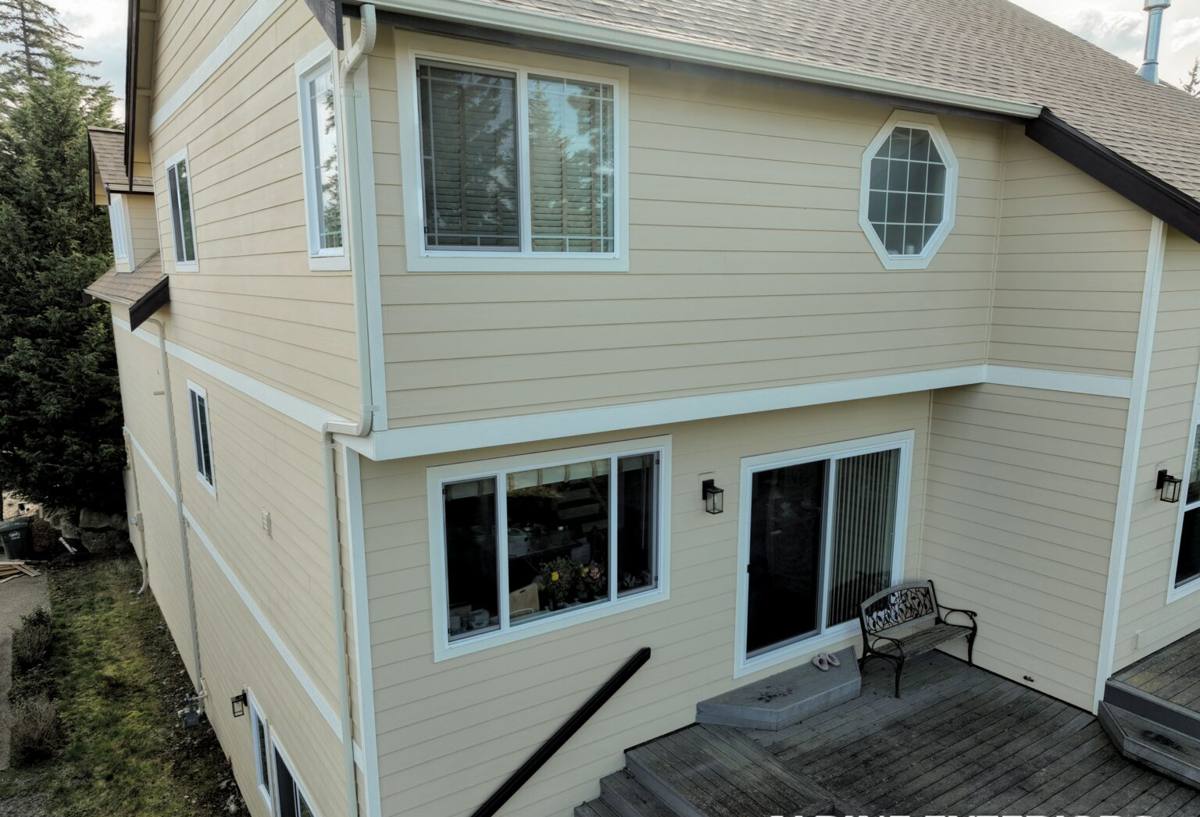
What the Marine Climate Does to a Deck Over Time
Salt air is corrosive to metal, full stop. Standard fasteners and hardware that aren't rated for coastal exposure can start rusting and staining the surrounding wood well before the deck itself is due for replacement. Driving rain finds every gap in flashing, every unsealed end cut, and every low spot where water should have drained but didn't. And moss doesn't need much — just shade, moisture, and a surface that stays damp longer than it should. Decks on the north or west side of a home, or under tree cover, are especially prone to it.
None of this means a deck can't hold up well here. It means the build has to plan for these conditions instead of ignoring them. A deck built the same way you'd build one in a dry climate is a deck that's going to need premature repairs.
Where Problems Usually Start
- Ledger board attachment points where the deck meets the house — a common spot for water intrusion if flashing isn't done correctly
- Fastener heads and joist hangers that weren't rated for coastal or treated-lumber exposure
- Board gaps that close up with debris and hold moisture instead of shedding it
- Areas with limited airflow underneath, where moss and mildew get a foothold
- End cuts and drilled holes that were never re-sealed after the cut was made
Choosing Decking Material for This Environment
There isn't a single "best" decking material for every West Sound home — it depends on your budget, how much upkeep you want to do, and how the deck will be used. What matters is understanding the real trade-offs for this climate specifically, not just in general.
| Material | Moisture & Salt Air Behavior | Maintenance | Typical Lifespan Here |
|---|---|---|---|
| Pressure-treated lumber | Resists rot when properly sealed and maintained; needs re-sealing to shed driving rain | Annual cleaning and periodic sealing/staining | 15–20 years with upkeep |
| Cedar | Naturally rot- and insect-resistant, but softer and can weather unevenly with constant moisture exposure | Regular cleaning; sealing recommended to slow graying and moss growth | 15–20 years with upkeep |
| Composite decking | Doesn't absorb water or rot; some early-generation composites in wet climates can trap surface moisture and grow moss if not cleaned | Periodic washing; no sealing or staining required | 25–30+ years |
| PVC decking | Fully moisture-resistant, doesn't support rot; performs well in constant damp conditions | Low — occasional washing | 25–30+ years |
Composite and PVC decking have become popular choices for waterfront and near-waterfront homes precisely because they don't rot and don't need refinishing every couple of years — a real advantage when the deck is exposed to driving rain most of the year. That said, wood decking done right, with the correct sealing schedule and airflow underneath, still performs well and is the right call for homeowners who want a specific natural look or are working with a tighter budget.
What a Correctly Built Deck Involves
A deck is only as good as what you can't see once it's finished. The visible boards get the attention, but the structure underneath is what determines whether the deck stays solid and dry.
Framing and Structural Layout
Joist spacing and beam sizing need to match the decking material and the loads the deck will actually see — furniture, hot tubs, and gatherings all factor in. We build in a slight slope away from the house so water sheets off rather than pooling, and we leave enough clearance underneath for air to move freely, which is one of the biggest factors in keeping moss and mildew from taking hold.
Ledger Attachment and Flashing
Where the deck attaches to the house is the single most common source of water damage on any deck, and it's even more important to get right in a climate with this much driving rain. Proper flashing — installed in the correct order with the house's existing weather barrier — keeps water from working its way behind the ledger board and into the wall structure.
Fasteners and Hardware
This is where a lot of decks built without coastal exposure in mind start to fail early. Standard galvanized fasteners can corrode faster than expected in salt air, leading to rust streaking, weakened connections, and hardware that needs replacing well ahead of schedule. We use fasteners and structural hardware rated for the exposure the deck will actually see, including stainless steel where it matters most — joist hangers, ledger bolts, and any hardware near ground contact or close to the water.
Railings and Guardrails
Railings need to meet Washington state building code for height and baluster spacing, and on elevated decks with water views, wind load matters too. We build railings that are structurally solid first, with the style and material — wood, metal, cable, or a mix — chosen to match the home and hold up to the same salt air and rain exposure as the rest of the deck.
Our Process for a West Sound Deck Project
Every deck project follows the same basic sequence, but the details get adjusted for the specific site — sun exposure, wind direction, tree cover, and how close the deck sits to the water all affect the decisions we make along the way.
- On-site assessment — we look at the site's exposure, existing structure (if it's a rebuild or expansion), drainage, and any moisture or moss issues already present
- Design and material consultation — we walk through material options and trade-offs honestly, based on your budget and how much maintenance you want to take on
- Permitting — we handle the permit application through San Juan County when the project requires one
- Construction — framing, flashing, decking, and railings, built in the sequence that keeps the structure protected from weather at every stage, not just at the end
- Final walkthrough — we go over the finished deck with you, including what maintenance it will need and when
Moss, Mildew, and Long-Term Maintenance
Even a well-built deck needs some seasonal attention in this climate. The good news is that most of it is straightforward once you know what to watch for, and a deck built with proper drainage and airflow needs far less intervention than one that wasn't.
- Sweep debris off the deck regularly — wet leaves and needles trap moisture against the boards and are one of the main causes of moss growth
- Clean the deck surface at least once a year to remove algae and moss buildup before it takes hold
- Check and clear any gaps between boards that have filled with debris, which blocks drainage
- Inspect fastener heads and visible hardware periodically for early signs of rust or corrosion
- Re-seal or re-stain wood decking on the schedule appropriate for the product — skipping this is the fastest way to shorten a wood deck's lifespan here
- Keep an eye on the ledger board area where the deck meets the house, since that's the most common spot for hidden water damage to start
Cost Factors for a Custom Deck
Every deck is priced based on its own scope, but a few factors consistently move the number up or down for homes in this area.
| Factor | How It Affects the Project |
|---|---|
| Size and shape | Larger decks and multi-level layouts require more framing, more material, and more labor |
| Material choice | Composite and PVC cost more upfront than wood but require little to no ongoing refinishing |
| Height and elevation | Elevated decks need additional structural support, stairs, and often taller railings |
| Site access | Sites with limited vehicle or material access can add time for staging and hauling materials to the build area |
| Railing style | Cable, glass, and custom metal railings cost more than standard wood or composite balusters |
| Existing structure | Rebuilds or repairs on an existing deck footprint can be more or less involved depending on the condition of the substructure underneath |
We give straightforward estimates based on what your specific project actually needs — no inflated add-ons and no cutting corners on the parts of the build that matter most for this climate, like flashing and fastener quality.
Why Hire a Crew That Already Works West Sound
Building on Orcas Island comes with logistics that don't apply on the mainland. Material deliveries have to work around ferry schedules, job timelines need to account for weather windows that close quickly in the fall and winter, and San Juan County's permitting process has its own requirements that are worth knowing ahead of time rather than learning mid-project. A crew that already works in the West Sound area has that logistics knowledge built in, which keeps projects moving instead of stalling on avoidable delays.
Just as important is knowing the climate itself. A contractor who builds decks primarily in dry, inland conditions may not think twice about fastener grade or airflow clearance underneath the deck — details that matter a lot more here than they would somewhere without constant salt air and rain. Local experience means those decisions are built in from the start, not addressed later as a repair.
Get a Free Estimate for Your West Sound Deck
If you're planning a new deck or need to replace one that hasn't held up to the weather out here, we're happy to take a look and give you an honest, no-pressure estimate. Use the form below to tell us a bit about your project and we'll follow up to schedule a time to assess your site.