 Orcas Island Siding
 Board & Batten Siding Built for Shaw Island's Marine Climate
Shaw Island sits in a demanding pocket of San Juan County. Homes here face salt-laden air off the water, long stretches of driving rain through fall and winter, and a moss season that can run nine months out of twelve on shaded, north-facing walls. Board and batten siding — with its clean vertical lines and deep shadow reveal — is one of the most requested looks on the island, but the look only holds up if the material and the installation are matched to what this climate actually does to a wall system over twenty or thirty years.
We install board and batten in James Hardie fiber cement exclusively. This page walks through what Shaw Island homes specifically need from a board and batten system, what a correct installation involves, and why hiring a crew that already works this island — not just the mainland — matters more here than in most places.
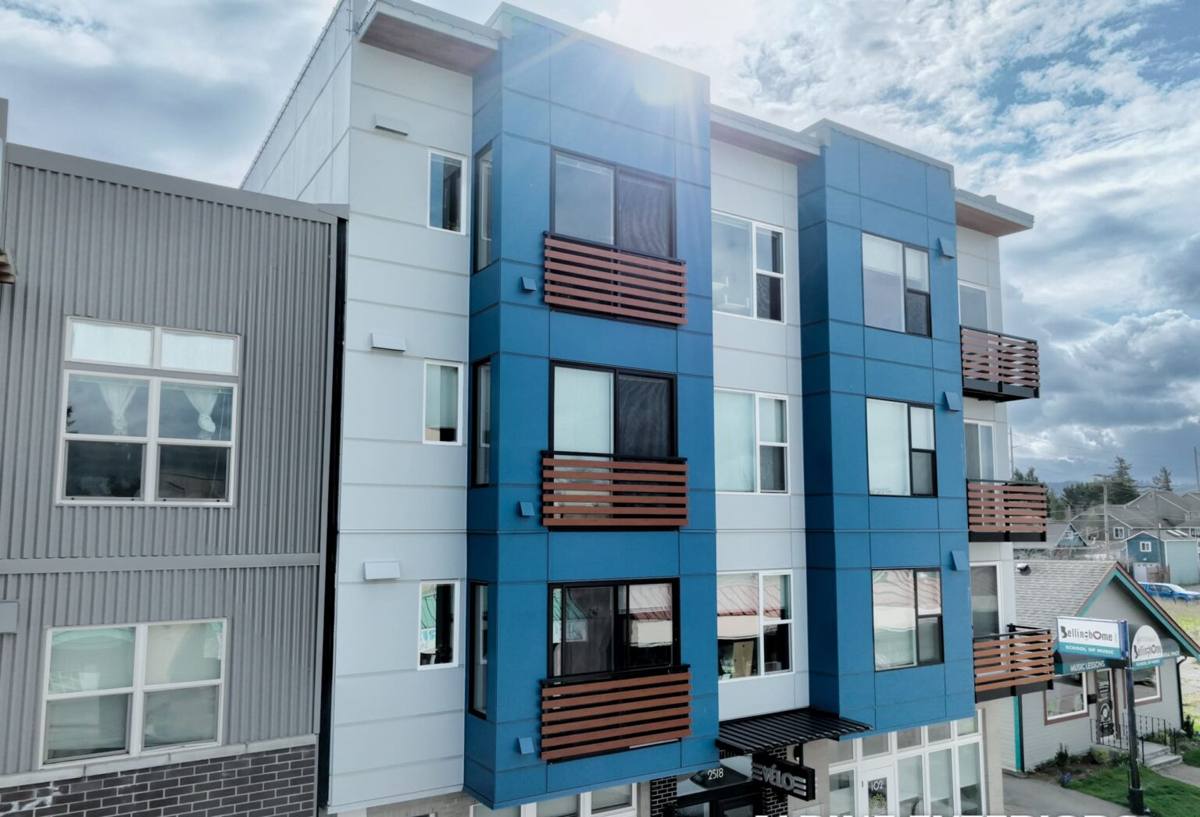
Why Board & Batten Suits Shaw Island's Architecture
Board and batten reads as a natural fit for the island's mix of cabins, cottages, and newer waterfront builds. The vertical board pattern, spaced with narrow battens covering each seam, gives a home a simple, honest look that complements timber framing, standing-seam metal roofing, and the understated exterior palettes common throughout the San Juans.
It's also a practical choice for gable ends, dormers, and accent walls where a horizontal lap pattern would compete with roofline geometry. Many Shaw Island homeowners pair board and batten on upper stories or feature walls with lap siding below, which keeps material costs reasonable while still getting the visual interest.
What the Style Demands From the Material
The trade-off with board and batten is that it has more vertical seams and more batten-to-board overlap than a standard lap profile. Every one of those seams is a potential water entry point if the substrate underneath isn't dimensionally stable. Wood-based boards swell and shrink with San Juan County's humidity swings, which eventually opens gaps at the battens, cracks paint film, and lets moisture behind the cladding. That's the core reason we don't install board and batten in primed spruce, cedar, or LP SmartSide on this island — the seam-heavy profile amplifies exactly the failure mode those substrates are most prone to.
What Shaw Island's Climate Does to a Wall Over Time
| Climate Factor | Effect on Siding | What a Correct Install Needs |
|---|---|---|
| Salt air off Puget Sound waters | Accelerates corrosion of fasteners, trim flashing, and paint film breakdown | Stainless or coated corrosion-resistant fasteners, factory-cured finish |
| Driving, wind-driven rain | Forces water sideways into seams and laps, not just straight down | Proper weather-resistive barrier, correct flashing at every penetration |
| Extended moss and lichen season | Holds moisture against the wall surface for months at a time on shaded sides | Rigid, non-organic substrate that won't rot or swell when damp for long stretches |
| Temperature swings, shoulder seasons | Expansion and contraction stresses joints, caulk lines, and fastener holes | Dimensionally stable board material, correct fastening pattern and gaps |
Why We Install Board & Batten Only in James Hardie
James Hardie fiber cement is engineered specifically to resist the conditions above. It's non-combustible, it doesn't absorb and swell with moisture the way wood-based products do, and it holds a factory-applied ColorPlus finish that's baked on and cured — not just brushed or sprayed on site — so it stands up to years of salt air and UV without chalking or peeling prematurely.
For an island climate like Shaw's, Hardie's HZ5 product line is engineered for the kind of moisture exposure and freeze-thaw cycling common in the Pacific Northwest. That matters more on a vertical board and batten profile than almost any other siding style, because the batten strips create dozens of extra joints per wall that all need to stay tight and sealed for the life of the siding.
What We Don't Install, and Why
- LP SmartSide: a wood-strand product that performs reasonably in drier climates, but wood-strand substrates are more vulnerable to long-duration moisture exposure than fiber cement — a real concern on a wall that stays damp under moss for months.
- Vinyl siding: lightweight and inexpensive, but it expands and contracts noticeably with temperature swings, which is a poor match for the tight reveal lines board and batten depends on for its look.
- Cedar or primed spruce: beautiful when new, but wood board and batten on a shaded, salt-exposed wall requires a maintenance and repainting cycle most homeowners don't want to sign up for.
- Cemplank or Allura: other fiber cement brands that compete on price but don't carry the same factory finish warranty structure or product-line engineering Hardie backs its boards with.
We'd rather stand behind one system we trust completely than offer five options and let a homeowner unknowingly pick the one that will cost them more in ten years.
What a Correct Board & Batten Installation Involves
The finished look of board and batten is simple, but the installation sequence underneath it is not. Getting it wrong is exactly how homeowners end up with the moisture problems the style is prone to.
The Core Steps
- Remove existing siding down to the sheathing and inspect for hidden rot, especially around windows, corners, and any wall that faces prevailing weather.
- Repair or replace damaged sheathing before anything else goes on — covering a compromised wall with new siding just hides the problem.
- Install a continuous weather-resistive barrier, lapped correctly from the bottom up so water sheds outward at every seam.
- Flash all penetrations — windows, doors, hose bibs, light fixtures — before the boards go on, not after.
- Install vertical Hardie panels or boards with correct fastener spacing and the manufacturer-specified gap for expansion.
- Install battens over each seam, fastened into framing where possible, not just into the board beneath.
- Seal and caulk only where Hardie's installation instructions call for it — over-caulking a fiber cement joint can trap moisture rather than shed it.
- Finish with factory ColorPlus color or field-applied paint matched to the manufacturer's approved coating specifications.
Common Mistakes We See on Island Homes
Board and batten is unforgiving of shortcuts, and we've corrected enough of them on Orcas and the surrounding islands to know the pattern:
- Battens fastened only into the board below instead of into structural framing, which lets them work loose over a few seasons of wind.
- Missing or improperly lapped weather barrier behind the boards, which shows up as staining or soft sheathing years later.
- Incorrect fastener spacing that leaves boards prone to cracking during temperature swings.
- Skipped flashing at window and door penetrations — the single most common source of hidden water damage we find during tear-offs.
- Using standard steel fasteners instead of corrosion-resistant ones, which streak and weaken well before the siding itself is due for attention.
Our Process for Shaw Island Projects
Shaw Island's ferry-dependent access means a siding project here can't run on the same logistics as a mainland job. We plan material deliveries, crew scheduling, and equipment staging around the ferry schedule so a project doesn't stall waiting on a board order or a missed sailing. That planning happens before the first piece of old siding comes off the wall.
What to Expect
- An in-person assessment of your home's current siding, sheathing condition, and exposure to wind, rain, and shade.
- A clear scope covering removal, any sheathing repair, weather barrier, flashing, board and batten installation, and finish.
- A materials and logistics plan that accounts for ferry access, so your project isn't held up by transportation, not workmanship.
- A crew that has worked island conditions before and knows the difference between a mainland install and one that has to survive Shaw Island's exposure.
Why Local Experience Matters More Here
A contractor who has never worked island jobs will often underestimate two things: how much salt air and shade genuinely accelerate wear, and how much logistics — ferries, tide tables, limited local material supply — affect scheduling and cost. Both mistakes show up later, either as a wall that fails early or a project that ran over budget because nobody planned for the realities of getting a crew and materials onto Shaw Island in the first place.
We work throughout San Juan County, including Orcas Island and its surrounding communities, so Shaw Island jobs are planned with the same logistics awareness as everything else we do out here — not treated as an afterthought to a mainland schedule.
Get an Honest Look at Your Home
If you're considering board and batten siding for a home on Shaw Island, we're glad to come take a look, walk you through what your specific walls need given their exposure, and give you a straightforward estimate — no pressure, no hard sell. Reach out using the form below to get started.