 Orcas Island Siding
 Crow Valley's Climate Puts Real Demands on Siding
Crow Valley sits inland from the saltwater shoreline that wraps most of Orcas Island, but "inland" on a San Juan County island still means damp. The valley floor holds moisture longer than exposed hillsides — morning fog settles in, tree cover keeps shaded walls wet well into the afternoon, and the same marine air that reaches the coastline still finds its way up the valley on any south or west wind. Add a long, mild wet season that runs from fall through spring, and siding here spends a large share of the year in contact with moisture, not just rain itself.
That combination — salt-tinged air, driving rain during winter storms, and a moss season that can stretch for months on shaded and north-facing walls — is exactly the kind of exposure that separates siding that holds up for decades from siding that starts failing in five or ten years. Homeowners in Crow Valley aren't dealing with desert UV or extreme freeze-thaw cycles like other parts of the state. The threat here is patient, persistent moisture, and it rewards materials and installation details built specifically for that.
Why We Only Install James Hardie Fiber Cement
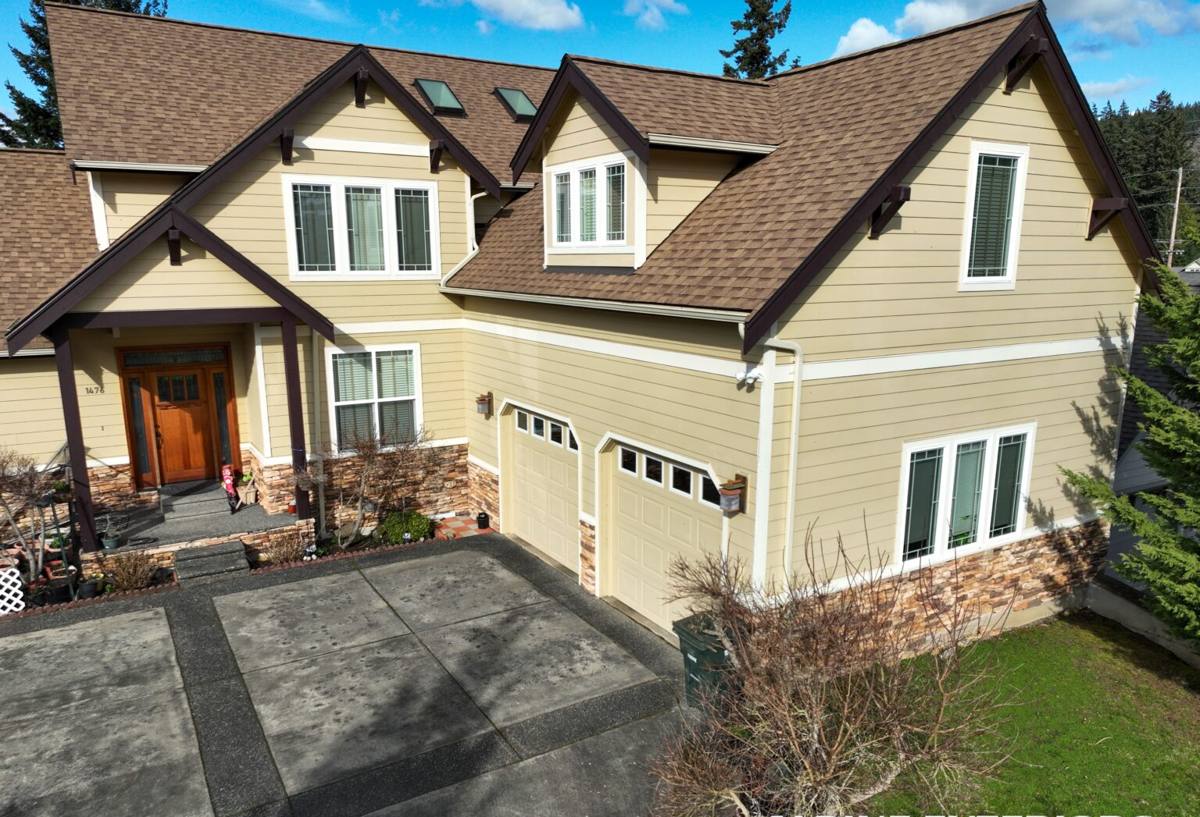
We install James Hardie fiber cement siding exclusively — no vinyl, no LP SmartSide, no primed wood or cedar. That's not a marketing position, it's a standard we hold because of what we see on Orcas Island homes over time. Fiber cement is non-combustible, dimensionally stable in damp conditions, and doesn't feed moss and mildew the way wood-based products can once moisture gets past the surface. James Hardie's ColorPlus factory finish is baked on under controlled conditions, which gives it a more consistent, durable bond than field-applied paint and a warranty that backs the finish itself, not just the substrate.
Vinyl siding can work loose or warp under the temperature swings a west-facing valley wall sees between a cold, damp morning and direct afternoon sun. LP SmartSide and other wood-strand products rely on an engineered resin coating to keep moisture out — if that coating is compromised at a cut edge, fastener hole, or joint, the wood-based core underneath is vulnerable to swelling and rot in exactly the kind of sustained damp conditions Crow Valley produces. Fiber cement doesn't have that failure mode. It's cement, sand, and cellulose fiber — it doesn't rot, and it isn't a food source for moss and algae in the way organic materials are.
What Homeowners Actually Notice
On existing homes in the valley, the difference shows up first on north and shaded walls: siding that isn't rated or installed for sustained damp exposure develops soft spots, staining, and moss growth years before south-facing walls show any wear. Fiber cement installed with the correct clearances and drainage plane resists that pattern because the material itself doesn't absorb and hold water the way wood-based products do.
What a Correct Fiber Cement Installation Involves
Fiber cement siding is only as good as the installation behind it. The product is engineered to perform for decades, but that performance depends on details that aren't visible once the job is finished — and those are the details that matter most in a climate like this one.
Weather-Resistive Barrier and Drainage Plane
Every wall gets a continuous weather-resistive barrier behind the siding, with a drainage gap that lets any moisture that gets past the cladding drain out and dry rather than sit against the sheathing. In a valley that holds humidity longer than open, breezy sites, that drainage plane is what keeps incidental moisture from becoming a long-term problem.
Flashing and Penetrations
Windows, doors, and any wall penetration — vents, hose bibs, light fixtures — are flashed so water is directed out and away from the wall assembly, not just sealed with caulk. Caulk fails; correctly lapped flashing doesn't rely on a sealant staying intact for thirty years.
Fastening and Clearances
James Hardie specifies exact fastener spacing, penetration depth, and minimum clearances from grade, roof lines, and decks. Siding installed too close to the ground or to a roof surface stays wet longer and is far more likely to develop moss and staining. We follow Hardie's fastening schedule and clearance requirements on every job, not just where it's convenient.
Joint and Butt Seam Treatment
Horizontal lap joints and butt seams are where water intrusion most often starts on a poorly installed job. Proper H-jointing or shiplap detailing, back-primed cut ends, and correct overlap keep these seams from becoming entry points during driving rain off the water.
| Installation Detail | Why It Matters in Crow Valley |
|---|---|
| Weather-resistive barrier + drainage gap | Lets trapped moisture from fog and shaded exposure drain and dry instead of sitting against sheathing |
| Correct grade and roofline clearance | Reduces splash-back and prolonged dampness that drives moss growth |
| Factory-primed, back-primed cut edges | Protects the most vulnerable part of the board from long wet seasons |
| Manufacturer-spec fastening | Prevents board movement and cracking under seasonal moisture cycling |
| Proper flashing at windows and penetrations | Stops wind-driven rain from tracking behind the cladding |
James Hardie Product Lines for This Area
James Hardie makes climate-engineered HZ product lines, and for Pacific Northwest island exposure we specify HZ5, which is formulated for wetter, moderate climates rather than freeze-heavy or high-heat regions. Within that, homeowners in Crow Valley typically choose between a few board profiles depending on the home's style and how much of the original character they want to preserve.
| Product | Best Fit For | Finish |
|---|---|---|
| HardiePlank lap siding | Traditional farmhouse and cottage-style homes common in the valley | ColorPlus factory finish or primed for field paint |
| HardiePanel vertical siding | Barns, outbuildings, and modern accents | ColorPlus factory finish |
| HardieTrim boards | Corner boards, window and door trim | ColorPlus factory finish |
| HardieShingle siding | Accent gables and dormers | ColorPlus factory finish or primed |
ColorPlus finish is worth understanding on its own: it's a multi-coat, oven-cured finish applied at the factory, not painted after installation. It resists fading and holds its color longer than field-applied paint, and touch-up product is formulated to match. For homes exposed to salt-tinged air and long wet seasons, that factory-cured finish is one less maintenance cycle homeowners have to think about.
How Our Process Works
1. On-Site Assessment
We walk the property and look at wall orientation, existing moisture or moss patterns, roof and gutter drainage, and any current siding failures before quoting anything. A north wall shaded by trees gets treated differently than an open south exposure.
2. Removal and Sheathing Check
Old siding comes off and we inspect the sheathing underneath. If there's rot or water damage from a prior failure, we address it before anything new goes up — covering a compromised wall with new siding just hides the problem.
3. Weather Barrier and Flashing
We install the drainage plane, flashing, and any trim before the Hardie boards go up, so the water management system is complete and continuous.
4. Siding Installation to Manufacturer Spec
Boards are installed following James Hardie's fastening, clearance, and joint specifications — the details that determine whether the siding performs for its full service life.
5. Final Walkthrough
We review the finished work with the homeowner, including basic care and what to watch for seasonally.
Maintaining Fiber Cement Siding in a Damp Valley Climate
Fiber cement is low-maintenance compared to wood siding, but "low-maintenance" doesn't mean "no maintenance" in a place with a real moss season. A short annual routine keeps siding performing the way it should:
- Rinse siding gently once a year, focusing on shaded north-facing walls where moss and algae take hold first
- Keep gutters clear so overflow doesn't run down wall surfaces during heavy winter rain
- Trim back vegetation and tree cover that keeps a wall damp and shaded longer than necessary
- Inspect caulking at trim and penetrations annually and re-caulk where it's cracked or pulled away
- Walk the exterior after major storms to check for any impact damage or lifted trim
- Avoid pressure washing directly into joints and seams, which can force water behind the cladding
What Affects the Cost of a Crow Valley Siding Project
Every home is different, but a few factors consistently move the price of a fiber cement siding project in this area more than others:
| Factor | Why It Matters |
|---|---|
| Extent of sheathing repair needed | Hidden rot from a prior siding failure adds labor before new siding can go on |
| Home's wall complexity | Dormers, gables, and multiple roof lines increase cutting, flashing, and trim work |
| Board profile and trim selection | Lap siding, panel siding, and shingle accents carry different material and labor costs |
| ColorPlus vs. field-applied finish | Factory finish carries a different upfront cost but reduces future repainting |
| Access and site conditions | Long driveways, tree cover, and staging space on rural valley lots affect labor time |
We give homeowners a real number after seeing the home, not a rough guess over the phone — every valley property has its own combination of these factors.
Why It Matters to Hire a Crew That Already Works Crow Valley
Siding installation looks similar everywhere on paper, but a crew that regularly works Crow Valley and the rest of Orcas Island knows which walls hold moisture longest, how far up a valley wall salt-tinged wind actually reaches, and where moss takes hold first on this island's homes. That knowledge shapes real decisions — clearance heights, drainage detailing, which walls need extra attention at seams and penetrations — before a single board goes up. It also means logistics that are straightforward for us and a headache for an off-island crew: ferry scheduling, material staging, and coordinating a job around island weather windows are things we plan for as a normal part of doing business here, not an afterthought that adds delays or surprise costs to your project.
If you're weighing a siding replacement or repair on your Crow Valley home, we're happy to take a look and walk you through what we'd recommend and why. The estimate is free, there's no pressure, and you'll get a straight answer about what your home actually needs — just fill out the form below to get started.