 Orcas Island Siding
 Windows in Crow Valley Take a Different Kind of Beating
Crow Valley sits back from the water compared to some of the more exposed shoreline stretches of Orcas Island, but that doesn't mean windows here get an easy ride. San Juan County's marine climate reaches everywhere on the island — salt-laden air moves inland on the wind, driving rain comes in sideways during winter storms, and the shaded, moisture-heavy pockets of the valley grow moss and algae on anything that stays damp too long. Add in the temperature swings between foggy mornings and warm afternoons, and you've got a environment that's quietly hard on window frames, sealants, and glazing over the years.
Most homeowners don't think about their windows until something goes wrong — a draft that wasn't there before, a sill that's gone soft, glass that fogs up between the panes. By the time those problems show up, the underlying issue has usually been developing for years. Good window installation on Orcas Island isn't just about picking a nice window. It's about building an assembly — frame, flashing, sealant, trim — that's going to hold up to this specific climate for decades, not just look good on install day.
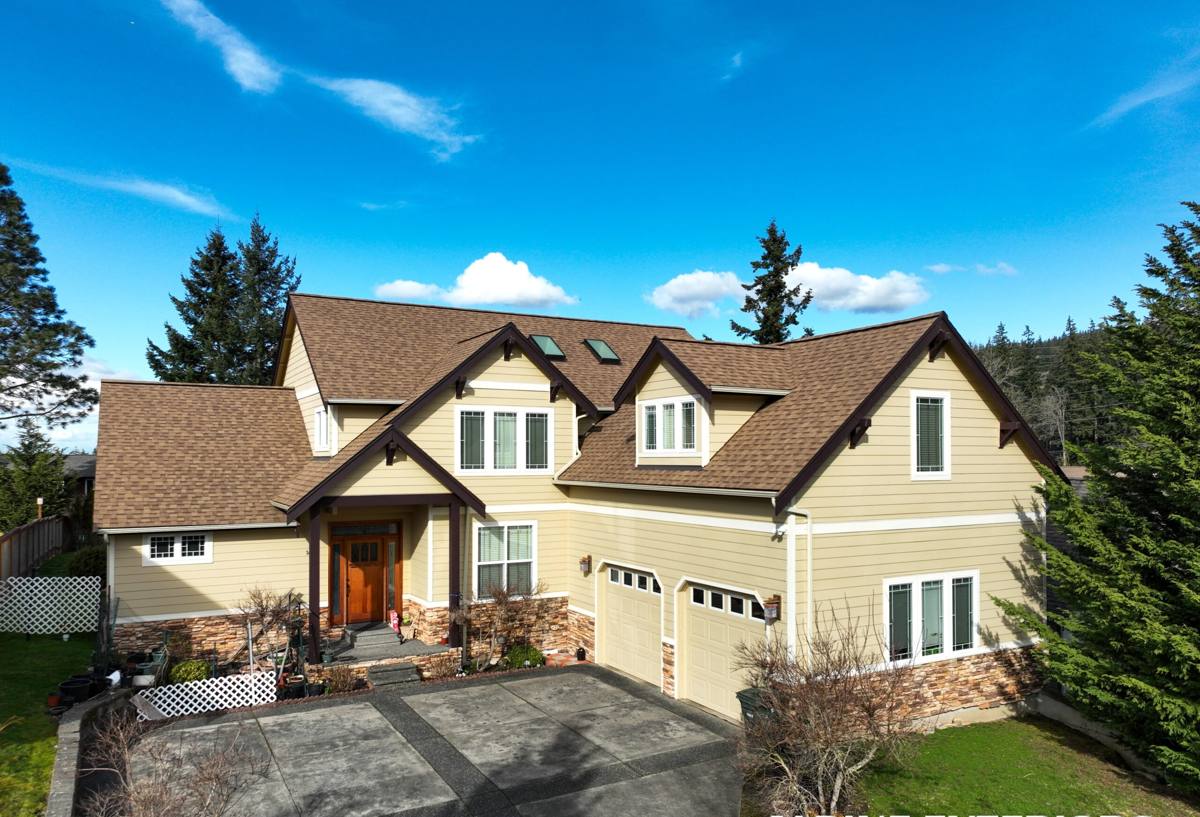
What Salt Air, Rain, and Moss Season Actually Do to a Window
It helps to understand the failure modes before you're staring at one. Three things drive most of the window problems we see in this part of San Juan County:
Salt Air and Corrosion
Airborne salt is corrosive to unprotected metal hardware — hinges, cranks, screws, and some lower-grade aluminum components. Over years, that corrosion can seize hardware, stain finishes, and weaken fasteners at the exact points where a window needs to stay tight against the frame.
Driving Rain and Water Intrusion
Wind-driven rain doesn't just hit a window head-on — it gets pushed sideways and upward into gaps that a calmer climate would never test. If flashing and sealant weren't installed correctly the first time, this is where water finds its way behind the trim and into the wall cavity, often long before anyone sees a stain on the inside.
Moss, Algae, and Trapped Moisture
Shaded, damp areas of a valley property are prime real estate for moss and algae growth on sills, trim, and siding around the window opening. That growth holds moisture against wood surfaces and finishes, accelerating rot and finish failure if it's not addressed as part of the install and the surrounding trim work.
Signs It's Time to Look at Your Windows
Some problems are obvious. Others develop quietly behind trim and siding. Here's what we tell Crow Valley homeowners to watch for:
- Visible fogging or moisture between panes of double-glazed glass — the seal has failed
- Soft, spongy, or discolored wood at the sill or lower corners of the frame
- Windows that are noticeably harder to open, close, or lock than they used to be
- Drafts you can feel with a hand near the frame on a windy day
- Moss or dark staining building up on the sill or trim year after year
- Paint or finish peeling specifically around the window opening, not the rest of the wall
- Noticeably higher heating bills without another clear explanation
- Visible gaps between the window frame and the siding or trim
Any one of these on its own might just mean routine maintenance. Two or three together usually means the window assembly itself needs attention.
What a Correct Window Installation Actually Involves
Window installation looks simple from the outside — pull the old one, set the new one, trim it out. The parts that actually determine whether the window lasts are mostly invisible once the job is done.
Opening Inspection and Prep
Before a new window goes in, we open up the rough opening and check the condition of the framing, sheathing, and any existing flashing. This is often where hidden water damage from a prior installation shows up. It needs to be dealt with before a new window ever goes in — installing a new window into a compromised opening just delays the same failure.
Flashing and Weatherproofing
This is the step that matters most in a climate like ours. Proper flashing directs any water that gets behind the siding back out and away from the wall assembly, in the correct sequence — sill pan, side flashing, head flashing — so each layer sheds water onto the one below it rather than behind it. Skipping or shortcutting this step is the single most common cause of the water damage we get called out to fix.
Setting, Shimming, and Sealing
The window has to be set plumb, level, and square, shimmed correctly so it isn't stressed or bowed, and fastened per the manufacturer's specification — not just "however many screws feel right." The interior and exterior sealant beads then close the assembly against air and water intrusion without trapping moisture where it can't escape.
Trim and Finish
Exterior trim gets sealed and finished to shed water, not collect it. Interior trim is set once the window is confirmed operating correctly and the exterior weatherproofing has been checked.
Choosing a Window for a Salt Air and Rain Climate
There's no single "best" window for every home — it depends on your home's exposure, style, and budget. What we can tell you honestly is how the common frame materials tend to hold up in a coastal San Juan County climate:
| Frame Material | How It Handles This Climate | Maintenance | Relative Cost |
|---|---|---|---|
| Vinyl | Doesn't rot or corrode; performs well against salt air and moisture | Low — occasional cleaning | Lower |
| Fiberglass | Very stable in temperature swings and moisture; strong long-term performer near the water | Low | Higher |
| Wood | Traditional look, but needs consistent finish maintenance to resist moisture and moss in shaded valley spots | High — regular refinishing | Moderate to Higher |
| Wood-Clad | Wood interior look with a protective exterior cladding; cladding needs to be properly sealed at joints | Moderate | Higher |
| Aluminum | Prone to corrosion and condensation issues in marine air unless it's a thermally broken, marine-rated product | Moderate to High | Varies |
Glass packages matter as much as frame material. For homes with real wind and rain exposure, we generally recommend double or triple glazing with a low-E coating and argon fill, and we pay close attention to how each window's specific weatherstripping and drainage system is designed — some perform noticeably better in driving rain than others, independent of price point.
Our Process on a Crow Valley Job
We run every window job here the same honest way, whether it's one window or a whole house:
1. On-Site Assessment
We look at the actual openings, not just a photo or a phone description. That means checking existing flashing, framing condition, and how exposed each window is to prevailing wind and rain on your specific site.
2. Straight Answers on Product and Scope
We'll tell you what we think is worth spending money on and what isn't, including when a lower-cost option is genuinely fine for a given window's exposure. If we don't think a product or approach is right for a particular opening, we'll say so and explain why — usually a maintenance, moisture, or installation-sensitivity trade-off, not a brand knock.
3. Careful Removal and Opening Repair
Old windows come out carefully to avoid damaging surrounding siding and trim more than necessary, and any rot or water damage found in the opening gets repaired before the new window goes in.
4. Installation and Weatherproofing
Flashing, shimming, fastening, and sealing done to spec — not rushed to hit a daily install quota.
5. Walkthrough
Before we call it done, we check operation on every window, confirm the exterior is properly sealed and finished, and walk you through anything you should keep an eye on.
Why a Crew That Already Works This Area Matters
A window installer who works Orcas Island regularly already knows what driving rain off the water does to a poorly flashed opening, what a valley's shaded, moisture-heavy pockets do to trim over a few seasons, and how salt air treats unprotected hardware. That's not something you get from a general contractor who does a handful of window jobs a year between other work, or from a big regional outfit that flies a crew in for the day and leaves.
It also matters for logistics. Getting materials and crews to Orcas Island takes planning — ferry schedules, weather windows, and lead times on special orders all factor into scheduling a job correctly. A contractor based here plans around that as a matter of course, rather than treating your island job as an afterthought squeezed between mainland work.
After Installation: Keeping Windows Performing in This Climate
A correctly installed window still benefits from a little seasonal attention in a climate like ours:
- Rinse salt residue off frames and glass periodically, especially after storms
- Clear moss and debris from sills and tracks before it holds moisture against the frame
- Check exterior caulking annually for cracking or gaps and have it addressed early
- Operate hardware through its full range a few times a year to keep it from seizing
- Watch for condensation between panes as an early sign of seal failure
None of this is complicated, but it's the difference between a window that performs well for its full expected lifespan and one that starts failing early because small issues went unaddressed.
If you're dealing with drafty, foggy, or failing windows on a Crow Valley property, or planning ahead for a home that's due for an upgrade, we're glad to come take a look. Fill out the form below for a free, no-pressure estimate — we'll assess your specific windows and exposure and give you a straight answer on what your home actually needs.