 Orcas Island Siding
 Salt Air, Rain, and Moss: What Friday Harbor Roofs Are Actually Up Against
A roof in Friday Harbor works harder than a roof fifty miles inland, even though nothing about the weather here looks dramatic on paper. The combination is what does the damage: salt-laden air drifting off the water, long stretches of driving rain in the fall and winter, and a moss season that can run most of the year on north-facing slopes and anything shaded by fir or cedar. None of those three things alone would wear out a shingle roof early. Together, over years, they will.
Salt air accelerates corrosion on exposed metal fasteners, flashing, and vent stacks faster than most manufacturers' warranty language assumes. Driving rain, especially when it comes sideways off the water, finds every weak seam around flashing, valleys, and penetrations instead of just running off the field of the roof like it would in a calmer climate. And moss doesn't just look bad — it holds moisture against the shingle surface, works its way under tabs, and can lift granules and shorten the life of an otherwise sound roof by years if it's left unmanaged.
None of this means asphalt shingles are a bad choice out here. It means the roof has to be specified and installed with San Juan County conditions in mind from the start, not treated like a generic mainland job.
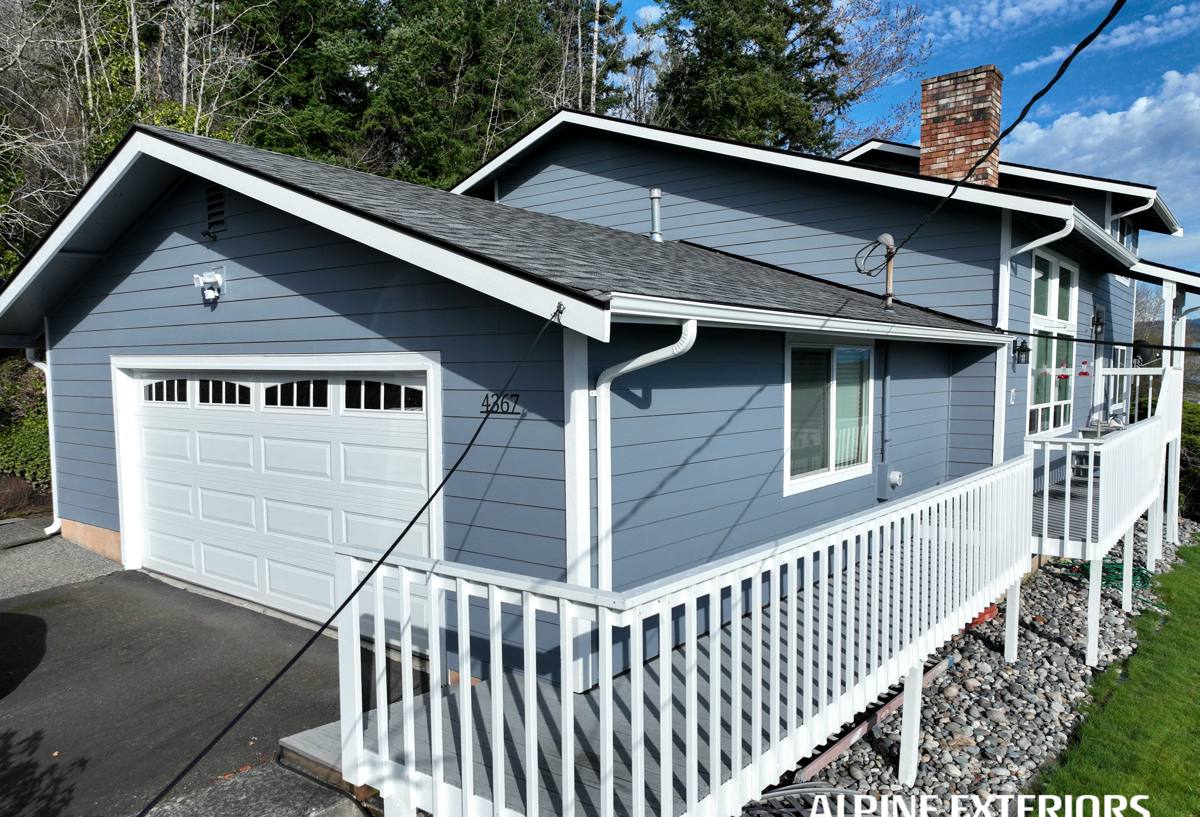
Why Asphalt Shingles Still Make Sense for Island Homes
Asphalt shingles remain one of the most practical roofing choices for Friday Harbor homeowners, and for good reason. They're a known quantity — installers, inspectors, and insurance adjusters all understand them, replacement material is easy to source even with ferry-dependent logistics, and a well-built asphalt roof holds up perfectly well against island weather when it's put together correctly. The material isn't the weak link in most of the shingle roof failures we see out here. Poor installation, undersized ventilation, and skipped underlayment details are.
That's an important distinction for a homeowner comparing bids. The difference between a shingle roof that lasts fifteen years and one that lasts twenty-five or more usually isn't the shingle brand — it's whether the crew handled the details that matter in a wet, salty, moss-prone climate.
Where Shingle Roofs Go Wrong in This Climate
We get called out to look at a lot of roofs that are failing well before they should. The patterns repeat:
- Underlayment that wasn't rated or lapped for sustained wind-driven rain, leaving small gaps that eventually become leaks
- Valleys and flashing installed with the assumption that "it'll shed water eventually" instead of being built to handle standing water and backed-up debris
- Ventilation that was never sized for the roof, trapping moisture in the attic and rotting the deck from underneath while the shingles above still look fine
- Fasteners and flashing that weren't rated for a marine environment, corroding years ahead of schedule
- Moss and organic debris left to build up in valleys and along eaves, holding moisture against the shingle mat
Every one of these is preventable. None of them shows up on a quick curb-side look at a finished roof — they show up five, ten, or fifteen years later as a leak, a soft spot in the decking, or shingles that are granule-bare far earlier than they should be.
Our Asphalt Shingle Roofing Process
Inspection and Honest Estimate
We start by actually getting on the roof, not just estimating from the ground or a photo. We check the deck condition, existing ventilation, flashing detail, and how much moss or organic buildup is present. You get a straight answer about what's actually needed — a full tear-off, a repair, or something in between — not an upsell.
Tear-Off and Deck Inspection
For a full replacement, we strip the old roofing down to the deck and inspect the sheathing itself. Any soft, delaminated, or rotted decking gets replaced before anything new goes down. Covering a compromised deck with new shingles just hides a problem that gets more expensive later.
Underlayment and Flashing First
This is where a roof's real weather resistance comes from. We use underlayment suited to sustained wind-driven rain, with ice-and-water-shield-grade protection at eaves, valleys, and any low-slope transitions. Flashing at chimneys, walls, skylights, and penetrations is rebuilt or replaced rather than reused, and we spec corrosion-resistant fasteners and flashing given the salt air here.
Shingle Installation
Shingles go down to manufacturer nailing patterns and exposure specs, with attention to how wind uplift and driving rain actually behave on this site's exposure — a roof facing open water gets treated differently than one tucked behind trees.
Ventilation Check and Correction
We verify intake and exhaust ventilation are balanced for the attic volume. Undersized or mismatched ventilation is one of the most common reasons shingle roofs fail from the inside out, and it's cheap to fix at installation and expensive to fix later.
Cleanup and Walkthrough
We clear the site of old material and debris, do a nail sweep, and walk the finished roof with you so you know what was done and what maintenance, if any, it'll need going forward.
Choosing the Right Shingle for a Marine Climate
Not every shingle line is built the same, and the differences matter more here than they would in a drier, calmer climate. The table below is a general guide to how shingle tiers tend to compare for island use — your actual best option depends on your roof's exposure, slope, and budget, which is something we'll walk through together.
| Shingle Tier | Typical Wind Rating | Algae/Moss Resistance | Best Fit |
|---|---|---|---|
| Standard 3-tab | Lower | Minimal or none | Budget projects, low-exposure roofs |
| Architectural / laminate | Higher | Often available with algae-resistant granules | Most Friday Harbor homes, especially open or water-facing roofs |
| Premium/designer laminate | Highest in the shingle category | Algae-resistant standard | Homes prioritizing longevity and appearance, higher-exposure sites |
For most homes in this area, we recommend architectural shingles with algae-resistant granules as the practical baseline — the wind performance and moss resistance are worth the modest cost difference over standard 3-tab, especially on a roof exposed to open water or heavy tree cover.
Living With Moss Season: Maintenance That Actually Helps
A correctly installed roof still needs some seasonal attention out here — that's just the reality of the climate, not a sign of a bad installation. A short list of what actually makes a difference:
- Keep gutters and valleys clear of needles, leaves, and moss buildup, especially heading into the wet season
- Have moss growth removed gently rather than left to spread — aggressive pressure washing can do more damage to granules than the moss itself
- Trim back overhanging branches where practical to reduce shade, debris, and moisture retention on the roof surface
- Check attic ventilation isn't blocked by insulation or debris at least once a year
- Have flashing and penetrations checked periodically, since these are the first place a marine climate causes trouble
None of this is a substitute for correct installation. It's what keeps a well-built roof performing at its best for its full expected lifespan.
What Drives Cost on a Friday Harbor Roofing Project
Every roof is different, and we won't quote a number without seeing it, but a few factors consistently move the price on island jobs:
| Factor | Why It Matters Here |
|---|---|
| Roof access and material delivery | Ferry-dependent logistics can affect scheduling and delivery lead time for larger jobs |
| Deck condition underneath old shingles | Moisture-related rot found during tear-off adds material and labor |
| Number of valleys, penetrations, and flashing details | Complex rooflines take more time to flash correctly for wind-driven rain |
| Shingle tier selected | Architectural and premium lines cost more upfront but hold up better against moss and salt air |
| Ventilation upgrades needed | Correcting undersized ventilation adds labor but prevents deck damage later |
Why a Crew That Already Works Friday Harbor Matters
Roofing on an island isn't the same logistical exercise as roofing on the mainland, and it shows in how a job gets planned and run. Material has to be ordered with ferry schedules in mind, not same-day delivery assumptions. Weather windows for tear-off and dry-in are tighter here, especially outside the summer months, and a crew that hasn't planned around that can leave a roof exposed longer than it should be. Local permitting and inspection processes in San Juan County are also more straightforward to navigate when a contractor has already been through them, rather than learning the process on your project.
There's also a simple accountability argument. A crew that lives and works in this community has a reason to get the details right the first time — the underlayment, the flashing, the ventilation — because a callback isn't a quick trip across town, it's a ferry ride. That's less an abstract promise and more a practical reality that shapes how the job gets done.
If you're weighing a repair against a full replacement, or just want a second opinion on a roof that's showing early signs of wear, we're happy to take a look. Reach out for a free, no-pressure estimate using the form below, and we'll give you a straight read on what your roof actually needs.