 Orcas Island Siding
 Siding Installation for Lopez Island Homes
Lopez Island sits in the same stretch of the Salish Sea as Orcas Island, and it deals with the same basic exposure: salt-laden marine air moving off the water, rain that comes in sideways as often as it falls straight down, and a moss season that can run most of the year on shaded, north-facing walls. We're based on Orcas and already work this part of San Juan County regularly, and this page covers what a correct siding installation actually involves for a Lopez Island home — not a generic "we do siding" pitch, but the specific decisions that matter for this climate and this island's logistics.
This is general guidance for the area, not a claim about any particular property. If you're planning a siding project on Lopez, the sections below should give you a realistic sense of what to expect and what to ask for.
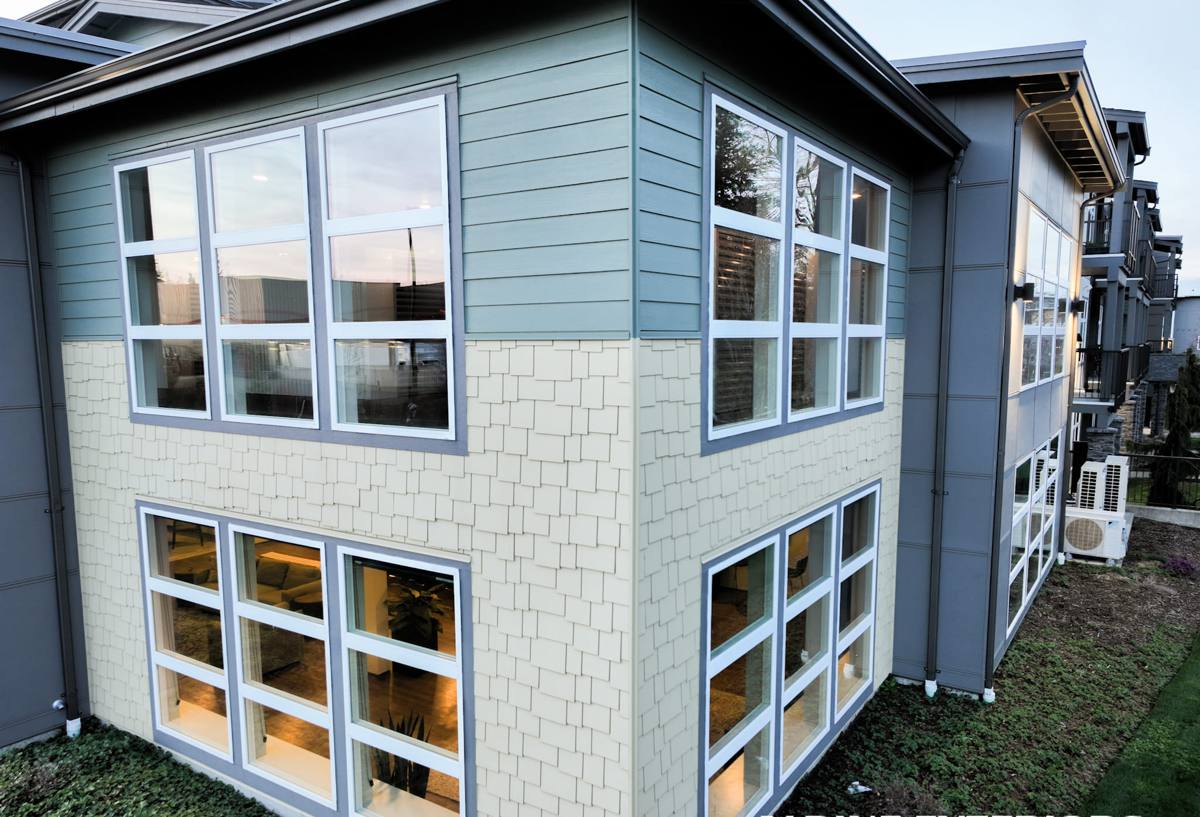
What Lopez Island's Climate Actually Asks of Siding
Salt Air, Constantly
Lopez is fully surrounded by water, and there's no meaningful distance from the shoreline anywhere on the island that fully escapes salt-laden air. Salt accelerates the breakdown of field-applied paint and lower-grade finishes, and it corrodes exposed fasteners and metal trim faster than an inland site would ever see. Material and hardware choices that hold up fine forty miles inland can start showing wear noticeably sooner out here.
Driving Rain, Not Straight-Down Rain
Open water means wind has room to build, and wind pushes rain sideways into siding laps, corner trim, and window and door openings instead of letting it run straight down and off a wall. That's a harder load on butt joints and caulked seams than an annual rainfall number suggests, because the water is being driven into the wall from the side, working at every gap and joint rather than sheeting past it.
A Long Moss Season
Mild temperatures, tree cover on much of the island, and near-constant moisture add up to a moss and mildew season that can stretch across most of the year on shaded or north-facing walls. Moss holds moisture directly against whatever it's growing on, and any siding material that's porous or that traps moisture against the substrate becomes a long-term growth surface. By the time moss is visibly established on a wall, the moisture behind it has usually been working on that spot for a while already.
Why We Install James Hardie Fiber Cement Only
We install James Hardie fiber cement siding exclusively, on every home we side — on Orcas, on Lopez, and anywhere else in San Juan County we work. We don't install LP SmartSide, vinyl siding, Cemplank, Allura, primed spruce, or cedar. That's a professional standard, not a supplier preference, and it comes from weighing what actually holds up against salt air, driving rain, and a long moss season versus what quietly shifts maintenance cost onto the homeowner a few years down the road.
- Non-combustible core: Fiber cement doesn't feed a fire the way wood-based siding can, which matters for household safety and can matter for insurance underwriting on an island where fire response takes longer to arrive.
- Factory-applied ColorPlus finish: Color is baked on under controlled factory conditions rather than brushed on in the field, so it resists fading, chalking, and moisture damage far longer than site-applied paint exposed to salt air.
- Climate-engineered HZ product lines: Hardie's HZ5 formulation is built for regions with heavy moisture exposure and freeze-thaw cycling, which fits Lopez Island's exposed, marine conditions well.
- Dimensional stability: Fiber cement doesn't swell, cup, or warp the way engineered wood siding can after repeated wet-season moisture cycles.
- Strong transferable warranty: Hardie backs its products with one of the stronger warranty structures in the industry when installation follows spec, which matters if the home changes hands later.
Other siding products have a legitimate place in the broader market, and plenty of homeowners are satisfied with them in less demanding climates. Out here, we'd rather stand fully behind one system we trust than offer a cheaper option and hope the trade-offs don't catch up with the homeowner during the next wet season.
What Correct Installation Actually Involves
Picking the right product only gets a homeowner part of the way there. A Hardie installation performs the way it's designed to only when the details underneath the finish are done right, and on an exposed island wall, there's less margin for a shortcut to go unnoticed.
Water Management Before a Single Board Goes Up
The house wrap and flashing layer behind the siding is what actually keeps a wall dry, and the siding itself is the second line of defense, not the first. That means correctly lapped house wrap, properly integrated flashing at every window and door opening, and flashing at every roof-to-wall intersection where water naturally wants to collect. Get this layer wrong and a beautifully installed Hardie exterior can still leak behind the boards.
Clearance, Fastening, and Joints
Proper clearance from grade, decks, and roof lines keeps splash-back and standing moisture away from the bottom courses, which is where a lot of siding problems start regardless of material. Fasteners need to be corrosion-resistant and placed to Hardie's spacing spec, since a fastener that streaks or backs out over time is both a cosmetic and a moisture problem. And butt joints and corners need to be caulked and detailed correctly, since a driving-rain climate finds every gap a shortcut leaves behind.
Cut Ends and Field Cuts
Every field cut on a fiber cement board exposes raw material that needs to be sealed and installed with proper clearance, the same way factory edges are protected. Skipping this step is a common corner-cutting spot on jobs that otherwise look fine from the ground, and it's exactly the kind of detail that only shows a problem a year or two later.
Our Process for a Lopez Island Project
- We walk the exterior in person and evaluate the existing siding, wall condition, and any moisture history before recommending a scope.
- We check the sheathing and house wrap once old siding comes off, since trapped moisture behind aging siding is common in this climate and needs to be addressed before new material goes on.
- We spec Hardie's HZ5 line for the added moisture and freeze-thaw resistance this location calls for.
- We detail flashing, fastening, and clearances to account for the driving rain and salt exposure specific to an island wall.
- We plan material delivery and crew scheduling around ferry logistics up front, so the project timeline is realistic from day one instead of a surprise once it's underway.
Full Replacement Versus Repair
Not every Lopez Island home needs a full tear-off. A storm-damaged section, a single failed trim board, or isolated impact damage can often be repaired and matched into existing Hardie siding. But if moisture has been tracking behind the wall for a while, or the existing siding is an older product nearing the end of its service life, a patch job usually just delays a bigger project — and delaying it on an island means the underlying damage keeps spreading between the point someone notices it and the point a crew can actually get out to address it. We'll give you a straight read on which situation you're actually in before we recommend a scope.
Siding Installation Cost Factors on Lopez Island
| Factor | What It Affects | Why It Matters Here |
|---|---|---|
| Tear-off vs. overlay | Labor scope and substrate access | Tear-off often reveals moisture damage that's common under aging siding in this climate |
| Substrate condition | Repair costs before new siding goes on | Trapped moisture behind failing siding can rot sheathing before it's ever visible from outside |
| Wall orientation and tree cover | Moss and mildew growth rate | Shaded, north-facing walls stay wet longer and show growth and finish wear sooner |
| Material and crew logistics | Scheduling and delivery timeline | Getting materials and a crew to Lopez means planning around ferry schedules, not a same-day mainland run |
| Site access | Labor time and staging needs | Rural roads, waterfront lots, and tree-covered sites common on the island can add setup time |
Exact numbers depend on the specific home and site conditions, which is why we walk the property in person before giving a real estimate rather than quoting off a generic price sheet.
Signs Your Siding Needs Attention
- Moss or dark staining that returns quickly after cleaning, especially on shaded walls
- Soft or spongy siding, particularly low on the wall or around window and door trim
- Peeling paint, bubbling, or visible warping on existing siding boards
- Visible gaps at siding seams, corners, or trim joints where water can track in
- Corroded or discolored fasteners, flashing, or trim
- Cracked or missing caulk at butt joints and corner boards
- Rising energy bills that may point to a wall assembly no longer sealing properly
Why a Crew That Already Works Lopez Island Matters
Hiring a crew based on Orcas that already works Lopez Island regularly means a few practical advantages over bringing in a mainland contractor for a one-off job. We already know how to plan material deliveries and crew time around ferry schedules instead of treating that logistics problem as a surprise mid-project. We've seen firsthand how salt air, driving rain, and a long moss season behave on real walls in this exact part of San Juan County, not just how a product performs on a spec sheet. And if a callback or follow-up detail comes up after the first hard winter storm, we're not asking you to wait on a contractor who has to schedule a special trip out to the islands to handle it — coming back is already part of how we operate here.
Get a Free, No-Pressure Estimate
If you're planning a siding project on Lopez Island, we're glad to walk the property with you and give you a straight read on what your home needs. Use the form below to schedule a free, no-pressure estimate.