 Orcas Island Siding
 Siding in the Mountain Lake Area Has Its Own Set of Problems
Homes around Mountain Lake sit differently than the shoreline properties most people picture when they think of Orcas Island. You're set back from direct saltwater spray, often with more tree cover and a bit more elevation. That sounds like it should be easier on siding. In practice, it trades one set of problems for another. Less wind to dry things out, more shade holding moisture against the wall, and a longer moss and algae season because the sun doesn't reach some elevations of the house for most of the day. Add San Juan County's driving rain events and the marine air that reaches every part of the island, salt included, and you've got a climate that punishes any siding material that isn't built and installed to shed water fast and resist organic growth.
We install James Hardie fiber cement siding exclusively, and Mountain Lake is a good example of why. This page is about that one product, on that one type of site, and what actually needs to happen for it to hold up.
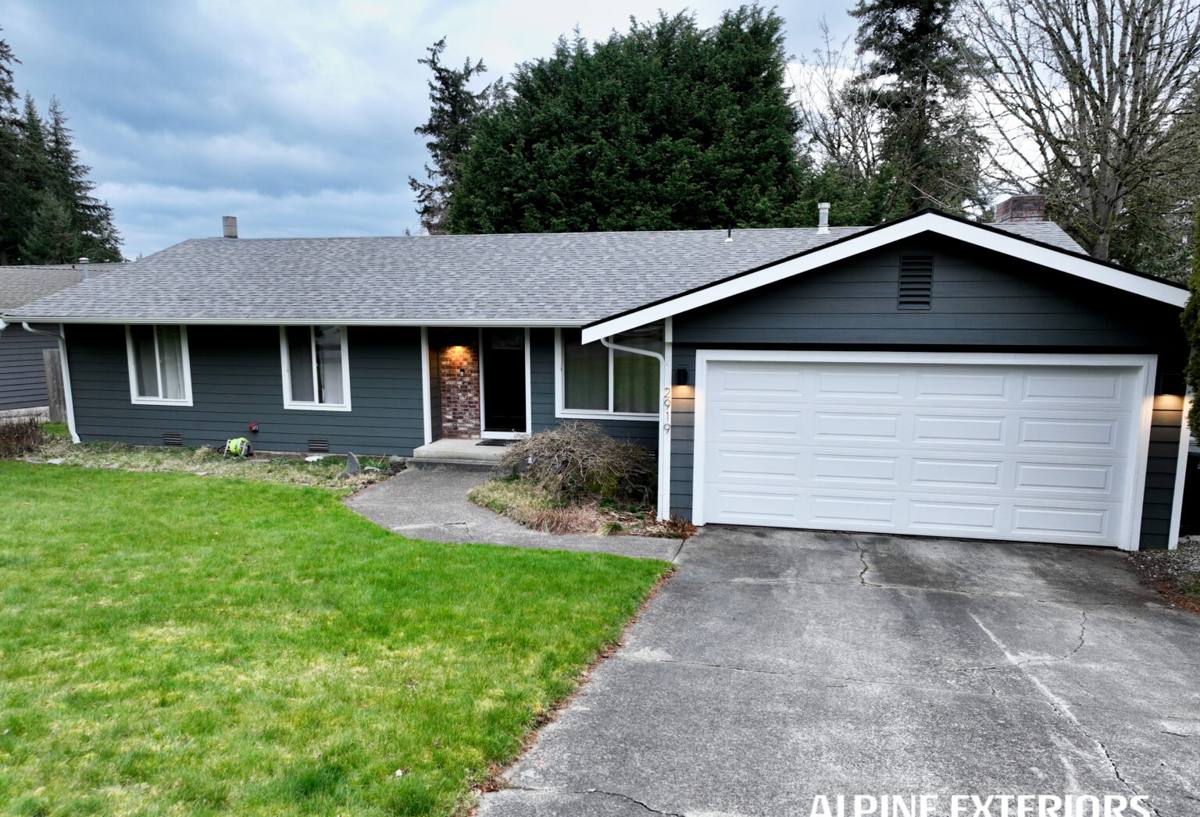
What the Mountain Lake Microclimate Does to a House
Moisture That Doesn't Leave
Wooded, shaded lots dry out slower after rain than open shoreline lots. Siding, trim, and the wall assembly behind it stay damp longer, which is exactly the condition mold, rot, and moss need to establish. A siding system that traps moisture behind it, or that itself absorbs water, is going to struggle in a spot like this regardless of how it looks on install day.
A Long Moss and Algae Season
Anywhere in San Juan County gets moss on north-facing walls and shaded siding. In a tree-covered area, that season stretches longer and the growth is heavier, because the surface never fully dries between rain events. This isn't cosmetic-only — moss and algae hold water against the siding surface, and over years that shortens the life of anything that isn't inherently resistant to it.
Salt Air Still Reaches Inland Sites
You don't have to be on the water for salt-laden marine air to affect fasteners, flashing, and finishes. It travels across the island. Inland homes see slower corrosion than waterfront ones, but "slower" isn't "none," and it's still a factor in what hardware and finish choices we make on a job.
Why James Hardie Is the Only Product We Install Here
James Hardie fiber cement is engineered specifically for this kind of exposure. It's non-combustible, it doesn't rot or delaminate the way wood-based products can, and it's manufactured in climate-specific formulations — the HZ5 product line is built for the Pacific Northwest's wet, temperate conditions rather than a generic national spec. The factory-applied ColorPlus finish is baked on and warranted separately from the substrate, which matters in a climate where finish failure (fading, peeling, cracking) shows up faster on field-painted or lower-grade coatings.
We don't install vinyl, LP SmartSide, Cemplank, Allura, primed spruce, or cedar, and it's worth being direct about why, since a homeowner comparing quotes deserves the real reasoning and not just a sales pitch:
- Vinyl expands and contracts with temperature and can warp or pull loose in wind-driven rain; it also doesn't hold up structurally the way fiber cement does over decades.
- LP SmartSide and other wood-strand products are engineered wood — better than raw lumber, but still wood at the core, meaning moisture intrusion at a cut edge or failed caulk joint can lead to swelling and rot, which is a real risk in a shaded, damp setting like this.
- Primed spruce and cedar require ongoing maintenance — refinishing, caulking, moisture monitoring — that most homeowners underestimate, and cedar in particular is a known fuel source in wildfire-adjacent conversations, on top of the upkeep.
- Cemplank and Allura are also fiber cement, and reasonable products, but we've standardized our crews, flashing details, and warranty process around one manufacturer so every job gets the same trained installation and the same backing if something needs to be addressed.
None of this means those products are junk. It means we made a professional call to install one system correctly and stand behind it, rather than spread our crew's expertise across five product lines with different installation rules and different failure points.
What Correct Installation Actually Requires on a Site Like This
A Working Rainscreen Gap
On a shaded, damp lot, the drainage gap behind the siding matters more than usual. A furred-out rainscreen assembly lets bulk water and incidental moisture drain and lets the wall breathe and dry between rain events. Face-nailing Hardie panels directly to the weather-resistive barrier with no gap is a common shortcut, and it's the single biggest reason fiber cement siding underperforms in wet climates — not because the product failed, but because the assembly behind it never had a way to dry.
Flashing and Water Path Details
Every window head, deck ledger, roof-to-wall transition, and butt joint needs flashing that directs water out and away, not just caulk relying on adhesion to stay sealed for thirty years. Caulk fails eventually. Flashing, done right, doesn't depend on it.
Clearances That Respect the Site
James Hardie's own installation instructions specify minimum clearances from grade, roof lines, and decks. On a wooded lot, we also pay attention to clearance from vegetation and anywhere leaf litter or debris will collect against the wall, because organic debris against siding holds moisture and accelerates moss growth right at the point where water is already slowest to dry.
Fastener and Joint Choices for a Corrosive, Damp Environment
Corrosion-resistant fasteners rated for the exposure, correctly countersunk and sealed, and joint treatment that matches Hardie's published details — this is where a lot of the long-term performance difference between a good install and a bad one actually lives, and it's invisible once the job is finished.
How Different Siding Materials Actually Perform in This Climate
| Material | Moisture Behavior | Moss / Algae Resistance | Long-Term Maintenance |
|---|---|---|---|
| James Hardie Fiber Cement (HZ5) | Doesn't absorb water into the substrate; engineered for wet climates | Resists sustained growth well when kept clean; factory finish doesn't feed organic growth | Periodic cleaning; ColorPlus finish holds color far longer than field paint |
| Vinyl | Doesn't absorb water, but seams and laps can let moisture behind panels | Moderate; surface texture can trap grime that supports growth | Low upkeep but can warp, fade, or crack over time in wind and cold |
| Wood-Strand (LP SmartSide, etc.) | Engineered to resist moisture better than raw wood, but still vulnerable at cut edges and failed joints | Moderate to poor if finish is compromised | Ongoing caulk and finish maintenance to keep moisture out |
| Cedar / Primed Spruce | Absorbs and releases moisture readily; prone to swelling and rot without diligent upkeep | Poor in shaded, damp conditions without frequent treatment | Highest maintenance burden — refinishing, caulking, inspection cycles |
Signs a Mountain Lake Home Should Get a Siding Assessment
- Persistent moss or dark streaking on shaded or north-facing walls that comes back shortly after cleaning
- Soft spots, visible swelling, or bubbling paint, especially near window trim, deck ledgers, and the bottom courses near grade
- Caulk joints that are cracked, pulled away, or missing in multiple spots
- Visible gaps or warping at panel seams and corners
- Siding installed flat against the wall with no visible drainage gap or weep points at the base
- Any musty smell near an exterior wall from the inside — a sign moisture may already be behind the siding
Our Process for a Mountain Lake Project
We start with a walk of the whole exterior, not just the side the homeowner is worried about, since problems on a shaded wall often show up first on the side facing the tree line rather than the road. We check the existing wall assembly where it's exposed (window returns, corners, any area we can see behind trim) to understand whether there's already trapped moisture, and we assess how much sun and airflow different elevations of the house actually get, since that changes the drainage detailing we'll specify.
From there we scope tear-off, any sheathing repair, house wrap and rainscreen furring, the HZ5 product line and profile that fits the home, and flashing details at every penetration and transition. Because this is a job we quote and build to the site conditions rather than a flat per-square-foot number, we walk the homeowner through exactly what's driving the price before any work starts.
What Drives the Cost on a Job Like This
- Amount of tear-off and whether the existing wall assembly needs repair before new siding goes on
- Home size, elevation changes, and roofline complexity around the areas needing flashing
- Whether a rainscreen assembly is being added where one doesn't currently exist
- Trim, corner, and soffit detailing — HZ5 panel vs. lap profile, and the ColorPlus color and texture selected
- Site access — tree cover and grade can affect staging and material handling on a wooded lot
Why It Matters That We Already Work on Orcas Island
Getting materials and crews to the island isn't a small logistical detail — it's a scheduling factor that affects every project. Ferry timing, material lead times, and coordinating a crew that's already staged on-island rather than commuting a job at a time all affect how smoothly a project runs and how accurate the timeline is. A crew that already works San Juan County knows how to plan around that instead of discovering it mid-project. That same local experience is what tells us, walking up to a shaded Mountain Lake wall, exactly what moisture and moss pattern we're going to find before we even pull the first piece of trim.
If you're dealing with moss buildup, aging siding, or you're planning ahead for a home in the Mountain Lake area, we're glad to come take a look. The estimate is free, there's no pressure, and you'll get a straight answer about what your home actually needs.