 Orcas Island Siding
 Building Decks That Hold Up in Obstruction Pass
Obstruction Pass sits on the wooded, water-facing side of Orcas Island, and that location shapes almost every decision that goes into a good deck here. Salt air off the water accelerates corrosion on fasteners and hardware. Driving rain off Rosario Strait finds every gap in flashing and framing. And the tree cover that makes this part of San Juan County so beautiful also means shade, damp air, and a moss season that can run most of the year. A deck built to a generic spec sheet does not last long under those conditions. A deck built for this specific stretch of Orcas Island does.
We build and repair custom decks for homes throughout the Obstruction Pass area, and most of what separates a deck that lasts fifteen-plus years from one that starts failing in five comes down to decisions most homeowners never see: how the ledger is flashed, what grade of fastener goes into the frame, how much airflow the substructure gets, and whether the decking material was actually chosen for a marine, tree-shaded climate instead of a showroom photo.
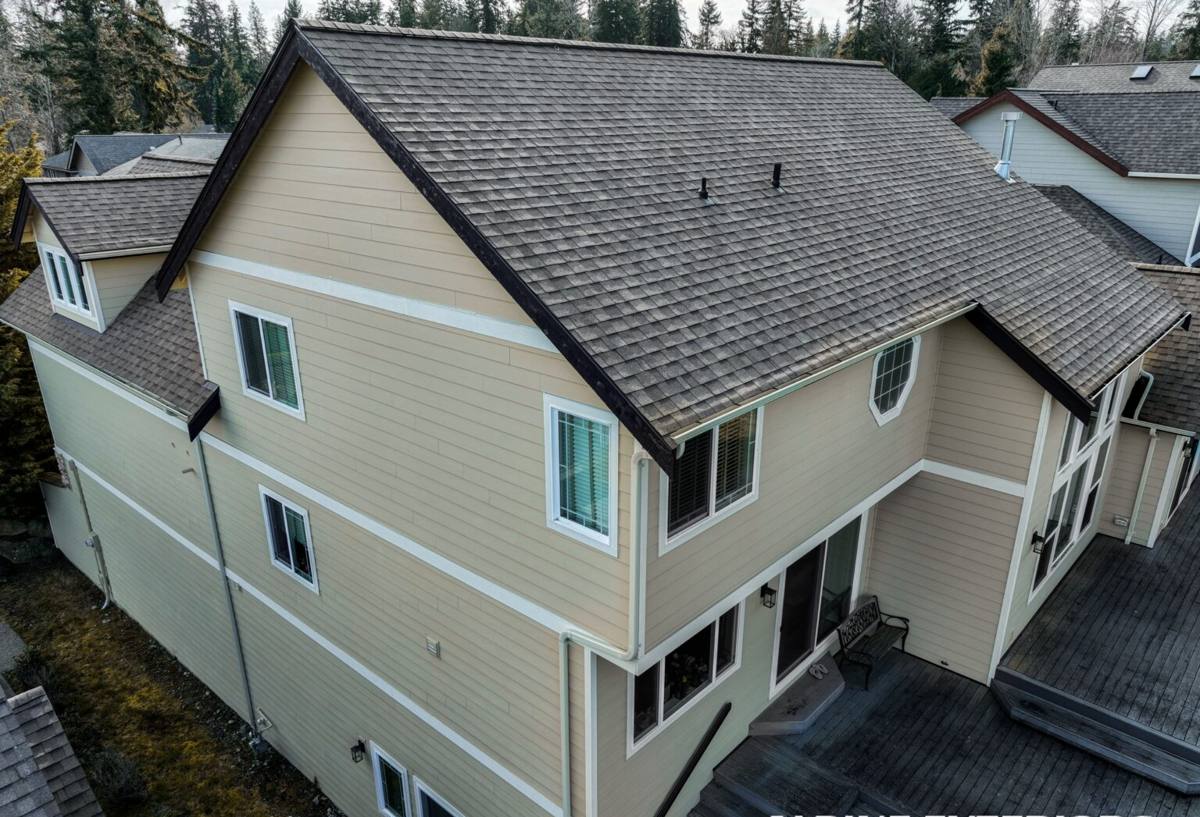
What Makes Obstruction Pass Different From an Inland Build
Decks on this side of the island deal with a combination of stressors that inland lots on Orcas rarely see all at once:
- Salt-laden air that speeds up corrosion on screws, brackets, post bases, and railing hardware — even hardware rated for exterior use can fail early if it is not rated for coastal exposure.
- Persistent shade from conifer cover, which keeps decking damp longer after rain and creates ideal conditions for moss, algae, and mildew.
- Wind-driven rain that gets pushed sideways under railings and against ledger connections, rather than simply falling straight down.
- Narrow, sometimes steep access roads typical of the waterfront and wooded lots in this area, which affect how materials are staged and how equipment gets to the build site.
- Soil and drainage conditions near the shoreline that need to be accounted for in footing depth and placement.
None of these individually is unusual for the San Juan Islands. Together, on a single lot, they mean a deck needs to be treated as a coastal structure, not a standard backyard addition.
Where Decks Actually Fail First
The Ledger Connection
The point where a deck attaches to the house is the single most common failure point we see on older decks around Orcas Island. If the ledger board was not properly flashed and sealed when it was installed, water works its way behind it over years, rotting the rim joist and, eventually, the framing inside the wall. In a high-rainfall, tree-shaded spot like Obstruction Pass, an unflashed or poorly flashed ledger can fail years before the decking on top even shows wear.
Fasteners and Hardware
Standard exterior-rated screws and joist hangers are not the same as coastal-rated hardware. Near salt water, even galvanized fasteners can start showing rust streaks and pitting within a few seasons. We use stainless steel or coastal-rated fasteners and connectors on every project in this area — it costs more up front and saves a rebuild later.
Substructure Airflow
Decks built low to the ground or over damp, shaded soil without adequate ventilation trap moisture underneath. That moisture feeds rot in the joists and encourages moss and algae growth on the underside of the decking, which most homeowners never see until it is a structural problem.
Choosing a Decking Material for This Climate
There is no single "best" decking material — there is a best material for a given lot, budget, and how much maintenance a homeowner actually wants to do. In a shaded, salt-air, high-moisture environment like Obstruction Pass, here is how the common choices actually perform:
| Material | Moisture & Moss Resistance | Maintenance | Typical Lifespan Here |
|---|---|---|---|
| Pressure-treated wood | Fair — needs sealing to resist moisture and slow moss growth | Annual cleaning, re-sealing every 1-2 years | 10-15 years with upkeep |
| Cedar | Good natural rot resistance, but still absorbs moisture in shade | Regular cleaning and periodic oiling to prevent graying and moss | 15-20 years with upkeep |
| Capped composite | Excellent — resists moisture absorption and won't rot | Occasional washing to clear moss and pollen film | 25+ years, backed by manufacturer warranty |
| Uncapped composite | Good, but the exposed core can hold moisture over time | More frequent cleaning than capped composite | 15-25 years |
| Tropical hardwood (e.g., ipe) | Very good natural density and rot resistance | Periodic oiling to maintain color; can be slippery when mossy | 25+ years |
For shaded, moss-prone lots, we generally steer homeowners away from uncapped or budget composite products — the exposed cores can wick moisture in exactly the conditions Obstruction Pass sees for much of the year. Capped composite or a well-maintained cedar deck tend to be the more honest long-term choices, depending on budget and the look you want.
Our Process for a Custom Deck Build
1. Site Visit and Design
We walk the property with you, look at sun and shade exposure, drainage, existing structure (for attached decks), and access for equipment and materials — access matters more on some Obstruction Pass lots than it would on a flat, road-front property elsewhere on Orcas Island. We talk through material options honestly, including trade-offs in cost, maintenance, and how each will hold up given the specific shade and moisture profile of your lot.
2. Permitting
Most new decks and many significant deck rebuilds in San Juan County require a building permit, and shoreline-proximity lots can involve additional review. We handle the permitting process as part of the job so you are not left navigating county requirements on your own.
3. Framing and Flashing
This is where the long-term durability of the deck actually gets decided. Proper ledger flashing, coastal-rated fasteners, correctly spaced and sized joists, and adequate ground clearance for airflow all happen at this stage — before a single decking board goes down.
4. Decking, Railing, and Finish Work
Decking is installed with attention to drainage and gap spacing so water and debris don't pool. Railings are set with hardware rated for salt-air exposure. Stairs, lighting, and any built-in features are finished last.
5. Final Walkthrough
We walk the finished deck with you, explain what maintenance it will need and roughly when, and answer questions before we consider the job done.
Railings and Hardware Built for Salt Air
Railings take a lot of abuse near the water — they're touched constantly, exposed directly to wind-driven rain, and often the first thing to show corrosion. We spec stainless steel or coated hardware rated for coastal environments on railing posts, brackets, and cable or baluster connections. Cheaper zinc-plated hardware may look fine for a season or two before rust starts bleeding through the finish, which on a light-colored deck or railing is one of the most common complaints we hear from homeowners who had work done elsewhere.
Living With a Long Moss Season
Moss and algae growth on a shaded, damp deck in this part of Orcas Island isn't a sign of a bad build — it's a normal part of owning a deck under tree cover near the water. What matters is staying ahead of it so it does not become a slip hazard or trap moisture against the decking surface. A simple, realistic maintenance routine goes a long way:
- Sweep debris (needles, leaves, pollen) off the deck regularly — this is what feeds moss growth more than anything else
- Wash the deck surface at least once or twice a year with a deck-safe cleaner, more often in heavily shaded spots
- Keep an eye on the underside and framing where visible — early moss or dark staining there is worth a look before it spreads
- Trim back overhanging branches where possible to let more light and airflow reach the deck surface
- Reseal wood decking on the schedule appropriate to the product — don't wait until it looks obviously weathered
- Check railing hardware annually for early rust streaks, which are easier to address early than after they've stained the surface
Composite decking cuts down on several of these tasks but does not eliminate moss and algae entirely in a shaded, high-moisture spot — regular washing is still the best defense regardless of material.
Permits and San Juan County Considerations
San Juan County generally requires permits for new deck construction and for major rebuilds, and lots near the shoreline can be subject to additional setback or critical-areas review. Requirements vary by parcel, so we don't guess — we confirm what applies to your specific property as part of the design process and handle the paperwork so the project stays on track.
Why Hire a Crew That Already Works Obstruction Pass
A contractor who mainly builds decks in drier, sunnier, inland conditions can still build a technically sound deck — but they may not default to coastal-rated hardware, may not think through shade and drainage the same way, and may not be familiar with the access realities of getting materials to some of the wooded and waterfront lots in this part of Orcas Island. Local experience shows up in the details: knowing which decking products actually hold up under tree cover here, which fastener grades are worth the extra cost near the water, and how to sequence a build around the ferry schedule and site access that come with island work.
We're an Orcas Island company working throughout San Juan County, and Obstruction Pass is part of our regular service area — not a special trip. That means realistic timelines, no guesswork on permitting, and a deck built for the actual conditions of your property rather than a one-size-fits-all spec.
If you're planning a new deck or need an honest look at repairing or replacing one that's showing its age, we're happy to come take a look. Reach out for a free, no-pressure estimate using the form below.