 Orcas Island Siding
 Why Obstruction Pass Roofs Wear Out Faster Than the Manufacturer's Warranty Suggests
Every roofing material sold in the Pacific Northwest comes with a warranty number that assumes average conditions. Homes around Obstruction Pass rarely get average conditions. Sitting close to the water on Orcas Island means the roof deck takes on salt-laden air, wind-driven rain that hits shingles sideways instead of falling straight down, and a moss season that can run eight months or longer in the shaded, moisture-heavy pockets common to San Juan County. None of that is a defect in the roof. It's just what a marine climate does to a structure, and it's why a roof that would last 25 years inland can start showing real trouble at 15 here.
A new roof installation done right for this specific location isn't a different product line — it's the same materials, installed with different priorities. Ventilation, fastener choice, underlayment, and moss-resistant detailing all matter more here than they would on a dry-side property. This page walks through what that actually looks like, so you know what to ask for and what to expect when you're ready to replace a roof at your Obstruction Pass home.
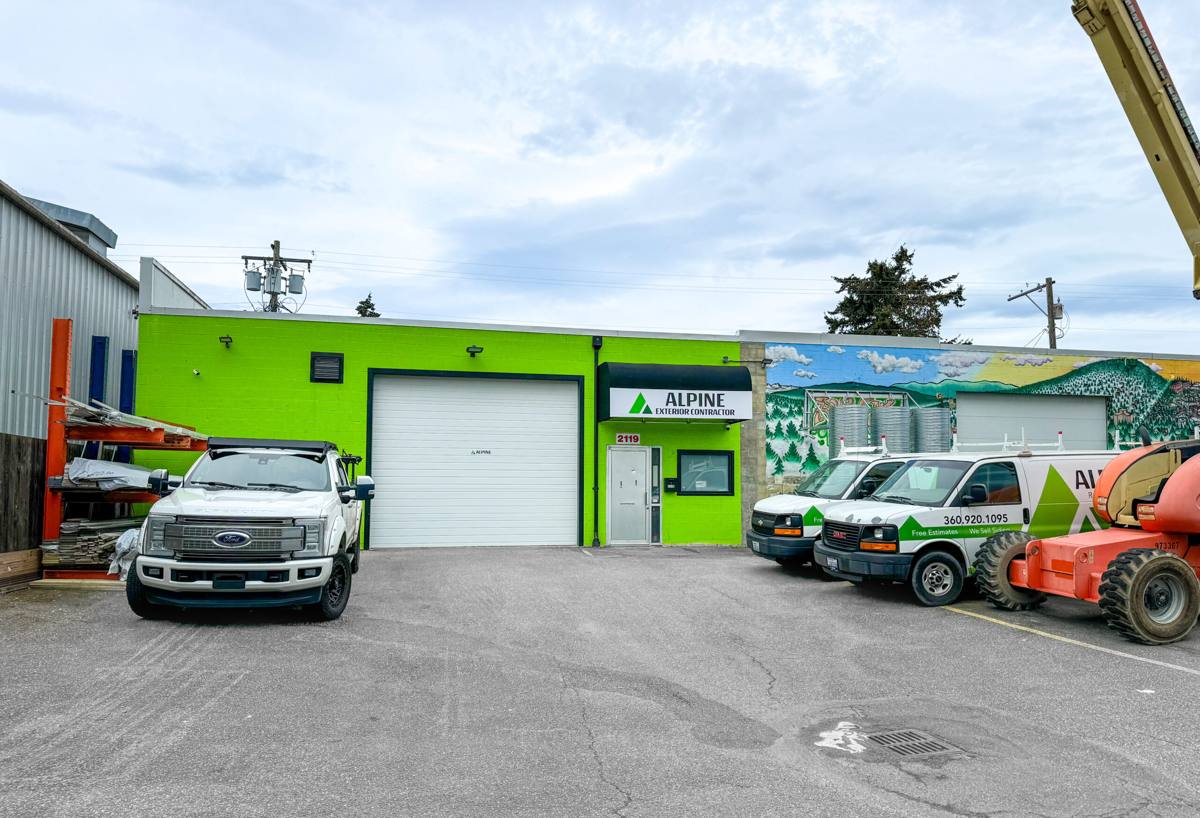
What Salt Air, Driving Rain, and Moss Actually Do to a Roof
Salt Air and Metal Fatigue
Airborne salt accelerates corrosion on any exposed metal — flashing, fasteners, vent caps, and gutter hardware. Standard galvanized fasteners can start rusting years before they would in a non-coastal setting, and once a fastener corrodes, the seal around it fails long before the shingle or panel around it wears out. This is one of the most common causes of early leaks on waterfront and near-waterfront Orcas Island homes, and it's almost entirely preventable with the right hardware choices up front.
Driving Rain and Wind-Driven Exposure
Obstruction Pass gets weather off the water, and that weather doesn't always fall straight down. Wind-driven rain pushes moisture up under shingle edges, into exposed nail heads, and through any flashing detail that was installed to a bare-minimum standard. A roof built for calmer, more sheltered lots inland often just doesn't have the sealing detail this kind of exposure needs.
Moss Season
Moss thrives wherever shade, moisture, and mild temperatures overlap, and that describes most of Orcas Island's tree-covered lots for a good chunk of the year. Moss isn't just cosmetic. It holds water against the roofing surface, works its way under shingle tabs, and on cedar or older composition roofs, it can hold enough moisture to accelerate rot in the deck underneath. A roof designed with moss in mind — proper slope transitions, zinc or copper strips where appropriate, and a surface that sheds rather than traps debris — holds up dramatically better over time than one that wasn't.
Choosing the Right Roofing Material for a Marine-Exposure Site
There's no single "best" roofing material for every home — it depends on your budget, roof pitch, tree cover, and how long you want to go between maintenance visits. Here's how the common options actually perform under Obstruction Pass conditions specifically.
| Material | Salt Air Performance | Moss Resistance | Typical Lifespan Here |
|---|---|---|---|
| Architectural asphalt shingle | Good, with corrosion-resistant fasteners and flashing | Moderate — needs periodic cleaning | 20-25 years |
| Standing seam metal | Excellent, with marine-grade coatings and fasteners | Very good — sheds moss growth naturally on steeper pitches | 40-50+ years |
| Cedar shake | Fair — needs regular treatment and inspection | Poor without diligent upkeep; traps moisture | 15-25 years with maintenance |
| Synthetic/composite shingle | Good | Moderate to good depending on product | 30-40 years |
We'll be upfront about our own standard: on heavily shaded, moss-prone lots we generally steer clients away from untreated cedar shake unless they're committed to an active maintenance schedule, because the moisture retention that makes it look good architecturally is the same trait that shortens its life in this climate. That's a maintenance-burden judgment call, not a claim that shake is a bad product everywhere — it's simply a poor match for a lot of Obstruction Pass's tree cover and exposure.
What a Correct New Roof Installation Actually Involves
A roof is only as good as what's underneath the visible surface. When we tear off and replace a roof here, the details below are non-negotiable, regardless of which finish material a homeowner chooses.
- Full tear-off and deck inspection — no installing new roofing over hidden rot or soft spots
- Deck repair or replacement of any damaged sheathing before anything new goes down
- Ice-and-water or high-quality synthetic underlayment at eaves, valleys, and penetrations, not just a single layer of felt
- Corrosion-resistant fasteners and flashing rated for coastal/marine exposure
- Proper intake and exhaust ventilation sized to the actual attic volume, not a generic default
- Flashing detail at every chimney, skylight, and wall intersection, sealed and inspected before covering
- Moss-resistant strategy appropriate to the roof's shade exposure and pitch
- Gutter and drip-edge integration that actually moves water off the roof instead of behind fascia boards
- Full site cleanup, including magnetic sweep for stray fasteners
Skipping any one of these doesn't usually cause an immediate problem — it causes a problem in year eight or ten, which is exactly the kind of failure that's hardest to trace back to the original install.
Our Process, Start to Finish
- On-site assessment. We walk the roof and attic, check the deck condition where accessible, and look at how the specific lot's tree cover, sun exposure, and wind direction affect the existing roof's wear pattern.
- Written estimate. You get a clear breakdown of material options, scope of work, and pricing — no vague allowances buried in the fine print.
- Material selection. We talk through the trade-offs in the table above based on your budget, how long you plan to own the home, and how much upkeep you want to sign up for.
- Scheduling around weather and access. Orcas Island logistics — ferry timing, material delivery, and weather windows — get built into the schedule up front rather than causing delays mid-project.
- Tear-off and deck inspection. Nothing new goes on top of a deck we haven't actually looked at.
- Installation. Underlayment, flashing, ventilation, and finish material go in, in that order, with each stage checked before the next begins.
- Final walkthrough and cleanup. We review the finished roof with you, confirm ventilation and flashing details, and clear the site completely.
Ventilation and Flashing Details That Matter More on This Site Than Most
Attic ventilation is easy to overlook because it's invisible from the ground, but it's one of the biggest factors in how long a roof lasts in a wet climate. Poor ventilation traps moisture in the attic, which condenses against the underside of the deck and accelerates rot from the inside — a failure mode that has nothing to do with the roofing material itself and everything to do with airflow. On tree-covered, moisture-heavy lots near the water, we size intake and exhaust ventilation to the specific attic, not a one-size formula.
Flashing is the other detail that separates a roof that lasts from one that leaks early. Every chimney, skylight, vent pipe, and wall-to-roof transition is a potential entry point for wind-driven rain. We install flashing to shed water in the direction it actually travels on this site — off the water, not from some generic assumed direction — and we use fasteners and flashing metal chosen to resist salt-air corrosion rather than the cheapest standard-grade hardware.
Access, Permits, and Working on Orcas Island
Roofing projects on Orcas Island have logistics that mainland contractors don't always plan for well. Material deliveries, dumpster or debris hauling, and crew scheduling all have to account for ferry timing, and a crew that only occasionally works in San Juan County tends to underestimate how much that affects a project timeline. We build ferry and delivery logistics into the schedule from the estimate stage, so a new roof installation doesn't stall out waiting on a part or a dumpster swap.
Permitting requirements and any applicable building code details are handled as part of the project — we confirm what's required for your specific property before work begins rather than assuming every Orcas Island roof falls under the same rules.
Why Local Experience on Obstruction Pass Actually Matters
A roofing crew that mostly works dry, inland, low-wind properties will often install a roof correctly by general standards and still see it underperform here, simply because the standard details aren't tuned for salt air, wind-driven rain, and a long moss season. Crews with real experience around Obstruction Pass and the rest of Orcas Island know which slopes hold moss, which exposures take the worst of the weather, and which fastener and flashing choices actually hold up rather than looking fine on installation day and failing quietly over the following years.
That local knowledge doesn't show up as a line item on an estimate, but it's the difference between a roof that needs attention again in a decade and one that goes the full distance of its expected lifespan.
Signs It's Time for a New Roof, Not Another Repair
Not every roof problem calls for full replacement, but certain signs mean patching is a short-term fix on a bigger issue.
- Multiple leak locations rather than one isolated spot
- Visible sagging in the roofline or soft spots when walked
- Widespread moss growth that keeps returning after cleaning
- Shingles that are curling, cracking, or losing granules across large sections
- A roof approaching or past its expected lifespan combined with any of the above
If you're seeing one or two of these, a repair might still make sense. If you're seeing several at once, replacement is usually the more cost-effective path — repeated repairs on a roof near the end of its life rarely add up to less than a full replacement over time.
If you're weighing a new roof for your Obstruction Pass home, we're happy to take a look and give you a straightforward, no-pressure estimate — just fill out the form below and we'll go from there.