 Orcas Island Siding
 Obstruction Pass Homes Take a Different Kind of Weather Beating
Obstruction Pass sits at the water's edge on Orcas Island, in the strait between Orcas and Obstruction Island, and that location shapes everything about how a home's exterior ages. Homes here deal with three things at once: salt-laden marine air off the water, driving rain that comes sideways during fall and winter storms, and heavy tree cover — fir, cedar, madrona — that keeps siding shaded and slow to dry. Any one of those on its own is manageable. Together, they're why siding that would hold up fine in a drier inland climate can start failing early out here.
Salt air is corrosive to exposed metal — fasteners, flashing, trim edges — and it accelerates the breakdown of coatings that aren't built for marine exposure. Driving rain doesn't just wet the surface of a wall; it tests every seam, joint, and penetration for a path inward. And shade from the tree canopy means water sits on siding longer after every rain instead of drying off in an afternoon of sun, which is exactly the condition moss and algae need to take hold. San Juan County's climate is mild by Pacific Northwest standards, but "mild" doesn't mean gentle on a building envelope — it means persistently damp, which is its own slow-motion problem.
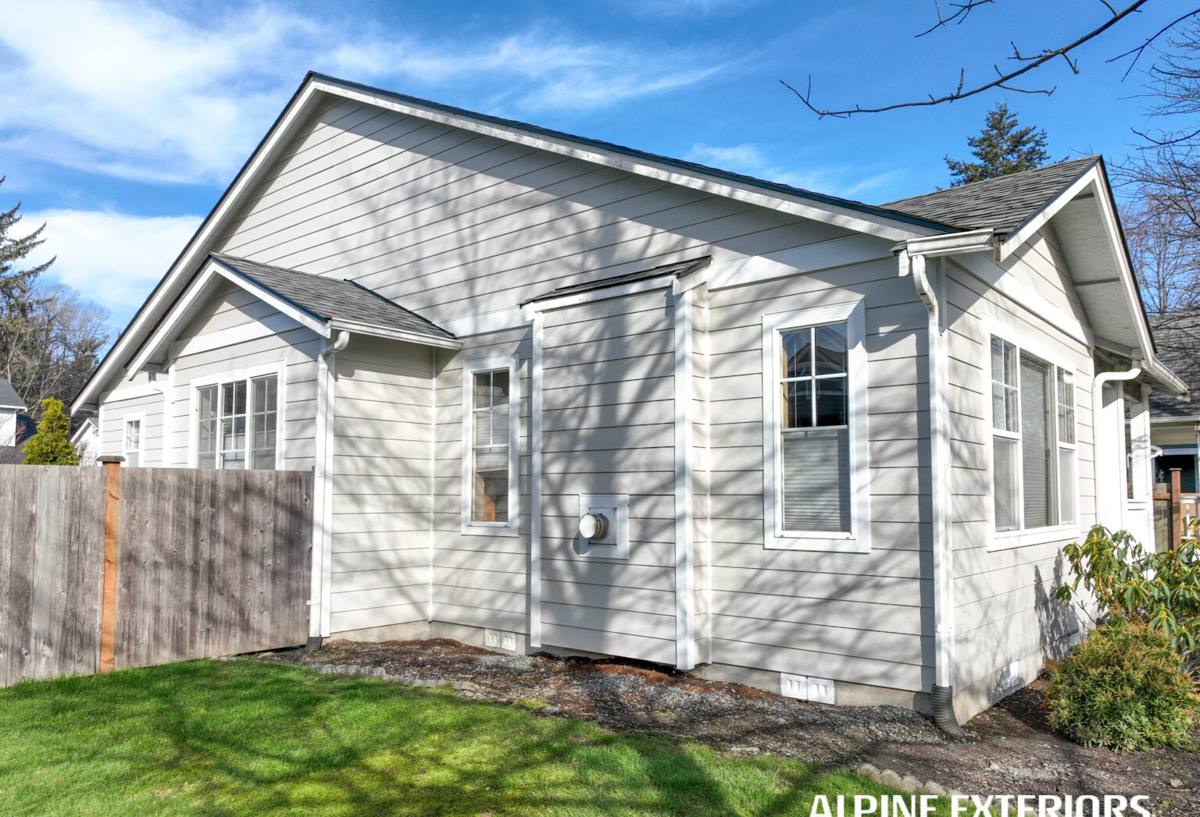
What a Correct Installation Actually Has to Account For
A siding job done right for Obstruction Pass isn't just about the visible plank on the wall — most of what determines whether it lasts is underneath and around it, where you can't see it once the job is finished.
The water-resistive barrier and drainage plane
Behind every board, there needs to be a continuous water-resistive barrier, properly lapped and sealed at every seam, window, and penetration. In a climate that gets sustained, wind-driven rain, gaps or shortcuts in this layer are where leaks start — often years later, after water has already been working its way into sheathing and framing unnoticed.
A rainscreen gap
Furring the siding out from the wall to create a small drainage and ventilation gap lets any moisture that does get behind the boards drain out and lets the wall assembly dry. On a shaded, damp lot near the water, that ability to dry out is what keeps a small amount of incidental moisture from turning into rot or mold over time.
Corrosion-resistant fasteners and flashing
Standard fasteners and flashing can start showing rust streaks and losing holding strength faster in salt air. Correct installation means using fastener and flashing materials rated for coastal exposure, not whatever is cheapest at the yard.
Flashing at every horizontal surface
Window heads, trim boards, deck ledgers, roof-to-wall transitions — every horizontal intersection needs flashing that sheds water outward, not caulk standing in for flashing. Caulk fails; properly lapped flashing doesn't depend on staying intact to keep water out.
Why We Install Only James Hardie Fiber Cement
We don't install vinyl, LP SmartSide, Cemplank, Allura, or bare cedar or spruce siding, and that's a deliberate standard, not a lack of options. Vinyl can warp and grow brittle with UV and temperature swings, and its seams and J-channels give wind-driven rain more opportunities to find a way in. Wood-based engineered sidings like LP SmartSide use wood strand substrates that are vulnerable at cut edges and exposed spots if moisture gets in behind the coating — a real risk in a climate where wet weather is the rule, not the exception. Bare cedar and spruce need real, ongoing maintenance — refinishing, sealing, moss removal — to hold up, and most homeowners don't want a siding product that's also a recurring chore.
James Hardie fiber cement is non-combustible, dimensionally stable in wet-dry cycling, and comes with a factory-applied ColorPlus finish that's baked on rather than field-painted, which means better UV and moisture resistance at the color layer than a job-site paint job. It's not immune to problems if installed poorly — no siding is — but installed correctly, it's the product we're willing to put our name behind on a marine-exposed, shaded, high-rainfall property like the ones around Obstruction Pass.
Choosing the Right Hardie Product Line for This Location
James Hardie engineers its siding by climate zone, and the Pacific Northwest — with its wet, moderate-temperature conditions — falls into Hardie's HZ5 zone formulation, built to perform in sustained moisture rather than extreme heat or freeze-thaw cycling. Within that, the product choice comes down to the look and detailing of the home:
- HardiePlank lap siding — the standard horizontal board look, available in several profiles and textures, the most common choice for full re-sides
- HardiePanel vertical siding — for board-and-batten style walls, gable ends, or accent sections
- HardieTrim — for corners, window and door casing, and fascia, matched to resist the same coastal exposure as the field siding
- HardieShingle — for a shingle-style look on accent areas or full elevations, where that's the desired aesthetic
ColorPlus finishes come in a range of factory colors designed to hold up under UV and marine air without needing repainting on the same schedule field-painted siding does. We'll walk through the line and color options that fit your home during the estimate rather than pushing one default.
Our Installation Process, Start to Finish
The steps don't change much from house to house, but how carefully each one is handled is what separates a durable job from one that fails early.
1. On-site assessment
We look at existing siding condition, sheathing and framing where accessible, trim and flashing details, sun and shade exposure, and how close the home sits to the water and prevailing weather.
2. Tear-off and substrate check
Old siding comes off and we inspect the sheathing underneath for hidden rot or moisture damage before anything new goes up — this is often the point where problems that have been building for years finally get caught.
3. Water-resistive barrier and rainscreen
A continuous, properly lapped barrier goes on, followed by furring strips to create the drainage gap, sized and fastened to spec.
4. Flashing and trim
Windows, doors, and all horizontal transitions get flashed before siding installation starts around them, not caulked afterward as a substitute.
5. Siding installation to Hardie's fastening and clearance specs
Correct nail placement, board overlap, ground clearance, and gaps at butt joints all matter for both water management and warranty coverage — Hardie's transferable warranty depends on installation following their published specifications.
6. Final inspection and cleanup
We walk the finished job checking caulking, trim, and flashing details before calling it done.
Why a Crew That Already Works Obstruction Pass Matters
Orcas Island is ferry-served, and that reality shapes how well a siding job goes more than most homeowners expect. A contractor based off-island has to time every phase of the job around ferry schedules — material deliveries, crew arrival, even a quick trip back for a forgotten part can mean a lost day. Weather cancellations and sailing waits turn a small scheduling slip into a stalled project with your walls partly open to the elements.
A crew that already works Obstruction Pass and the rest of Orcas Island has that logistics problem solved before your job starts — material staged, crew scheduling built around the ferry rather than fighting it, and a working knowledge of how wind, rain exposure, and shade vary from one part of the island to another. We also know what San Juan County's building department expects for permitting on exterior work, so that step doesn't become a surprise delay partway through the project.
What Siding Replacement Costs Depend On
Every home is different, so we won't quote a number without seeing the job, but these are the factors that move the price up or down:
| Factor | Why It Matters |
|---|---|
| Home size and wall complexity | More linear footage, more corners, dormers, and roof intersections mean more material and more flashing detail work |
| Condition of existing sheathing | Rot or moisture damage found during tear-off adds repair scope before new siding can go on |
| Product line and profile | HardiePlank, panel, shingle, and trim combinations vary in material cost and installation time |
| Access and site conditions | Steep lots, tree cover requiring clearance, and tight water-side access all affect labor time |
| Scope of trim and detail work | Full trim replacement and custom flashing at windows and rooflines add cost over a straightforward re-side |
| Logistics to the island | Material and crew mobilization via ferry is planned into every project, but weather and sailing schedules can affect timeline |
Living With Your New Siding: Moss Season and Maintenance
James Hardie siding needs far less upkeep than wood or a job-painted surface, but "low maintenance" isn't "no maintenance," especially under a tree canopy near the water. A little attention keeps it looking right and performing the way it's supposed to for the long run.
- Rinse siding down once or twice a year, more often in heavily shaded sections, to clear off moss spores, pollen, and salt residue before they build up
- Keep tree branches and shrubs trimmed back from the walls so air can move and siding can dry between rains
- Check caulking at trim, windows, and penetrations annually and have any cracked or missing sections redone
- Watch gutters and downspouts for clogs — overflow running down a wall is one of the most common causes of localized staining and moss growth
- Look at ground-level clearance periodically to make sure soil, mulch, or debris hasn't built up against the bottom of the siding
- Address any impact damage or gouges promptly so the underlying material isn't exposed to moisture
If you're weighing a full siding replacement against patch repairs on an aging system, we're glad to walk your home with you, point out what we're actually seeing, and give you a straight answer about which makes more sense. Reach out for a free, no-pressure estimate — we'll look at your specific exposure, walk you through product and color options, and give you a clear scope and price before any work starts.