 Orcas Island Siding
 Building Decks in Olga: A Different Set of Rules
Olga sits on the water-facing side of Orcas Island, and homes here take a different kind of weather than decks built inland or in town. Wind carries salt spray onto railings and fasteners, rain arrives sideways more often than straight down, and the long gray stretch of fall through spring keeps every horizontal surface damp for weeks at a time. A deck built to a generic spec sheet — the kind sold at a big box store or drawn up by a contractor who mostly works dry inland lots — will show its age in Olga faster than it should. Rust bleeds through fastener heads, boards cup and hold water, and moss finds a foothold in every shaded corner within a season or two.
None of that means a deck in Olga has to be high-maintenance or short-lived. It means the material choices, the fasteners, the drainage details, and the framing all have to be selected with this specific exposure in mind, not just "what's normal for the Pacific Northwest." San Juan County's marine climate is milder in temperature than most of Washington, but it's harder on hardware and finishes than people expect until they've lived with it a few winters.
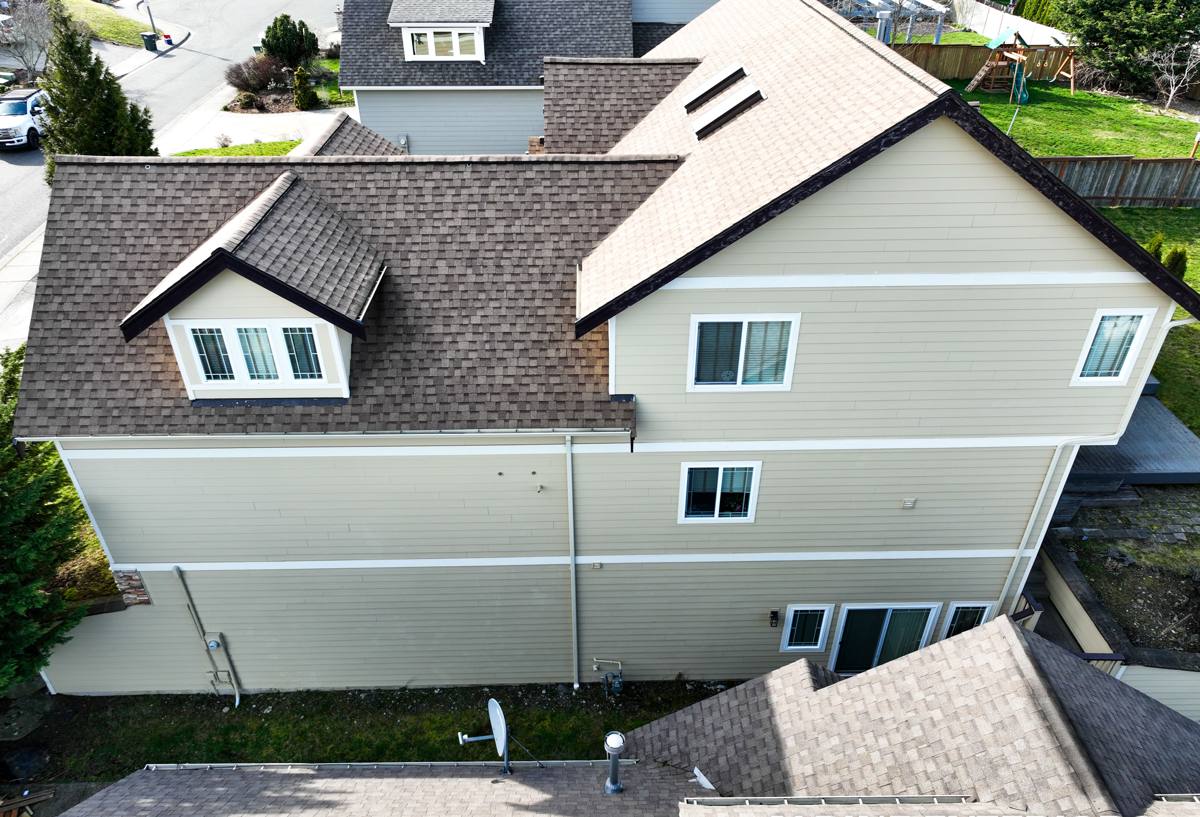
What Salt Air Actually Does to a Deck
Salt-laden air doesn't need to sit right on the beach to cause corrosion — wind carries fine salt particles well inland on an island this size, and they settle on every exposed surface. On a deck, that shows up in a few predictable ways:
- Standard electro-galvanized screws and nails start showing rust streaks within a year or two, staining the surrounding wood or composite.
- Aluminum railing components and fasteners can pit and corrode faster than their mainland-rated lifespan suggests.
- Metal flashing and connectors at the ledger board — the part that keeps water out of the house framing — are especially vulnerable because they're hidden and rarely inspected until there's already a problem.
The fix isn't complicated, it's just non-negotiable: stainless steel or heavy hot-dip galvanized fasteners and hardware rated for coastal exposure, used everywhere, not just on the visible top surface. Cutting a corner here doesn't save real money and it's the single most common reason a deck built by an out-of-area crew starts failing early.
Driving Rain and the Parts of a Deck That Actually Fail First
Most deck problems in this climate don't start with the decking boards — they start underneath, at the ledger connection, the joists, and the footings. Wind-driven rain gets pushed sideways and upward under railings and around posts in a way that flat-roof-style drainage assumptions don't account for. The details that matter most:
Ledger Flashing
Where the deck attaches to the house, proper flashing (not just caulk) has to shed water away from the house sheathing. This is the single most common failure point we see on older Olga decks, and it's invisible until the siding or framing behind it starts to rot.
Joist Protection
Untreated or under-protected joist tops trap water in a climate that rarely gets a real dry stretch to let wood fully dry out between rain events. A joist tape or membrane over the top of every joist, not just the ones under gaps in the decking, adds real years to the structure's life.
Post Bases and Footings
Ground contact in this region stays damp longer into the year than most of the state. Post bases that hold posts up off standing water, and footings sized and set for the island's soil and drainage conditions, keep the structural posts from wicking moisture for months at a time.
Choosing Decking Material for Olga's Conditions
There's no single "best" decking material — there's a best fit for how a homeowner wants to spend their maintenance time, and how exposed the specific site is to wind, salt, and shade. Here's how the common options actually perform in this climate:
| Material | How it handles salt air & rain | Moss/mildew tendency | Maintenance |
|---|---|---|---|
| Pressure-treated fir/pine | Good if fasteners and hardware are corrosion-rated; wood itself handles moisture well when sealed | Higher in shaded spots without regular cleaning | Needs re-sealing every 1-3 years |
| Western red cedar | Naturally rot-resistant, handles moisture better than most softwoods | Moderate — benefits from airflow underneath | Periodic cleaning and oil/stain to maintain color |
| Composite decking | Excellent — doesn't absorb water or corrode | Can still grow surface mildew/moss film in shaded, damp spots; cleans off easily | Low — occasional washing |
| Tropical hardwood (ipe and similar) | Very good natural durability, dense and rot-resistant | Low | Periodic oiling to maintain appearance; can be left to gray naturally instead |
Our default recommendation depends on the site: a shaded, tree-covered lot pushes us toward composite or a hardwood for lower moss upkeep, while an open, sunnier lot with good airflow can do very well with well-maintained cedar or treated lumber at a lower upfront cost. We'll walk the specific site with you rather than push one product across the board.
Moss, Mildew, and Designing for Drainage
San Juan County's long wet season — often stretching from fall through late spring — means a deck spends most of the year damp, not just rained on. Moss and algae don't need standing water to take hold; they just need shade and consistent moisture, which describes a lot of tree-covered Olga lots for much of the year. A few design choices make a real difference over the life of the deck:
- Gapping and board spacing sized to let water drain through quickly instead of pooling on the surface
- Adequate clearance and airflow underneath the deck, not just at the edges
- Trimming back overhanging branches where practical, since shade and leaf litter are what feed moss growth
- Surface texture choices (grooved vs. smooth boards) that balance grip with how easily moss and grime rinse off
No deck in this climate will stay moss-free without any upkeep, but a well-drained, well-ventilated deck needs a simple rinse and occasional cleaning rather than aggressive scrubbing or replacement of rotted boards.
Permits and Building in San Juan County
Deck projects in Olga fall under San Juan County's permitting and setback rules, and depending on the size, height, and proximity to property lines or shoreline areas, that can mean a permit is required before work starts. We handle that process as part of the job — pulling the right permit, building to the current code requirements for guardrails, stair geometry, and structural spans, and scheduling inspections — so homeowners aren't left navigating county requirements on their own.
Our Process for Olga Deck Projects
Building on Orcas Island means accounting for island logistics, not just carpentry. Materials, especially specialty hardware and composite decking, often have to be ordered ahead and brought over by ferry, so our process is built around planning that in rather than discovering it mid-project:
- Site visit: We walk the actual lot in Olga, note sun/shade exposure, wind direction, existing drainage, and the condition of anything we're replacing.
- Material selection: We go through the real trade-offs — cost, maintenance, and how the specific site's exposure affects each option — rather than defaulting to one product.
- Permitting: We handle the San Juan County permit application and any required documentation.
- Material staging: Because everything comes over by ferry, we order and stage materials with enough lead time that weather and ferry schedules don't stall the project mid-build.
- Build: Framing and flashing details get the same attention as the visible decking — this is where long-term durability is actually decided.
- Final walkthrough: We go over care and maintenance specific to the material installed and the site's exposure before we consider the job done.
Maintenance Checklist for Olga Homeowners
A little seasonal attention prevents most of the expensive problems we get called out to fix. For any deck in this climate, we recommend:
- Rinse or sweep the deck surface a few times a year to clear organic debris before it feeds moss growth
- Check railing and post fasteners annually for early rust staining, especially on decks more than five years old
- Inspect the ledger flashing line where the deck meets the house for any staining or gaps in caulking
- Keep gutters and downspouts clear so roof runoff isn't dumping extra water directly onto or under the deck
- Re-seal or re-stain wood decking on the schedule appropriate to that species, rather than waiting until it visibly grays
- Trim back vegetation that's shading the deck surface and keeping it from drying out between rains
Why It Matters to Hire a Crew That Already Works Orcas Island
A deck built by a crew that mainly works mainland or inland projects will often use standard fastener grades, standard flashing details, and standard material assumptions — because that's what works where they usually build. On Orcas Island, and specifically in a wind- and salt-exposed spot like Olga, those standard assumptions are exactly what leads to early corrosion, hidden rot, and moss problems that show up faster than the homeowner expects. Working here regularly also means we already understand the ferry logistics for getting materials over, the county's permitting process, and how a given lot's exposure and shade pattern will actually behave through a wet San Juan County winter — details that get expensive to learn on the fly.
If you're planning a new deck or need to address problems with an existing one in Olga, we're happy to come take a look and give you a straightforward, no-pressure estimate. There's a form below to get that conversation started.