 Orcas Island Siding
 Deck Repair Built for Orcas Island Conditions
A deck on Orcas doesn't age the way a deck in a dry inland climate does. Between the salt-laden air blowing off the water, long stretches of driving rain through fall and winter, and a moss season that can run six months or more, the wood, fasteners, and framing underneath a deck take a steady beating year after year. We repair decks all over Orcas and the surrounding San Juan County islands, and the damage we see here has a pattern to it: it's rarely one dramatic failure. It's usually years of small, ignored moisture and salt exposure finally catching up with a structure.
This page is about deck repair specifically — not full replacement, not new builds. If your deck is structurally sound but showing wear, rot in isolated spots, loose railings, or surface damage, repair is very often the right call. Our job is to tell you honestly which category your deck falls into and fix it correctly the first time.
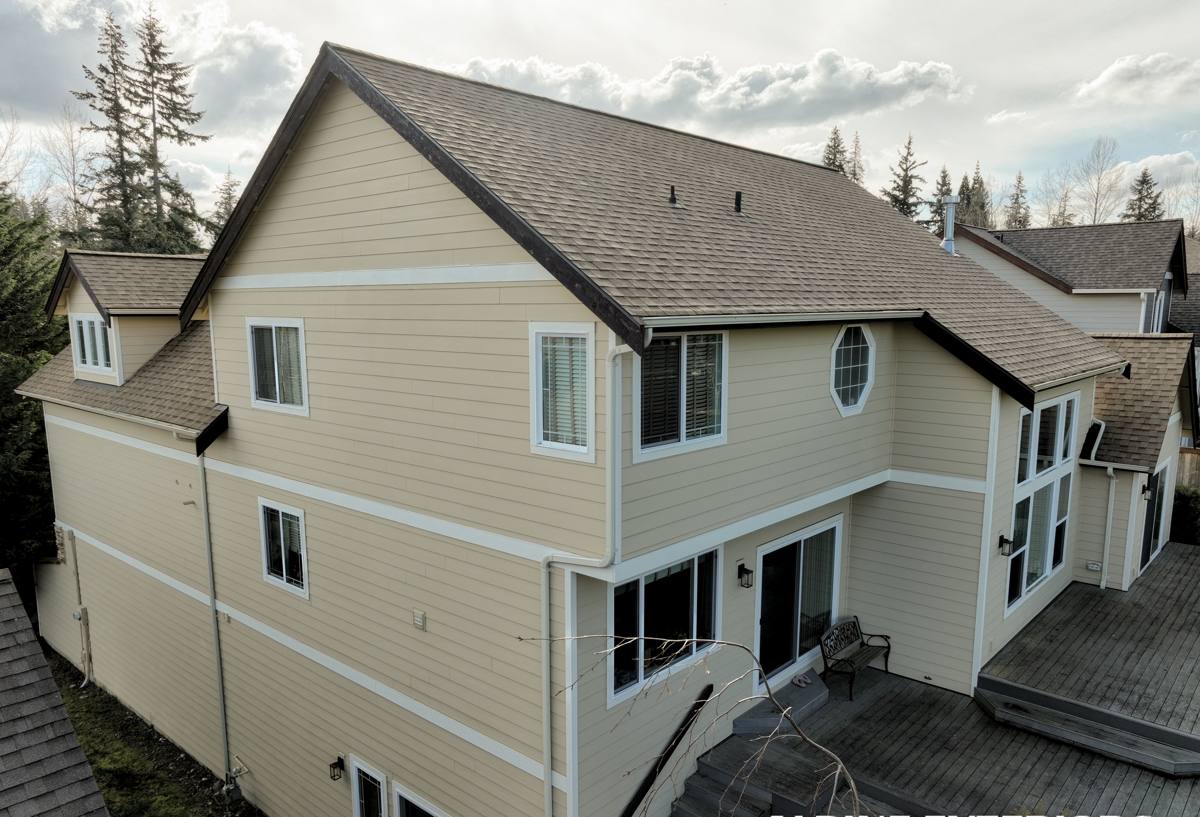
Why Decks Struggle in This Climate
Three things work against decks here more than almost anywhere else in Washington:
Salt Air
Homes closer to the water on Orcas Island deal with airborne salt that settles on every exposed surface. It accelerates corrosion on fasteners, hinges, and metal railing hardware, and it slowly breaks down protective coatings and sealants faster than manufacturers' timelines assume. A screw that would last fifteen years inland can start showing rust streaks in a fraction of that time in a salt-exposed location.
Driving Rain
San Juan County gets less total rainfall than much of Western Washington, but when storms roll through, wind-driven rain finds its way into places a calmer rain never would — under railing caps, behind ledger boards, into end-grain cuts that weren't sealed, and around post bases where water can pool. Repeated wetting and drying cycles are what actually rot wood, not a single soaking.
Moss and Sustained Dampness
The long, mild, damp season on Orcas is ideal for moss growth on decking boards, stair treads, and anywhere shade keeps a surface from drying out fully between rains. Moss holds moisture directly against the wood fibers for weeks at a time. Beyond making a deck slippery and unsafe, it's one of the most common causes of soft, punky decking boards we find when we start a repair inspection.
Signs Your Deck Needs Repair, Not Just Cleaning
Some deck problems are cosmetic and some are structural, and telling the difference matters — it determines whether you need a weekend cleaning or a contractor. Watch for these:
- Boards that feel soft, spongy, or flex noticeably underfoot
- A screwdriver or awl sinking easily into wood with light pressure (a sign of rot beneath the surface)
- Railings or posts that wobble or shift when pushed
- Rust streaking or staining around fasteners and hardware
- Gaps opening up between decking boards or at the ledger board where the deck meets the house
- Persistent moss or black-green staining that returns quickly after cleaning
- Stair stringers or treads that feel uneven or "give" when stepped on
- Peeling, cracking, or bubbling on stained or painted deck surfaces
Any one of the first four items on that list is worth a professional look sooner rather than later — those point to structural concerns, not just weathered appearance.
What a Correct Deck Repair Actually Involves
A repair that just replaces the boards you can see and skips what's underneath isn't a repair — it's a cosmetic patch that fails again in a season or two. Here's what we actually check and address:
Structural Framing
Joists, beams, and ledger board connections are inspected for rot, especially where moisture collects: under the decking near the house, around post bases, and at any point where two pieces of lumber meet without ventilation. Framing issues get fixed before a single new board goes down.
Fasteners and Hardware
Given the corrosion risk from salt air, we replace failing fasteners with hardware rated for coastal and treated-lumber exposure, not standard interior-grade screws. This is one of the most common corner-cutting shortcuts in cheap deck repairs, and it's why "repaired" decks sometimes fail again within a couple of years.
Railings and Guards
Loose or rotted railing posts are a safety issue, not a cosmetic one. We check that posts are properly through-bolted into structural framing, not just screwed to a rim joist, which is a common and dangerous shortcut we sometimes find on older or previously repaired decks.
Decking Surface
Individual board replacement, sanding, re-sealing, or full resurfacing depending on how widespread the wear is. We match existing material where possible and explain your options where an exact match isn't practical.
Drainage and Ventilation
A repair isn't complete if the underlying moisture problem isn't addressed. That can mean adjusting flashing at the ledger board, improving airflow under low decks, or correcting a slope that's letting water pool instead of shed.
How Different Deck Materials Hold Up Locally
What your deck is built from changes both how it fails and what a repair should look like. Here's how the common options handle this specific climate:
| Material | How It Typically Fails Here | Repair Considerations |
|---|---|---|
| Pressure-treated wood | Surface checking, moss growth, rot at fastener points and end cuts | Individual board swaps are straightforward if framing underneath is sound |
| Cedar | Graying, splintering, softening in persistently shaded/damp areas | Sanding and refinishing can extend life; rotted sections need full replacement, not patching |
| Composite decking | Fading, occasional moisture wicking at cut edges, hardware corrosion underneath | Boards themselves rarely rot, but the wood substructure below still needs inspection |
| Older/unknown mixed materials | Inconsistent wear, hidden rot from prior poor repairs | Requires the most thorough inspection before any repair estimate is accurate |
Composite decking resists moss staining and rot far better than wood, but we're honest with clients that it doesn't eliminate the need for repair — it shifts the failure points down into the framing and hardware, which is exactly where a lot of homeowners forget to look.
Repair or Replace? How We Help You Decide
Not every damaged deck needs to come out. We look at a few honest factors before recommending either path:
| Factor | Leans Toward Repair | Leans Toward Replacement |
|---|---|---|
| Framing condition | Solid, dry, no significant rot | Widespread soft or rotted joists/beams |
| Extent of damage | Isolated boards or sections | Damage spread across most of the deck surface |
| Age of structure | Under 15-20 years, built to a reasonable standard | Original construction was undersized or poorly detailed |
| Railing/safety hardware | Attachment points sound, just cosmetic wear | Posts not properly anchored to structure |
We'll always tell you if a deck is a better candidate for replacement — recommending a repair that won't hold up isn't good for you or for our reputation on the island.
Our Deck Repair Process
- On-site inspection. We check framing, fasteners, railings, and decking surface, including probing suspect areas rather than just looking at them.
- Honest assessment. You get a clear explanation of what's failing, why, and what repair (or in some cases, replacement) actually involves — no upselling to a full rebuild if it isn't needed.
- Written estimate. Scope and cost factors laid out before any work begins.
- Repair work. Structural issues addressed first, then hardware, then surface and finish work, using fasteners and materials suited to coastal exposure.
- Final check. We confirm railings are secure, boards are properly fastened, and drainage is functioning before we consider the job done.
Ongoing Care Between Repairs
A good repair lasts a lot longer with basic seasonal maintenance. A few things worth doing on Orcas specifically:
- Clear moss and debris from decking and stair treads before it has a chance to hold moisture through the wet season
- Rinse salt residue off decking and railings periodically if you're close to the water
- Check railing posts for movement once or twice a year
- Re-seal or re-stain wood decking on the manufacturer's recommended cycle, not just when it looks worn
- Keep gutters and downspouts clear so runoff isn't draining directly onto or under the deck
Why Hire a Crew That Already Works on Orcas
Deck repair on Orcas Island isn't quite the same trade as deck repair in a dry, inland town. A crew that works this island regularly knows which framing details tend to fail first in salt air, which hardware actually holds up here versus what's rated for it on paper, and how much moss and moisture exposure a given deck orientation and shade pattern is realistically dealing with. That local pattern recognition is the difference between a repair that gets it right the first time and one that looks fine for a season before the same problems resurface. Scheduling and material logistics on the islands also matter — a contractor unfamiliar with San Juan County can underestimate both, which shows up as delays or corners cut on a job.
Get a Straight Answer About Your Deck
If your deck is showing soft spots, loose railings, moss that won't quit, or general wear from the salt air and rain that come with living on Orcas Island, we're happy to take a look and give you an honest read on what it needs. Reach out for a free, no-pressure estimate using the form below.