 Orcas Island Siding
 Roofing in Lopez Village Has Its Own Set of Problems
Lopez Village sits close to the water, which is exactly what makes it a beautiful place to live and exactly what shortens the life of a roof. Salt-laden air off the water corrodes exposed metal fasteners, flashing, and vents faster than it would inland. Wind-driven rain off the Strait doesn't just fall on a roof — it gets pushed sideways and upward under shingle edges and around penetrations that would stay dry in a calmer climate. And the long, damp shoulder seasons here mean moss and moisture have months at a time to work into anything that isn't properly sealed or ventilated. None of this is unique to one house — it's the baseline every roof in this part of San Juan County has to be built to handle.
A roof replacement done for Lopez Village needs to account for all three of these stresses at once, not just swap old shingles for new ones. That's the difference between a roof that looks fine for a season and one that actually holds up through another decade of Orcas Island weather.
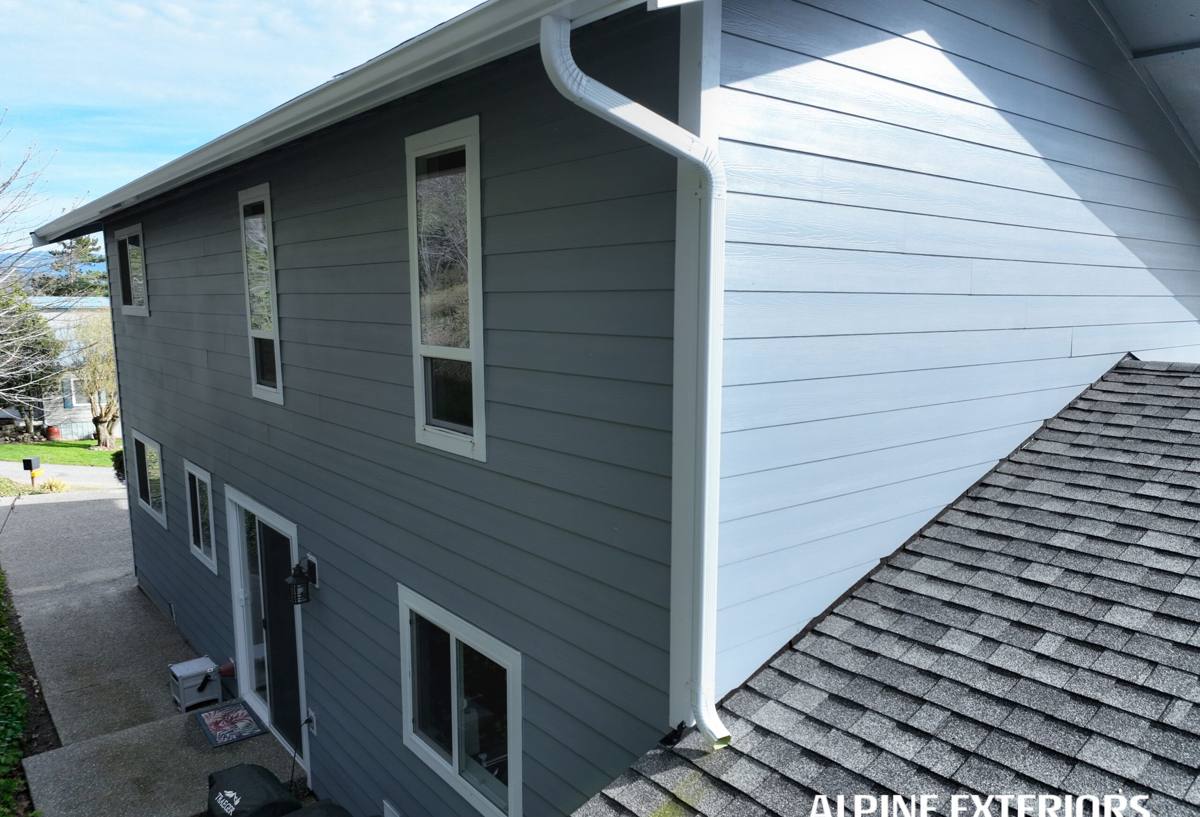
Signs Your Lopez Village Roof Is Due for Replacement
Repairs make sense when the problem is isolated — a cracked pipe boot, a handful of lifted shingles after a windstorm, a flashing detail that was never sealed right. Replacement makes sense when the damage is spread across the roof or when the underlying materials have aged out. Here's what typically tips a roof from "repair" into "replace" territory in this climate:
- Granule loss heavy enough that you can see bare asphalt in multiple areas, not just one worn patch
- Moss or lichen that keeps coming back within a season or two of cleaning, especially on north-facing slopes
- Soft or spongy decking felt underfoot in the attic, a sign moisture has already gotten past the roofing layer
- Daylight visible through the roof deck from inside the attic
- Shingles curling, cracking, or losing their seal along multiple courses, not just at the ridge
- Interior staining on ceilings or in the attic that shows up during or after wind-driven rain
- A roof that's simply reaching or past the manufacturer's expected service life for this climate, which tends to run shorter here than in drier parts of the state
What a Correct Roof Replacement Actually Involves
Tear-Off, Not Overlay
We don't install a new layer over old shingles. A second layer traps moisture, hides deck problems, and voids most manufacturer warranties. A full tear-off is the only way to see the deck, the flashing, and the ventilation clearly enough to fix what's actually wrong instead of covering it up.
Deck Inspection and Repair
Once the old roofing is off, we inspect the sheathing for soft spots, delamination, or rot — common wherever a roof has been quietly leaking under moss or failed flashing. Any compromised decking gets replaced before anything new goes down. Skipping this step is the single most common shortcut that leads to a roof failing early in a wet climate like this one.
Underlayment Built for Wind-Driven Rain
Given how directly Lopez Village catches weather off the water, we use synthetic or ice-and-water underlayment products rated for high wind-driven-rain exposure, with extra coverage at eaves, valleys, and any low-slope transitions where water tends to back up.
Flashing and Penetration Detailing
Chimneys, skylights, vent pipes, and roof-to-wall transitions are where most roof leaks actually start, not in the open field of shingles. We replace flashing rather than reuse it, and we pay particular attention to metal choice near salt air — some fastener and flashing metals corrode noticeably faster this close to the water, so material selection here isn't cosmetic, it's structural.
Ventilation
A roof that can't breathe traps moisture in the attic, which speeds up moss growth on the underside of the deck and shortens shingle life from below as well as above. We check intake and exhaust balance as part of every replacement, not as an upsell.
Material Options for This Climate
There's no single "best" roofing material for every home — it depends on budget, roof pitch, and how much maintenance a homeowner wants to take on. Here's how the common options stack up against Orcas Island's salt air, rain, and moss:
| Material | Salt Air Resistance | Moss Resistance | Typical Maintenance |
|---|---|---|---|
| Architectural asphalt shingle | Good, with corrosion-resistant fasteners and flashing | Moderate — benefits from periodic cleaning or algae-resistant granules | Low to moderate |
| Standing seam metal | Very good with marine-grade coatings and fasteners | Very good — sheds debris and dries quickly | Low |
| Composite/synthetic shake | Good | Good | Low |
| Wood shake | Fair — needs regular treatment near salt air | Poor without consistent upkeep | High |
We install what fits the home and the homeowner's tolerance for upkeep. If a material needs frequent treatment to hold up here, we'll say so plainly rather than talk around it — that's a real cost of ownership, not a footnote.
Our Replacement Process, Start to Finish
- On-site inspection. We walk the roof and the attic, not just look from the ground, and document what we find.
- Written estimate. Scope, materials, and price laid out clearly, with any deck repair contingencies explained up front rather than discovered mid-job.
- Material and scheduling coordination. Because Lopez Village is served by ferry, we order and stage materials with enough lead time to avoid delays from missed sailings.
- Tear-off and disposal. Old roofing removed and hauled off, deck exposed and inspected.
- Deck repair as needed. Any rot or soft sheathing replaced before underlayment goes down.
- Underlayment, flashing, and ventilation work. The layers that actually determine whether the roof stays dry.
- New roofing installed to manufacturer specification, including proper nailing patterns and exposure — details that matter more in high-wind coastal conditions than in sheltered inland settings.
- Final walkthrough with the homeowner before we consider the job done.
Why a Crew That Already Works Lopez Village Matters
Roofing on an island isn't the same logistics problem as roofing on the mainland. Material orders have to account for ferry schedules. Weather windows for tear-off need to be judged with local rain patterns in mind, not a generic forecast. And the specific ways salt air and moss attack a roof here are things you learn by doing this work on Orcas Island and in the San Juan Islands repeatedly, not by reading a manufacturer spec sheet once. A crew that regularly works Lopez Village knows which details — fastener metal, flashing laps, ventilation balance — actually matter for a roof that has to survive this particular environment, and which ones are just upsells.
What Drives Roof Replacement Cost Here
| Factor | Why It Matters Locally |
|---|---|
| Roof size and pitch | Steeper pitches and larger roofs take more labor and material, straightforward everywhere |
| Deck condition | Hidden rot from long-term moisture exposure is more common here than in drier climates and adds repair cost once uncovered |
| Material choice | Corrosion-resistant fasteners and marine-grade flashing cost more than standard hardware but last longer near the water |
| Access and staging | Ferry-dependent delivery can affect scheduling and, occasionally, staging costs for larger material orders |
| Tear-off layers | Removing multiple existing layers costs more than a single-layer tear-off |
We don't quote a roof over the phone. Every estimate is based on an actual inspection, because guessing at deck condition or flashing needs from a photo does homeowners a disservice.
Maintaining a New Roof in This Climate
A well-installed roof still needs some upkeep to hit its full lifespan here. A short annual routine goes a long way:
- Clear moss and debris from valleys and north-facing slopes before it builds up, ideally before the wet season sets in
- Keep gutters clear so wind-driven rain has somewhere to go instead of backing up under the roof edge
- Trim back overhanging branches that keep shaded areas of the roof damp longer than the rest
- Have flashing and penetrations checked every few years, since these are the first points to fail even on a good roof
- Address any interior staining or attic moisture immediately rather than waiting for it to worsen
Ready to Talk About Your Roof
If your roof in Lopez Village is showing its age, or you just want an honest opinion on whether repair or replacement makes sense, we're glad to take a look. The estimate is free, there's no pressure attached to it, and you'll get a straight answer about what your roof actually needs — use the form below to get started.