 Orcas Island Siding
 Rosario sits close enough to the water that salt air, wind-driven rain, and heavy shade from the surrounding evergreens all show up in the condition of a home's windows before they show up anywhere else. If you've owned a place out here for more than a few years, you've probably already noticed it: sashes that stick in the damp months, condensation that won't clear, sills going soft, or a persistent draft you can't quite trace. None of that is unusual for this part of San Juan County — it's just what marine climate does to windows that weren't built or installed with it in mind.
This page covers what we actually do when we replace or install custom windows on homes in the Rosario area: what the climate demands, what a correct installation looks like, and how our process works from the first look at your house to the final walk-through.
Why Rosario's Climate Is Hard on Windows
Rosario's location on Orcas Island puts homes in a specific combination of conditions that's tougher on windows than most inland Washington towns ever see.
Salt Air and Metal Fatigue
Airborne salt from the surrounding marine waters settles on exterior surfaces year-round, and it's particularly hard on window hardware — hinges, cranks, locks, and any exposed fasteners. Cheaper aluminum or bare-steel components corrode faster here than they would twenty miles inland. It also accelerates the breakdown of low-grade seals and gaskets, which is usually the first thing that fails on an older window.
Driving Rain and Wind-Driven Moisture
Storms coming off the water don't just fall straight down — wind pushes rain sideways into window assemblies, testing the flashing and seal details far more than a calm rain would. A window that's watertight in a light shower can still leak during a windy winter storm if the flashing details weren't done right the first time.
The Long Moss Season
Orcas Island's tree cover and damp winters mean moss and algae growth isn't limited to roofs — it creeps onto window sills, trim, and frames that stay shaded and damp for months at a stretch. Wood components that aren't properly sealed or detailed for drainage hold moisture under that growth, which is exactly the condition that leads to rot.
What Correct Windows Look Like for This Property Type
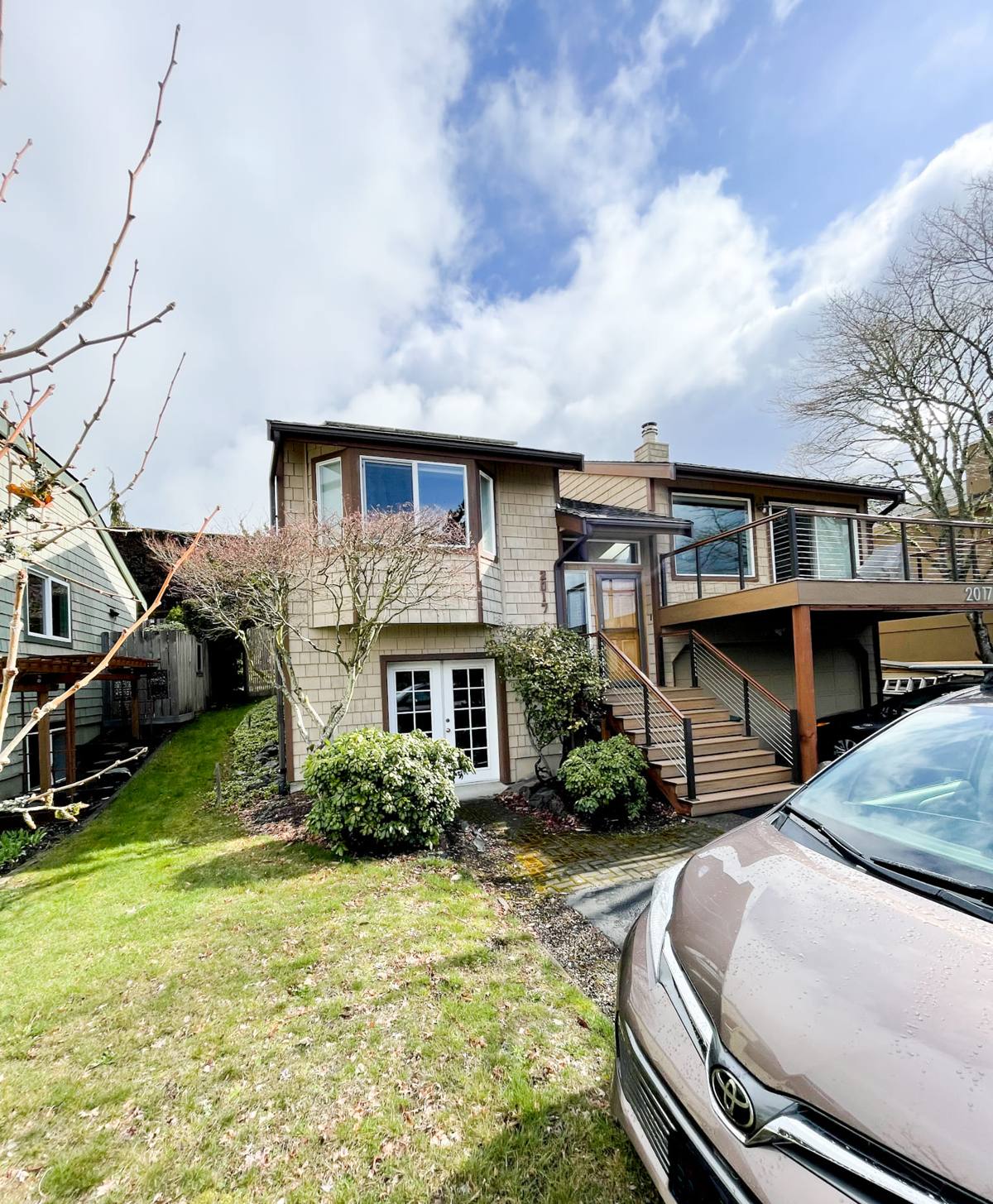
Rosario homes range from older cabins to newer builds, but the performance requirements for windows here are consistent regardless of style.
- Frame materials that resist corrosion and don't require constant refinishing — fiberglass, vinyl, or properly clad wood, matched to the home's style
- Weatherstripping and seals rated for high-moisture, high-wind exposure, not builder-grade minimums
- Multi-point locking hardware in corrosion-resistant finishes, since standard hardware degrades faster in salt air
- Proper glazing specification for the home's orientation — solar heat gain and U-factor matter differently on a water-facing wall than on a shaded, tree-covered side
- Drainage details built into the sill and frame so any moisture that does get in has somewhere to go
Installation Details That Actually Determine Performance
The window unit itself is only part of the equation. On Rosario homes, we've found the installation details matter as much as the product — often more.
Flashing and Water Management
Correct flashing integration with the house wrap or building paper is what keeps wind-driven rain out of the wall cavity. This is the step that gets rushed on lower-bid jobs, and it's also the one that causes the most expensive damage when it's done wrong — you don't see the problem until there's already rot in the framing.
Sill Pan Protection
A sill pan under the window creates a backup barrier that redirects any water that gets past the primary seal back outside instead of into the wall. Given how much wind-driven rain this area sees, we treat sill pans as standard practice rather than an upgrade.
Insulation and Air Sealing Around the Frame
Gaps around a window frame are a common source of both drafts and moisture infiltration. Proper low-expansion foam or backer rod and sealant, applied correctly, closes those gaps without bowing the frame or trapping moisture where it can't escape.
Exterior Trim and Caulking Choices
Caulk and trim products that aren't rated for marine, high-UV, high-moisture exposure fail early here — often within a couple of years instead of the decade or more a proper product should last. We use sealants and trim materials chosen for this specific exposure, not generic hardware-store products.
Choosing Materials: A Comparison
There's no single "best" window frame material for every home — it depends on the home's style, budget, and how much upkeep the owner wants to take on. Here's how the common options compare for Rosario's conditions specifically.
| Frame Material | Salt Air / Moisture Performance | Maintenance | Typical Fit |
|---|---|---|---|
| Vinyl | Very good — won't corrode or rot | Low — occasional cleaning | Budget-conscious replacements, rental properties |
| Fiberglass | Excellent — dimensionally stable, resists moisture and corrosion | Low | Homes wanting long service life with minimal upkeep |
| Clad Wood (wood interior, metal or composite exterior) | Good on the exterior face if cladding and flashing are done right; interior wood needs the marine exposure kept off it | Moderate — exterior low-maintenance, interior wood finish occasional | Homes wanting a wood look inside with better weather resistance outside |
| Solid Wood, unclad | Poor without diligent, frequent refinishing in this climate | High — regular repainting/resealing needed | Historic-style homes where owners are committed to upkeep |
| Bare Aluminum | Poor — corrodes and conducts cold, prone to condensation | Moderate, but corrosion is often not fully preventable | Generally not recommended for this exposure |
For most Rosario homes, we steer owners toward fiberglass or vinyl for straightforward replacements, and clad wood when the look of real wood on the interior matters to the homeowner. We're honest that unclad solid wood, while attractive, asks a lot of upkeep in this specific climate — that's a maintenance trade-off, not a knock on wood as a material.
Signs Your Current Windows Are Losing the Fight
Because failure in this climate tends to happen gradually, a lot of homeowners don't realize how far along the damage is until they start looking for these specific signs.
- Sashes that stick, drag, or won't stay open in damp weather
- Persistent fogging or condensation between panes on double- or triple-glazed units, which usually means a failed seal
- Visible moss or algae buildup on sills or lower frame sections
- Soft or discolored wood at the sill, especially at corners
- Noticeable drafts near the frame even when the window is fully latched
- Hardware that's corroded, stiff, or difficult to operate
- Paint or finish that's peeling faster than it should on exterior trim near the window
Any one of these on its own might just mean a tune-up or resealing job. Several of them together, especially on an older window, usually mean it's time to talk about replacement before the surrounding framing gets involved.
Our Process for a Rosario Window Project
We keep the process straightforward and focused on getting the details right, since those details are what determine how the windows perform over the next twenty years, not just the next two.
- On-site assessment — we look at the home's orientation relative to wind and water exposure, current window condition, and any existing moisture or rot issues around the openings.
- Product selection — we walk through frame material, glazing, and hardware options suited to that specific home and budget, being upfront about trade-offs rather than upselling.
- Prep and removal — old units are removed carefully to check the condition of the rough opening and framing underneath before anything new goes in.
- Flashing and sill pan installation — water management details are built correctly the first time, since this is the step that determines long-term performance.
- Window installation and air sealing — units are set plumb and level, insulated and sealed properly around the frame.
- Exterior trim and finish work — trim and sealants are matched to the home's style and rated for marine exposure.
- Final walk-through — we check operation, seals, and finish with the homeowner before calling the job done.
Why Local Installation Experience Matters Here
A window installer who mostly works inland jobs may never have had to think hard about wind-driven rain flashing or salt-air hardware corrosion, because those problems simply don't show up as often away from the water. Working regularly on Orcas Island and specifically in areas like Rosario means we've already seen how different products and installation details hold up — or don't — under these exact conditions. That experience shows up in fewer callbacks, fewer surprise leaks after the first big storm, and windows that are still operating smoothly well past the point where a generic installation would be showing problems.
It also means we're realistic with homeowners about timelines. San Juan County's ferry schedule and island logistics affect material delivery and scheduling in ways a mainland crew often doesn't plan for. We build that into the estimate up front instead of letting it become a surprise delay mid-project.
Cost Factors to Expect
Every home is different, so we don't publish blanket pricing, but the main factors that move a Rosario window project's cost are consistent:
- Number of windows and their sizes — larger or custom-shaped units cost more than standard sizes
- Frame material chosen — vinyl is typically the most budget-friendly, fiberglass and clad wood cost more upfront but often less over the window's lifespan
- Condition of the existing rough opening — if there's rot or damage found once old windows are removed, that repair work is additional
- Access and site conditions — upper-story or hard-to-reach windows take more labor time
- Glazing upgrades — higher-performance glass packages for sun exposure or noise cost more than standard double-pane
We walk through all of this during the on-site assessment so there are no surprises once work begins.
If your Rosario home has windows showing any of the wear signs above, or you're planning ahead for a remodel, we're happy to take a look and put together a straightforward, no-pressure estimate. Use the form below to get started.