 Orcas Island Siding
 Why Board & Batten Suits San Juan Island Homes
Board and batten shows up all over San Juan Island — on waterfront cabins, farmhouse-style new builds, and older homes getting a full exterior update. The vertical lines read as clean and understated, which fits the island's mix of working-farm history and quiet residential character. It's also a practical choice: a well-built board and batten wall sheds water differently than horizontal lap siding, which matters a great deal here given how much moisture this part of San Juan County deals with over a typical year.
But board and batten is also one of the siding styles most sensitive to installation quality. Get the detailing wrong and you've built dozens of small water traps into the wall. Get it right, and it's one of the more durable, lower-maintenance exteriors you can put on an island home. The difference between those two outcomes is almost entirely in the install, not the material — which is why this page focuses less on the look of board and batten and more on what actually needs to happen behind the boards for it to hold up here.
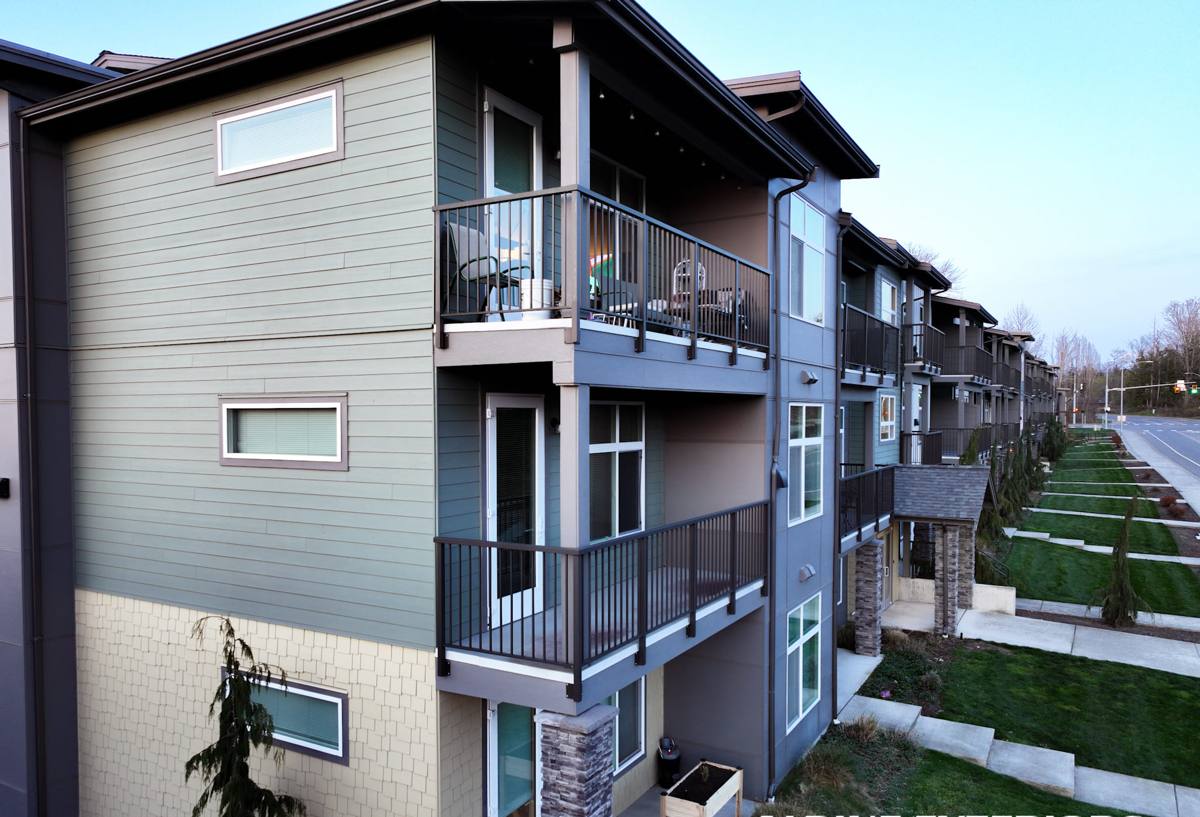
What Salt Air, Driving Rain, and Moss Season Do to Siding Here
San Juan Island sits in the same marine climate as the rest of the San Juan Islands — surrounded by saltwater, exposed to wind-driven rain off the Strait, and shaded by evergreen canopy that keeps north- and west-facing walls damp for long stretches of the year. Three things do most of the damage to siding on this island over time:
- Salt-laden air — corrodes exposed fasteners and accelerates fading on anything without a durable factory finish, especially on homes with open water views.
- Driving rain — wind-driven storms push water sideways into seams, laps, and penetrations that a calmer climate would never test.
- Extended moss and algae season — cool, damp, shaded conditions for much of the year let organic growth take hold on any surface that stays wet and doesn't get direct sun.
None of that is unique to board and batten. What is unique is how vertical siding handles that moisture. Every batten strip covers a seam between two panels, and every one of those seams is a place water can get behind the cladding if the flashing and drainage plane underneath aren't built correctly. On a lap-sided wall, gravity does a lot of the work of shedding water downward and outward. On a board and batten wall, that job falls almost entirely on the installer.
Why We Install James Hardie for Board & Batten, and Nothing Else
We install James Hardie fiber cement exclusively — we don't do board and batten in cedar, vinyl, LP SmartSide, or primed spruce, and we won't quote those materials even when a homeowner asks for them. That's not a knock on every use case for those products; it's a standard we hold for what we're willing to put our name behind on this island specifically.
Cedar battens and boards move with humidity, and on an island with this much sustained dampness, that movement opens gaps at the fastener points over time — exactly where water intrusion starts. Engineered wood products like LP SmartSide use a resin-treated substrate that resists moisture better than raw wood, but the material is still wood at its core, and any breach in the factory coating exposes it to swelling and edge deterioration. Vinyl board and batten is low-maintenance but relies on a rigid look that reads as artificial up close, and it has real limits in high heat or impact — not the top climate risk here, but part of why we don't stock it.
James Hardie's fiber cement is cement, sand, and cellulose fiber — it doesn't rot, it doesn't feed moss the way organic wood fiber can, and it's non-combustible, which matters increasingly for insurance underwriting on rural and wooded island lots. The factory-applied ColorPlus finish is baked on under controlled conditions and warranted against fading and chipping in ways that field-applied paint on wood or spruce boards can't match. For board and batten specifically, Hardie's HZ5 and HZ10 product lines are engineered for wet, marine, and freeze-cycle climates — which is precisely the profile San Juan County sits in.
What a Correct Board & Batten Installation Actually Involves
This is the part most homeowners never see, and it's the part that determines whether the siding lasts fifteen years or fifty.
The Rainscreen Gap
Board and batten should never be fastened flat against the house wrap. A vertical furring strip creates a drainage gap behind the panels, so any water that does get past the battens has somewhere to go — down and out at the bottom of the wall — instead of sitting against the sheathing. On an island with this much seasonal rain, skipping the rainscreen is one of the most common shortcuts that leads to hidden rot years down the road.
Flashing at Every Penetration
Window heads, door heads, hose bibs, light fixtures, and any other wall penetration need proper flashing integrated with the water-resistive barrier before the first panel goes up. Battens run vertically past these points, so if the flashing isn't correctly lapped and sealed, driving rain gets funneled right down behind the siding instead of away from it.
Fastener Pattern and Batten Placement
Battens need to land on framing or solid blocking, not just be nailed through the panel into open cavity. Fastener spacing, edge distance, and batten width all follow the manufacturer's published specifications — not a "close enough" field judgment call. Corrosion-resistant fasteners (stainless steel or hot-dip galvanized) are non-negotiable this close to saltwater; standard galvanized fasteners can start showing rust streaks within a few seasons.
Panel Gaps and Caulking
Hardie panels need a small gap at seams and terminations to allow for expansion, sealed with a high-quality, paintable sealant rated for exterior use — never caulked tight edge-to-edge, which traps moisture instead of letting it move.
Our Process for San Juan Island Projects
Working on San Juan Island means building ferry logistics into the schedule from day one — materials, crew, and equipment all move on the same interisland routes as everyone else, and weather can push a sailing. We plan for that instead of letting it become a surprise mid-project.
- On-site walkthrough. We look at wall exposure, existing siding condition, water intrusion signs, and how much of the wall faces prevailing wind and rain.
- Written estimate. A clear scope covering tear-off (if needed), house wrap and rainscreen strategy, flashing details, Hardie product line and color, and timeline.
- Material staging. Panels, battens, trim, and fasteners are ordered and staged ahead of the crew's arrival so the job isn't waiting on a delayed sailing mid-install.
- Installation. Tear-off, moisture barrier and rainscreen, flashing, panel and batten install, sealant, and finish work, in that order — no skipped steps.
- Walkthrough and cleanup. A final check against the manufacturer's install specs, plus job-site cleanup before we leave.
Board & Batten Compared to Other Siding Styles on the Island
| Siding Style | Best Suited For | Moisture Behavior Here | Typical Maintenance |
|---|---|---|---|
| Board & Batten (Hardie) | Farmhouse, craftsman, modern cabin styles | Good, if rainscreen and flashing are done correctly | Low — occasional wash, no repainting |
| Horizontal Lap (Hardie) | Traditional and transitional homes | Very good — natural gravity drainage at each lap | Low — occasional wash, no repainting |
| Cedar Board & Batten | Rustic, natural-wood aesthetic | Fair — moisture-sensitive at fasteners and end grain | High — periodic sealing or refinishing |
| Vinyl Board & Batten | Budget-driven projects | Fair — relies on rigid panel fit, limited flashing options | Low, but limited repair and color options over time |
Lap siding technically drains slightly more forgivingly than board and batten because gravity does more of the work. That doesn't make board and batten a worse choice — it means the installation has to compensate with better detailing, which is exactly what a rainscreen and correct flashing schedule are for.
What Board & Batten Typically Costs to Install Here
| Cost Factor | Why It Moves the Price |
|---|---|
| Tear-off of existing siding | Old siding, house wrap, and any hidden rot repair add labor before new material goes on |
| Wall height and access | Multi-story or steep-lot homes need more scaffolding and staging time |
| Batten spacing and trim detail | Tighter batten spacing and custom trim around windows and corners add material and labor |
| Material and crew logistics | Ferry scheduling for material delivery and crew transport factors into project timeline and cost |
| Color and finish | Factory ColorPlus finishes vary slightly in cost versus primed panels finished on-site |
We don't publish flat per-square-foot pricing because wall condition and access vary too much from one property to the next — a house needing full tear-off and rot repair costs differently than one going over sound sheathing. A site walkthrough is the only honest way to scope it.
Why Hiring a Crew That Already Works San Juan Island Matters
Board and batten forgives almost nothing when the crew installing it hasn't worked this specific climate before. A contractor used to drier inland conditions may not default to a rainscreen gap, may under-spec fasteners, or may not think through how driving rain off the water behaves differently than a typical inland storm. On an island, there's also no quick same-day trip back to a supply house if something was ordered wrong — a crew that already knows the interisland ferry schedule, local permitting expectations, and material lead times builds that into the plan from the start instead of discovering it mid-project.
We work this island regularly, from properties near Friday Harbor to the quieter, more exposed corners of San Juan Island, and that familiarity shows up in fewer surprises — on scheduling, on material staging, and on how the finished siding performs through its first few wet seasons.
What to Check Before You Hire
- Ask whether they install a rainscreen gap on board and batten, not just flat panel-to-wrap
- Confirm they use stainless or hot-dip galvanized fasteners for coastal exposure
- Ask how flashing is handled at window heads, doors, and wall penetrations
- Confirm they follow James Hardie's published fastener and batten-spacing specs — this affects your warranty
- Ask how they plan around ferry schedules for material delivery and crew time
- Get the batten spacing and trim detail in writing, not just a verbal description
Maintaining Board & Batten Siding Once It's Installed
Correctly installed Hardie board and batten needs very little upkeep, but a few habits extend its life on an island exposure:
- Rinse salt spray and grime off the siding once or twice a year, especially on water-facing walls
- Keep gutters and downspouts clear so runoff doesn't sheet down the face of the siding
- Trim back vegetation and tree canopy that keeps a wall shaded and damp longer than necessary
- Check caulked seams and trim joints periodically and re-seal if you see cracking or gaps
- Address any moss or algae growth promptly with a gentle wash rather than pressure-washing directly into seams
If you're weighing board and batten for a San Juan Island home and want a straight answer on what your walls actually need, we're happy to walk the property with you and put together a free, no-pressure estimate — no obligation, just a clear look at what correct installation would involve for your home.