 Orcas Island Siding
 Roof Repair Built for Shaw Island's Weather, Not a Generic Coastal Climate
Shaw Island sits in the same weather system as the rest of the San Juan Islands, but small islands like this one get their own version of it. You're surrounded by water on every side, which means salt-laden air reaches every roof plane, not just the ones facing open water. Add the long, wet Pacific Northwest fall-through-spring stretch and the shade thrown by mature fir and cedar cover on many island lots, and you get a roof environment that ages differently than a roof forty miles inland in Bellingham or Mount Vernon. Salt air accelerates corrosion on exposed metal fasteners and flashing. Driving rain, especially when it comes sideways off a southwesterly blow, finds every gap in a roof detail that would stay dry in a calmer climate. And moss doesn't just grow on Shaw Island roofs — it thrives, because shade and moisture rarely let up long enough to dry a north-facing slope out completely.
None of that means every Shaw Island roof is falling apart. It means the failure points are predictable if you know what to look for, and a repair done with that climate in mind lasts a lot longer than one that treats this like any other roof job.
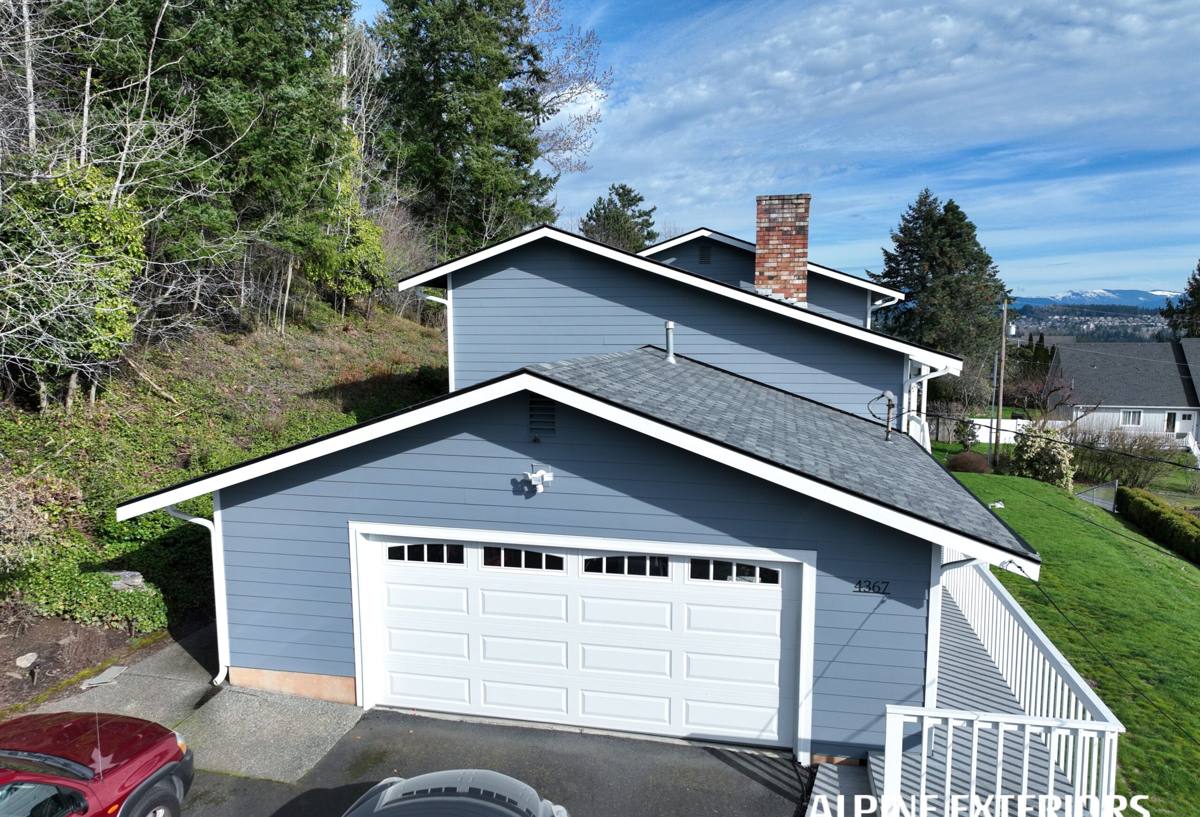
What "Roof Repair" Actually Means Here
Roof repair is targeted work — fixing what's actually failed — as opposed to a full tear-off and replacement of the whole roofing system. On San Juan County homes, especially older cabins and cottages that have been added onto over the years, a roof rarely fails all at once. It fails in specific spots: a valley that collects debris, a chimney flashing that was never properly step-flashed, a section where moss has held moisture against the shingles for years. Repair means finding those specific failure points, understanding why they failed, and fixing them correctly so the same spot doesn't fail again in two years.
This is different from a maintenance visit (cleaning gutters, clearing moss, doing a visual check) and different from replacement (stripping the roof down to deck and starting over). A good contractor tells you honestly which category your roof actually needs — and doesn't push you toward a full replacement when a proper repair will do the job for years to come.
When Repair Is the Right Call
- The roofing material itself (shingles, shakes, metal panels) is still structurally sound in most areas
- Damage is isolated to specific sections — a valley, a penetration, an edge — rather than spread uniformly
- The roof deck underneath shows no widespread rot or soft spots
- The roof is less than roughly two-thirds through its expected service life
- Leaks trace back to a flashing, fastener, or sealant failure rather than worn-out field material
Signs a Shaw Island Roof Needs Attention
Because the island climate hides some damage longer than a drier climate would, it helps to know what to actually check for, not just wait for a ceiling stain to show up.
- Moss buildup on north- and west-facing slopes — a thin green tint is cosmetic, but thick, spongy moss mats hold water against the roofing material and lift shingle edges
- Rust streaking below metal flashing or fasteners — a sign salt air has started breaking down galvanized or poorly coated metal
- Granule buildup in gutters or at downspout outlets — accelerated wear on asphalt shingle surfaces
- Soft or springy spots when walked (a contractor should check this, not a homeowner) — usually deck-level moisture damage
- Daylight visible around chimney, vent pipe, or skylight flashing from the attic side
- Interior ceiling stains that appear only during heavy, wind-driven rain — a strong indicator of a flashing or wind-driven water intrusion issue rather than a simple leak
- Curling, cracked, or missing shingles concentrated on the side of the roof that takes the most weather
Common Repair Scenarios on Shaw Island Homes
Moss-Related Damage
Moss is the most common repair driver we see on island roofs. Left alone, moss roots work into shingle surfaces, holds moisture against the material long after a storm passes, and can lift shingle tabs enough for wind-driven rain to get underneath. The fix isn't just scraping moss off — done wrong, that damages the shingle surface further. It's careful removal, treatment to slow regrowth, and repair or replacement of any shingles that were already compromised underneath.
Flashing and Penetration Failures
Chimneys, vent stacks, skylights, and roof-to-wall transitions are where most leaks actually originate — not in the open field of the roof. Salt air speeds up corrosion on the metal used in these details, and older homes on the island were sometimes flashed with methods that don't hold up to decades of driving rain. Correcting this means re-flashing with proper step, counter, and kick-out details, not just running a bead of sealant over the old problem.
Fastener and Edge Wear
Exposed fasteners near roof edges and ridge caps take the brunt of salt exposure and wind uplift. Once these start to corrode or back out, that section of roof becomes vulnerable even if the rest of the roof is in good shape. This is a straightforward, contained repair when caught early.
Valley and Drainage Issues
Roof valleys concentrate runoff and collect needle and leaf debris from the tree cover common on island lots. A clogged or poorly detailed valley backs water up under the shingles above it. Repair here often includes clearing the valley, checking the underlayment, and correcting the valley metal or weave if it was undersized for the water volume it actually handles.
Roofing Materials Found on Shaw Island and How They Repair
| Material | Typical Repair Considerations | Climate Notes |
|---|---|---|
| Asphalt composition shingle | Straightforward spot repairs; matching older shingle color/profile can be harder on weathered roofs | Moderate lifespan in wet, shaded conditions; moss-prone |
| Cedar shake or shingle | Requires shake-specific repair technique; rot and moss are the primary issues | Needs regular moss/moisture management to reach full lifespan here |
| Standing seam or panel metal | Repairs focus on seams, fasteners, and flashing rather than field panels | Handles moss and moisture well; fastener corrosion from salt air is the main watch item |
| Torch-down or membrane (low-slope sections) | Seam and penetration repair; patching requires matching membrane type | Common on additions and outbuildings; ponding water is the biggest local risk factor |
How Our Repair Process Works
- On-roof inspection. We walk the roof (weather permitting) and check the attic side where accessible, looking for the actual source of a leak rather than just the spot it showed up inside.
- Honest diagnosis. We explain what failed, why, and whether it's a repair or something bigger. If it's a small fix, we tell you that — we're not in the business of upselling a full replacement you don't need.
- Written scope and estimate. You get a clear description of the work before anything starts, including materials and the approach we'll use for flashing, moss treatment, or shingle matching.
- The repair itself. Correcting the underlying cause — not just patching the visible symptom — using materials and fastening appropriate for a marine, high-moss climate.
- Cleanup and debris removal. Old moss, damaged shingles, and old flashing leave the site; we don't leave debris for a later ferry trip.
- Follow-up guidance. We tell you what to watch for and how often the repaired area (and the rest of the roof) should be checked going forward.
What Affects the Cost of a Roof Repair
| Factor | Why It Matters |
|---|---|
| Extent and location of damage | A contained flashing repair costs far less than damage that's spread across multiple roof planes or reached the deck |
| Roof pitch and access | Steep or hard-to-access roof sections take longer and require more safety setup |
| Material match | Matching older shingle color or a discontinued shake profile can add time and sourcing cost |
| Underlying deck condition | Rot found once shingles are pulled back adds scope — this is why an honest inspection matters before pricing |
| Site logistics | Ferry scheduling and material transport to the island are part of realistic project timing and cost |
We give straightforward, honest pricing ranges once we've actually seen the roof — we won't quote a number sight unseen, because the difference between a contained flashing fix and a section with deck rot is significant, and guessing helps no one.
Why a Crew That Already Works Shaw Island Matters
Shaw Island isn't like a mainland neighborhood where a contractor can swing by on short notice with whatever's on the truck. Getting a crew, tools, and the right materials to the island means planning around ferry schedules, and a contractor who already routes through San Juan County regularly can fold your repair into a trip efficiently instead of treating every visit as a special, expensive one-off. That familiarity also means we already understand the material behavior specific to this climate — which fastener coatings hold up, which flashing details actually shed wind-driven rain here, and how aggressively moss needs to be managed on a shaded island lot versus a sunny one. A crew that's worked other homes on Orcas Island and throughout San Juan County brings that pattern recognition to your roof instead of learning it for the first time on your dime.
After the Repair: Keeping It From Happening Again
A correct repair should hold up for years, but the same conditions that caused the original damage don't go away. A little ongoing attention protects the investment:
- Clear moss and debris from valleys and north-facing slopes at least once a year, more often under heavy tree cover
- Keep gutters and downspouts flowing freely so water isn't backing up under roof edges
- Trim back overhanging branches that keep roof sections shaded and slow to dry
- Have flashing and penetrations checked every couple of years, since these are the parts most likely to fail again before the field material does
- Address small issues — a lifted shingle tab, a hairline gap at a flashing edge — before the next storm season rather than after
If you're seeing signs of trouble on a Shaw Island roof, or just want an honest read on whether you're looking at a repair or something bigger, we're happy to come take a look. Fill out the form below for a free, no-pressure estimate — we'll tell you straight what we find.