 Orcas Island Siding
 Siding Repair Built for What West Beach Actually Deals With
West Beach sits on the exposed western side of Orcas Island, which means homes here take the brunt of the weather that moves through San Juan County off the water. Wind-driven rain, near-constant salt air, and long stretches of shade and dampness during the wet months put more stress on exterior walls than most siding repair jobs are built to handle. A repair that just covers up a soft spot or caulks over a crack won't hold up here — it'll fail again, usually in the same spot, within a year or two.
This page is about one job done right: siding repair for West Beach homes, from a crew that already understands what this stretch of the island does to a wall over time.
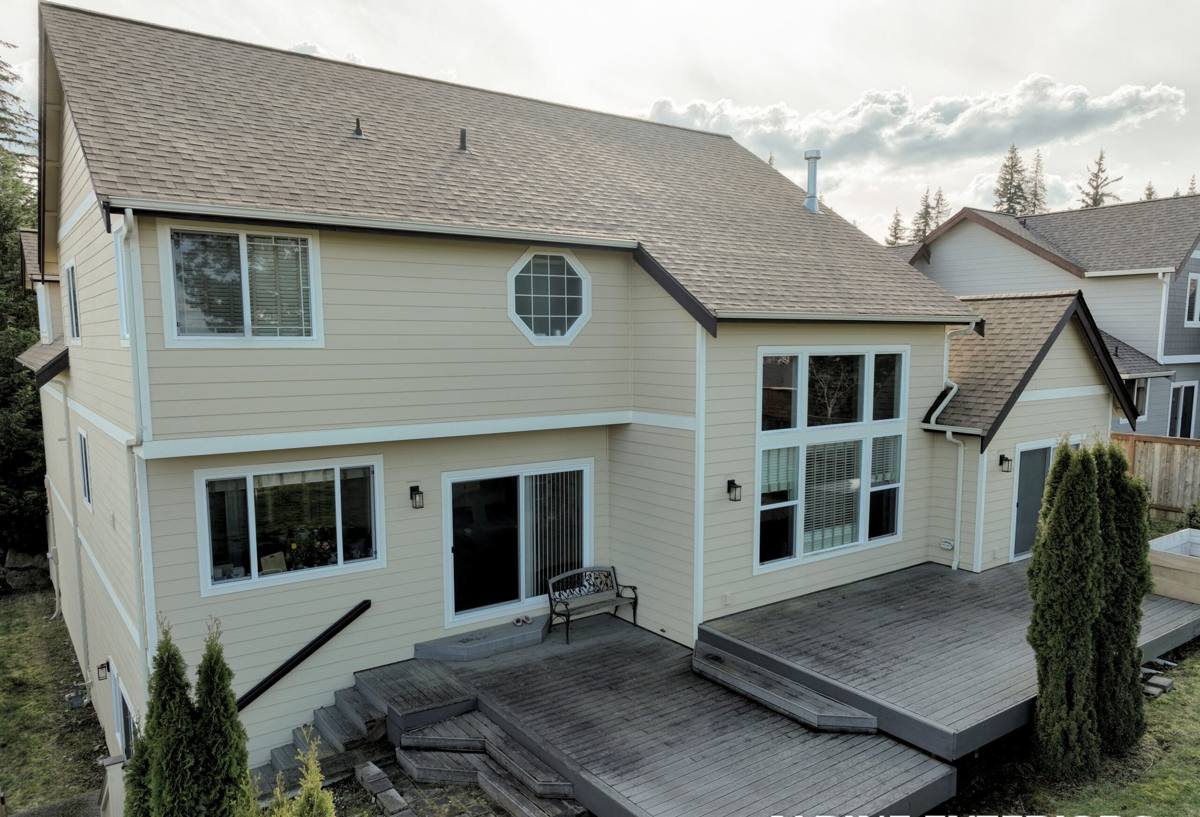
What West Beach's Climate Does to Siding Over Time
Salt Air and Slow Corrosion
Homes close to the water pick up airborne salt that settles on siding, trim, and especially fasteners. Over years, that salt exposure accelerates corrosion in cheaper nails and staples, and it breaks down paint film faster than it would a few miles inland. Siding that looks fine from the road can have fastener corrosion or coating failure underneath that only shows up once you're looking closely at a section that's starting to move or crack.
Driving Rain and Wind-Driven Water
West-facing exposure means rain doesn't just fall on this siding — it gets driven into it, sideways, during winter storms. Wind-driven rain finds every gap in a lap joint, every under-caulked seam, and every spot where flashing was skipped or installed short. Once water gets behind the siding plane, it travels, so damage often shows up several feet from where the water actually got in. This is the single biggest reason DIY patch jobs and quick caulk-and-paint fixes don't last on this side of the island.
Moss, Shade, and Trapped Moisture
A lot of West Beach lots carry heavy tree cover, and shaded, damp siding is where moss and algae take hold fastest. Moss itself doesn't eat through fiber cement, but it holds moisture against the surface far longer than open sun-exposed walls would ever see, and that constant dampness is what causes paint failure, wood trim rot, and — if the water management behind the siding was never right to begin with — hidden sheathing damage.
Signs a West Beach Home Needs Siding Repair, Not Just a Paint Touch-Up
Some of these are obvious from the ground; others take a closer look, especially on north- and west-facing walls that get the worst of the weather.
- Soft or spongy spots when you press on the siding, especially near the bottom courses and around window trim
- Visible cracking or splitting along panel edges or at butt joints
- Persistent moss or dark streaking that comes back within weeks of being cleaned
- Bubbling, peeling, or chalky paint that's isolated to one wall or one section
- Gaps opening up at caulked joints, especially around windows, doors, and trim
- Nail heads or fastener staining bleeding through the paint
- A musty smell or visible staining on interior walls that back up to an exterior wall showing damage outside
- Warping or bowing panels that weren't there a season ago
Any one of these can be a small, contained repair if it's caught early. Left alone through another wet season, most of them turn into a much larger job.
What a Correct Siding Repair Actually Involves
Finding the Real Cause First
The visible damage is rarely the whole story. Before we cut out or replace anything, we're checking what's happening behind the siding — whether water is getting in through a failed seam, a missing kick-out flashing, an old window installation, or a spot where the original siding was never lapped correctly. Repairing the surface without fixing the cause just buys a year or two before the same spot fails again.
Matching Material and Profile
Good repair work is invisible once it's done. That means matching the existing plank width, exposure, and profile so the repaired section doesn't stand out, and matching or properly blending the finish so a patched wall doesn't read as a patched wall from the street or the water side.
Flashing, Sealant, and Drainage Details
This is where most shortcut repairs fail. Correct repair work re-establishes proper flashing at every horizontal joint, window head, and penetration, uses sealant only where it belongs (not as a substitute for flashing), and makes sure water has a way to drain back out from behind the siding plane rather than pooling against the sheathing. On a west-facing, rain-driven wall, these details are the difference between a repair that lasts and one that doesn't.
Repair or Replace? How We Make the Call
| Factor | Leans Toward Repair | Leans Toward Full Replacement |
|---|---|---|
| Extent of damage | Isolated to one or two wall sections | Spread across multiple elevations |
| Underlying cause | A single identifiable flashing or seam failure | Systemic water intrusion from original installation |
| Sheathing condition | Solid, no rot behind the siding | Soft or rotted sheathing found during tear-out |
| Age of existing siding | Newer material, still under warranty | Original siding near or past its service life |
| Material match | Discontinued or unmatched profile can be blended in | No reasonable way to match existing material |
We'll always tell you honestly which side of that table your home falls on. A lot of West Beach calls turn out to be legitimate repairs — but if we open a wall and find rot working its way along the framing, patching over it isn't a service we're willing to sell you.
Our Process for a West Beach Siding Repair Call
Scheduling Around Island Logistics
Working on Orcas Island means planning material runs and crew scheduling around ferry timing, not showing up whenever. We build that into the estimate up front so there are no surprise delays once the job is booked, and we bring what the job needs the first time rather than making a homeowner wait on a return trip for a part we should have anticipated.
On-Site Assessment
We walk the affected wall (and the walls around it — problems on a west-facing wall often show up on the adjacent side too) and open up the damaged section enough to see what's really going on behind the siding before we quote the work.
The Repair Itself
Damaged material comes out, the cause gets corrected — flashing, sealant, drainage plane, whatever the actual problem was — and new material goes in matched to the existing wall. We're not painting over a problem; we're removing what failed and replacing it correctly.
Cleanup and Follow-Up
Job site gets cleaned up, and we walk the repair with you before we call it done. If moss or organic growth was part of what caused the damage, we'll tell you plainly what to watch for and how to keep it from creeping back onto the repaired section.
Why We Repair and Install Only James Hardie Fiber Cement
Every repair we do gets tied back into James Hardie fiber cement siding — it's the only product we install, on repairs and full re-sides alike. We made that call because fiber cement doesn't rot, doesn't feed moss and algae the way wood-based products can, and is non-combustible, which matters on a heavily wooded island where wildfire risk is a real seasonal concern. Hardie's HZ product lines are engineered specifically for climate zones like ours — the wetter, more humid HZ5 formulation resists moisture-related damage better than a standard-climate product would. The factory-applied ColorPlus finish also matters more here than in a drier climate: it's baked on under controlled conditions rather than field-applied, so it holds up to salt air and UV exposure longer than a job-site paint job typically does, and it carries a real transferable warranty behind it. When we repair a section of Hardie siding, we're not guessing at compatibility with some other manufacturer's board — we know exactly how the product performs long-term because we've been standing behind it on homes across the islands.
Why Hiring a Crew That Already Works West Beach Matters
Siding repair on this side of Orcas Island isn't the same job as siding repair somewhere sheltered and dry. A crew that hasn't worked this exposure before will often underestimate how much flashing and drainage detail a wall actually needs, because the damage patterns here don't look like textbook damage — they show up from a specific combination of salt, wind direction, and shade that's particular to this stretch of coastline. A crew that already services West Beach knows which walls typically take the worst of it, what the moss cycle looks like season to season, and how to schedule and source material around island logistics without turning a two-day repair into a two-week one.
After the Repair: Keeping Moss and Moisture From Coming Back
A correct repair should hold for years, but a little seasonal attention keeps it that way — especially on shaded, west-facing walls.
- Rinse moss and organic buildup off siding before it has a chance to hold moisture through the wet season
- Keep gutters clear so overflow isn't running down the wall face during heavy rain
- Trim back vegetation that's shading a wall and keeping it damp longer than it should be
- Walk the exterior once a year and check caulked joints around windows and trim for gaps
- Address any new soft spots or cracking early — small repairs stay small if they're caught in the first season
If a section of your West Beach home's siding is showing damage, or you just want an honest read on whether it's a repair or something bigger, we're happy to come take a look. Fill out the form below for a free, no-pressure estimate.