 Orcas Island Siding
 West Sound Decks Take a Different Kind of Beating
West Sound sits close enough to the water that salt air is part of daily life, and it shows up in how fast wood decking grays, splits, and loosens its fasteners. Add in the long stretches of driving rain that San Juan County sees over fall and winter, plus a moss season that can run for months on shaded or north-facing decks, and you've got a combination that's hard on any outdoor surface. Composite decking was built to handle exactly this kind of exposure, but only when it's installed with the substructure and drainage details that West Sound conditions actually demand.
We install composite decking across Orcas Island, and West Sound properties get a specific set of considerations from us before a single board goes down — shade patterns, wind exposure, proximity to salt spray, and how water is going to move off and away from the deck once it's built.
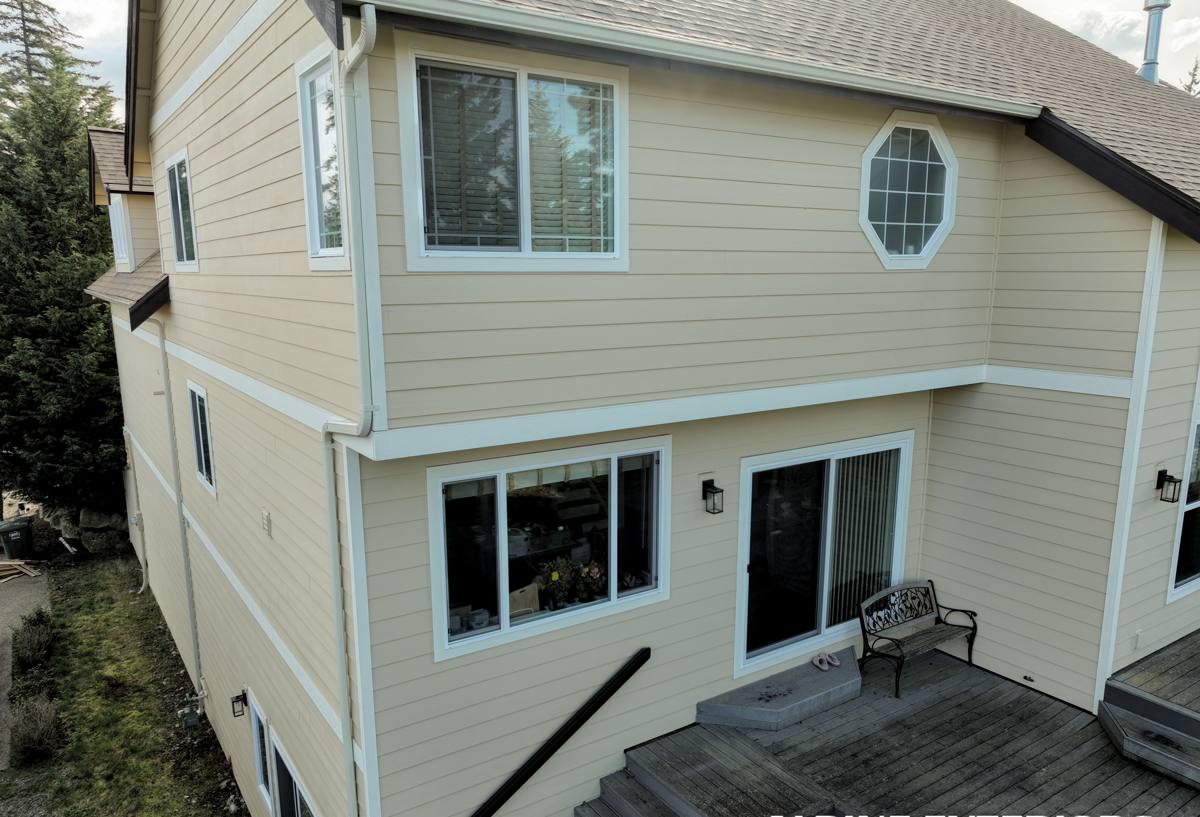
What Composite Decking Actually Solves Here
Traditional wood decking on the island needs regular sanding, staining, and sealing to fight moisture intrusion and UV breakdown. Skip a season of maintenance and you're often looking at cupping boards, popped nails, and soft spots that show up right where water sits longest. Composite decking removes most of that maintenance burden. The boards don't absorb water the way wood does, they don't need refinishing, and they hold their color and surface texture far longer under the kind of damp, low-sun conditions common on this side of the island.
That doesn't mean composite decking is maintenance-free — it isn't — but it shifts the work from sanding and sealing to simple cleaning, which matters a lot for owners who aren't on Orcas year-round.
Where Composite Decking Still Needs Respect
Composite boards are moisture-resistant, not moisture-proof, and the framing underneath them is still wood in almost every case. If that substructure isn't protected and ventilated correctly, you can end up with a deck surface that looks fine while the joists and ledger board underneath are quietly rotting. This is the failure mode we see most often when we're called out to look at a composite deck someone else installed — the boards themselves are holding up, but the framing wasn't detailed for our rainfall and humidity.
Salt air adds another layer: fasteners, brackets, and any exposed metal hardware need to be rated for coastal exposure, or they'll corrode well before the decking itself shows any wear.
The Three Failure Points We See Most
- Ledger board attachment to the house without proper flashing, letting water track behind the siding
- Joists without protective tape or wrap, absorbing moisture from the top down where the deck boards can't be seen
- Standard fasteners and hardware corroding faster than rated marine-grade or coated alternatives
Board Types and What They Mean for a West Sound Home
Not all composite decking is built the same way, and the differences matter more in a marine climate than they would somewhere dry and inland. Here's how the main categories compare for a West Sound install:
| Board Type | Moisture Behavior | Maintenance | Best Fit |
|---|---|---|---|
| Capped composite | Protective outer shell resists moisture and staining | Occasional washing | Most West Sound decks, especially shaded or low-airflow spots |
| Uncapped composite | More prone to surface moisture absorption and mold in shaded areas | Periodic cleaning, closer attention needed | Sunnier, well-drained locations only |
| PVC decking | Fully synthetic, essentially no moisture absorption | Very low | High-exposure or heavy-shade areas prone to moss |
| Wood alternative (cedar, etc.) | Absorbs moisture, needs sealing to resist rot | Annual sanding/sealing | Owners who want a specific traditional look and will keep up maintenance |
For most West Sound properties, especially anything under tree cover or facing prevailing wind and rain, we lean toward capped composite or PVC. The upfront cost is higher than uncapped composite, but the moss and mildew resistance pays for itself on a deck that doesn't get full sun exposure to dry out between storms.
The Substructure Is Half the Job
A composite deck is only as good as what's underneath it, and this is where a lot of the real work happens on a proper install. We frame or verify the joist layout for the specific board spacing the manufacturer requires, apply joist tape to protect the top of every framing member from standing moisture, and flash the ledger connection at the house so water can't work its way behind the siding. Board spacing and hidden fastener systems get adjusted slightly for our climate too — we leave enough gap for airflow and seasonal movement without opening room for debris and moss to pack into the joints.
Drainage matters just as much as the framing itself. Decks that sit low, back up against a slope, or catch runoff from a roofline need grading or diverter details worked out before installation, not after the boards are down and water starts pooling somewhere it shouldn't.
Our Installation Process
- On-site evaluation of the existing structure (or building site), sun exposure, drainage, and how water currently moves across the area
- Framing inspection or new substructure build, sized and spaced to the composite manufacturer's specifications
- Joist protection and ledger flashing, with corrosion-resistant fasteners and hardware throughout
- Composite board installation with hidden or color-matched fastening, verified spacing for drainage and airflow
- Edge, stair, and railing detailing so transitions stay tight and water-shedding
- Final walk-through covering care and what to expect through the wet months
Moss, Algae, and Salt Air: The Maintenance Reality
Composite decking cuts down maintenance dramatically compared to wood, but "low-maintenance" isn't "no-maintenance," especially with moss season lasting as long as it does here. Shaded sections of a deck, or boards tucked under overhangs where rain rinses them less often, are the spots that need attention first.
- Sweep debris and organic buildup off the deck regularly, especially in fall when leaf litter accumulates
- Wash the surface a couple of times a year with a composite-safe cleaner and a stiff (non-metal) brush — avoid pressure washers set too high, which can damage the board surface
- Pay extra attention to shaded corners and under railings, where moss and algae take hold first
- Rinse salt residue off periodically if the deck faces open water or takes direct spray
- Check fasteners and hardware annually for early signs of corrosion, particularly on older or non-coastal-rated hardware
- Keep gutters and downspouts near the deck clear so runoff isn't dumping extra water onto one section
Cost Factors for a West Sound Composite Deck
Composite decking costs more upfront than pressure-treated wood, but the gap narrows over the life of the deck once you factor in the sanding, staining, and repair work wood typically needs. Actual pricing depends on a handful of site-specific factors:
| Factor | Why It Affects Cost |
|---|---|
| Board tier (capped vs. uncapped vs. PVC) | Higher-end boards cost more per square foot but need less upkeep and resist moss better |
| Substructure condition | Existing framing that needs repair or replacement adds labor and material cost |
| Site access | Sloped lots, limited equipment access, or waterfront setbacks can add time to the job |
| Railing and stair complexity | Multi-level decks or custom railing details add material and labor |
| Drainage or grading work | Sites that need diverters, regrading, or drainage correction before decking begins |
We'll walk through these factors on-site and give you a straightforward number, not a vague range — there's no reason to guess when we can measure and look at the actual conditions.
Why Hire a Crew That Already Works West Sound
Composite decking installation looks straightforward on paper, but the details that determine whether a deck lasts fifteen years or needs framing repairs in five are the ones that aren't visible once the job is done — flashing behind the ledger, joist protection, hardware selection, and drainage planning. A crew that hasn't worked this specific stretch of coastline doesn't always know how much moss pressure a shaded deck will see, or how aggressively salt air will work on standard hardware.
We've built and repaired decks throughout Orcas Island's varied conditions, from open, sun-exposed sites to heavily shaded lots tucked into the trees near the water. That local experience shapes real decisions on every job — board selection, fastener grade, and how we detail drainage — not just how the finished deck looks on day one.
If you're planning a new composite deck or replacing an aging wood one in West Sound, we're happy to take a look and walk you through what your specific site needs. Reach out for a free, no-pressure estimate using the form below.