 Orcas Island Siding
 Windows on San Juan Island Work Harder Than Windows Almost Anywhere Else
San Juan Island sits out in San Juan County's marine climate, and that means the windows on a typical home here are dealing with conditions that inland Washington houses never see. Salt-laden air moves in off the water and settles into every seam, hinge, and fastener it can find. Driving rain comes in sideways during winter storms, testing every joint around a window frame rather than just falling straight down onto a sill. And the long, damp moss season — stretching from fall through spring — keeps humidity high against exterior walls for months at a time. Individually, none of these are dramatic. Together, over ten or fifteen years, they're exactly what wears out window frames, seals, and flashing faster than a manufacturer's warranty ever anticipated.
We don't treat San Juan Island jobs the same way we'd treat a window replacement in a dry inland climate. The materials, the flashing detail, and the sequencing all get adjusted for salt exposure and sustained moisture — because a window that's technically "installed correctly" by generic standards can still fail early out here if it wasn't built for this specific exposure.
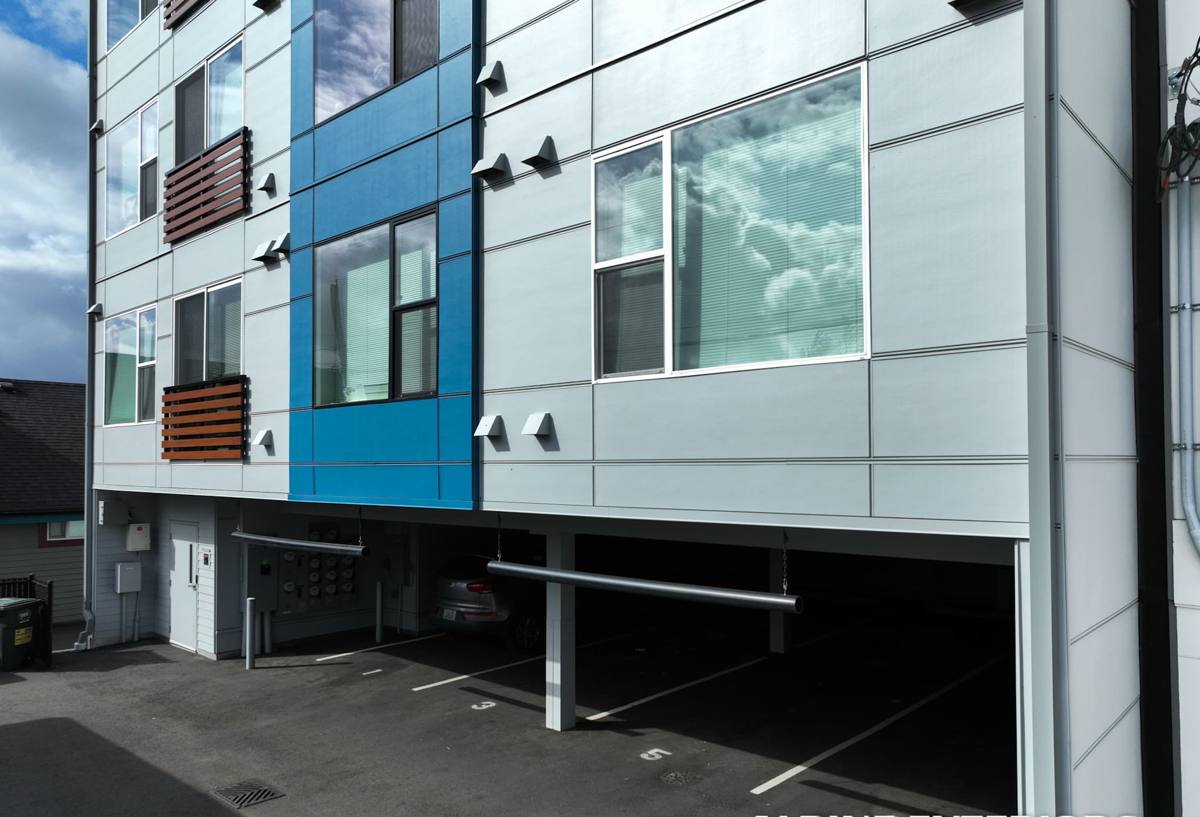
How to Tell Your Windows Are Actually Failing (Not Just Old)
Age alone isn't a reason to replace a window. What matters is whether the unit is still doing its job — keeping water out, keeping air from moving through the frame, and operating the way it should. On San Juan Island, these are the signs we take seriously:
- Fogging or a persistent haze between panes — the seal on the insulated glass unit has failed and moisture is trapped inside
- Soft or discolored wood at the sill or lower corners of the frame, often the first place driving rain finds a way in
- Windows that won't stay open, won't latch fully, or have become noticeably harder to operate
- Visible gaps or cracked caulking around the exterior trim, especially on walls that face prevailing wind and rain
- A cold draft near the frame on windy days, even with the window fully latched
- Paint or finish that keeps failing on the interior sill no matter how often it's repainted — usually a sign of ongoing moisture intrusion, not a paint problem
- Visible mildew or a musty smell concentrated right at the window opening
Any one of these can often be addressed on its own. Several of them together, especially on the weather-facing side of a house, usually mean the window assembly itself — frame, flashing, and glass — has reached the end of its useful life.
What a Correct Window Replacement Actually Involves
It Starts With What's Behind the Window, Not the Window Itself
The window unit itself is often the easy part. What determines whether a replacement lasts is the flashing and weatherproofing detail around the rough opening — the layers that direct water away from the wall assembly before it ever reaches the window frame. On a house exposed to San Juan Island's driving rain, we pay close attention to head flashing above the window, proper lapping of any house wrap or weather-resistive barrier, and sill pan flashing that gives water somewhere to go if it ever does get past the outer seal. Skipping or rushing this step is the single most common reason a "new" window leaks within a few years.
Frame Material Matters More Here Than in Drier Climates
We factor salt air and constant humidity into the frame material conversation for every San Juan Island homeowner. Some materials handle that combination better than others, and the right choice often comes down to your home's exposure, your maintenance preferences, and your budget rather than a single "best" answer.
Glass and Energy Performance
Double-pane, low-E insulated glass is the baseline for this climate — it manages heat loss during cold, wet winters and helps control condensation on interior glass during humid stretches. For homes with more direct wind or water exposure, we also look at the strength and quality of the seal between panes, since that seal is what eventually fails and causes the fogging described above.
Comparing Frame Materials for a Marine Climate
| Frame Material | How It Handles Salt Air & Moisture | Maintenance | General Trade-Off |
|---|---|---|---|
| Vinyl | Doesn't corrode or absorb moisture; performs consistently in salt air | Low — occasional cleaning | Cost-effective, but color and trim options are more limited than wood-clad |
| Fiberglass | Very stable in temperature swings and moisture; strong resistance to warping | Low to moderate | Higher upfront cost, but holds up well over a long ownership period |
| Aluminum-clad wood | Attractive exterior finish, but any breach in the cladding exposes wood to moisture | Moderate — seams need periodic inspection | We recommend it selectively and only with careful sealing detail, given constant humidity here |
| Bare wood | Requires the most protection from driving rain and salt exposure | High — regular refinishing | Best suited to covered or protected elevations, not the weather-facing side of a house |
None of these materials is wrong in every situation — the right pick depends on which wall the window sits on, how much direct weather it takes, and how much upkeep you want to sign up for. We'll walk through this specific to your house rather than defaulting to one product for every job.
Our Process, Start to Finish
- On-site assessment — we look at each window from both sides, check the condition of the surrounding trim and framing, and note which elevations take the most weather
- Honest recommendation — full replacement where the frame or flashing has failed, repair or re-seal where that's genuinely all that's needed
- Written estimate — clear scope, materials, and pricing before anything is ordered
- Ordering and lead-time planning — built around ferry schedules and delivery timing so materials arrive when the crew does, not days apart
- Removal and opening prep — old units removed carefully to protect interior and exterior finishes, with the opening checked for hidden rot or moisture damage before anything new goes in
- Flashing and weatherproofing — done before the new window ever goes into the opening
- Installation — window set, shimmed, and fastened per manufacturer specification, then sealed on the exterior
- Interior and exterior finish work — trim, caulking, and touch-up so the job looks finished, not patched
- Final walkthrough — every window opened, closed, and checked with you before we consider the job done
What Affects the Cost of a Window Replacement Here
| Factor | Why It Changes the Price |
|---|---|
| Number of windows and their size | Larger and more numerous openings mean more material and labor |
| Condition of the rough opening | Hidden rot or moisture damage behind the old window adds repair work before the new one can go in |
| Frame material selected | Vinyl, fiberglass, and clad-wood options carry different material costs |
| Exterior finish work required | Matching existing trim, siding, or paint adds time beyond the window swap itself |
| Site access and logistics | Island delivery and scheduling can affect timeline more than mainland jobs, though this is planned into the estimate, not billed as a surprise |
We give real, written numbers after seeing the actual openings — not a rough phone quote — because the condition behind the window matters as much as the window itself.
Why It Matters That We Already Work San Juan Island
Getting materials, crews, and equipment to San Juan Island isn't the same as scheduling a job in a mainland neighborhood. Ferry schedules affect when materials can arrive and when a crew can be on site for a full working day. A contractor who hasn't planned around that will either pad your price to cover the uncertainty or run into delays that stretch your project out. Because we already build our schedule around island logistics, we can plan realistic timelines and keep the job moving once it starts.
There's also a product-knowledge piece to this. After working houses across San Juan County, we have a good sense of which window details hold up to this specific combination of salt air, wind, and sustained moisture — and which ones look fine in a showroom but underperform two winters in. That's not something a crew coming from a drier inland market necessarily knows walking in.
Keeping New Windows Performing Long-Term
A correctly installed window still benefits from basic upkeep in this climate. A short annual routine goes a long way:
- Rinse salt residue off exterior frames and glass, especially on wind-exposed walls, a couple of times a year
- Check exterior caulking annually for cracking or separation and re-seal small gaps before they become water paths
- Clear debris and moss buildup from sills and surrounding trim so moisture doesn't sit against the frame
- Operate each window through its full range a few times a year so hardware doesn't seize up between uses
- Keep gutters and downspouts clear so roof runoff isn't sheeting down across upper-floor windows
None of this is heavy maintenance — it's the difference between a window that reaches its full service life and one that starts showing problems early because small issues went unaddressed.
Get a Straight Answer on Your Windows
If you're dealing with fogged glass, drafts, soft trim, or windows that just don't operate the way they used to, it's worth having someone look at the actual openings before guessing at a fix. We'll give you a clear, honest read on what's going on and what it would take to fix it right — no pressure, no inflated scope. Use the form below to request a free estimate for your San Juan Island home.