 Orcas Island Siding
 Roofing on San Juan Island: A Different Climate, A Different Job
San Juan Island sits in the same demanding stretch of the Salish Sea as the rest of San Juan County, and the roof over an island home works harder than one just a ferry ride away on the mainland. Salt-laden wind off the water, driving winter rain that comes in sideways more often than straight down, and a long, damp moss season that can run most of the year all put steady stress on asphalt shingles. A roof that's installed correctly for this exposure can go the distance. One that isn't will show problems early — curling shingles, granule loss, soft spots at the eaves, moss creeping under the tab lines. This page is about doing asphalt shingle roofing right for San Juan Island specifically, not just roofing in general.
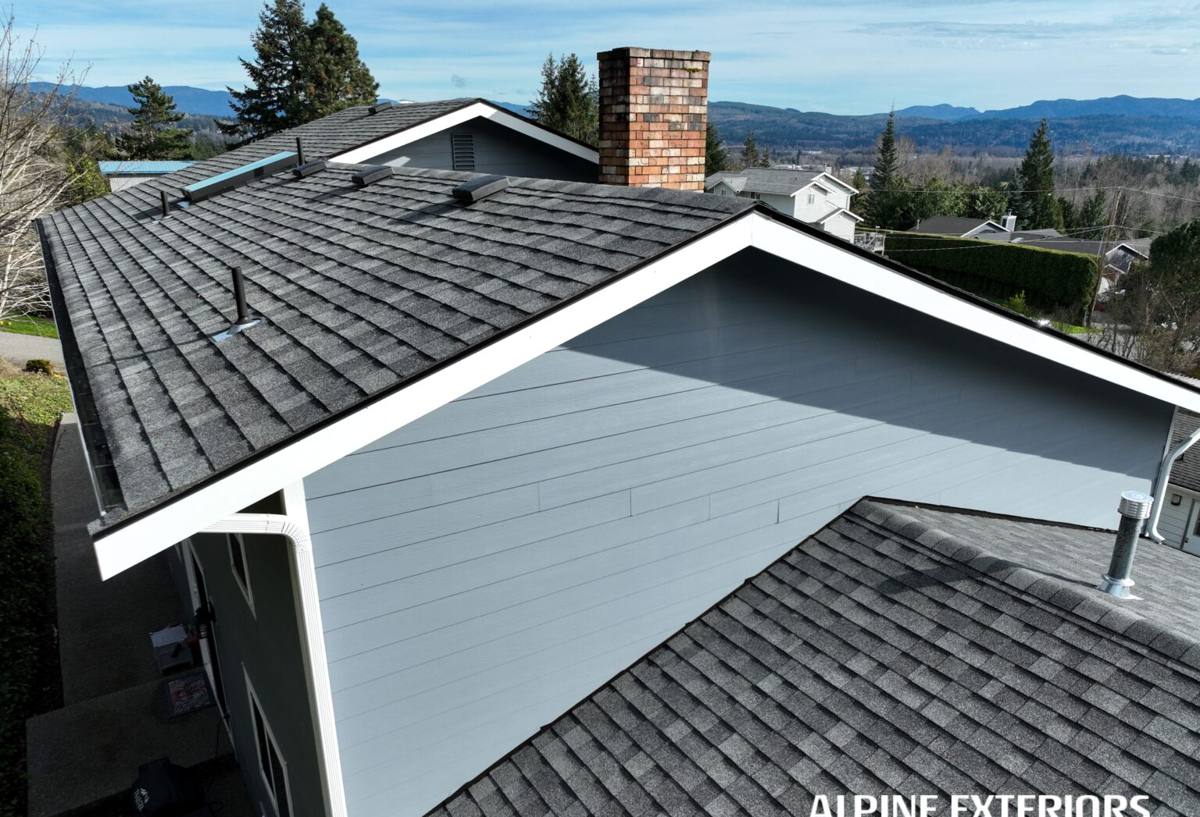
What Salt Air, Rain, and Moss Actually Do to a Shingle Roof
Salt-Laden Air and Fastener Corrosion
Homes closer to the water's edge on San Juan Island take on a fine mist of salt spray during storms and windy stretches, and that salt settles on every exposed surface, including the roof. Over time it accelerates corrosion on unprotected metal — nail heads, flashing seams, drip edge — well before the shingles themselves are due for replacement. A roof that skimps on corrosion-resistant fasteners and flashing will fail at those metal points first, long before the field of the roof shows its age.
Driving Rain and Wind-Driven Water Intrusion
Island storms rarely arrive as gentle, straight-down rain. Wind pushes water sideways and uphill under shingle tabs, especially at valleys, eaves, and anywhere two roof planes meet. Standard shingle overlap handles typical rainfall fine, but wind-driven rain needs backup — proper underlayment and flashing detail — or water finds its way to the decking and eventually the framing underneath.
Moss, Moisture, and Roof Deck Rot
San Juan Island's shaded, moisture-holding microclimates — north-facing slopes, roofs under conifers, low-pitch sections that stay damp — grow moss readily for much of the year. Moss isn't just cosmetic. Its root structure lifts shingle edges, holds water against the roof surface long after the rest of the roof has dried, and over seasons that trapped moisture works into the shingle mat and the deck below it. A roof that looks fine from the ground can have real moisture damage building underneath a moss mat.
What a Correctly Installed Asphalt Shingle Roof Includes
"Correct" isn't a marketing word here — it's a specific list of details that matter more on an exposed island roof than they would somewhere sheltered and dry.
Underlayment That Actually Resists Wind-Driven Water
A synthetic or high-quality felt underlayment, properly lapped and fastened, is the roof's real waterproofing layer — the shingles are the weather-facing armor, but the underlayment is what keeps the deck dry if wind pushes water past the shingle edge. On San Juan Island, we treat underlayment as non-negotiable, not an afterthought.
Ice-and-Water Barrier at Vulnerable Points
Self-adhering membrane at eaves, valleys, and roof penetrations gives a second line of defense exactly where wind-driven rain and ponding are most likely. These are small areas of the total roof but they're where the majority of leaks originate.
Flashing and Fasteners Rated for Marine Exposure
Step flashing, valley metal, and fasteners should be corrosion-resistant grades suited to salt air, not the minimum-spec hardware that's fine inland. This is one of the most common corners cut on budget roofing jobs, and it's the one that costs homeowners the most in early repairs.
Ventilation That Matches the Insulation Below
Balanced intake and exhaust ventilation keeps the underside of the roof deck dry and at a stable temperature, which matters for shingle lifespan and for controlling condensation in our wet, mild climate. A roof can be installed perfectly on top and still fail early from moisture trapped underneath if ventilation is wrong.
Fastening to Manufacturer Spec, Not Shortcuts
Correct nail count, placement, and pattern for the wind exposure of the specific roof — not a generic minimum. Under-nailed shingles are one of the leading causes of wind-related shingle loss on exposed island roofs.
Choosing Shingles for Island Exposure
Asphalt shingles come in a range of grades, and the right choice for a San Juan Island home depends on exposure, roof pitch, and how long the homeowner wants to go before thinking about the roof again. We walk through the honest trade-offs rather than pushing whatever has the best markup.
| Shingle Type | Typical Lifespan | Best Fit for San Juan Island | Trade-Off |
|---|---|---|---|
| 3-Tab | 15-20 years | Budget projects, secondary structures | Lower wind rating, less algae resistance |
| Architectural / Dimensional | 25-30+ years | Most island homes, especially exposed sites | Higher upfront cost, better wind and impact performance |
| Algae-Resistant (copper-infused granules) | 25-30+ years | Shaded lots, north slopes, tree cover | Slight cost premium; slows but doesn't eliminate moss/algae |
| Impact-Rated (Class 4) | 25-30+ years | Homes wanting max durability against debris/hail | Higher material cost; may qualify for insurance discounts |
For most San Juan Island homes, we recommend architectural shingles with algae-resistant granules as the baseline — the moss season here makes that granule technology worth the modest premium over standard shingles, and the heavier profile handles wind exposure better than 3-tab.
Our Asphalt Shingle Roofing Process on San Juan Island
- Inspection and honest assessment — we check the deck, flashing, ventilation, and moss/moisture damage before recommending repair or full replacement.
- Material staging — because every job here involves a ferry crossing, we plan material delivery and site staging in advance so the crew isn't waiting on supplies mid-project.
- Tear-off and deck inspection — old roofing comes off down to the deck, and any soft or rotted decking (often found under old moss growth) is identified and replaced before anything new goes on.
- Underlayment and ice-and-water barrier installation — installed to the standard above, not the minimum code allows.
- Flashing and shingle installation — marine-grade flashing and fastening, correct nail pattern for the site's wind exposure.
- Ventilation check and correction — intake and exhaust balanced for the home's insulation and roof geometry.
- Site cleanup and final walkthrough — debris and old materials hauled off the island, not left to be dealt with later.
Repair or Replace? Cost Factors to Weigh
Not every roof problem on San Juan Island means a full replacement. We look at age, extent of damage, and what's happening underneath before recommending either path.
| Factor | Favors Repair | Favors Replacement |
|---|---|---|
| Roof age | Under 15 years, isolated issue | Approaching or past expected lifespan |
| Extent of moss/moisture damage | Surface moss, no deck softening | Soft decking, granule loss across large areas |
| Flashing condition | Localized corrosion at one point | Widespread corrosion at multiple flashing points |
| Number of past repairs | First repair needed | Repeat leaks in different spots |
| Homeowner timeline | Planning to address roof again in a few years | Wants a long-term, low-maintenance solution |
Maintenance Checklist for San Juan Island Homeowners
Between full inspections, a few habits go a long way toward keeping an asphalt shingle roof performing through the island's wet season and moss cycle:
- Keep gutters clear so wind-driven rain has somewhere to go besides under the shingles
- Trim back overhanging branches to reduce shade, debris buildup, and moss growth
- Have moss physically removed rather than left to grow — scraping and gentle treatment, not pressure washing, which damages granules
- Watch for granules collecting in gutters, a sign shingles are wearing down
- Check attic ventilation isn't blocked by insulation or debris
- After major windstorms, do a visual check from the ground for lifted or missing shingles
- Schedule a professional inspection every couple of years, more often on shaded or heavily exposed roofs
Why an Island-Based Roofing Crew Matters
Roofing logistics on San Juan Island aren't the same as roofing logistics on the mainland. Material orders need to account for ferry schedules, weather windows for tear-off need to be planned tightly since an exposed deck can't sit uncovered through an unexpected storm, and a crew that already works San Juan County knows which exposures need extra flashing attention and which neighborhoods deal with heavier moss growth. A contractor based off-island who treats a San Juan Island job like any other mainland roof is more likely to underestimate weather timing, under-spec fasteners for salt exposure, or leave a callback repair waiting on the next ferry crossing. We're already working these islands regularly, which means faster response for follow-up questions and a crew that isn't learning the local climate on your roof.
If your San Juan Island home needs a roof inspection, a repair, or you're weighing full replacement, we're glad to take a look and give you a straight answer. Reach out for a free, no-pressure estimate through the form below.