 Orcas Island Siding
 Roof Repair on Lopez Island: Why the Local Climate Changes the Job
Lopez Island roofs deal with a combination most inland contractors never have to think about. Salt-laden air off the surrounding waters slowly corrodes exposed metal. Driving rain, pushed sideways by open-water wind, finds its way under flashing and shingle edges that would stay dry in a calmer climate. And the tree cover that makes so many Lopez Island properties beautiful also keeps roof surfaces shaded and damp for long stretches of the year, which is exactly what moss needs to take hold. None of this means a roof on Lopez Island is doomed to fail early. It means the repair work has to account for conditions a generic patch job ignores.
We work throughout San Juan County, and the repair calls we get from Lopez Island tend to follow a pattern: problems that started small, stayed hidden under moss or behind flashing, and grew slowly until they showed up as a stain on a ceiling or a soft spot underfoot in the attic. Catching and correcting those issues early is cheaper and less disruptive than waiting for a full failure.
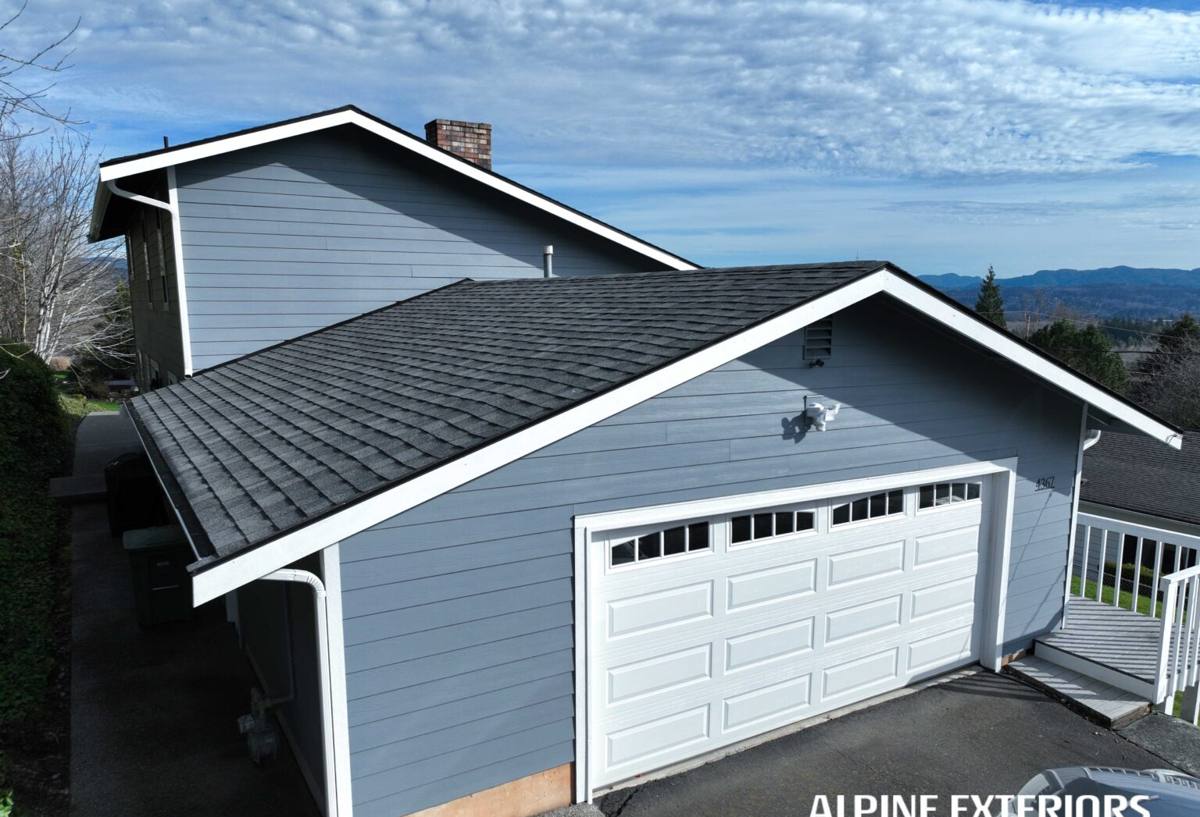
Common Roof Problems We Find on Lopez Island Homes
Moss and Organic Growth
A long, damp moss season is one of the defining maintenance challenges for roofs in this part of Washington. Moss holds moisture against the roofing surface, works its way under shingle tabs as it grows, and can lift edges just enough to let wind-driven rain in behind them. Left unchecked long enough, it accelerates granule loss on asphalt shingles and can stain or degrade wood shakes.
Flashing and Fastener Corrosion
Flashing around chimneys, skylights, dormers, and roof-to-wall transitions is where most leaks actually originate, not out in the open field of the roof. Salt air speeds up corrosion on lower-grade or older metal flashing and on exposed fasteners, which can loosen seals and open small gaps over time.
Wind-Driven Rain Intrusion
Storms coming off open water don't just drop rain straight down — they push it sideways and upward under eaves, into vents, and along ridge lines. A roof that would shed a calm rain just fine can still leak in a wind-driven storm if the underlayment, flashing, or ventilation details weren't built for that kind of exposure.
Aging or Storm-Damaged Roofing Material
Wind gusts, falling branches, and general age eventually show up as cracked, curled, or missing shingles; split shakes; or dented and lifted metal panels. These are usually straightforward to repair if addressed promptly, but they're also the easiest problems to overlook from the ground.
What a Correct Roof Repair Actually Involves
A repair that actually solves the problem starts with finding the source of the issue, not just patching where the water showed up inside the house. Water travels — a stain on a bedroom ceiling can trace back to a flashing gap several feet away. We look at the roofing material itself, the flashing details, the underlayment where it's exposed, and the attic or roof deck from the inside when we can access it, so the repair addresses the actual entry point.
A correct repair also matches materials appropriately. Mixing incompatible metals in flashing repairs, for example, can cause galvanic corrosion that creates a new leak path a few years down the road — a particular risk in a salt-air environment. And any repair that disturbs roofing material needs to restore proper water-shedding overlap, not just seal a hole with caulk or cement, which is a short-term fix at best.
Repair or Replace? How We Help You Decide
Not every roof problem calls for full replacement, and not every leak can be permanently solved with a patch. The honest answer depends on the roof's age, how widespread the damage is, and what's driving the problem in the first place.
| Factor | Points Toward Repair | Points Toward Replacement |
|---|---|---|
| Age of roofing material | Roof is within its expected service life | Roof is at or past the end of its expected lifespan |
| Extent of damage | Isolated to one area (flashing, one section of shingles) | Multiple areas failing or widespread granule/material loss |
| Underlying deck condition | Roof deck is sound and dry | Deck shows rot, soft spots, or repeated water damage |
| Moss/organic growth history | Growth is surface-level and manageable | Growth has caused repeated lifting or material breakdown over years |
| Cost over time | Repair cost is a small fraction of replacement cost | Repeated repairs are approaching the cost of replacement |
We'll walk you through where your roof falls on these factors and give you a straight recommendation — not the most expensive option by default.
Our Roof Repair Process on Lopez Island
Inspection and Diagnosis
We start by physically inspecting the roof and, where possible, the attic or interior space below the affected area. Ground-level guesses about roof problems are frequently wrong, so we get up there before we quote anything.
Honest Scope and Written Estimate
You get a clear written estimate that explains what we found, what we're fixing, and why. If a repair genuinely won't hold and replacement makes more sense, we'll tell you that instead of selling a patch we don't believe in.
The Repair Itself
We match materials to what's already on the roof where possible, correct flashing and fastener details rather than just sealing over them, and make sure water-shedding overlap is restored properly — not just the visible symptom.
Cleanup and Walkthrough
We clear debris and old material from the site and walk you through what was done, including anything worth keeping an eye on going forward.
Materials We Work With — and Why Some Choices Matter More Here
Asphalt composition shingles, standing-seam and other metal roofing, and cedar shakes all show up on Lopez Island homes, and each has different maintenance needs in this climate. Asphalt shingles are cost-effective and widely used, but they need periodic moss control to avoid premature granule loss in a moss-prone environment. Metal roofing sheds moss and moisture well and holds up over a long service life, but flashing and fastener quality matter more in salt air, since lower-grade hardware corrodes faster near open water. Cedar shakes have a traditional look many island homeowners want, but they require more consistent moss and moisture management than the other two options, and repairs need to be done carefully to keep the surrounding shakes weathering evenly.
None of these are wrong choices — they're trade-offs between upfront cost, appearance, and the maintenance commitment a homeowner is willing to make. When we recommend one repair approach over another, it's based on what will actually hold up on your specific roof, not a one-size-fits-all default.
Timing Your Repair Around San Juan County's Seasons
Roofing repairs go on best during dry, stable weather, which narrows the practical window in a climate that sees a lot of rain across fall, winter, and spring. Moss treatment and removal is also more effective, and less risky for the roof surface, when it's scheduled deliberately rather than rushed between storms. We plan repair work around realistic weather windows rather than promising a date that a rain system is likely to blow through.
Island logistics add another layer. Materials, equipment, and crew all move by ferry, so scheduling has to account for sailing times in a way that mainland jobs simply don't. A contractor who already works Lopez Island regularly builds that into the plan from the start instead of discovering it mid-project.
Signs Your Roof Needs Repair Now
- Visible moss buildup on shingles, shakes, or in valleys
- Missing, cracked, or curling shingles, or split/lifted shakes
- Rust streaks, corrosion, or gaps at flashing around chimneys, vents, or skylights
- Water stains on ceilings or interior walls, especially after a windy storm
- Granules collecting in gutters or downspouts
- Daylight visible through the roof deck from inside the attic
- Sagging or soft spots anywhere on the roof surface
Why Hiring a Crew That Already Works Lopez Island Matters
Roofing work on an island isn't the same logistics problem as roofing work on the mainland. Getting a crew, tools, and the right materials over on the ferry, timing the work around sailing schedules, and understanding how exposure and weather patterns vary from one part of the island to another all take local familiarity. A contractor who regularly works Lopez Island and the broader San Juan County area has already worked out those logistics, so your repair doesn't become a lesson in island scheduling on your dime.
Local experience also means we've seen how roofs in this specific climate actually fail over time — which flashing details hold up to salt air, how aggressively moss needs to be managed on a shaded lot versus an open one, and which repairs are worth doing well the first time versus which ones are genuinely simple. That's the kind of judgment that only comes from doing this work here, repeatedly, not from a general roofing background applied to an island for the first time.
If you're seeing signs of trouble or just want a second opinion on a roof problem, we're glad to take a look. Reach out for a free, no-pressure estimate using the form below — we'll give you an honest read on what's going on and what it would take to fix it right.