 Orcas Island Siding
 Why Roof Replacement Looks Different on San Juan Island
A roof on San Juan Island does a harder job than the same roof would do thirty miles inland. It's shedding driving rain off the Strait one week and sitting under a still, damp fog bank the next, all while salt-laden air works on every exposed fastener and metal edge year-round. San Juan County's marine climate doesn't produce the hardest storms in the state, but it produces the most persistent moisture, and persistent moisture is what actually wears a roof out. That's the backdrop for every roof replacement we do out here, and it's why a roofing crew that mainly works dry inland neighborhoods can miss details that matter a lot on an island roof.
Salt Air and Metal Components
Flashing, fasteners, vents, and any exposed metal trim take the brunt of salt exposure. Standard fasteners and thin-gauge flashing can start pitting and corroding years before they would on the mainland, and once a fastener head starts to go, the seal around it goes with it. On San Juan Island roofs we lean toward corrosion-resistant fastener packages and heavier-gauge flashing metals as a baseline, not an upgrade, because the cost of doing it right the first time is small compared to chasing leaks around a rusted-out valley five years later.
Moss, Lichen, and Shaded Rooflines
Between the tree cover common on island lots and the long, cool, damp shoulder seasons, moss and lichen get a real head start here. Moss isn't just cosmetic — it holds moisture against the roofing material, lifts shingle edges as it grows, and can work its way under flashing over time. North-facing slopes and roofs shaded by conifers are the areas we watch closest, both when we're assessing whether a roof needs replacing and when we're planning how the new roof will be built to resist regrowth.
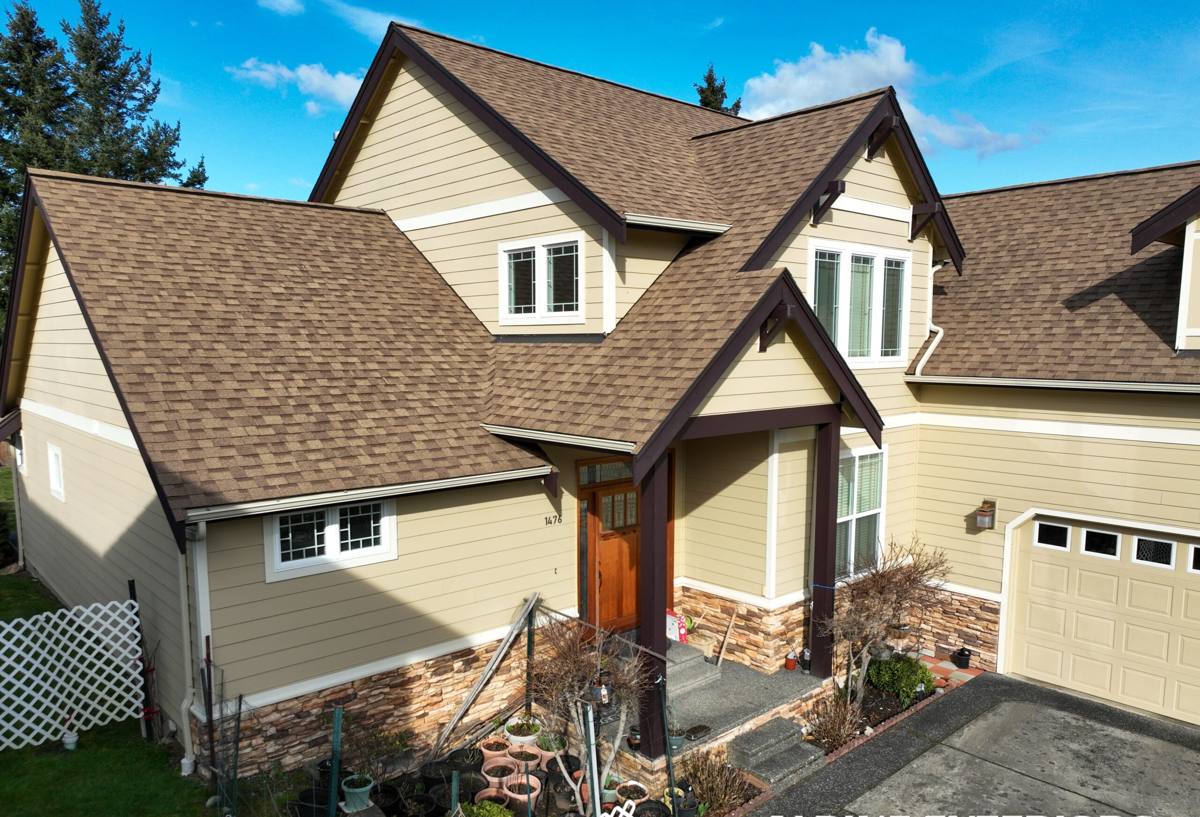
Signs a San Juan Island Roof Needs Replacement, Not Just Repair
Repair makes sense when the damage is localized and the roofing material still has service life left. Replacement makes sense once the underlying material is failing broadly, even if only a few spots are actively leaking. Here's what tends to tip a roof from the repair column into the replacement column on the homes we see:
- Granule loss heavy enough that you can see bald patches or find granules collecting in gutters
- Shingles that are cupping, curling, or cracking across multiple slopes, not just one weathered corner
- Moss or lichen established deeply enough that scraping it off would damage the roofing surface underneath
- Soft or spongy spots in the decking when walked, usually a sign moisture has been getting through for a while
- Rusted, pitted, or failing flashing at valleys, chimneys, and roof-to-wall transitions
- Daylight visible through the attic or consistent staining on interior ceilings after rain events
- A roof that's simply reached the end of its material's expected life, even if it looks okay from the ground
Any one of these alone doesn't automatically mean replacement. It's the combination, and how much service life is realistically left, that determines the honest recommendation.
What a Correct Roof Replacement Actually Involves
Tear-Off and Deck Inspection
We remove the old roofing down to the deck rather than layering over it. That's the only way to actually see the sheathing — soft, delaminated, or rotted plywood or boards get replaced before anything new goes down, because no underlayment or shingle can compensate for a deck that's already failing underneath it. On older San Juan Island homes, this step is also when we find out whether the original decking and spacing even meet current code, which affects what we can install and how it needs to be fastened.
Underlayment and Water-Shedding Details
In a climate where rain comes sideways as often as it comes straight down, underlayment isn't a formality. We use synthetic or self-adhering underlayment at eaves, valleys, and other vulnerable areas as a second line of defense behind the primary roofing material, so that wind-driven rain that gets past the surface layer still has somewhere to go besides your attic.
Flashing: The Part Most Often Done Wrong
Most roof leaks trace back to flashing, not the field shingles. Chimneys, skylights, dormers, valleys, and wall-to-roof transitions all need flashing that's properly lapped, sealed, and tied into the drainage plane — not just caulked over. We rebuild flashing as part of every full replacement rather than reusing old pieces, since flashing that's already corroding from salt exposure won't hold up through the next roof's lifespan either.
Ventilation in a Damp Marine Climate
A roof deck that can't breathe traps moisture, and trapped moisture is what rots decking and feeds moss from underneath. We check intake and exhaust ventilation balance on every replacement — ridge vents, soffit vents, or both — because on a humid island roof, ventilation does as much long-term work protecting the structure as the roofing material does protecting against rain.
Matching the Roofing Material to Island Exposure
There's no single "best" roofing material for San Juan Island — the right choice depends on your home's exposure, roof pitch, tree cover, and budget. Here's how the common options actually perform under salt air, driving rain, and moss pressure:
| Material | Salt Air Durability | Moss Resistance | Maintenance | Typical Lifespan |
|---|---|---|---|---|
| Architectural asphalt shingle | Good with corrosion-resistant fasteners | Moderate — needs periodic cleaning on shaded slopes | Low to moderate | 25–30 years |
| Standing seam metal | Very good with proper coating and fastener spec | High — sheds moss more readily | Low | 40–50+ years |
| Cedar shake | Fair — needs regular treatment near salt exposure | Low without upkeep — moss-prone in shade | High | 20–30 years with maintenance |
| Synthetic/composite shingle | Good | Moderate to high depending on product | Low | 30–50 years |
Cedar shake has real visual appeal and a long history on the islands, but its maintenance burden and moisture sensitivity in a persistently damp climate are worth going in with clear eyes about — it needs a homeowner committed to regular upkeep to hit its full lifespan here. Metal and better-grade composite shingles generally ask less of you over the years in exchange for a higher upfront cost, which is a trade-off worth discussing against your own plans for the home.
What Drives the Cost of a Roof Replacement Here
Every roof is priced on its own specifics, but a few factors consistently move the number more than others on San Juan Island jobs:
| Factor | Why It Matters |
|---|---|
| Roof size and number of planes | More square footage and more valleys, hips, and dormers mean more material and labor |
| Pitch and access | Steep or hard-to-access roofs need more safety setup and take longer to work |
| Tear-off layers | Removing multiple existing layers costs more than a single-layer tear-off |
| Deck repair needed | Rotted or soft sheathing found during tear-off adds material and labor |
| Material choice | Asphalt, metal, cedar, and composite carry different material and install costs |
| Ferry and delivery logistics | Material barging and crew scheduling add planning time compared to mainland jobs |
We're not going to quote a number without seeing the roof, and we're skeptical of anyone who will. What we can say is that a straightforward asphalt shingle replacement on a modest island home tends to run in a broadly different range than a large, multi-pitch cedar or metal roof with deck repairs — the honest answer only comes after an actual inspection.
How We Run a Roof Replacement Project on San Juan Island
Scheduling Around the Ferry and Weather
Getting a full crew, tear-off equipment, and enough material staged for a roof replacement onto San Juan Island takes real planning around ferry schedules — it isn't the same as pulling a truck up to a mainland driveway. We build that logistics time into the project schedule up front, and we watch the weather window closely, since a torn-off roof and an incoming Pacific storm system don't mix.
The Work Itself
Once material and crew are staged, the sequence is tear-off, deck inspection and repair, underlayment, flashing, then the roofing material itself, working section by section so the home is never left more exposed than necessary. We protect landscaping and siding during tear-off and keep a magnetic sweep going for nails and debris throughout the job.
Cleanup and Final Walkthrough
Full cleanup, a final nail sweep, and a walkthrough with you before we consider the job done — including a look at attic ventilation and any gutter or drainage adjustments that came out of the work. On an island where a return trip means another ferry crossing, we'd rather catch and fix anything on the spot.
Protecting Your New Roof Year-Round
A well-built roof still benefits from basic upkeep, especially in a climate that grows moss faster than most. A little regular attention goes a long way toward hitting the full lifespan of the material you chose:
- Keep overhanging branches trimmed back to cut down on shade, debris, and moss spores landing on the roof
- Clear gutters and downspouts at least twice a year so water actually drains instead of backing up under the edge
- Have moss and lichen treated or removed before it establishes rather than after it's visibly thick
- Walk the roofline visually after major windstorms to check for lifted or displaced material
- Schedule a periodic inspection every few years, even with no visible problems, to catch flashing or fastener issues early
Why It Matters to Hire a Crew That Already Works San Juan Island
A roofing crew that's used to mainland conditions can do fine work and still miss the details that matter here — under-specifying fasteners for salt exposure, skipping extra moss-resistant detailing on shaded slopes, or underestimating how much lead time material delivery and crew scheduling need around the ferry. A crew that already works San Juan County knows the climate isn't theoretical: it's the reason we default to certain fastener grades, flashing details, and ventilation choices without having to be talked into them. That familiarity also means fewer surprises in scheduling and logistics, which matters when a delayed trip isn't a quick drive back out — it's another crossing.
If you're weighing a repair against a full replacement, or you just want an honest look at where your roof actually stands, we're glad to come take a look. Reach out for a free, no-pressure estimate using the form below.