 Orcas Island Siding
 Why Eastsound Roofs Wear Differently
Eastsound sits at the hub of Orcas Island, and its roofs deal with a combination of conditions that mainland San Juan County homes don't always share to the same degree: salt-laden marine air off the surrounding water, wind-driven rain that comes at the house sideways during winter storms, and heavy shade from evergreen tree cover that keeps roof surfaces damp long after a storm passes. None of these things destroy a roof overnight. They wear it down slowly, in ways that are easy to miss from the ground.
Salt Air and Metal Components
Salt air accelerates corrosion on exposed fasteners, flashing, and drip edge. A roof that would hold up for decades a few hours inland can show rust streaks, loosened nail heads, and pitted metal years earlier out here. This matters most at the details — valleys, penetrations, and edge metal — because that's where a roof either sheds water cleanly or lets it find a way in.
Wind-Driven Rain and Water Path
Driving rain doesn't just fall, it pushes. During a strong winter blow, water can be forced up and under shingle edges, into vents, and along flashing laps that would be fine in calm rain. A roof system built for the islands needs underlayment and flashing details that assume water will try to travel sideways and uphill, not just run straight down.
Moss, Shade, and the Tree Canopy
Much of Eastsound sits under or near mature fir and cedar cover, and that shade is part of what makes the area beautiful — it's also what keeps roof surfaces from drying out between rains. Moss and moisture-loving growth take hold fastest on north-facing slopes and shaded valleys, and once moss gets under the shingle mat it lifts edges and holds water against the roof deck long-term. A long moss season here isn't a cosmetic issue; it's a moisture-management issue.
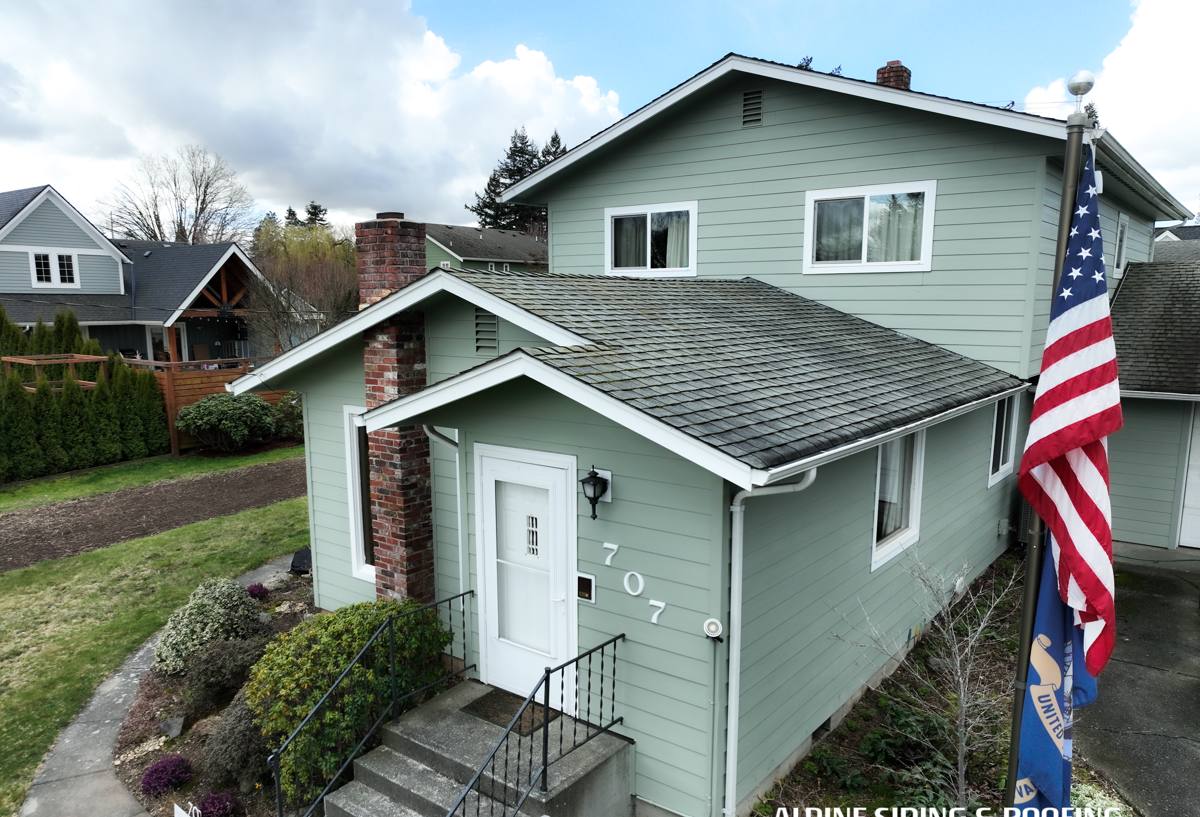
Signs an Eastsound Roof Needs Replacement, Not Another Patch
Every roof reaches a point where patching individual leaks costs more, over time, than a full replacement — and stops being reliable besides. On the island, we typically see homeowners reach that point when several of these show up together rather than one in isolation.
- Granule loss heavy enough that you can see bare or shiny patches on asphalt shingles
- Moss or dark streaking covering more than a small section of the roof, especially on shaded slopes
- Shingles that are cupping, curling at the edges, or cracking when touched
- Soft spots in the decking felt underfoot from the attic or during an inspection
- Flashing around chimneys, skylights, or valleys that's rusted, lifted, or has been re-caulked repeatedly instead of properly repaired
- Leaks that reappear in a new spot each time one is fixed, which usually means the underlayment has failed broadly, not just at one point
- A roof approaching or past the manufacturer's expected service life for this climate, particularly if the original installation skipped ice-and-water protection at eaves and valleys
If you're only seeing one of these and the roof is otherwise sound, a repair may genuinely be the right call — we'll tell you that directly rather than push a replacement you don't need yet.
What a Correct Roof Replacement Involves
A roof replacement is more than swapping old shingles for new ones. On Orcas Island, the details underneath the visible surface are what determine whether the new roof actually outperforms the old one in salt air and driving rain.
Tear-Off and Deck Inspection
We remove the existing roofing down to the deck rather than layering over it. That's the only way to actually see the sheathing, find soft or rotted panels from past moisture intrusion, and replace them before they're sealed under a new roof for another twenty-plus years.
Underlayment and Ice-and-Water Barrier
Self-adhering ice-and-water membrane belongs at eaves, valleys, and around every penetration — the spots where wind-driven rain is most likely to find a way past the shingle layer. The rest of the deck gets a synthetic underlayment that holds up better than old-style felt if it's exposed to weather for a few days during installation, which matters on an island where weather windows can close fast.
Flashing Details
New step flashing at walls, new counter-flashing where needed, and new flashing at every chimney, vent, and skylight — not re-using old, corroded metal to save time. This is the single most common source of leaks we find in older roofs out here, and it's the detail that's easiest to shortcut and hardest to see once the roof is finished.
Ventilation
Proper intake and exhaust ventilation keeps the attic space closer to outdoor temperature and humidity, which reduces condensation on the underside of the deck — a real issue in our damp climate — and helps the shingles themselves last their full rated life instead of cooking or trapping moisture from underneath.
Choosing Roofing Materials for Orcas Island Conditions
There isn't one universally "best" roofing material for the island — the right choice depends on your home's exposure, roof pitch, budget, and how much upkeep you want to take on. Here's how the common options compare against the specific conditions Eastsound homes face.
| Material | Salt Air Durability | Moss Resistance | Maintenance | Typical Lifespan |
|---|---|---|---|---|
| Architectural asphalt shingle | Good with quality metal flashing and fasteners | Moderate — benefits from periodic cleaning on shaded slopes | Low to moderate | 25-30 years |
| Standing seam metal | Very good with coated/marine-grade fasteners and finish | High — sheds moss more easily due to smooth, steep-shedding surface | Low | 40-50+ years |
| Cedar shake | Fair — needs careful detailing and regular upkeep | Lower — organic material is more moss-prone in shaded, damp settings | Higher — periodic treatment expected | 20-30 years with upkeep |
Cost follows a similar pattern: asphalt is generally the most affordable up front, metal costs more initially but spreads that cost over a much longer service life, and cedar sits in between on price but asks for more ongoing attention if it's going to hold up under our tree cover. We'll walk through these trade-offs against your specific roof rather than steering everyone toward the same product.
Appearance and Local Guidelines
Some properties in and around Eastsound fall under shoreline, community, or association design standards that limit roofing color or material choices. It's worth checking any guidelines that apply to your property before settling on a look, and we're glad to help you sort out what's actually required versus what's just customary for the area.
What Drives the Cost of a Roof Replacement Here
Every roof is priced individually, but a handful of factors tend to move the number the most for homes in and around Eastsound.
- Roof size and the number of existing shingle layers — tearing off two layers costs more in labor and disposal than tearing off one
- Roof pitch and complexity — steep roofs, multiple valleys, and dormers all add time and safety equipment
- Deck condition found during tear-off — hidden rot means sheathing repair before new roofing goes down, and that's not something you can know for certain until the old roof is off
- Material choice — asphalt, metal, and cedar sit at meaningfully different price points, as shown above
- Access and staging — narrow driveways, tree cover, and coordinating material delivery on the island can all affect how a job is set up and timed
We break all of this down in the written estimate so you know what you're paying for and why, instead of getting a single number with no explanation behind it.
Our Process for an Eastsound Roof Replacement
- On-site inspection. We get on the roof, check the attic, and look at flashing, decking, and ventilation before recommending anything.
- Written estimate. A clear scope of work and price, with material options explained honestly — including when a repair still makes more sense than replacement.
- Material selection. We help you weigh shingle, metal, or shake against your budget, roof exposure, and how the home is shaded.
- Permitting and scheduling. We handle the required paperwork with San Juan County and plan the job around realistic weather windows rather than guessing.
- Tear-off and installation. Full removal to the deck, repair of any damaged sheathing, new underlayment and flashing, then the new roofing system.
- Cleanup and walkthrough. Magnetic sweep for stray fasteners, full site cleanup, and a walkthrough so you know exactly what was done and what to watch for going forward.
Why a Crew That Already Works Eastsound Matters
Roofing logistics on Orcas Island aren't the same as on the mainland, and it shows in how a job gets scheduled and supplied. Material deliveries have to be coordinated around ferry schedules, not just a supplier's truck route. Weather windows between fronts can be narrower here, so a crew that's used to working around them plans tear-off and dry-in differently than one that isn't. And a crew that's already worked on Eastsound roofs has a working sense of which slopes hold moss longest, which older homes tend to have hidden decking issues, and how San Juan County's permitting process actually runs in practice — not just on paper.
That local familiarity isn't a marketing point, it's a practical one: it's the difference between a roof that gets torn off, dried in, and closed up before the next system rolls through, and one that sits exposed longer than it should because nobody planned around the ferry or the forecast.
Maintaining Your New Roof Through the Island's Wet Seasons
A correctly installed roof still benefits from basic upkeep in this climate, especially through the long moss season.
Gutter and Debris Management
Fir needles and cedar debris collect fast under tree cover and hold moisture against roof edges and valleys. Keeping gutters and valleys clear reduces the standing water that feeds moss growth.
Moss Prevention
Zinc or copper strips near the ridge, along with periodic gentle cleaning on shaded slopes, help keep new moss from establishing before it has a chance to lift shingle edges.
Periodic Inspection
A quick visual check after major winter storms — looking for lifted shingles, displaced flashing, or new moss patches — catches small issues while they're still small.
If your Eastsound roof is showing its age, or you just want an honest read on whether repair or replacement makes sense, we're happy to take a look. Reach out for a free, no-pressure estimate using the form below.