 Orcas Island Siding
 Deck Repair Built for Cascade Lake's Conditions
Cascade Lake sits inland from the saltwater shoreline, but it's still part of Orcas Island's marine climate — which means decks here take on moisture from two directions: humid air off the water and heavy tree cover that keeps things damp long after a storm passes. Add San Juan County's long, wet winters and a moss season that can run from October through May, and you've got conditions that are hard on any wood or composite deck structure. We repair decks around Cascade Lake regularly, and the failure patterns we see are consistent enough that we can usually tell you what's wrong before we even pull up a board.
This page covers what deck repair actually involves for homes in this area, what a correct repair looks like versus a quick patch, and how to think about the decision between repairing and replacing.
Why Decks Fail Faster Here Than in Drier Climates
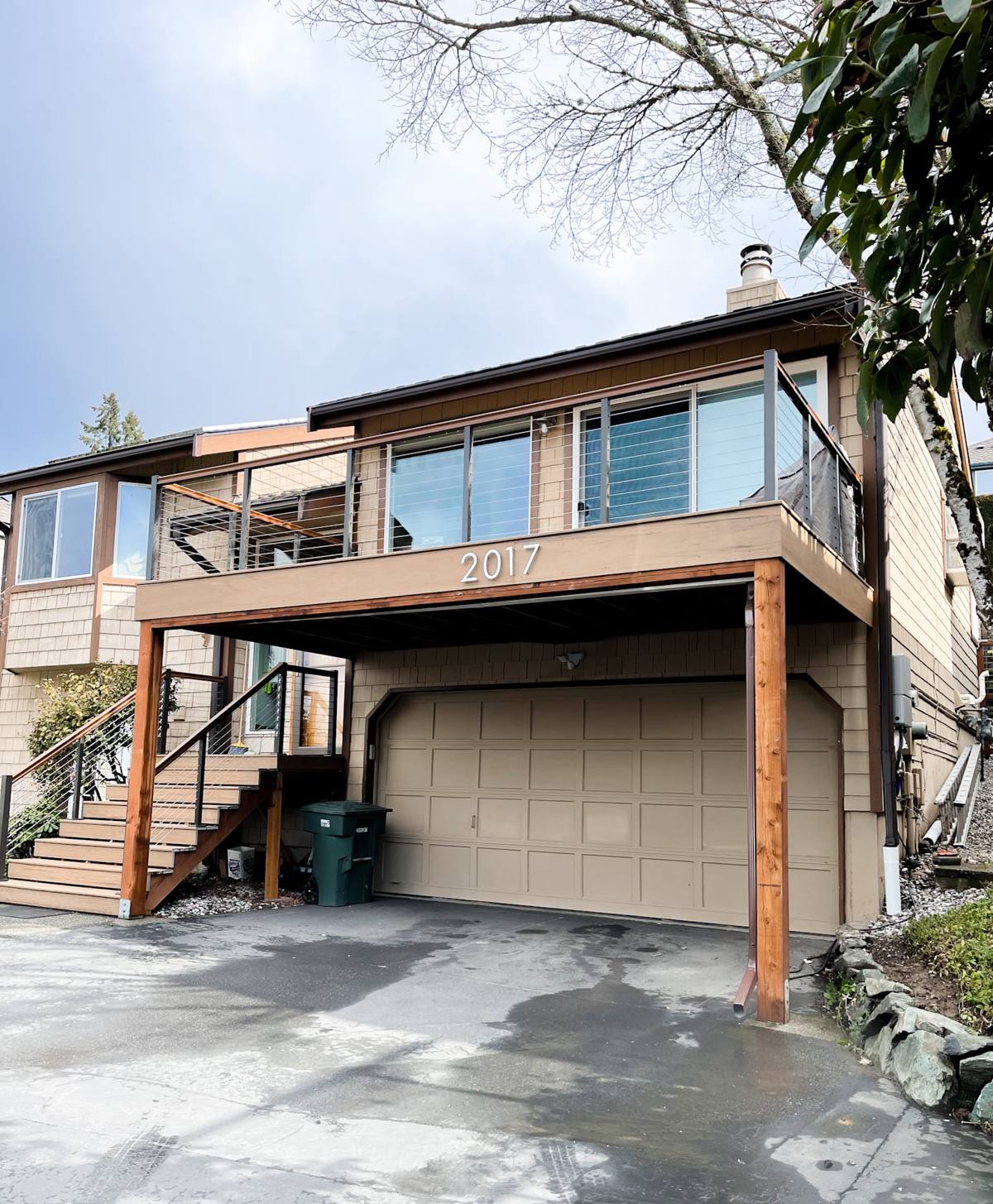
A deck in a dry inland climate mostly has to deal with sun and occasional rain. A Cascade Lake deck deals with near-constant ambient moisture for much of the year, plus shade from surrounding trees that slows drying time after every rain event. That combination is what drives most of the repair calls we get in this neighborhood.
The Big Three Failure Causes
- Trapped moisture at ledger boards and joists — where the deck meets the house, water gets behind flashing or siding and sits against wood that never fully dries.
- Moss and algae holding water on deck boards — moss doesn't just look bad, it acts like a sponge sitting directly on the wood surface, keeping it wet far longer than bare boards would be.
- Fastener corrosion — salt-influenced air accelerates rust on standard fasteners, which weakens board attachment and can cause squeaking, movement, or boards popping loose.
Any one of these can look minor from the surface — a soft spot here, some green discoloration there — while the structural wood underneath is already compromised.
What a Correct Deck Repair Actually Involves
A repair that just replaces the boards you can see, without checking what's underneath, tends to fail again within a season or two in this climate. Here's what we check on every Cascade Lake deck repair, regardless of the size of the job:
Structural Inspection First
Before any repair work starts, we check the ledger board connection to the house, the condition of the joists (probing for soft spots, not just looking at them), post bases where they meet concrete or the ground, and the fasteners holding it all together. Surface-level rot is often a sign of something worse a few inches deeper.
Moisture Management, Not Just Board Replacement
If we replace decking boards without addressing why moisture got trapped in the first place — poor flashing, missing ledger board flashing tape, insufficient gap between boards, or grading that pools water near posts — the same damage shows up again. Correct repair means fixing the water path, not just the symptom.
Matching Materials Properly
Mixing incompatible fasteners or wood treatments with existing decking is a common shortcut that causes problems later — galvanic corrosion between dissimilar metals, or new pressure-treated lumber that reacts poorly against older wood. We match fastener type to the decking material and use hardware rated for exterior, high-moisture use.
Common Cascade Lake Deck Problems We Repair
| Symptom | Likely Cause | Typical Fix |
|---|---|---|
| Soft or spongy boards | Wood rot from prolonged moisture exposure | Replace affected boards; check joists beneath for rot spread |
| Deck feels bouncy or unstable | Weakened joists or loose ledger connection | Sister or replace joists; re-secure ledger with proper flashing |
| Green or black staining on boards | Moss, algae, or mildew growth from shade and moisture | Clean and treat surface; address drainage and airflow to reduce recurrence |
| Rust streaks around fasteners | Corroding hardware in salt-influenced air | Replace with corrosion-resistant fasteners rated for coastal exposure |
| Railing feels loose | Post base rot or fastener failure | Inspect post embedment; replace hardware or post material as needed |
| Gaps or separation between boards and framing | Wood shrinkage/swelling cycles from wet-dry seasons | Re-fasten or replace warped boards; assess if framing needs attention |
Repair vs. Replace: How We Help You Decide
Not every deck with visible damage needs full replacement, and not every deck that "looks fine" is actually sound. We base the recommendation on what we find during inspection, not on what's easiest to sell.
Repair usually makes sense when:
- Damage is isolated to a few boards or one section, not spread across the structure
- The joists, ledger, and posts test solid when probed
- The deck is structurally sound but cosmetically worn
Replacement is usually the honest answer when:
- Rot has reached the structural framing in multiple areas
- The deck was built without proper ledger flashing and water has been getting behind it for years
- Repeated repairs haven't stopped the same failure from recurring
We'll tell you plainly which category your deck falls into. A deck that only needs a repair doesn't need a replacement quote, and we're not going to sell you one.
Moss and Algae: An Ongoing Maintenance Reality
Because of the tree cover and moisture common around Cascade Lake, moss and algae growth on deck surfaces isn't a one-time problem — it's a recurring maintenance item. Part of a proper repair includes talking through a realistic maintenance rhythm so the same issue doesn't force another repair call in a year or two.
What Helps Slow Regrowth
- Keeping overhanging branches trimmed back to let sunlight and airflow reach the deck surface
- Periodic cleaning before moss gets a chance to establish and hold moisture against the wood
- Ensuring boards have proper spacing so water drains through rather than sitting on top
- Checking that gutters and downspouts near the deck aren't dumping extra water onto it
None of this eliminates moss entirely in this climate — that's simply the environment — but it substantially extends the life of a repaired deck.
Our Deck Repair Process
- On-site inspection — we walk the full deck, probe suspect boards and framing, and check the ledger and post connections.
- Honest assessment — we explain what we found in plain terms: what's failing, what's still sound, and why.
- Written scope and estimate — a clear breakdown of what will be repaired and what it involves, no vague line items.
- Repair work — structural fixes first, then decking, railings, and finish work, using fasteners and materials suited to this climate.
- Final walkthrough — we go over the repaired areas with you and flag anything worth keeping an eye on going forward.
Why Local Experience with Cascade Lake Homes Matters
A crew that hasn't worked in this specific microclimate can miss things that are obvious once you know what to look for — the way moisture behaves under heavy tree cover, how quickly untreated fasteners corrode this close to the water, or which ledger flashing details actually hold up through a full Orcas Island winter. We've repaired enough decks around this part of San Juan County to know the difference between a board that looks bad but is fine, and one that looks fine but isn't.
That local pattern recognition saves homeowners money — we're not tearing into sound structure out of caution, and we're not patching over hidden rot to save time. It also means the fixes we make are suited to this exact environment, not a generic repair approach borrowed from a drier region.
A Quick Pre-Repair Checklist for Homeowners
If you're trying to decide whether it's time to call about your deck, walk it and check for these signs:
- Boards that feel soft, spongy, or flex noticeably when you step on them
- Visible gaps, cracking, or separation where boards meet the frame
- Rust staining around screws or nail heads
- Green, black, or slimy buildup on the deck surface, especially in shaded areas
- Railings or posts that wiggle or feel less solid than they used to
- Any noticeable sagging or unevenness across the deck surface
If you're seeing two or more of these, it's worth getting a professional look before the damage spreads further into the structure.
Get a Straightforward Look at Your Deck
If your deck near Cascade Lake is showing signs of wear, soft spots, moss buildup, or general age, we're happy to come take a look and give you an honest read on what it needs. There's no pressure and no obligation — just a clear assessment from a crew that already knows this area's climate and what it does to decks over time. Use the form below to request a free estimate.