 Orcas Island Siding
 Homes around Cascade Lake and the wooded stretch near Moran State Park sit in a different microclimate than the open, waterfront side of Orcas Island. The lake and the surrounding tree canopy hold moisture close to the house longer than a breezier, sun-exposed site would, and that changes what a window installation actually needs to get right. Add in the island-wide realities of salt air, driving winter rain, and a moss season that can run most of the year on shaded walls, and you get a setting where a window job that's "close enough" tends to show problems faster than it would somewhere drier and more open. This page is about what correct window installation looks like specifically for homes in this part of the island — not a generic rundown of window options.
What Makes Window Installation at Cascade Lake Different
Most homes near Cascade Lake sit under mature fir, cedar, and madrona cover, often on lots that stay shaded through a good part of the day even in summer. That's part of the appeal of the setting, but it has a real consequence for anything built into an exterior wall. Shaded walls dry out far more slowly after rain than walls that get direct sun, and a window opening that stays damp longer gives moisture more time to work into any small gap in the flashing or sealant before the next dry stretch arrives to help it out. The lake itself adds a bit of its own humidity to the immediate air, and cooler, still air pooling in a wooded low spot behaves differently than the wind-scoured air along the island's open shoreline.
None of that cancels out the marine climate the whole island shares. Salt-laden air off the Salish Sea still moves across Orcas and still accelerates the breakdown of exposed sealants and corrodes unprotected fasteners, canopy or no canopy. What the Cascade Lake setting adds on top of that is shade and standing moisture that extend how long a wall stays wet after a storm — which is exactly the condition moss and mildew need, and exactly the condition that turns a small sealant gap into a slow, ongoing leak instead of a quick dry-out.
Where Windows Actually Start to Fail Here
It's rarely the glass itself. Insulated glass units are generally reliable if they were manufactured and installed correctly. What actually fails first around here is almost always at the edges — a sill that was never properly pitched to shed water outward, a corner where housewrap wasn't lapped correctly under the flange, or a bead of exterior sealant that was never designed to stay wet as long as a shaded Cascade Lake wall keeps it wet. Once water gets behind the trim on a wall that doesn't dry quickly, it can sit against the framing for weeks at a time rather than hours, and that's when soft wood, staining, and eventually rot show up.
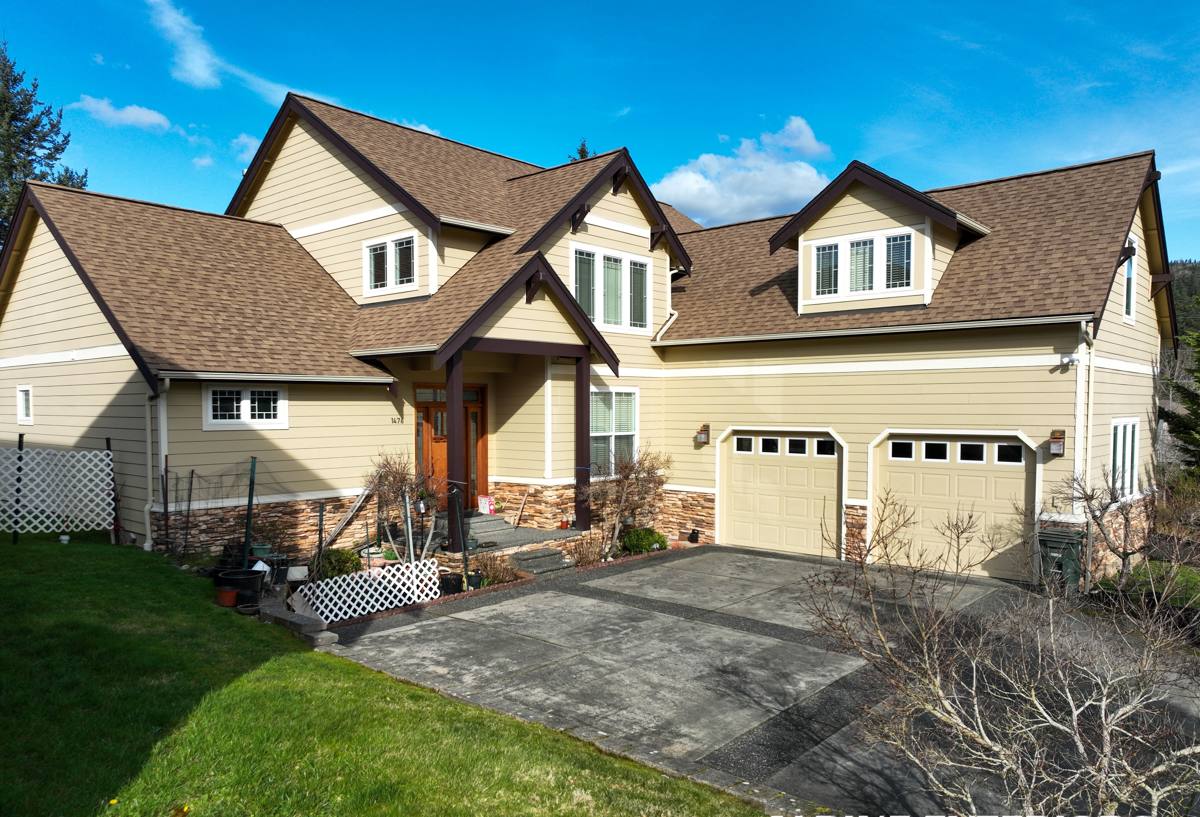
Signs Your Windows Need Attention
A lot of window problems in this setting develop quietly, especially on north- or east-facing walls that get the least direct sun. Worth checking for periodically, especially heading into the wet season:
- Fogging or a hazy film between panes of a double- or triple-pane unit — a sign the seal has failed and the gas fill is gone
- Soft, spongy, or discolored wood at the sill or the trim immediately around the frame
- Moss or dark mildew staining building up on the frame or sill faster than on the rest of the wall
- A sash that's become stiff, sticky, or hard to latch — often a sign the frame has shifted slightly from moisture-related movement
- Visible daylight, a draft, or a whistle around the frame during a windy storm
- Peeling or bubbling paint on wood trim near the window, even if the rest of the trim looks fine
Any one of these is worth a look before it's ignored through another wet season. On a shaded lot, the gap between "small issue" and "framing repair" tends to close faster than homeowners expect.
What a Correct Installation Involves
A window is only as good as the opening it goes into and the sequence used to seal it. For a Cascade Lake property, that generally means:
- Removing the old window carefully and inspecting the sill, jambs, and sheathing underneath for rot or existing water damage before anything new goes in
- Taking exact measurements of the actual opening rather than assuming it matches the nominal size of the unit being replaced
- Repairing or replacing any damaged framing or old, brittle building paper found during removal — patching over it is how small problems become bigger ones
- Installing a sloped sill pan so any water that does get past the glazing is directed back outward, not left to sit against bare wood
- Sequencing side and head flashing correctly so each layer sheds water onto the layer below it, shingle-style, rather than relying on caulk alone
- Setting the unit square, plumb, and properly shimmed, since even a slight misalignment stresses the seal over time
- Using sealants and fasteners rated for sustained damp, salt-air exposure — not general-purpose products that are fine on a dry, sun-exposed wall but degrade faster in constant shade
Skip the flashing sequence or the sill pan and the window itself can be excellent quality and still let water into the wall within a few wet seasons. That's a harder mistake to catch and fix on a shaded wall, because the surface symptoms take longer to show up even after the damage has started.
Frame Materials for a Shaded, Damp Lot
Frame material matters more here than it would on an open, sun-exposed wall, because a shaded frame spends more of its life wet or damp. We'll walk through the honest trade-offs for your specific windows rather than defaulting to whichever product is fastest to install.
| Frame Material | How It Handles This Setting | Maintenance |
|---|---|---|
| Vinyl | Doesn't rot or corrode; performs well under sustained shade and moisture | Low — occasional cleaning, no refinishing |
| Fiberglass | Very stable in temperature and moisture swings; strong choice for larger or custom units | Low — durable factory finish |
| Wood-clad (composite exterior) | Can look right on an older or period home if the exterior cladding is properly protected; the wood core is more sensitive to prolonged dampness than vinyl or fiberglass | Moderate — exterior finish and seals need periodic inspection |
| All-wood | Traditional look, but the least forgiving option on a shaded, slow-drying wall without a rigorous maintenance schedule | High — regular refinishing and sealant renewal required |
None of this means wood windows are off the table for a Cascade Lake home where the look matters, especially on an older or architecturally distinct property. It means going in with a clear-eyed view of the maintenance that choice requires in a setting that dries out more slowly than most of the island, so it's a decision made on purpose rather than by default.
How Our Process Works for Cascade Lake Homes
We start with a walk-through of the actual openings, not a phone quote based on a general description. That includes checking existing sills and trim for soft spots, noting which walls get the least sun and the most moss, and talking through what you actually want out of the windows — better seals, easier operation, a different look, or all three. From there we measure precisely, go over frame material and glass options against what your specific walls deal with, and give you a straight answer on scope, timeline, and price before any work starts.
On installation day, that means opening up each window fully rather than doing a quick insert-and-caulk swap, checking the framing behind it, and building the flashing sequence back correctly before the new unit goes in. We clean up as we go and walk you through what was found and what was done at each opening, especially if we ran into rot or old flashing failures that needed addressing beyond the original scope. You should never be surprised by what we found after the fact.
Cost Factors for Window Installation Near Cascade Lake
We won't quote a number without seeing the openings, but the factors that consistently move price on jobs in this part of the island are predictable:
| Factor | Why It Matters |
|---|---|
| Opening condition | Rot or old water damage found at the sill or framing adds repair work before the new window can go in |
| Frame material | Vinyl, fiberglass, wood-clad, and all-wood units differ significantly in upfront and long-term cost |
| Size and number of units | Larger openings and full-house replacements have different labor and material economics than a single window |
| Site access | Wooded, sloped, or gravel-driveway lots common near the lake can add time for equipment and material staging |
| Seasonal or part-time use | Properties that sit vacant part of the year sometimes need extra attention to moisture damage that went unnoticed for a while |
| Custom shapes or sizes | Non-standard openings on older or architecturally distinct homes take more time to source and flash correctly |
Why Hiring a Crew That Already Works Cascade Lake Matters
A crew that's worked this part of Orcas Island before already knows which walls tend to hold moisture longest, what a shaded sill usually looks like after a decade of standing water, and where manufacturer installation instructions written for a dry, standard-construction site need extra attention here. That's not something a generic set of install directions covers, and it's not something you can tell from a bid alone.
It also matters for logistics. Materials and follow-up service on Orcas mean working around the ferry schedule, not a same-day mainland errand, and wooded, sloped, or seasonal-use properties near the lake sometimes need more coordination to access than a straightforward in-town lot. A contractor who already plans around those realities is less likely to leave a job half-staged or a callback waiting weeks longer than it should.
A Practical Checklist Before You Hire
- Ask what they found when they inspected the actual opening, not just a general condition estimate
- Confirm the flashing sequence they use, including a sloped sill pan — not caulk as the only defense
- Get a clear recommendation on frame material for your specific wall's sun and moisture exposure, with the reasoning behind it
- Ask how labor is warrantied separately from the window unit itself
- Confirm they've worked on Orcas Island before and understand ferry-based scheduling for materials and follow-up
- Get a written scope before work starts, so any framing repair found along the way isn't a surprise add-on
Ready for a Free Estimate
If you're noticing drafts, fogged glass, or soft trim on a window near Cascade Lake, or you're planning ahead for a full replacement, it's worth having someone look at the actual openings before pricing anything. We offer free, no-pressure estimates for window installation in this part of Orcas Island — use the form below to get a time on the schedule.